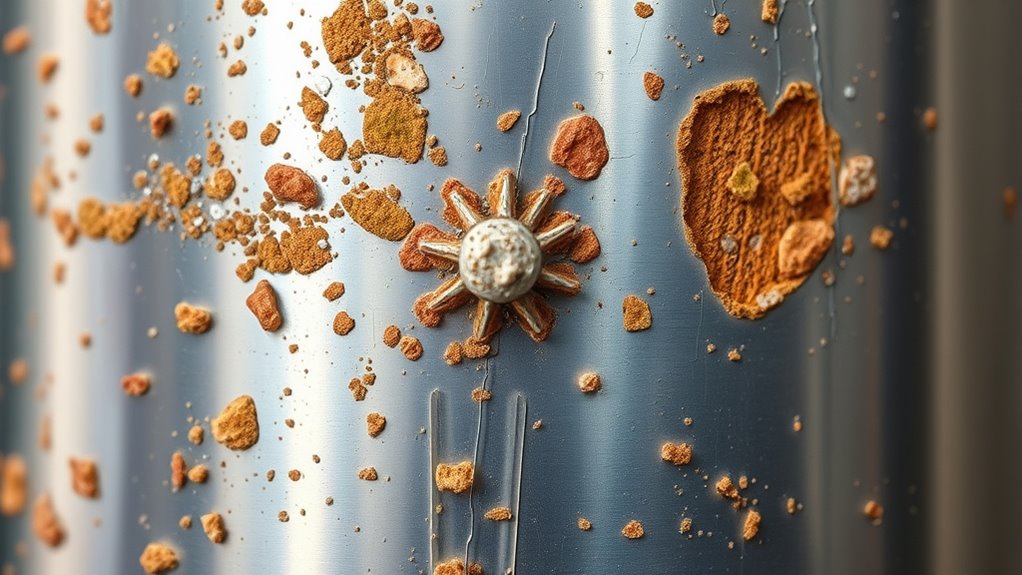

Scale buildup on your water heater’s components reduces its efficiency by trapping heat and forcing it to work harder. This sediment insulates the heating elements, leading to longer heating times and higher energy bills. Over time, the weight and pressure from mineral deposits can cause cracks, leaks, and overheating, shortening the lifespan of your unit. If you want to prevent costly repairs, understanding how to manage scale is essential—keep exploring to learn more.
Key Takeaways
- Scale buildup acts as an insulator, reducing heat transfer efficiency in the water heater.
- Mineral deposits cause the heater to work harder, increasing energy consumption and utility costs.
- Sediment accumulation stresses tank walls and overheats heating elements, risking damage and leaks.
- Persistent scale reduces the lifespan of heating components, leading to more frequent repairs or replacements.
- Regular maintenance and water softening prevent excessive scale, preserving efficiency and extending system longevity.
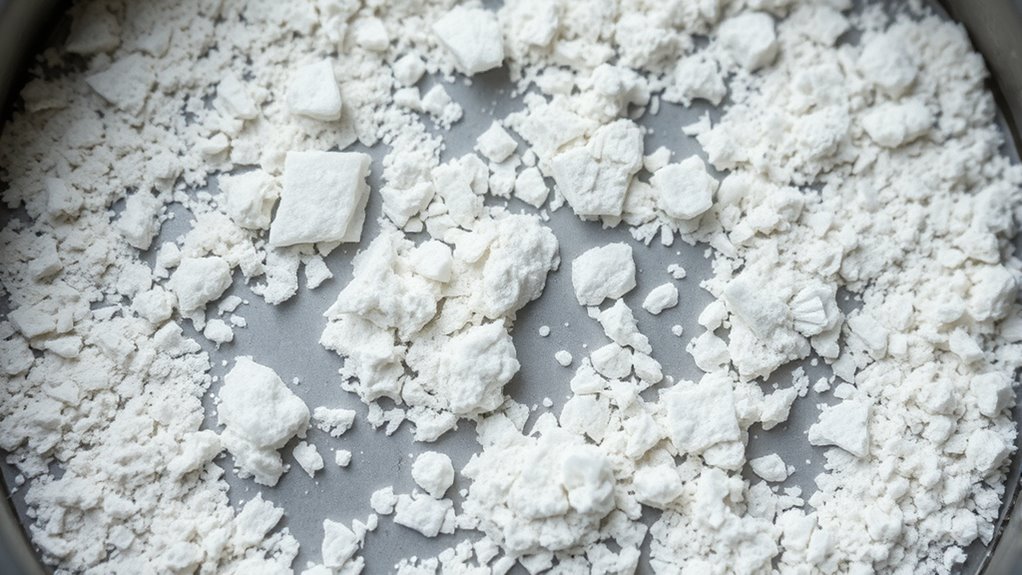
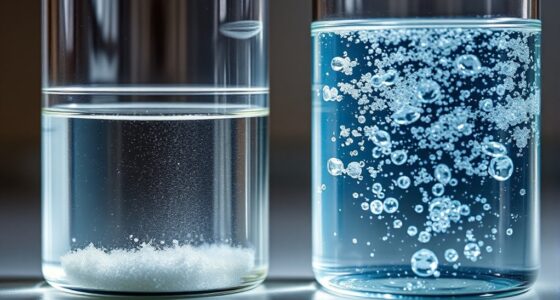
Scale buildup inside your water heater can markedly reduce its efficiency and shorten its lifespan. When mineral deposits like calcium and magnesium accumulate, they form sediment buildup on the interior surfaces of the tank and around the heating elements. These mineral deposits act as insulators, making it harder for the heater to transfer heat effectively. As a result, your water heater has to work harder and longer to heat water to the desired temperature, which not only wastes energy but also increases your utility bills. Over time, this inefficiency becomes more pronounced, leading to higher operational costs and unnecessary wear on the system.
Scale buildup reduces water heater efficiency and shortens its lifespan.
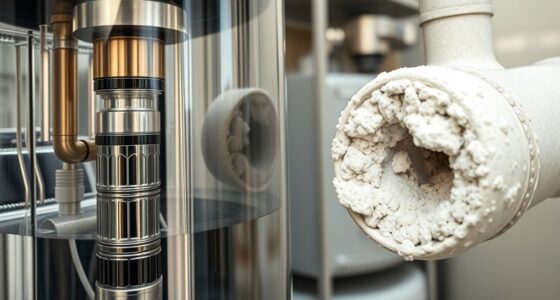
Sediment buildup is most common in areas with hard water, where mineral concentrations are high. As the mineral deposits accumulate, they create a thick layer of scale that can cover the bottom of the tank and the heating elements. This layer hampers heat transfer because the heat now has to penetrate the scale before reaching the water. Consequently, the heater’s thermostat may turn off prematurely or run continuously, trying to compensate for the lost efficiency. This constant cycling accelerates wear and tear on the heating components, eventually leading to part failures or complete system breakdowns.
In addition to decreasing efficiency, sediment buildup and mineral deposits can cause physical damage to your water heater. The weight of accumulated scale can stress the tank walls, potentially leading to cracks or leaks over time. Moreover, mineral deposits can cause the heating elements to overheat and burn out faster than usual. When heating elements fail, your water heater has to be repaired or replaced sooner than expected, often at significant expense. The presence of sediment also promotes corrosion inside the tank, further compromising its integrity and reducing its lifespan. Regular maintenance, including flushing and descaling, can help prevent these issues and extend the longevity of your unit.
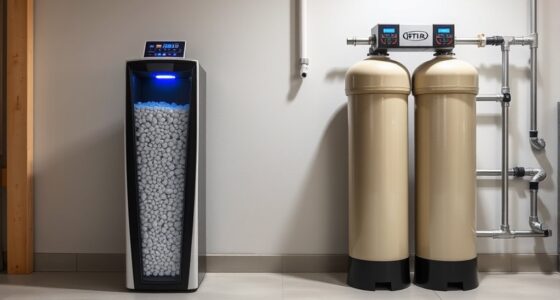
To mitigate these issues, regular maintenance is essential. Flushing your water heater periodically helps remove accumulated sediment and mineral deposits, restoring its efficiency. Installing a water softener can prevent mineral buildup altogether, especially in areas with hard water. If you notice your water heater is taking longer to heat water or if you see signs of leaks or strange noises, it’s time to inspect it for scale buildup. Addressing these problems early can extend the life of your system and keep it running smoothly. Ignoring sediment buildup and mineral deposits only accelerates deterioration, leading to costly repairs or premature replacement. Taking proactive steps now ensures your water heater remains efficient and reliable for years to come. Additionally, understanding the importance of proper maintenance and water quality can significantly impact your system’s performance and lifespan.
Frequently Asked Questions
How Often Should I Flush My Water Heater to Prevent Scale Buildup?
You should flush your water heater at least once a year to prevent scale buildup. Follow a regular maintenance schedule to keep it in top shape. Use proper flushing techniques, such as turning off the power, attaching a hose, and draining the tank to remove sediment and minerals. Doing this annually helps maintain efficiency, extends the lifespan, and prevents costly repairs caused by scale accumulation.
Can Water Softeners Fully Eliminate Scale Formation?
A stitch in time saves nine, and water softeners can’t fully eliminate scale formation. While they substantially reduce mineral content, water softener limitations mean some scale can still form over time. To protect your water heater, combine softening with other scale prevention strategies like regular flushing and installing a scale inhibitor. This proactive approach keeps your system efficient and extends its lifespan, proving that prevention is better than cure.
What Are the Signs My Water Heater Is Affected by Scale?
You’ll notice signs like reduced water flow, inconsistent hot water, or longer heating times, indicating scale formation is affecting your water heater. You may also hear banging sounds or see mineral buildup around the tank. These issues lower water heater performance and can lead to early failure. If you observe these signs, it’s time to address scale buildup to guarantee maximum efficiency and extend your water heater’s lifespan.
Does Scale Buildup Vary With Different Water Heater Models?
Yes, scale buildup varies with different water heater models due to design differences and regional variations in water quality. Some models have better scaling resistance, while others are more prone to buildup, especially in areas with hard water. Factors like tank material and heating element type influence how quickly scale accumulates. You should consider these model differences and regional variations when choosing or maintaining your water heater to minimize scale issues.
Are There Chemical Treatments to Dissolve Existing Scale?
Did you know that chemical solutions can effectively dissolve existing scale? You can use commercial descaling agents or vinegar-based solutions for scale dissolution. These treatments penetrate mineral buildup, restoring your water heater’s efficiency. Just make certain you follow the manufacturer’s instructions carefully to avoid damage. Regular chemical treatments help prevent future scale accumulation, extending your water heater’s lifespan and maintaining ideal performance.
Conclusion
As you can see, scale buildup can reduce your water heater’s efficiency by up to 30%, costing you more on energy bills. It also shortens its lifespan, often by several years. Regular maintenance and descaling can prevent these issues. Did you know that in areas with hard water, scale accumulates faster, increasing the risk of early failure? Staying proactive guarantees your water heater runs smoothly for years to come, saving you money and hassle.