
Your water treatment system’s layout plays a vital role in its effectiveness and reliability, often more than the brand names of the equipment. A well-organized design guarantees smooth flow, maximizes contact time with filtering media, and reduces maintenance needs. It also allows for future expansion and built-in redundancy, keeping your system dependable over time. By focusing on proper placement and arrangement, you can achieve better water quality and longevity—discover how a smart layout can make all the difference.

Get home appliances delivered free — and shop member deals
- Fast, free delivery on millions of items
- Access to Prime Big Deal Days deals on October 6–7
- Prime Video, Amazon Music and more included
Key Takeaways
- Proper layout ensures optimal flow and contact time, directly improving filtration efficiency regardless of equipment brands.
- Strategic component placement enhances system reliability and redundancy, reducing dependence on brand reputation.
- A well-designed layout accommodates future expansion and upgrades, ensuring long-term system performance.
- Layout influences maintenance ease and system longevity, often more impactful than brand quality alone.
- Effective system organization minimizes flow disruptions and dead zones, leading to better water quality than premium brands alone.
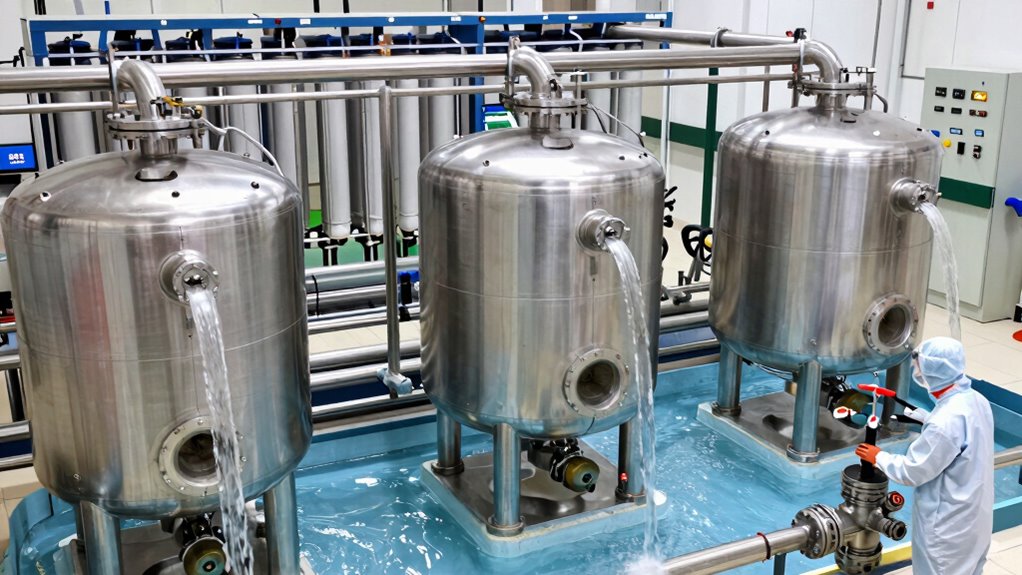
Have you ever wondered how water treatment plants are organized to guarantee clean, safe water? It’s not just about choosing the most popular brand or the fanciest equipment. Instead, the layout of the entire system plays a crucial role in ensuring effective and reliable water treatment. When designing a treatment facility, understanding how each component fits together influences filtration efficiency and system scalability. These factors determine whether the plant can consistently produce high-quality water while adapting to changing demands.
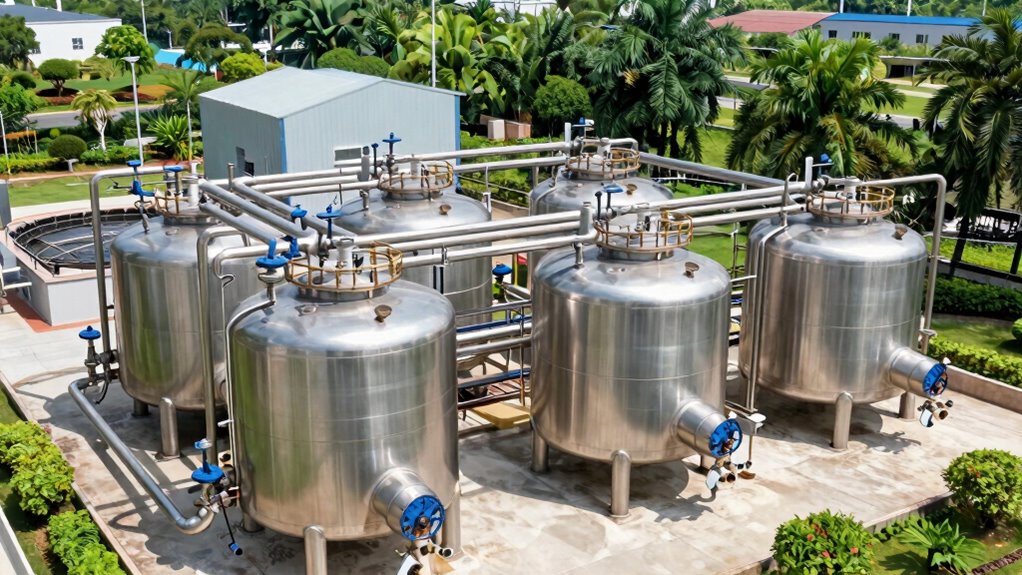
Filtration efficiency is at the heart of a well-designed water treatment layout. If your plant’s setup is optimized, water passes smoothly through each stage of filtering media, removing contaminants efficiently. A poorly planned layout, on the other hand, can cause flow disruptions or dead zones, reducing filtration effectiveness. For example, arranging filters with proper flow paths and ensuring adequate contact time helps maximize contaminant removal. This focus on layout means you’re not just relying on the brand of equipment but on how well the system is designed to work together. When filtration is efficient, you get clearer water, fewer residual pollutants, and less maintenance down the line.
Optimized filter layouts ensure smooth flow, better contaminant removal, and reduced maintenance for efficient water treatment systems.
System scalability is another critical aspect that a thoughtful water treatment layout addresses. As population or industrial needs grow, your plant must expand without sacrificing performance. A flexible design allows for easy integration of additional treatment units or upgrades without major overhauls. You want a layout that considers future expansion from the start, so adding new filters, disinfection stages, or storage tanks becomes seamless. This foresight ensures your water treatment system remains effective over time, regardless of increased demand. It’s not just about buying the latest equipment but about setting up a modular, adaptable infrastructure that can evolve. Understanding system design principles is vital for creating such scalable systems.
Additionally, a well-planned layout can incorporate system redundancy to maintain continuous operation during maintenance or unexpected failures, further enhancing reliability.
In essence, the layout of your water treatment plant directly impacts performance and longevity. A system built with strategic placement and flow considerations outperforms one that relies solely on high-end equipment or brand names. When you prioritize layout, you’re investing in a system that delivers consistent filtration efficiency and accommodates growth. This approach guarantees safe, clean water for your community, now and into the future. Remember, no matter how reputable the brand, a poorly designed treatment layout can undermine the entire process. Focus on how the system is organized, and you’ll set yourself up for success in delivering dependable water quality.
water treatment system layout design
As an affiliate, we earn on qualifying purchases.
As an affiliate, we earn on qualifying purchases.
Frequently Asked Questions
How Does Layout Impact Water Treatment Efficiency?
Your water treatment layout directly impacts efficiency by optimizing flow and space utilization. Properly designed layouts ensure smooth flow, reducing bottlenecks and minimizing downtime. When you strategically arrange equipment, you maximize space, making maintenance easier and preventing cross-contamination. This efficient setup allows your system to operate smoothly, saving you time and costs. In short, a well-planned layout enhances overall performance, making your water treatment process more dependable and effective.
Can Poor Layout Cause System Failures?
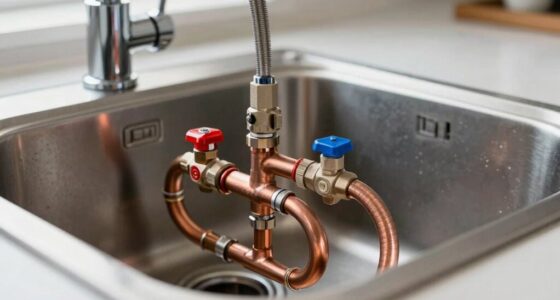
Yes, poor layout can cause system failures. Imagine water flowing through poorly arranged pipes and incorrectly placed valves, creating turbulence and pressure issues. Inadequate pipe arrangement or valve placement can lead to leaks, blockages, or equipment damage, risking system shutdowns. You might notice inconsistent water quality or sudden failures. A well-designed layout guarantees smooth flow, minimizes stress points, and keeps your water treatment system reliable and efficient.
What Are Common Layout Mistakes to Avoid?
You should avoid poor layout choices that hinder flow optimization and waste space. Common mistakes include cramming equipment too tightly, which restricts flow and makes maintenance difficult, and neglecting proper placement of sensors and valves, causing inefficiencies. Also, overlooking future expansion needs can lead to cramped designs. Focus on clear pathways, strategic placement, and maximizing space utilization, ensuring your system runs smoothly and is easy to maintain.
How Does Layout Affect Maintenance Access?
Your water treatment layout directly impacts maintenance access by either easing or complicating repairs. With poor layout, you face accessibility challenges that slow down routine inspections and emergency fixes. A well-designed layout offers flexibility, allowing technicians to reach components easily. This guarantees quicker maintenance, minimizes downtime, and reduces risks. Prioritizing layout flexibility and accessibility can save you time and money, making your system more efficient and easier to manage.
Is Custom Layout Better Than Standard Designs?
Custom layouts often outperform standard designs because they offer 30% more design flexibility, allowing you to tailor the system to your specific needs. This adaptability improves maintenance, efficiency, and aesthetic appeal, making it easier to integrate into your space. While standard designs are quick to install, custom layouts give you control over functionality and appearance, ensuring your water treatment system works better and looks better in your facility.
As an affiliate, we earn on qualifying purchases.
Conclusion
Remember, choosing the right water treatment layout isn’t just a small detail—it’s the difference between drinking pure, crystal-clear water or risking a lifetime of costly, health-damaging mistakes. Even the biggest brand names can fall flat if their layout isn’t optimized for your needs. Don’t let a poor setup turn your water into a dangerous mess. Invest in the right layout now, and you’ll be sipping the cleanest, safest water for decades to come—trust me, it’s that important!
water treatment plant components
As an affiliate, we earn on qualifying purchases.
As an affiliate, we earn on qualifying purchases.
home water filtration system expansion
As an affiliate, we earn on qualifying purchases.
As an affiliate, we earn on qualifying purchases.
Fall yard work Picks
leaf blowers
As an affiliate, we earn on qualifying purchases.