
Many believe that one water test shows your water’s true quality, but that’s a myth. Visual cues like clear water or lack of debris can be misleading, as harmful chemicals or bacteria often go unnoticed. Regular testing with reliable kits and tools helps you monitor water health over time. Staying informed about proper methods and data interpretation ensures confidence. Keep exploring to discover how consistent tracking can protect your water supply and health.
Key Takeaways
- Regular testing and data logging build confidence in water quality management.
- Myth: One test is enough; fact: Ongoing monitoring reveals true water conditions.
- Visual cues can be misleading; proper testing uncovers hidden contaminants.
- Using high-quality kits and digital tools ensures accurate, reliable results over time.
- Understanding key parameters helps interpret results, enabling informed water safety decisions.
Common Misconceptions About Water Testing

Many people assume that a single water test provides a complete picture of water quality, but in reality, water conditions can change over time and vary by location. Relying on one test can lead to false confidence, especially if the testing accuracy isn’t high. Water purification methods can influence test results, and factors like contamination spikes or seasonal changes can alter water quality quickly. It’s a misconception that a one-time test is enough; consistent testing offers a more reliable understanding. To truly monitor water quality, you need to recognize that tests are just one part of the process. Proper testing protocols and accurate results help you identify issues early, ensuring your water remains safe and clean over time. Recognizing that test accuracy can vary is essential for maintaining confidence in your water quality assessments.
Why Visual Clues Can Be Deceiving

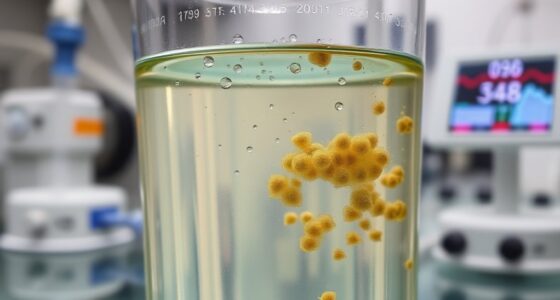
Relying solely on visual clues to assess water quality can be misleading because appearances often hide underlying issues. Just because water looks clear or free of debris doesn’t mean it’s safe—visual cues can be deceiving. Sensory limitations, like the inability to detect chemicals or bacteria by sight or smell, mean you might miss hidden contaminants. Murky water might seem suspicious, but clear water isn’t always free from harmful substances. Conversely, algae blooms or discoloration can sometimes be harmless. Thus, while visual observations can provide initial hints, they shouldn’t replace proper testing. Trusting your senses alone could lead to overlooking serious water quality problems that only laboratory analysis can reveal. Always combine visual assessments with regular testing for a complete, accurate picture.
Understanding the Importance of Regular Monitoring
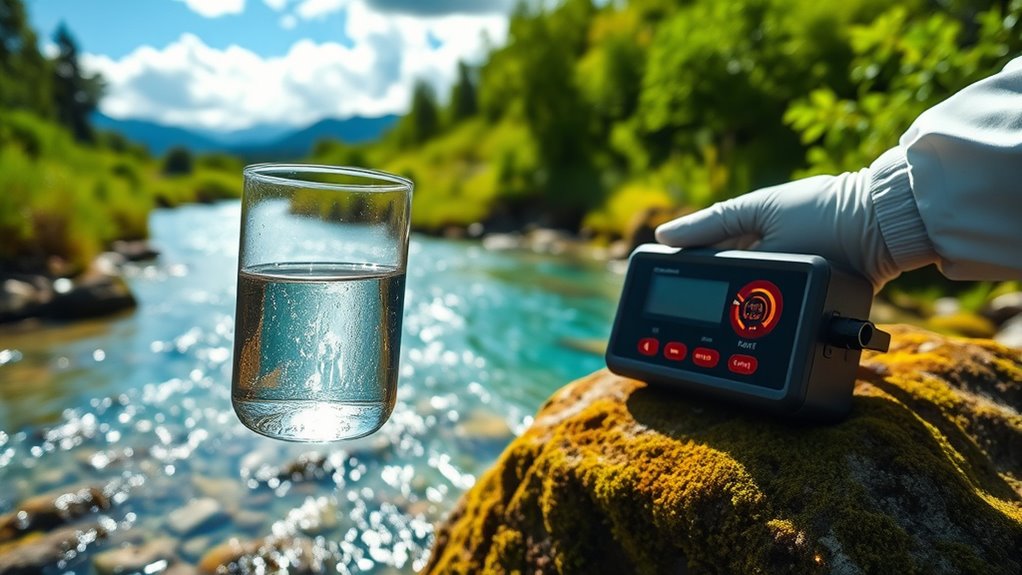
Regular monitoring keeps your water safe to drink and helps catch problems early before they become serious. It also provides essential data to identify hidden contaminants and prevent health risks. By staying proactive, you can make informed decisions to better manage your water quality over time. Understanding the role of consistent testing ensures you maintain optimal water conditions and respond swiftly to any issues that may arise.
Ensures Safe Drinking Water
To guarantee your drinking water remains safe, continuous monitoring of water quality is essential. Regular checks help identify contaminants before they pose health risks, ensuring your water stays clean and safe. Implementing water filtration systems is a key step, removing harmful substances and improving overall quality. By monitoring water regularly, you also promote water conservation, as you can detect leaks or inefficiencies early, reducing waste. This proactive approach allows you to maintain a safe water supply and avoid costly health issues or infrastructure repairs. Staying vigilant with water testing provides peace of mind, knowing your drinking water meets safety standards. Ultimately, consistent monitoring supports healthier living and sustainable water use, safeguarding your well-being and the environment.
Detects Contaminants Early
By actively monitoring water quality, you can detect contaminants early before they pose serious health risks. Regular testing with properly calibrated sensors ensures accurate readings, helping you identify contamination sources promptly. Here are key benefits:
- Quickly identifies changes in water chemistry
- Detects emerging contamination sources early
- Ensures sensor calibration maintains measurement accuracy
- Prevents long-term health issues by addressing issues promptly
Early detection allows you to take swift action, reducing health hazards and costly cleanups. Monitoring tools like sensors must be regularly calibrated to avoid false readings, which could delay necessary responses. By staying vigilant with consistent testing, you safeguard your water supply and protect everyone relying on it. Remember, catching problems early is essential for maintaining safe, clean water over time.
Guides Water Management
Effective water management relies on consistent monitoring to maintain water quality and guarantee safety. Regular testing helps you identify issues early, guiding decisions on water conservation and pollution control. When you track water parameters over time, you can pinpoint pollution sources and implement targeted measures to reduce contaminants. Monitoring also supports efficient water use, ensuring resources aren’t wasted and helping meet conservation goals. By staying vigilant, you prevent problems before they escalate, saving costs and protecting public health. Consistent data collection enables you to adapt management strategies proactively, ensuring water remains safe and sustainable. Additionally, regular assessment helps maintain compliance with environmental standards and regulations. Ultimately, understanding water quality trends empowers you to make informed decisions that balance resource preservation with environmental protection.
Simple Methods to Track Water Quality at Home
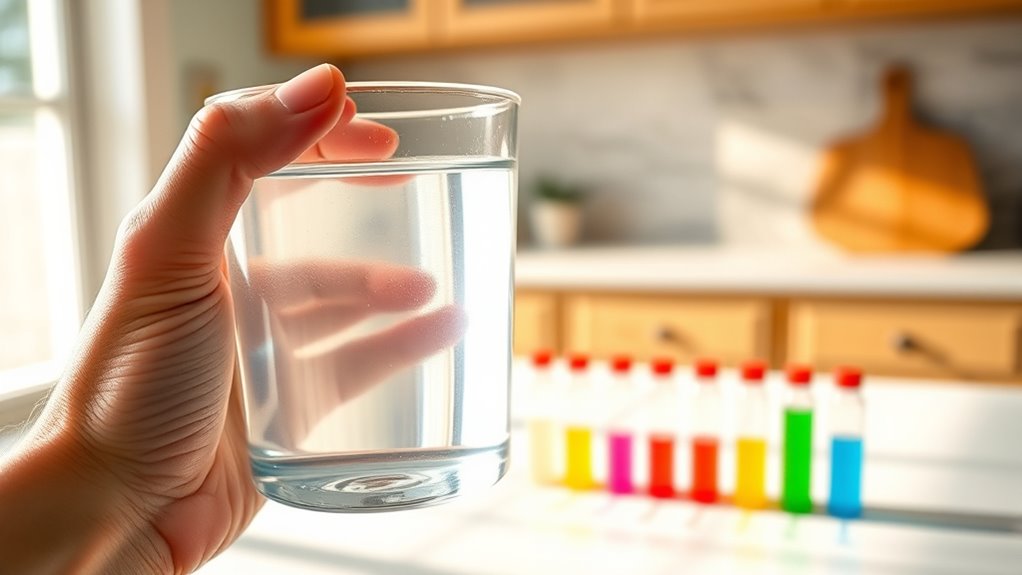
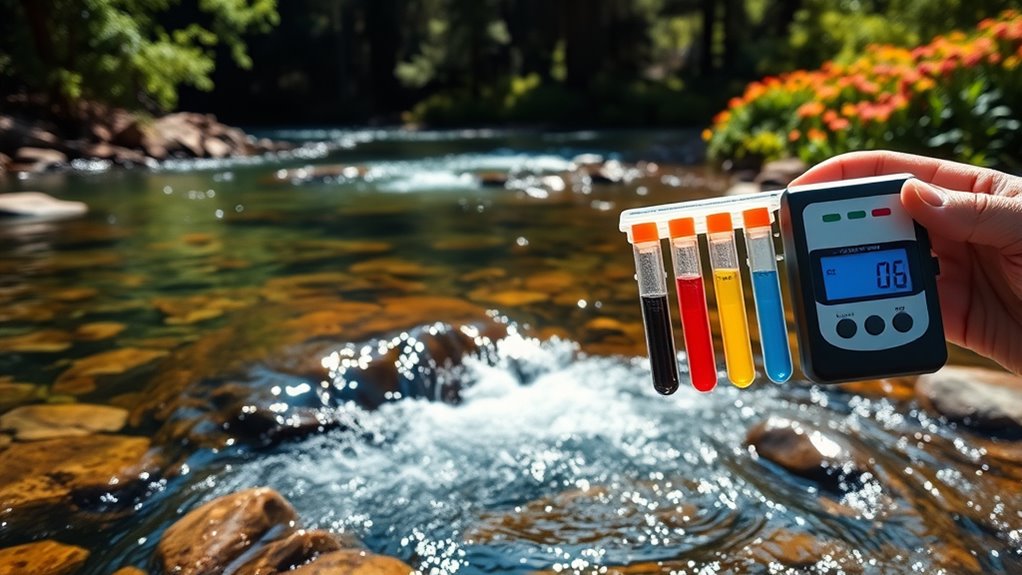
Monitoring water quality at home doesn’t have to be complicated. You can easily keep an eye on your water with simple methods. First, consider DIY kits—they’re affordable and straightforward, allowing you to test for common contaminants like chlorine, pH, and lead. Second, use smartphone apps designed for water testing; these apps often guide you through testing procedures and help log results over time. Third, check your water’s appearance—look for cloudiness, discoloration, or particles. Fourth, pay attention to smell and taste; any unusual odors or flavors can signal issues. Additionally, understanding water contaminants and their health effects can help you interpret test results more effectively for better insights. Combining these methods provides a quick, effective way to monitor water quality regularly, giving you peace of mind and helping you identify potential problems early.
Interpreting Test Results and When to Seek Help

Understanding your water test results is essential for determining if your water is safe to use. When interpreting test results, focus on the levels of contaminants like bacteria, nitrates, heavy metals, and pH. If your results show levels within safe limits, your water is generally safe; if not, it’s time to act. Knowing when to seek help involves recognizing warning signs such as persistent strange taste, odor, or discoloration, even if tests seem normal. If your test results indicate high contaminant levels or you’re unsure how to interpret them, contact a water quality professional or local health department. They can provide guidance and recommend appropriate steps to ensure your water’s safety, giving you peace of mind and protecting your health. Regular testing and understanding contaminant levels can help prevent health issues associated with unsafe water.
Tools and Resources for Effective Water Testing
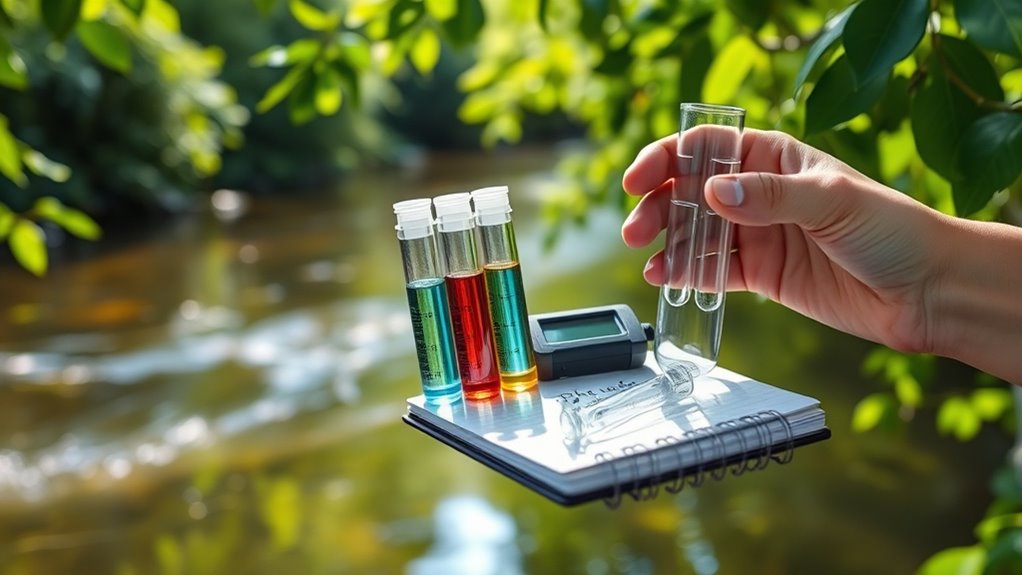
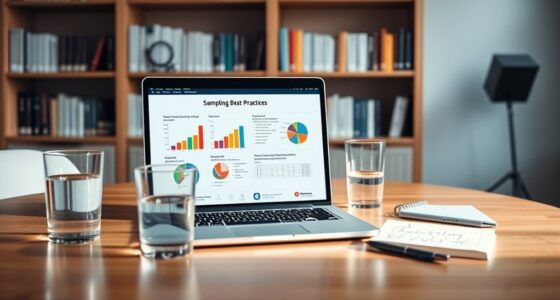
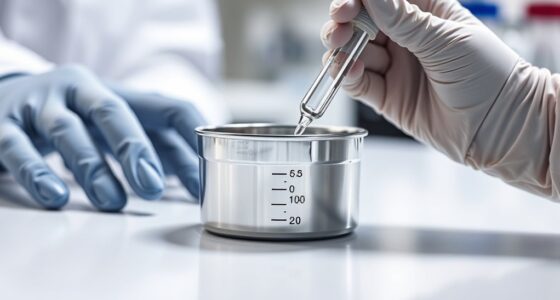
To guarantee your water testing is accurate and reliable, it’s important to use the right tools and resources. Start with quality testing kits designed for your specific needs—whether testing pH, contaminants, or other parameters. Data logging devices are essential for tracking changes over time, helping you identify trends and patterns. To get the most out of your testing, consider these resources:
Ensure accurate water testing with quality kits, data loggers, and proper guidance for reliable results.
- High-quality testing kits for quick and precise results
- Digital data loggers to automatically record measurements
- Instruction manuals and tutorials for proper testing procedures
- Online platforms or apps for analyzing and storing your data
- Understanding the parameters to ensure comprehensive water quality assessment
Using these tools ensures your water testing is effective, consistent, and informative, empowering you to make confident decisions about your water quality.
Frequently Asked Questions
How Often Should I Test My Water for Optimal Safety?
You should test your water at least once a year for maximum safety, but the water testing frequency depends on your local water source and potential contaminants. For well water, testing every three to six months is recommended, especially after heavy rains or environmental changes. Follow the best testing intervals suggested by local health authorities or water testing labs. Regular testing helps identify issues early and ensures your water remains safe to use.
Can Natural Water Sources Be Trusted Without Testing?
Trusting natural water sources is like relying on a fragile vessel—without testing, you risk contamination or imbalance. Spring water, often symbolized as nature’s gift, can contain unpredictable mineral content or pollutants. Even if it looks pure, unseen bacteria or chemicals could be present. Regular testing is essential to guarantee the water’s safety and mineral balance, just like checking the vessel’s integrity before trusting its contents.
What Are the Health Risks of Undetected Water Contaminants?
Undetected water contaminants pose serious health risks, including illnesses from bacteria, viruses, heavy metals, and chemicals. Exposure can cause symptoms like stomach cramps, diarrhea, skin rashes, or neurological issues. If you don’t regularly test your water, you might unknowingly consume dangerous contaminant types, risking long-term health effects. Protect yourself by understanding potential contaminants and staying vigilant with water quality testing to guarantee your water remains safe and clean.
Are DIY Water Testing Kits Reliable Enough?
Think of DIY water testing kits as a first brushstroke on a canvas—they give you a general idea but might miss finer details. While they’re affordable and convenient, DIY accuracy can vary, so they shouldn’t substitute professional testing for critical concerns. If cost is a factor, they’re a good starting point, but for complete peace of mind, consider professional lab tests to ensure your water’s safe and clean.
How Does Water Quality Vary Seasonally in My Area?
You’ll notice seasonal fluctuations in your water quality due to changing water temperatures and environmental conditions. In warmer months, water may promote algae growth or bacterial activity, impacting safety and taste. During colder months, lower temperatures can reduce microbial activity but may also cause mineral deposits or pipe issues. Regular testing helps you stay aware of these variations, ensuring your water remains safe and of good quality throughout the year.
Conclusion
Don’t let myths hold you back from ensuring safe water. Regular testing isn’t complicated, and visual clues can be misleading. By understanding and using simple home methods, you’ll gain confidence in your water quality. Remember, interpreting results correctly is key—seek help when needed. With the right tools and knowledge, you can confidently track your water’s health over time, making informed decisions that protect you and your loved ones.