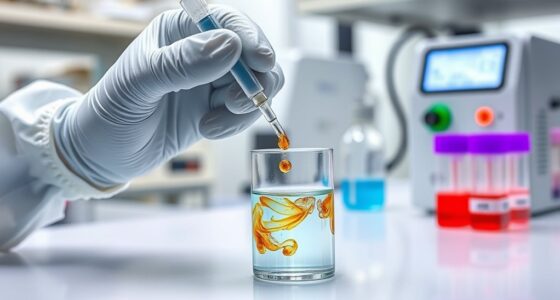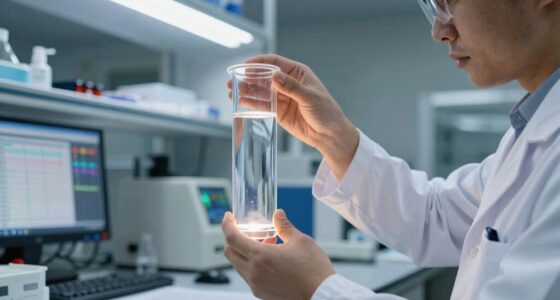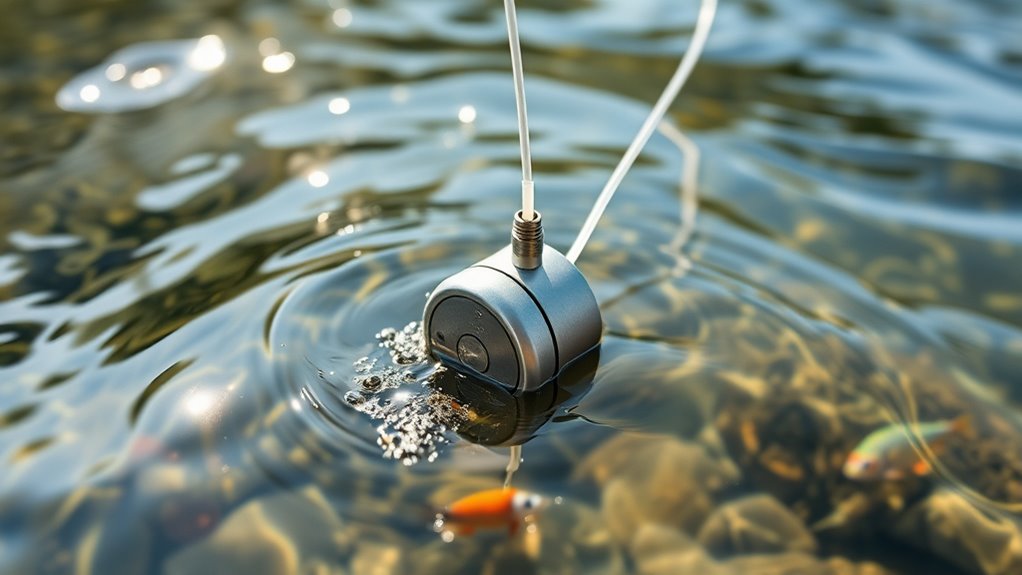

Continuous monitoring systems with real-time water quality sensors allow you to keep a constant watch on water safety, security, and efficiency. They provide timely data on parameters like pH, turbidity, and contaminants, helping you prevent pollution and respond quickly to issues. Regular calibration and reliable data transmission guarantee the system remains accurate and dependable, giving you confidence in your water management decisions. Keep exploring to uncover how proper system integration boosts operational effectiveness.
Key Takeaways
- Real-time water quality sensors provide continuous data to monitor safety, pollution levels, and environmental health effectively.
- Regular calibration ensures sensor accuracy, preventing false readings and enhancing system reliability.
- Secure data transmission protocols enable prompt, reliable transfer of water quality information to central monitoring systems.
- Proper integration of sensors and communication networks facilitates rapid response to water quality issues.
- Automated alerts and data analysis support proactive management and decision-making in water resource systems.
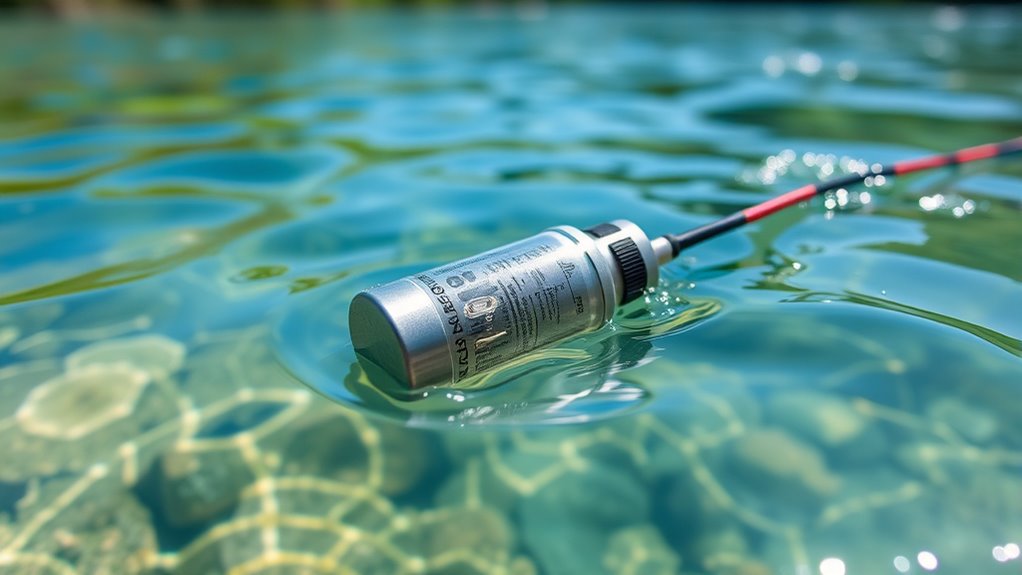
Have you ever wondered how industries guarantee safety, security, and efficiency around the clock? It’s all made possible through continuous monitoring systems, especially real-time water quality sensors. These sensors constantly keep an eye on water parameters, providing immediate data that helps prevent pollution, ensure safe drinking water, and maintain environmental health. But for these systems to work reliably, proper sensor calibration is crucial. You need to verify that sensors measure water quality accurately, which involves regular calibration to account for drift or environmental changes. When sensors are well-calibrated, they deliver precise readings that reflect the true state of the water, giving you confidence in the data you receive.
Reliable water monitoring depends on accurate sensor calibration and real-time data transmission.
Effective data transmission plays a critical role here. Once the sensors gather information, it must be swiftly and securely transmitted to a central system for analysis. This process involves robust communication networks—wireless or wired—that keep data flowing seamlessly. If data transmission falters or becomes delayed, it can compromise the system’s ability to respond promptly to water quality issues. That’s why modern continuous monitoring systems utilize advanced data transmission protocols, ensuring minimal latency and high dependability. These protocols often incorporate encryption and redundancies to protect sensitive information and prevent data loss.
As you rely on these sensors for real-time insights, it’s clear that maintaining their calibration and ensuring smooth data transmission are essential for the system’s success. When calibration is off, you risk receiving inaccurate readings, which could lead to missed contamination events or unnecessary alerts. Similarly, unreliable data transmission means delayed responses, risking environmental damage or public health hazards. To prevent these issues, operators regularly perform sensor calibration checks and update transmission hardware or software as needed.
Furthermore, integrating these sensors into a comprehensive monitoring network allows for continuous data collection and analysis. Automated alerts can be set up to notify operators immediately if water quality parameters drift outside safe ranges. This proactive approach helps you address problems swiftly, often before they escalate into crises. By combining precise sensor calibration with reliable data transmission, you ensure that your water quality monitoring system functions at its best, providing real-time insights that empower you to make informed decisions.
In the end, the seamless operation of continuous monitoring systems hinges on these fundamental components. When calibration guarantees measurement accuracy and data transmission guarantees real-time delivery, you create a resilient system capable of safeguarding water resources around the clock. This integration of technology not only enhances safety and efficiency but also fosters trust in the systems that protect public health and the environment. Additionally, understanding the importance of personality traits can improve team coordination and system management, ensuring continuous operation and quick troubleshooting when issues arise.
Frequently Asked Questions
What Are the Maintenance Requirements for Water Quality Sensors?
You need to regularly calibrate your water quality sensors to guarantee accurate readings, typically every few weeks or after any noticeable drift. Keep an eye on power management by checking batteries or power supplies, and replace or recharge them as needed. Clean the sensors periodically to prevent biofouling, and verify data accuracy through calibration checks. Proper maintenance guarantees reliable data and extends your sensor’s lifespan.
How Do Sensors Perform in Extreme Weather Conditions?
You might think extreme weather could hinder sensors, but with proper calibration and weatherproof enclosures, they thrive. When storms rage or heat intensifies, these sensors maintain accuracy by resisting water ingress and temperature fluctuations. Regular calibration guarantees reliable readings, even in harsh conditions. So, with robust design and upkeep, your water quality sensors perform effectively, providing real-time data regardless of weather extremes.
What Is the Typical Lifespan of Continuous Monitoring Sensors?
You can expect continuous monitoring sensors to last around 2 to 5 years, depending on factors like sensor calibration and durability. Regular calibration helps maintain accuracy, extending their lifespan. Environmental conditions, such as extreme weather, can impact durability, so choosing sensors designed for harsh conditions and performing routine checks guarantees they operate effectively longer. Proper maintenance and calibration are key to maximizing your sensor’s lifespan.
Can Sensors Detect All Types of Water Contaminants?
You might think sensors can detect all water contaminants, but that’s not true. They are designed to target specific pollutants, so calibration is vital for data accuracy. Different sensors have varying capabilities, and some contaminants may require specialized equipment. Regular calibration ensures your sensors remain accurate and reliable. Keep in mind, no single sensor can cover every contaminant, so a combination of sensors and testing methods offers the best water quality assessment.
How Secure Is Real-Time Data Transmission From Sensors?
Real-time data transmission from sensors can be quite secure if you implement strong cybersecurity measures. While vulnerabilities like hacking or data breaches exist, using robust data encryption protocols helps protect your information. Regular software updates and secure network practices further minimize cybersecurity vulnerabilities. So, with proper safeguards, you can confidently rely on real-time water quality data transmission without significant security concerns, ensuring accurate and safe monitoring.
Conclusion
By using real-time water quality sensors, you can detect contamination events nearly instantly, reducing health risks. Did you know that continuous monitoring systems can identify pollutants up to 60% faster than traditional methods? This rapid response helps you protect public health and the environment more effectively. Embracing these technology-driven solutions means you stay ahead of potential water issues, ensuring safer, cleaner water for everyone. Invest in continuous monitoring today for a smarter, more responsive approach.