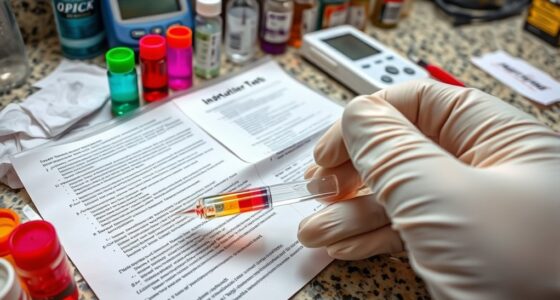

Iron testing is a smart way to uncover hidden deficiencies or excesses in your iron levels that might not show obvious symptoms. It measures markers like serum ferritin and transferrin saturation to reveal how your body stores and uses iron. Water quality and diet play a big role in accurate results, so considering these factors is important. Keep exploring to learn how to better understand and manage your iron health effectively.
Key Takeaways
- Iron testing measures markers like serum ferritin and transferrin saturation to detect hidden iron deficiencies or excesses.
- Water quality, especially contaminated or mineral-rich water, can skew iron test results and affect interpretation.
- Dietary intake of iron-rich foods and absorption issues influence blood iron levels and may mask deficiencies.
- Considering environmental factors, such as water source, helps identify hidden iron imbalances accurately.
- A comprehensive assessment combining blood tests, water quality, and diet provides the best approach to uncover hidden iron issues.
Have you ever wondered how doctors determine if you have enough iron in your blood? Iron testing is a vital tool that helps uncover hidden deficiencies or excesses, guiding treatment and lifestyle adjustments. One of the first things your doctor might consider is your water quality, especially if you rely on well water or live in an area with questionable water safety. Contaminated or mineral-rich water can influence your body’s iron levels, either by adding extra iron or by interfering with iron absorption. If your water contains high levels of iron, it might skew your blood test results, making it seem like you have more iron than you actually do. Conversely, poor water quality that lacks essential minerals can contribute to iron deficiency, especially if you’re not getting enough from your diet. This is why your doctor might ask about your water sources when evaluating your iron status, alongside other factors like your diet.
Speaking of diet, dietary iron plays a pivotal role in maintaining healthy blood iron levels. If you’re not consuming enough iron-rich foods—such as red meats, leafy greens, beans, or fortified cereals—you could be at risk for deficiency. Sometimes, even with a balanced diet, absorption issues can prevent your body from effectively utilizing dietary iron. During an iron test, your healthcare provider looks at various markers, including serum ferritin and transferrin saturation, to get a complete picture of your iron stores. These tests can reveal whether your body is storing enough iron or if it’s being depleted despite your efforts to eat well. If your diet is lacking, your provider might recommend increasing your intake of iron-rich foods or taking supplements.
Eating iron-rich foods or taking supplements supports healthy blood iron levels.
However, iron levels don’t tell the whole story on their own. Water quality can influence iron absorption and overall blood levels, making it a factor worth considering. For example, drinking water with high mineral content may contribute to elevated iron levels, but it might also interfere with how your body processes iron from food. On the other hand, contaminated or poor-quality water might lead to deficiencies or health complications that mask underlying iron issues. That’s why your doctor considers both your dietary habits and water sources when interpreting iron test results. They want to ensure that any abnormalities aren’t simply due to environmental factors or diet but genuinely reflect your body’s iron status. Additionally, understanding the role of water quality can help prevent misinterpretation of test results and guide appropriate intervention strategies.
In the end, iron testing isn’t just about numbers—it’s about understanding the bigger picture of your health. By paying attention to your water quality and diet, and working closely with your healthcare provider, you can catch “hidden” iron problems early. Proper testing and awareness allow for targeted interventions, helping you maintain excellent energy levels, immune function, and overall well-being.
Frequently Asked Questions
What Are the Common Symptoms of Iron Deficiency?
You might notice symptoms like fatigue, weakness, or pale skin, which are common signs of iron deficiency. Sometimes, symptoms overlap with other issues, making it tricky to identify. Iron absorption problems can worsen these symptoms, so paying attention is essential. If you experience persistent tiredness or dizziness, consider testing for iron deficiency to catch hidden issues early and improve your overall health.
How Often Should I Get My Iron Levels Checked?
You should get your iron levels checked at least once a year, or more often if you have symptoms of deficiency or risk factors like pregnancy or a vegetarian diet. Testing frequency depends on your health status and doctor’s advice. Regular iron level testing helps catch hidden deficiencies early, so stay proactive about scheduling these tests, especially if you experience fatigue, pale skin, or other related symptoms.
Can Diet Alone Correct Iron Deficiency?
Diet alone can sometimes correct iron deficiency if you make proper dietary adjustments by including iron-rich foods like red meat, leafy greens, and fortified cereals. However, in many cases, supplement considerations are necessary, especially if your deficiency is severe or absorption is poor. It is crucial to consult your healthcare provider to determine the right balance of dietary changes and supplements to effectively restore your iron levels.
Are There Risks Associated With Iron Supplementation?
Think of iron supplementation like filling a reservoir—too much can cause flooding. You risk iron overload and supplement risks if you take too much without proper guidance. Excess iron can damage organs and lead to health issues. Always check your iron levels before supplementing, and follow your healthcare provider’s advice to avoid the dangers of overdoing it. Balance is key to keeping your health safe.
How Do Different Testing Methods Compare in Accuracy?
You’ll find that laboratory techniques vary in testing accuracy for iron levels. Serum ferritin tests are reliable for evaluating iron stores, but they can be influenced by inflammation. Complete blood count (CBC) provides indirect clues but isn’t specific. Bone marrow analysis is the most accurate but invasive. Comparing these methods, serum ferritin offers a good balance of accuracy and practicality, helping you detect iron deficiency effectively.
Conclusion
Now that you know the trick to uncovering hidden iron, you hold the key to clearer health. Think of iron testing as shining a flashlight into a dark room, revealing secrets you couldn’t see before. With this knowledge, you can navigate your wellness journey with confidence, like a ship steering through fog toward calm waters. Keep this tool in your kit, and let it be the beacon that guides you to better health and vigor.