
If your water starts tasting or smelling strange, or appears cloudy or discolored, it’s a sign your carbon block may be saturated and needs replacing. A noticeable decrease in flow rate also indicates the filter is clogged and running out of capacity. Regularly monitoring these signs and replacing your cartridge every 6 to 12 months helps maintain water quality and system efficiency. Keep going to find out more about keeping your filter in top shape.
Key Takeaways
- Water tastes or smells off, indicating the carbon block’s saturation.
- Water appears cloudy or discolored, signaling reduced filtration effectiveness.
- Water flow significantly decreases, showing the filter may be clogged or exhausted.
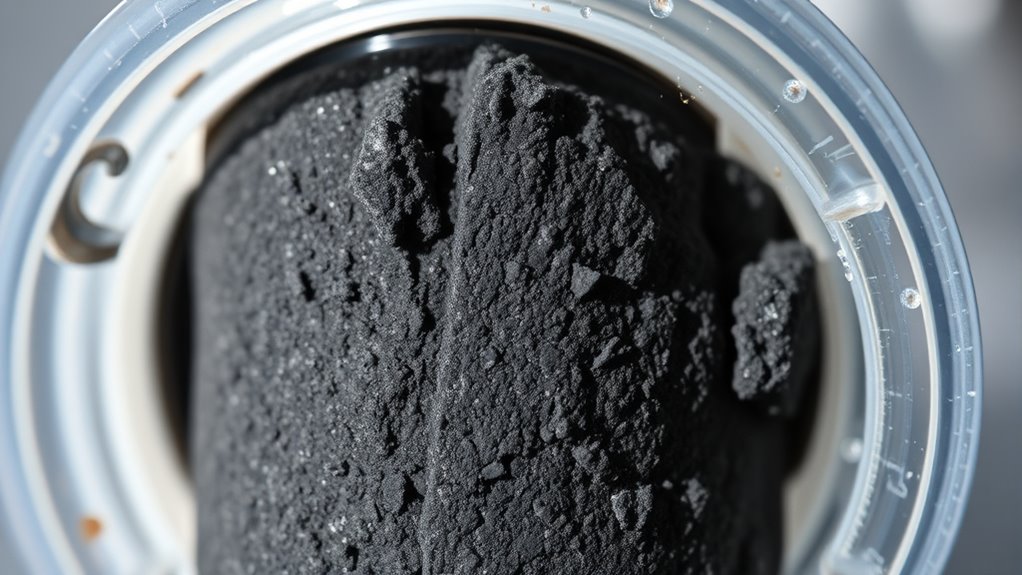
- Visible buildup or sediment suggests the carbon block needs replacement.
- Regularly scheduled changes (6-12 months) help prevent performance decline.

Replacing carbon blocks is a crucial maintenance task that guarantees your equipment runs efficiently and safely. When you maintain your filters properly, you extend the filter lifespan and ensure your water quality remains high. Over time, carbon blocks become less effective at removing contaminants, which can compromise the taste, clarity, and safety of your water supply. Recognizing the signs that it’s time to replace your carbon block cartridge helps you avoid issues like foul odors, discoloration, or sediment buildup, all of which indicate that your filter is no longer performing at its best.
One of the clearest signs that you need a new carbon block is a noticeable decline in water quality. If your water starts to taste strange, smell off, or looks cloudy, it’s likely because the carbon isn’t trapping impurities as it used to. Carbon blocks are designed to absorb chemicals like chlorine, volatile organic compounds (VOCs), and other contaminants, but their effectiveness diminishes as they become saturated. When this happens, your water quality suffers, and you risk consuming contaminants that could affect your health. Regularly monitoring your water’s appearance and taste provides an early warning that replacement is necessary.
Another key indicator is a reduced flow rate. If your water flow from the tap or filtration system slows down considerably, it could mean that the carbon block is clogged with debris and contaminants. This clogging not only hampers water flow but also shortens the filter lifespan. When the flow rate decreases, it often signifies that the filter is exhausted and needs replacing. Not doing so can cause strain on your system, leading to potential damage or decreased efficiency.
You should also pay attention to the maintenance schedule recommended by your filter manufacturer. Even if you don’t notice overt changes in water quality or flow rate, following these guidelines ensures your filter continues to perform effectively. Typically, carbon blocks need replacement every 6 to 12 months, depending on usage and water quality. If your water contains higher levels of impurities or you use your filter heavily, more frequent replacements might be necessary.
Staying informed about AI Security can help you understand how new technologies are being developed to monitor and improve water quality in real time. Replacing your carbon block at the right time helps you avoid the buildup of contaminants and maintains ideal water quality. It also ensures your system operates at peak efficiency, preventing unnecessary strain on other components. By staying alert to signs like a decline in water taste, smell, clarity, or flow rate, you can proactively replace your carbon block before problems escalate. This simple maintenance step not only prolongs your equipment’s lifespan but also guarantees you continue enjoying clean, fresh-tasting water every day.
Frequently Asked Questions
How Long Does a Typical Carbon Block Last?
A typical carbon block lasts about 6 to 12 months, depending on your filter’s lifespan and usage. To guarantee peak performance, you should perform regular carbon block maintenance and monitor water quality. If you notice a decline in water taste or flow rate, it’s a sign it’s time to replace your cartridge. Proper maintenance helps extend the filter’s life and keeps your water clean and safe.
Can I Clean and Reuse My Existing Carbon Block?
Think of your carbon block as a trusty shield; once it’s become worn and clogged, cleaning won’t restore its strength. You can’t truly extend its lifespan through cleaning, as filter maintenance only temporarily alleviates buildup. Reusing it risks contaminants bypassing your system. For ideal protection and consistent water quality, it’s best to replace your cartridge when its lifespan ends, ensuring your filter continues to perform effectively.
What Are the Environmental Impacts of Replacing Carbon Blocks?
Replacing carbon blocks impacts the environment, but you can minimize this by exploring recycling options. Proper disposal decreases waste and prevents harmful materials from entering landfills. Recycling carbon blocks offers environmental benefits by conserving resources and lowering pollution. You can check local recycling programs or specialized facilities to verify your used filters are processed responsibly. Making these choices helps protect the environment while maintaining clean, safe water for your home.
Are There Different Types of Carbon Blocks for Various Filters?
You might wonder if different carbon blocks exist for various filters. The answer is yes—filter compatibility depends on block materials, which vary to suit specific filtration needs. Some blocks are made from activated carbon, others from coconut shell, and some combine both. Choosing the right type ensures peak performance, so always check your filter’s compatibility before replacing the carbon block. This way, you maintain effective, safe water purification.
How Do I Dispose of Used Carbon Blocks Properly?
You should dispose of used carbon blocks through eco-friendly disposal methods. Check if your local recycling centers accept them, as some facilities offer recycling options for activated carbon filters. If recycling isn’t available, consider repurposing the carbon for gardening or air purification. Avoid throwing them in regular trash, since improper disposal can harm the environment. Always follow local regulations to ensure responsible disposal and help reduce waste.
Conclusion
So, next time your water tastes a little off, don’t ignore the signs—your carbon block might be begging for a break. It’s funny how we wait until things get noticeably worse before replacing something so simple. Remember, a fresh cartridge isn’t just about better water; it’s about avoiding the irony of realizing too late how much you missed the clarity. Stay ahead, swap early, and keep those taps happy—before the taste turns bitter.