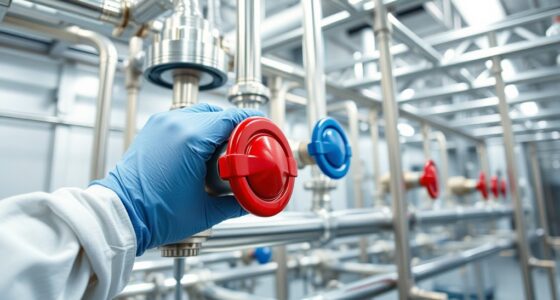
To check and adjust your filtration system’s water pressure, locate the pressure gauge on the filter tank or main line. Make certain the reading is within the ideal range of 8 to 12 psi—adjust if needed using the regulator or bypass valve. Make small changes, then wait for the system to stabilize. Keeping an eye on these pressure levels helps guarantee ideal performance. If you want to keep your system running smoothly, there’s more to learn about proper adjustments.

Get home appliances delivered free with Prime
- Fast, free delivery on millions of items
- Prime Video, Amazon Music and more included
- Member-only deals all year
Key Takeaways
- Locate the pressure gauge on your filter tank or main line to monitor system pressure accurately.
- Check that the pressure reading is within the recommended 8-12 psi range for optimal operation.
- Adjust the pressure regulator or bypass valve incrementally to increase or decrease water pressure as needed.
- Wait for the system to stabilize after each adjustment before rechecking the pressure gauge.
- Regularly monitor and maintain the pressure to ensure efficient filtration and prevent system damage.

Maintaining proper water pressure in your filtration system is essential for ensuring it operates efficiently and effectively. When your system’s pressure is too low or too high, it can lead to poor filtration, increased wear on components, and even system failure. To prevent these issues, you’ll need to regularly check and adjust the water pressure, starting with understanding how to interpret your pressure gauge. The pressure gauge provides a visual reading of the system’s current pressure, usually measured in pounds per square inch (psi). It’s typically located on the filter tank or the main line. When you check the gauge, look for a reading within the manufacturer’s recommended range, often between 8 to 12 psi for residential systems. If the pressure falls below this, it indicates your system isn’t filtering properly because water isn’t moving through it at the right flow rate. Conversely, if the pressure is too high, it can cause excessive strain on the filter and other components, risking damage and reducing the lifespan of your system.
Your flow rate, which describes how much water passes through the system per minute, is directly affected by pressure levels. A low flow rate often signals insufficient pressure, meaning your system isn’t circulating water as it should. This can be caused by clogged filters or low pressure settings. Conversely, a high flow rate combined with high pressure can stress your system, leading to leaks or mechanical failure. Monitoring these readings helps you identify when adjustments are necessary. Regular maintenance and understanding how to interpret these readings can help prolong the life of your system and ensure optimal performance.
To adjust the water pressure, start by locating the pressure regulator or bypass valve, which controls flow and pressure in the system. If the pressure gauge shows a reading below the recommended range, you might need to increase the pressure by adjusting the regulator—usually turning a screw or knob. Be cautious and make small adjustments, then wait a few minutes to see how the pressure stabilizes. If the pressure is too high, you’ll want to decrease it by adjusting the same regulator in the opposite direction. Always verify the new pressure reading on the gauge afterward, ensuring it falls within the ideal range. Remember, maintaining a steady flow rate and pressure ensures your filtration system works efficiently, extending its lifespan and improving water quality.
Regularly checking your pressure gauge and making small, precise adjustments keeps your system running smoothly. This proactive approach prevents problems before they escalate, saving you time and money in repairs and replacements. Your system’s efficiency depends on your vigilance—so keep an eye on that gauge and adjust as needed. Proper water pressure isn’t just about system longevity; it’s about ensuring you have clean, safe water whenever you need it. Staying informed about your system’s performance metrics can help you better manage its operation and avoid costly repairs.
water pressure gauge for filtration system
As an affiliate, we earn on qualifying purchases.
As an affiliate, we earn on qualifying purchases.
Frequently Asked Questions
How Often Should I Check Water Pressure in My Filtration System?
You should check your water pressure weekly to guarantee your filtration system runs smoothly. Regular maintenance schedules help prevent signs of pressure issues like reduced flow or strange noises. Keep an eye on the pressure gauge, and if it falls outside the recommended range, adjust it promptly. Consistent checks help you catch problems early, extend your system’s lifespan, and maintain ideal water quality.
Can High Water Pressure Damage My Filtration System?
High water pressure can indeed damage your filtration system, causing issues like water hammer and pipe strain. These problems lead to loud banging and potential pipe leaks, risking costly repairs. If you notice these signs or if your pressure is too high, it’s essential to lower it promptly. Ignoring it could compromise your system’s efficiency and longevity, so stay vigilant and keep your water pressure within safe limits.
What Tools Are Needed to Adjust Water Pressure?
You’ll need a pressure gauge to measure your water pressure accurately, ensuring proper calibration. A wrench or pliers helps you adjust the pressure regulator or valve, while a screwdriver may be necessary for fine-tuning. Remember to check your tools regularly for tool maintenance, so they stay in good condition. Using these tools correctly allows you to safely and effectively adjust your water pressure, preventing system damage and ensuring peak performance.
How Do I Know if My Pressure Gauge Is Accurate?
You can verify your pressure gauge’s accuracy by comparing it with a calibrated gauge or testing it with a known pressure source. Regular pressure gauge calibration ensures reliable readings, preventing water pressure myths from causing confusion. If your gauge shows inconsistent readings, consider recalibrating or replacing it. Accurate pressure measurements help maintain your filtration system’s efficiency and longevity, so don’t overlook checking its precision regularly.
Should I Replace My Pressure Regulator Regularly?
Think of your pressure regulator as the heartbeat of your water system—regular maintenance keeps it healthy. You should replace it if it shows signs of wear or inconsistent water pressure. For best performance, perform water pressure calibration periodically. Regular pressure regulator maintenance ensures it functions smoothly, preventing surprises like leaks or pressure drops. Keeping it in good shape is like tuning an instrument—your system will sing with clarity and efficiency.
water pressure regulator for home filter
As an affiliate, we earn on qualifying purchases.
As an affiliate, we earn on qualifying purchases.
Conclusion
Now that you know how to check and adjust your water pressure, the real test begins. Will your system perform flawlessly, or will hidden issues arise when you least expect it? Don’t leave it to chance—stay vigilant and guarantee everything’s set perfectly. One small adjustment could make all the difference, but the true outcome depends on your next move. Are you ready to take control and protect your home’s water quality? The choice is yours.
bypass valve for water filtration system
As an affiliate, we earn on qualifying purchases.
As an affiliate, we earn on qualifying purchases.
As an affiliate, we earn on qualifying purchases.
NFL season / tailgating Picks
team gear
As an affiliate, we earn on qualifying purchases.