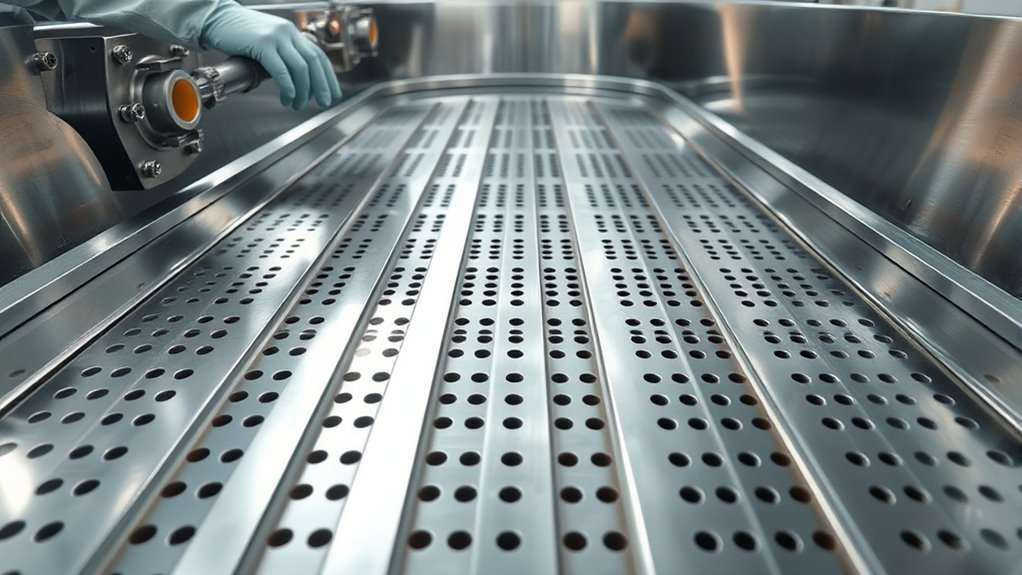

To prevent channeling in media tanks, you should guarantee uniform media distribution and bed leveling during installation, avoid rushing media loading, and regularly monitor pressure and flow patterns for early signs. Use proper backwashing and cleaning techniques to keep media beds uniform and free of debris. Choosing the right media type and maintaining consistent bed depth also help. If you stay vigilant, you’ll find effective strategies to keep flow even and filtration efficient, with more tips ahead.
Open a free Amazon Business account
Business pricing, bulk buying and tax-exempt orders.
As an affiliate, we earn on qualifying purchases.
Key Takeaways
- Do ensure even media distribution during loading to prevent voids and flow shortcuts.
- Not do rush the media loading process, which can cause uneven compaction and channel formation.
- Do regularly inspect and clean media beds to maintain uniformity and prevent clogging.
- Not do ignore pressure and flow pattern monitoring, as early signs help prevent channeling.
- Do select appropriate media types and support layers to promote even flow and reduce bypass risks.
What Causes Channeling in Media Tanks?

Channeling in media tanks occurs when the fluid flows through narrow, preferential paths rather than evenly across the entire media bed. This uneven flow leads to media clogging in some areas, while others remain underutilized. When media clogging happens, it causes flow disruption, reducing the tank’s efficiency and potentially damaging equipment. You might notice that water isn’t being filtered properly or that pressure drops suddenly. These issues often stem from improper media distribution, which encourages flow paths to form instead of spreading out uniformly. Over time, these channels deepen, making flow even more uneven. Understanding that media clogging triggers flow disruption helps you identify early signs of channeling, so you can address problems before they become severe. Access to resources and tools can assist in diagnosing and preventing this issue effectively.
How Can Proper Media Distribution Prevent Channeling?

Proper media distribution helps you achieve a uniform spread, reducing the risk of channels forming. Using correct loading techniques guarantees the media flows evenly and doesn’t create voids or pathways. By focusing on these methods, you can effectively prevent channeling and improve tank performance.
Ensure Uniform Media Spread
When media is distributed evenly throughout a tank, it creates a consistent barrier that directs flow paths and prevents preferential channels from forming. Proper media bed leveling ensures a uniform surface, promoting balanced flow distribution across the entire tank. This prevents areas of stagnation and reduces the risk of channeling. To visualize:
- Imagine a smooth, level surface that guides water evenly
- Picture flow seamlessly spreading through every part of the media bed
- Envision no gaps or thin spots that could cause flow shortcuts
Focusing on flow distribution helps maintain consistent contact between water and media, improving filtration efficiency. By ensuring your media is evenly spread and level, you establish a stable environment where water moves uniformly, preventing channel formation and protecting your tank’s overall health.
Additionally, regular maintenance and monitoring of media placement enhance overall performance.
Use Proper Loading Techniques
Applying media evenly during installation is essential to prevent channeling. Proper media loading ensures that the media is distributed uniformly across the tank bed, promoting bed uniformity. When you load the media correctly, you reduce the risk of voids and uneven gaps that can cause flow channels. Start by adding media in layers, spreading it carefully to avoid compacting or creating uneven areas. Avoid dumping large amounts at once; instead, distribute it gradually. Maintain consistent media depth throughout the tank to promote even flow paths. Proper loading techniques help maintain bed uniformity, which encourages even water flow and reduces channeling risks. Using proper media distribution techniques during installation is vital for achieving optimal filtration efficiency. By paying attention to media distribution during installation, you set a solid foundation for efficient filtration and long-term tank performance.
Why Is Consistent Media Bed Depth Important?
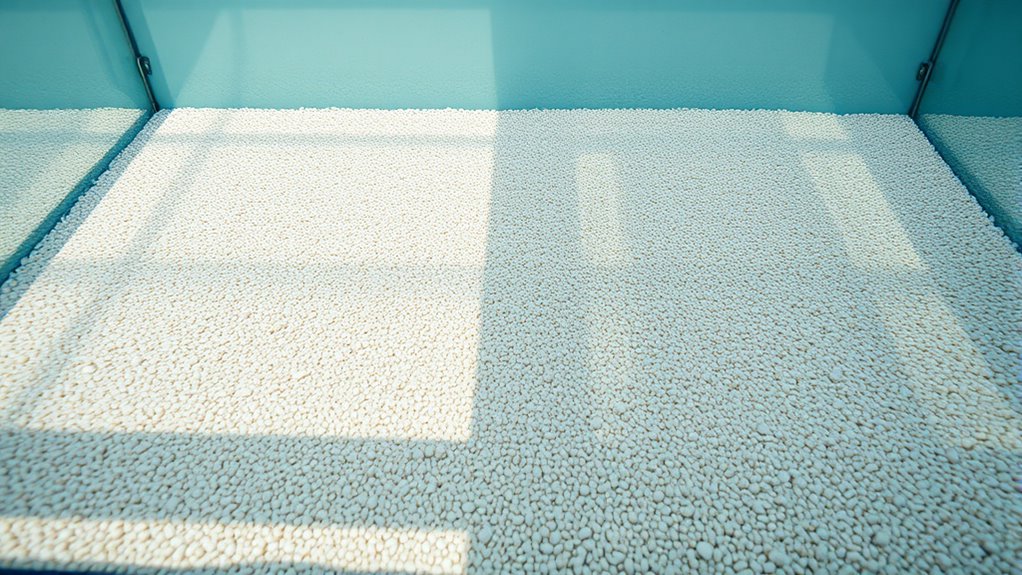
Maintaining a consistent media bed depth is essential for ensuring even flow distribution and ideal contact between the media and water. When your media bed is uniform, you promote flow uniformity, preventing areas of stagnation or high velocity that cause channeling. Uneven media depths can create shortcuts for water to pass through, reducing filtration efficiency. Picture a well-maintained bed as a smooth, level surface that guides water evenly across the entire tank. A protective styling benefits of a uniform media bed is that it minimizes the risk of media disturbance or displacement over time, maintaining optimal filtration conditions. This media bed consistency helps you avoid dead zones and ensures your filtration system operates at peak performance, making sure water flows smoothly and thoroughly through all media layers.
What Role Does Media Type Play in Channeling Prevention?
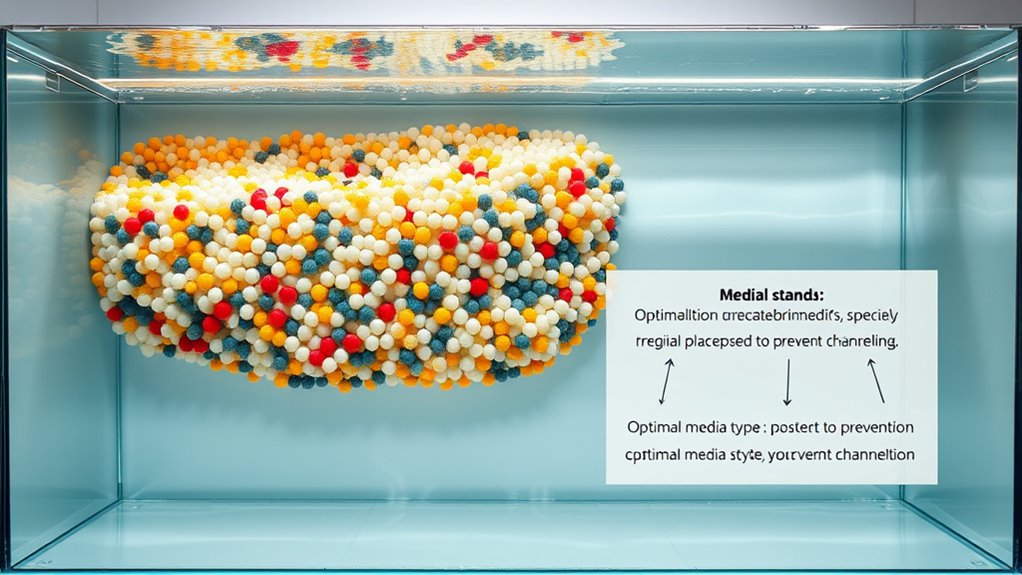
The type of media you choose directly impacts how well your filtration system prevents channeling. Media compatibility is vital because different media materials vary in structure and flow characteristics. For example, coarse media like large gravel can create uneven flow paths, increasing the risk of channeling. Conversely, media density influences how well water filters through; denser media provides more uniform flow and better contact time, reducing the chances of water bypassing parts of the bed. Selecting the right media type ensures proper distribution and minimizes voids or gaps where channels can form. Proper media selection is a fundamental step in maintaining efficient filtration and consistent water quality. Additionally, understanding media flow dynamics helps in designing systems that minimize channeling by promoting even water distribution throughout the filter bed.
How Does Proper Backwashing Reduce Channeling Risks?

Proper backwashing helps remove debris blockages that can cause uneven flow. It also restores media uniformity, ensuring water flows smoothly through the tank. By doing so, it prevents flow bypasses that increase the risk of channeling.
Removes Debris Blockages
How does proper backwashing help prevent channeling in media tanks? It ensures debris removal, keeping the media bed clear of obstructions that can cause uneven flow. Regular backwashing flushes out accumulated dirt, leaves, and particles that may clog the system and create flow paths that lead to channeling. By preventing these blockages, you promote uniform media distribution and ideal filtration. Imagine:
- Water flowing smoothly through a clean, debris-free bed
- No buildup of dirt that creates shortcuts or bypasses
- Consistent filtration performance without dead zones or channels
This process is essential for clog prevention, maintaining the tank’s efficiency, and extending media life. Proper backwashing removes debris blockages, reducing the risk of channeling and ensuring the media functions as intended. Additionally, maintaining proper media bed conditions helps sustain optimal filtration performance over time.
Restores Media Uniformity
Regular backwashing helps restore media uniformity by evenly redistributing particles and removing accumulated debris. This process prevents uneven media layering, which can lead to channeling. Proper backwashing maintains media compatibility, guaranteeing that the media stays in excellent condition for filtration. Additionally, it supports the tank design by promoting uniform flow paths, reducing the risk of flow bypasses and channel formation. When you backwash correctly, you help keep the media bed consistently packed, avoiding pockets where water might bypass the media altogether. This uniformity is vital for efficient filtration and prolongs media lifespan. By regularly restoring media uniformity, you guarantee your tank operates effectively, reducing the likelihood of flow irregularities and maintaining steady, reliable water treatment.
Prevents Flow Bypasses
When backwashing is done correctly, it effectively prevents flow bypasses that can lead to channeling. Proper backwashing ensures media flow remains even throughout the tank, avoiding areas where water might bypass the media entirely. This uniform flow helps dislodge trapped debris and prevents channels from forming. Visualize the process as a thorough rinse that:
- Flows evenly through the media bed, washing away blockages
- Clears out dead zones where flow stagnates
- Restores media contact with water, maintaining ideal filtration
- Top mattress toppers can also be used to improve support and longevity of the media bed, further reducing the risk of channeling.
What Are Common Mistakes to Avoid During Media Loading?
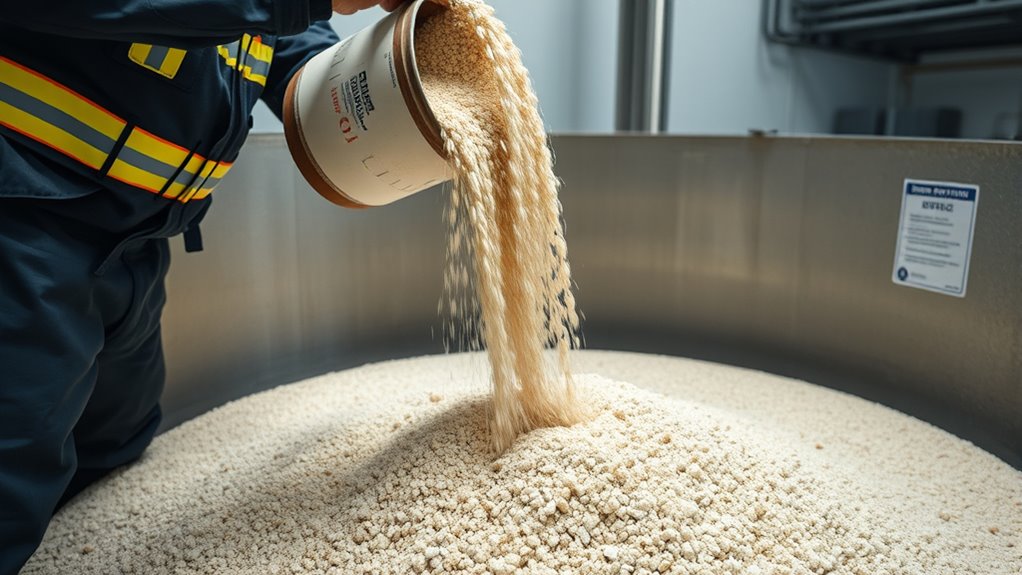
Avoiding common mistakes during media loading is essential for ensuring even distribution and preventing channeling in media tanks. One mistake is rushing the process, which can cause uneven media bed compaction and create voids that lead to flow bypasses. Another error is ignoring chemical compatibility; using media that isn’t compatible with your system can cause degradation or clumping, disrupting flow patterns. Overloading the tank or failing to distribute media evenly can also result in uneven packing, increasing the risk of channeling. Additionally, neglecting proper cleaning before loading can introduce contaminants that affect media performance. Always ensure media is loaded gradually, evenly distributed, and compatible with your system’s chemistry. Proper media placement also involves understanding sound healing science, as specific frequencies can influence flow and cellular health within the system. These steps help promote uniform flow and reduce the chances of channel formation.
How Can Regular Monitoring Detect Early Signs of Channeling?

Monitoring media tanks consistently allows you to catch early signs of channeling before it becomes a major problem. Regular checks of sensor calibration ensure that your measurements are accurate, revealing subtle changes in flow rate that may indicate developing channels. By observing variations in flow rate, you can detect uneven media movement early on. For example, you might notice:
- Sudden drops or spikes in flow that suggest media isn’t evenly distributed
- Inconsistent sensor readings hinting at blocked or bypassed areas
- Changes in pressure or flow patterns indicating the formation of channels
- Implementing vetted safety protocols and best practices further supports early detection efforts.
These signs help you intervene early, preventing further damage. Consistent monitoring guarantees you’re always aware of your media bed’s condition, enabling proactive adjustments and maintaining optimal tank performance.
What Maintenance Practices Keep Media Beds Uniform?
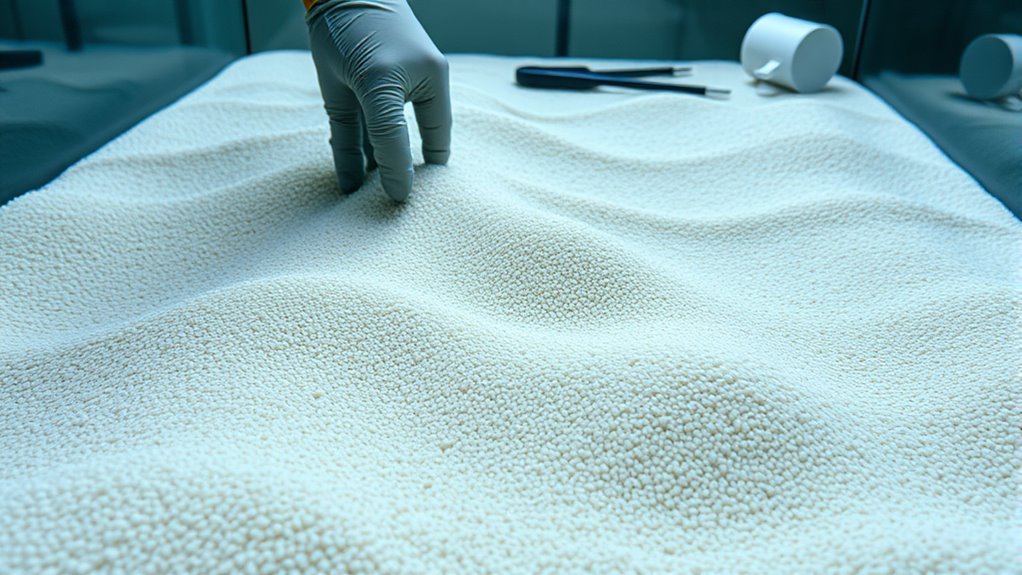
Regularly performing maintenance on your media bed is essential to keep it uniform and functioning properly. Ensuring proper media bed aeration promotes even flow and prevents channeling, which can cause uneven media distribution. Regularly inspect and clean the media to remove debris that may block flow paths. Proper chemical dosing helps maintain the biological balance, preventing the buildup of unwanted residues that can cause uneven media settling. Adjust flow rates as needed to avoid compacting media in certain areas. Flushing or gently agitating the media periodically can also help restore uniformity. Consistent maintenance of media beds minimizes dead zones and promotes even biofilm development, ultimately reducing the risk of channeling and improving overall system efficiency.
When Should You Consider Media Replacement or Replenishment?
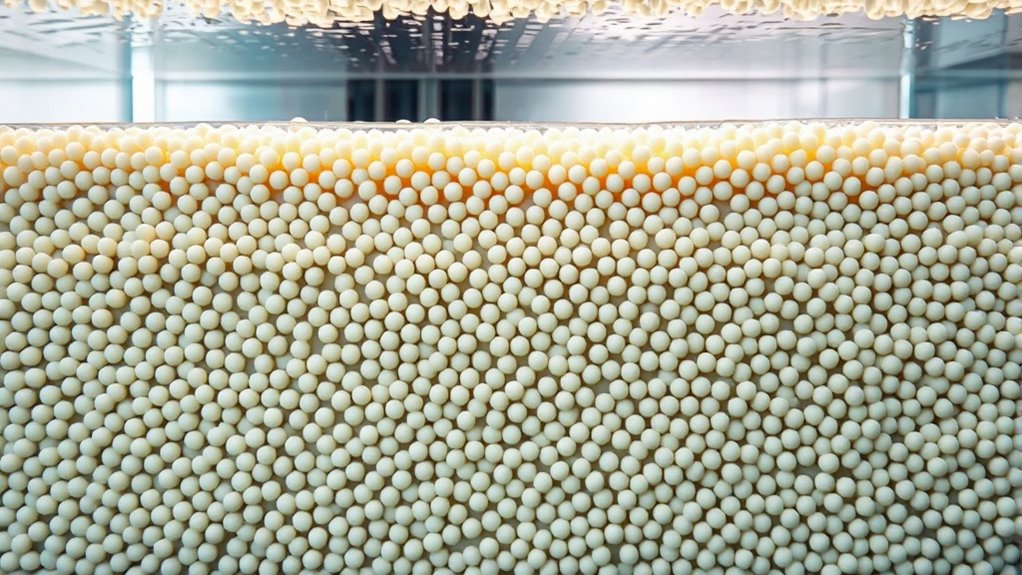
You should consider replacing or replenishing media when you notice a decline in system performance, such as reduced flow rates or increased clogging. This indicates your media bed may be exhausted or compacted, impairing filtration efficiency. Look for signs like:
- Thick buildup blocking flow paths
- Frequent backwashing or cleaning
- Decreased water clarity over time
In these cases, performing media replacement restores optimal filtration, preventing channeling. Alternatively, media replenishment can extend media life when only part of the media is worn out. Regularly assess your media bed’s condition and schedule media replacement or replenishment accordingly. This proactive approach helps maintain consistent performance, prevents channeling, and prolongs your media bed’s effectiveness.
Frequently Asked Questions
Can Specific Media Shapes Help Prevent Channeling?
Yes, specific media shapes can help prevent channeling by optimizing media shape and enhancing flow distribution. When you choose the right media shape, you create a more uniform flow path, reducing dead zones and avoiding preferential channels. Media shape optimization guarantees that the flow remains evenly distributed throughout the tank, which minimizes channeling, improves filtration efficiency, and extends media lifespan. Proper media design is key for effective tank operation.
How Does Media Particle Size Distribution Influence Channeling?
You should understand that media particle size distribution affects channeling because uniformity promotes consistent flow. When particles vary greatly in size, it causes uneven packing, leading to poor flow distribution and potential channeling. To minimize this, select media with a narrow particle size range, ensuring better media particle uniformity. This helps maintain steady flow, reduces dead zones, and prevents channels from forming, ultimately improving tank efficiency.
Are There Chemical Additives That Reduce Channeling in Media Beds?
Yes, chemical inhibitors and flow modifiers can help reduce channeling in media beds. These additives improve flow distribution by decreasing media compaction and promoting even water movement. Some chemical inhibitors prevent particle clumping, while flow modifiers alter flow patterns for better uniformity. You might worry about chemical compatibility, but when properly selected, these additives enhance system performance without damaging your media or increasing maintenance needs.
What Are the Signs of Uneven Flow Patterns Indicating Channeling?
You’ll notice signs of uneven flow patterns, like flow imbalance and pressure fluctuations, indicating channeling. These issues cause some areas to receive less media contact, reducing efficiency. You might see inconsistent media movement or areas where flow seems restricted. If you observe these signs, it’s a clear indicator that channeling is happening, and you should take steps to correct flow distribution before it worsens.
How Does Flow Rate Adjustment Impact Channel Formation?
Ever wondered how flow rate adjustments affect channel formation? When you tweak the flow rate, you directly influence flow distribution within the tank. Increasing it can cause uneven flow, promoting channeling, while decreasing it helps maintain uniform flow, preventing channels from forming. Properly managing flow rate ensures even media contact, reducing the risk of channeling. Do you regularly monitor and adjust your flow rate for ideal media tank performance?
Conclusion
Think of your media tank as a garden that needs careful tending. When you prevent channeling, you’re nurturing even growth and healthy flow. By staying vigilant and attentive to proper distribution, bed depth, and regular maintenance, you’re cultivating a resilient system that keeps impurities at bay. Remember, neglect is like weeds—unchecked, it stifles progress. With consistent care, your media bed will flourish, ensuring clear, pure water flows like a well-tended stream.
NFL season / tailgating Picks
team gear
As an affiliate, we earn on qualifying purchases.