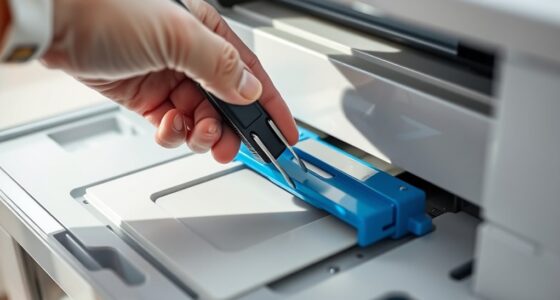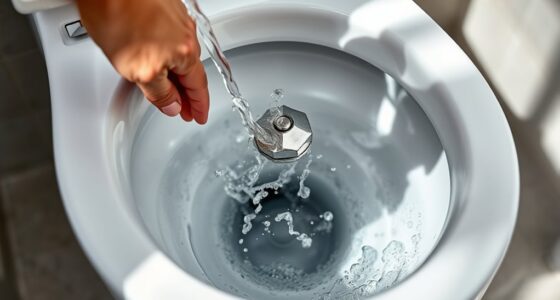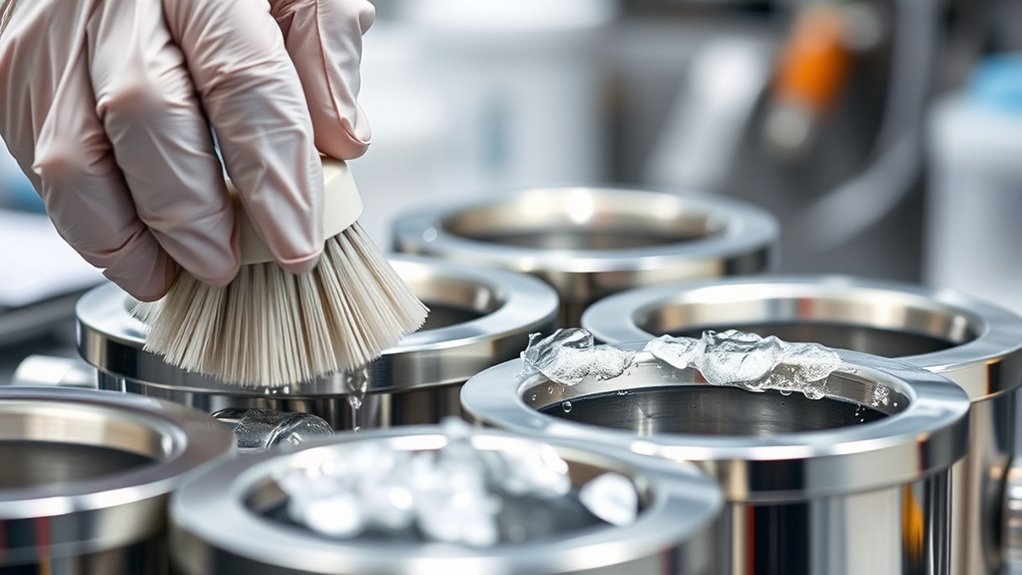

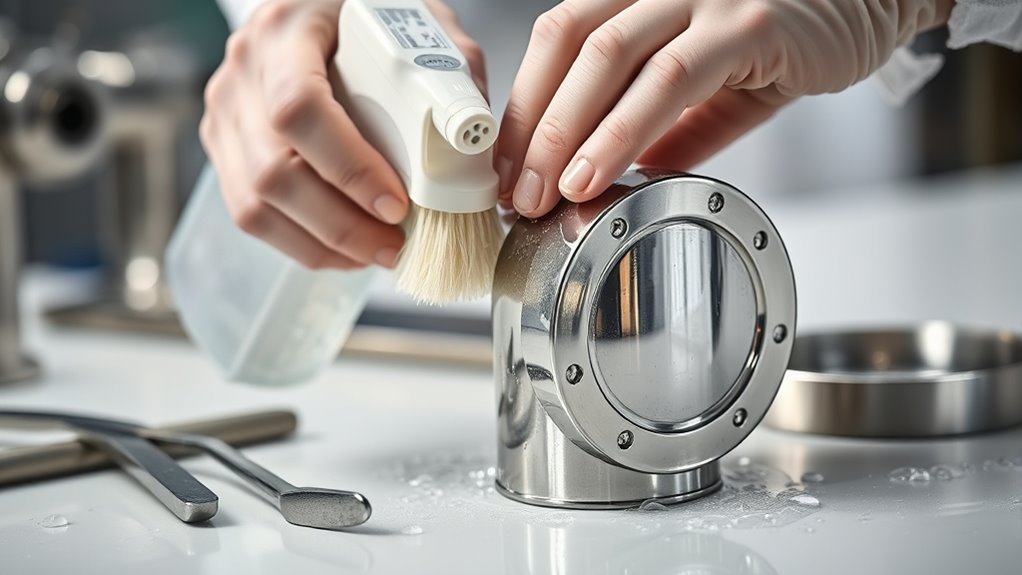
To avoid bacterial growth in your filter housings, regularly clean and sanitize them using water and a mild cleaner. Turn off your system, remove the housing, and inspect for buildup or slimy residues. Scrub with a soft brush, then rinse thoroughly. To sanitize, fill the housing with a diluted bleach solution or commercial sanitizer, let it sit for 10-15 minutes, and rinse well. Proper maintenance keeps your water safe; discover how to do it effectively.
Key Takeaways
- Turn off the system, release pressure, and remove the filter housing before cleaning.
- Use a mild cleaner and scrub interior surfaces to remove buildup, then rinse thoroughly.
- Sanitize with a diluted bleach solution or approved sanitizer, letting it sit for 10-15 minutes.
- Rinse multiple times to ensure no residual chemicals remain, preventing water contamination.
- Regularly inspect, clean, and replace filters to maintain water quality and prevent bacterial growth.
Regularly cleaning and sanitizing your filter housings is crucial to maintain water quality and prevent contamination. Over time, debris, mineral deposits, and bacteria can accumulate inside the housings, compromising the effectiveness of your filtration system. If you neglect this routine, you risk bacterial growth that can lead to foul odors, discoloration, and health issues. To keep your system functioning at its best, you need to perform regular filter replacement alongside thorough cleaning of the housings. Fresh filters ensure dirt, sediment, and microbial contaminants are effectively removed, while clean housings prevent bacteria from lingering and multiplying.
Regular cleaning and sanitizing of filter housings prevent bacterial growth and maintain water quality.
When it’s time to replace your filters, consider whether the housings are also due for a deep clean. A new filter alone isn’t enough if the housing remains dirty or contaminated. Bacteria can cling to the interior surfaces, and if left unchecked, they can re-contaminate the water passing through. Before replacing your filter, turn off your system and release any pressure. Remove the housing carefully and examine the interior. If you notice buildup, discoloration, or slimy residues, it’s a sign that cleaning is overdue. Use a mixture of water and a mild, non-abrasive cleaner to scrub the inside thoroughly, ensuring all deposits are removed. Rinse the housing well to eliminate any cleaning agents before reinstalling the new filter. Incorporating proper disinfection techniques is essential for comprehensive sanitization.
Sanitizing your filter housing is equally important. After cleaning, you should disinfect the interior to eliminate lingering bacteria. A solution of diluted bleach or a commercial sanitizer designed for water systems works well. Fill the housing with the sanitizing solution and let it sit for about 10-15 minutes. This process kills bacteria and prevents their regrowth. Make sure to rinse the housing multiple times with clean water afterward to remove any residual sanitizer, as leftover chemicals can affect water taste and safety.
Consistent maintenance not only protects water quality but also extends the lifespan of your filtration system. Each step—filter replacement, cleaning, and sanitizing—plays a crucial role in ensuring your water remains safe and clear. By adhering to these practices regularly, you reduce the risk of bacterial contamination and keep your system operating at peak efficiency. Remember, neglecting this routine can lead to costly repairs, reduced water flow, and compromised health. Make it a habit to inspect your filter housings periodically, clean and sanitize them thoroughly, and replace filters as recommended. Your water’s quality and your peace of mind depend on it.
Frequently Asked Questions
How Often Should Filter Housings Be Inspected Visually?
You should conduct a visual inspection of your filter housings at least once a month. During this inspection, look for signs of housing deterioration, such as cracks, leaks, or corrosion. Regularly checking guarantees you catch potential issues early, preventing bacterial growth and system failures. If your water quality or usage is high, consider increasing the inspection frequency to every two weeks for ideal safety and performance.
Can Homemade Cleaning Solutions Be Effective for Filter Housings?
Yes, DIY cleaning with natural disinfectants can be effective for filter housings if done correctly. You can use solutions like vinegar or baking soda to clean and disinfect, ensuring you thoroughly scrub all surfaces and rinse well. However, make sure your homemade solutions are strong enough to kill bacteria and that you follow proper procedures. Regular inspections and cleaning with natural disinfectants help prevent bacterial growth and maintain filter efficiency.
What Are the Signs of Bacterial Contamination in Filter Housings?
You’ll notice bacterial contamination in filter housings when biofilm buildup appears like a slimy, stubborn film clinging to surfaces. Unpleasant odors wafting from the housing are another red flag, signaling unseen microbial activity. If your filters seem to clog faster or water looks cloudy despite recent cleaning, bacteria may be lurking. Regular inspections and thorough cleaning help prevent these warning signs from turning into bigger health risks.
Are There Specific Disinfectants Recommended for Different Filter Materials?
You should choose disinfectants based on their compatibility with your filter material, guaranteeing they won’t cause damage or degrade performance. Always verify disinfectant compatibility before use, as some chemicals can harm certain filter materials like cellulose or synthetic fibers. Prioritize filter material safety by selecting approved disinfectants that effectively eliminate bacteria without compromising filter integrity. This careful approach helps maintain filter longevity and ensures your system stays hygienic.
How Does Temperature Affect the Cleaning and Sanitizing Process?
Oh, the thrill of temperature effects—because who doesn’t love a good science lesson? Higher temperatures boost cleaning efficacy, making bacteria pack their bags faster, while lower temps slow down the process, giving germs extra time to party. When sanitizing filter housings, you want to crank up the heat (within safe limits) to make sure bacteria are thoroughly eliminated. So, yes, temperature really does make or break your cleaning game!
Conclusion
Regularly clean and sanitize your filter housings to prevent bacterial growth. Neglecting this step can lead to contamination, impacting your health and water quality. Did you know that studies show up to 60% of household water filters harbor bacteria if not properly maintained? By staying diligent with cleaning routines, you guarantee safe, clean water for you and your family. Don’t wait—make cleaning your filter housings a priority to keep bacteria at bay and maintain ideal water quality.