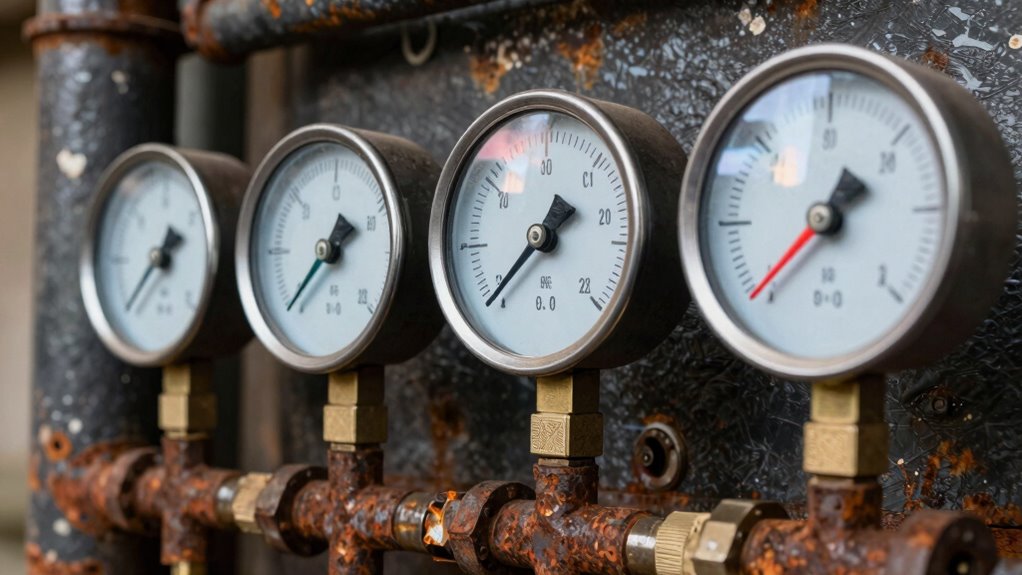

Pressure gauges turn guesswork into diagnostics by providing real-time, accurate pressure readings. When you regularly calibrate and maintain them, you prevent errors and get precise data to identify potential problems early. They help you interpret system conditions, so you can troubleshoot effectively and make informed decisions. Proper use and care guarantee reliable diagnostics, reducing risks and downtime. Keep going to discover how proper gauge management can keep your systems running smoothly and safely.

Get home appliances delivered free — and shop member deals
- Fast, free delivery on millions of items
- Access to Prime Big Deal Days deals on October 6–7
- Prime Video, Amazon Music and more included
Key Takeaways
- Provide real-time, accurate pressure readings to identify system issues early.
- Convert raw measurement data into meaningful diagnostics for informed decision-making.
- Regular calibration ensures gauge readings are precise, reducing guesswork.
- Routine inspection and maintenance prevent errors caused by wear or environmental factors.
- Reliable pressure data supports proactive troubleshooting and safe system operation.
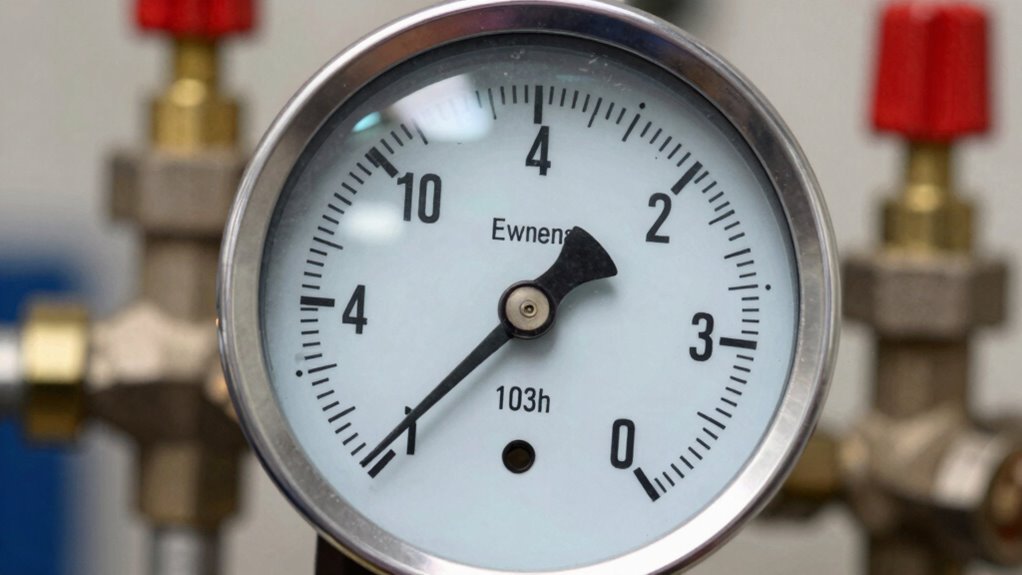
Pressure gauges are essential tools for monitoring and maintaining the safe operation of various systems, from industrial machinery to household appliances. Their primary role is to provide real-time readings of pressure levels, helping you identify potential issues before they escalate. But the true power of a pressure gauge doesn’t just lie in its ability to display numbers — it’s in how you interpret and maintain those readings to turn guesswork into accurate diagnostics. Achieving this starts with understanding calibration accuracy. Over time, pressure gauges can drift from their original calibration, leading to inaccurate readings that might cause you to overlook critical problems or, conversely, chase false alarms. Regular calibration ensures that your gauge’s measurements remain precise, giving you confidence that what you see reflects the actual pressure within your system. Proper calibration procedures involve comparing the gauge’s readings against a known standard and making necessary adjustments, which can often be performed on-site or through professional calibration services. By maintaining calibration accuracy, you prevent errors that could compromise safety or lead to unnecessary equipment downtime. Additionally, understanding the importance of calibration standards helps ensure that your maintenance practices align with industry best practices for accuracy and reliability. Routine maintenance procedures are equally vital; inspecting your gauges regularly helps identify signs of wear, damage, or corrosion that might impair their accuracy or functionality. For example, if you notice a sluggish needle, leaks around the connection points, or physical damage to the gauge housing, it’s time to replace or repair the device. Maintenance procedures also include cleaning the gauge to prevent dirt, dust, or debris from affecting its operation. When you keep your gauges in peak condition, you’re better equipped to interpret their readings correctly, which transforms raw data into meaningful diagnostics. Recognizing the impact of environmental factors on gauge performance can also help you take preventive measures to extend their service life. Understanding how temperature, humidity, and vibration affect gauge accuracy allows for better planning of gauge placement and protection strategies. It is also beneficial to consider the effects of aging on gauge components, as degradation over time may necessitate more frequent inspections or replacements. You can then make informed decisions, such as adjusting system pressures, scheduling repairs, or confirming safety parameters. Incorporating calibration accuracy and diligent maintenance into your routine ensures your pressure gauges reliably provide accurate data. This reliability is what turns basic pressure readings into actionable diagnostics, enabling you to troubleshoot issues effectively and keep your systems running smoothly. When you understand the importance of these practices, you’re not just reacting to problems—you’re proactively preventing them, saving time and resources in the process. In the end, calibration accuracy and upkeep make your pressure gauges invaluable diagnostic tools, providing clarity amid complex systems and giving you the confidence to operate safely and efficiently.
digital pressure gauge for industrial use
As an affiliate, we earn on qualifying purchases.
As an affiliate, we earn on qualifying purchases.
Frequently Asked Questions
How Often Should Pressure Gauges Be Calibrated for Accuracy?
You should calibrate pressure gauges regularly, typically every 6 to 12 months, to maintain measurement precision. Calibration intervals depend on the gauge’s usage, environment, and manufacturer recommendations. If you notice inaccuracies or the gauge operates in a harsh setting, consider more frequent calibrations. Regular calibration guarantees your pressure readings remain accurate, reducing guesswork and enhancing diagnostics, ultimately helping you make informed decisions and maintain safety and efficiency.
What Are Common Causes of Pressure Gauge Failure?
Pressure gauge failure often stems from environmental impacts like corrosion, vibration, or extreme temperatures, which act like relentless storms battering a ship. These conditions degrade components over time. If you neglect calibration frequency, you risk unseen errors compounding. Regular calibration acts as your lighthouse, guiding accurate readings and preventing failures. By understanding these factors, you protect your gauge from the hidden storms that threaten precision and reliability.
Can Pressure Gauges Measure Both Liquids and Gases?
Yes, pressure gauges can measure both liquids and gases, but their effectiveness depends on fluid compatibility and measurement precision. You need to choose gauges designed for specific fluids to prevent damage and guarantee accurate readings. For gases, select gauges with appropriate materials and calibration. By matching the gauge to the fluid type, you improve measurement precision, turning your pressure readings into reliable diagnostics instead of guesswork.
How Do Temperature Changes Affect Pressure Gauge Readings?
Temperature changes can markedly impact pressure gauge readings due to thermal expansion of the gauge components and the fluid being measured. As temperatures rise, materials expand, potentially causing higher readings, while cooler temperatures may lead to lower readings. These effects pose calibration challenges, making it vital to regularly calibrate gauges under specific operating conditions. You should consider temperature compensation or use gauges designed for wide temperature ranges to guarantee accurate measurements.
Are Digital Pressure Gauges More Reliable Than Analog Ones?
Digital pressure gauges are generally more reliable than analog ones because of their superior digital accuracy, providing precise readings that reduce errors. However, analog gauges excel in durability, often lasting longer in harsh environments due to their simple design and fewer electronic components. If you need precision, go digital; if you prioritize longevity and ruggedness, analog gauges are the better choice.
calibrated pressure gauge for HVAC systems
As an affiliate, we earn on qualifying purchases.
As an affiliate, we earn on qualifying purchases.
Conclusion
Now that you understand how pressure gauges transform guesswork into precise diagnostics, you’ll appreciate their role in keeping systems running smoothly. Think of them as your modern-day steampunk gizmos—reliable and essential, like a trusty compass guiding you through industrial labyrinths. With this knowledge, you’re better equipped to spot issues early, ensuring your machinery stays shipshape. So, next time you see a pressure gauge, give it a nod—it’s the unsung hero in your mechanical adventure.
As an affiliate, we earn on qualifying purchases.
analog pressure gauge for water systems
As an affiliate, we earn on qualifying purchases.
As an affiliate, we earn on qualifying purchases.
Fall yard work Picks
leaf blowers
As an affiliate, we earn on qualifying purchases.