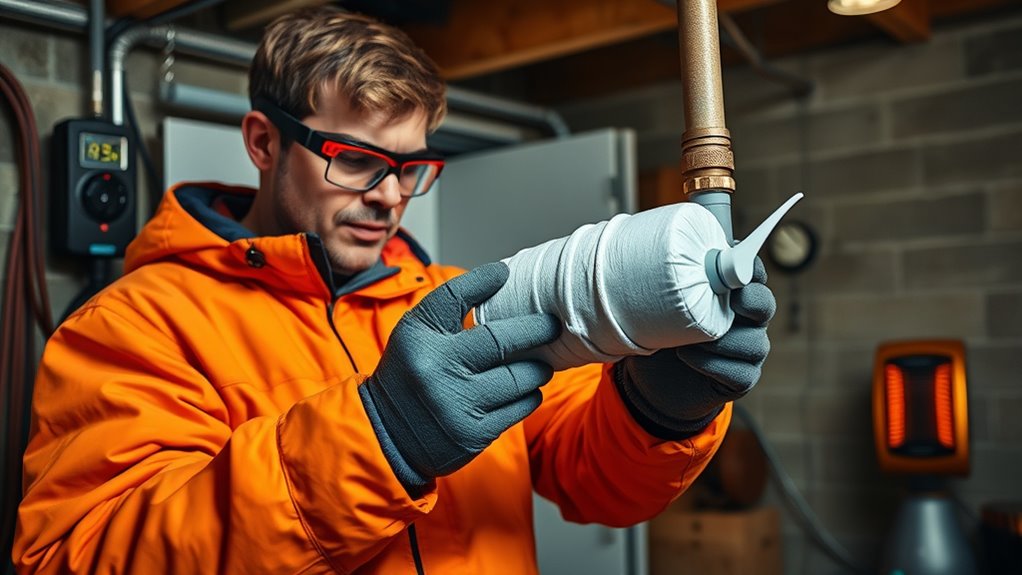

To quickly winterize your water system in just 15 minutes, start by inspecting exposed pipes around your home, garage, and outdoor faucets for cracks or gaps. Wrap these pipes with foam insulation or heat tape and seal any cracks with weatherproof caulk. Cover outdoor spigots with insulated covers, shut off the outdoor water supply, and drain residual water. Focus on these key steps first—more detailed tips can help you easily protect your entire system.

Get home appliances delivered free — and shop member deals
- Fast, free delivery on millions of items
- Access to Prime Big Deal Days deals on October 6–7
- Prime Video, Amazon Music and more included
Key Takeaways
- Shut off outdoor water supply and drain outdoor faucets to prevent freezing damage.
- Insulate exposed pipes with foam or heat tape to retain warmth quickly.
- Seal cracks and gaps around windows and exterior walls to block cold drafts.
- Cover outdoor spigots with insulated covers for immediate frost protection.
- Drain sprinkler system hoses and shut off valves to prevent ice expansion.
As an affiliate, we earn on qualifying purchases.
Winterizing Your Water System: Essential Tips
As winter approaches, taking just 15 minutes to winterize your water system can save you from costly repairs and water damage later on. The key is to focus on frost protection and pipe insulation, which are critical in preventing pipes from freezing and bursting during the coldest months. Start by inspecting exposed pipes around your home, garage, and outdoor faucets. These are the most vulnerable areas. Wrap them with foam pipe insulation or heat tape designed specifically for cold weather. Secure the insulation tightly around the pipes, ensuring there are no gaps where cold air can seep in.
Spending 15 minutes on frost protection and pipe insulation can prevent costly winter water damage.
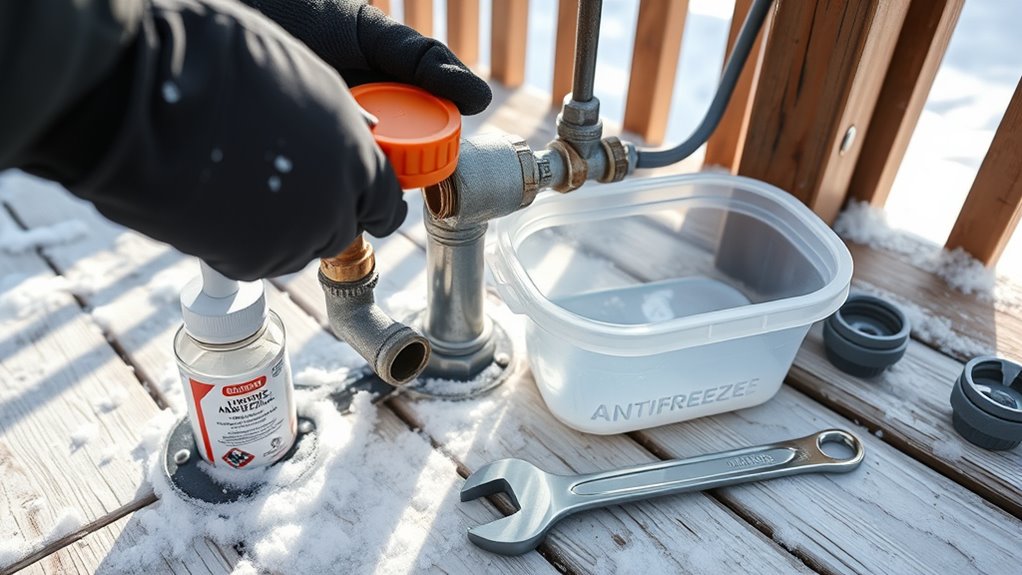
Frost protection isn’t just about wrapping pipes; it’s about creating a barrier against freezing temperatures. If you spot any cracks or gaps in your exterior walls or around windows, seal them with weatherproof caulk or foam sealant. This prevents cold drafts from reaching your plumbing and reduces the risk of pipes freezing. For outdoor faucets, shut off the water supply from inside your home, then open the outdoor faucet to drain any remaining water. Cover outdoor spigots with insulated covers to provide an extra layer of frost protection.
Next, check your sprinkler system if you have one. Drain any remaining water from the hoses and sprinkler heads to prevent ice from expanding inside the pipes, which could cause cracks. If your sprinkler system has a shut-off valve, make sure it’s closed and properly insulated. The idea is to eliminate any standing water that could freeze and expand, putting pressure on your pipes.
Consider also insulating your water heater and exposed piping in the basement or attic. Use pipe insulation or foam sleeves to wrap around these pipes. This helps maintain the water temperature and prevents pipes from freezing in unheated areas. If you’re planning to be away during the cold months, consider draining your water lines entirely. Turn off the main water supply, open all faucets to drain residual water, and leave the faucets open so air can circulate. This simple step can prevent pipes from freezing and bursting while you’re gone.
Taking these quick, proactive steps doesn’t require much time but can save you hundreds of dollars in repairs. Proper frost protection and pipe insulation are your best defenses against winter’s worst. By insulating exposed pipes and sealing gaps around your home, you create a barrier that keeps the cold out and your water flowing smoothly. Just 15 minutes now can mean peace of mind all winter long, avoiding the mess and expense caused by frozen pipes. Regularly reviewing your water system maintenance can help identify potential vulnerabilities before winter strikes, ensuring continuous protection.
As an affiliate, we earn on qualifying purchases.
Frequently Asked Questions
How Early Should I Winterize My Water System Each Year?
You should winterize your water system before the temperatures drop consistently below freezing, typically in late fall or early winter. Timing considerations are vital for effective seasonal planning, so keep an eye on the forecast. Aim to complete winterization at least a week or two before a cold snap to prevent any damage. Starting early ensures your system stays protected and avoids costly repairs caused by frozen pipes.
Can I Winterize My Water System Myself or Need a Professional?
You can definitely winterize your water system yourself with some DIY tips, but if you’re unsure or have complex plumbing, professional services are a smart choice. Doing it yourself involves draining pipes, disconnecting hoses, and insulating vulnerable areas. However, a professional can guarantee everything’s properly winterized, reducing the risk of costly damage. Consider your comfort level and system complexity before deciding—either way, proper winterization keeps your water system safe through the cold.
What Signs Indicate My Water System Is Vulnerable to Winter Damage?
You can tell your water system is vulnerable to winter damage if you notice exposed pipes without insulation or if pressure testing shows low pressure or leaks. Signs like freezing pipes, condensation, or uneven water flow also indicate vulnerability. To protect your system, add pipe insulation where needed, and perform pressure testing to identify weak spots. Addressing these issues early helps prevent costly repairs during winter’s coldest months.
Are There Eco-Friendly Winterizing Products Available?
Did you know that over 60% of households seek eco-friendly options? Yes, eco-friendly alternatives for winterizing your water system are readily available. You can choose biodegradable products that protect pipes without harming the environment. These products are safe, effective, and reduce chemical impact. By opting for biodegradable options, you not only winterize your system efficiently but also contribute to sustainability efforts, making your winter prep both smart and eco-conscious.
How Often Should I Inspect My Water System During Winter?
You should inspect your water system at least once every two weeks during winter. Check pipe insulation for any damage or gaps, and verify valves are functioning properly. Regular inspections help prevent freezing and bursting pipes, especially when temperatures drop unexpectedly. Keep an eye on exposed pipes and consider adding extra insulation if needed. Staying proactive minimizes costly repairs and keeps your water system running smoothly throughout the cold months.
As an affiliate, we earn on qualifying purchases.
Conclusion
By taking just 15 minutes to winterize your water system, you can prevent costly damages and avoid the inconvenience of frozen pipes. Did you know that burst pipes can cause over $10,000 in damage on average? Don’t wait until it’s too late—quick, simple steps now can save you time, money, and stress later. Stay proactive this winter and protect your home with these easy tips. Your peace of mind is worth it!
winterizing sprinkler system kit
As an affiliate, we earn on qualifying purchases.
As an affiliate, we earn on qualifying purchases.
Fall yard work Picks
leaf blowers
As an affiliate, we earn on qualifying purchases.