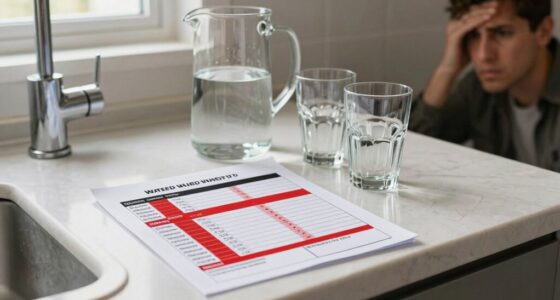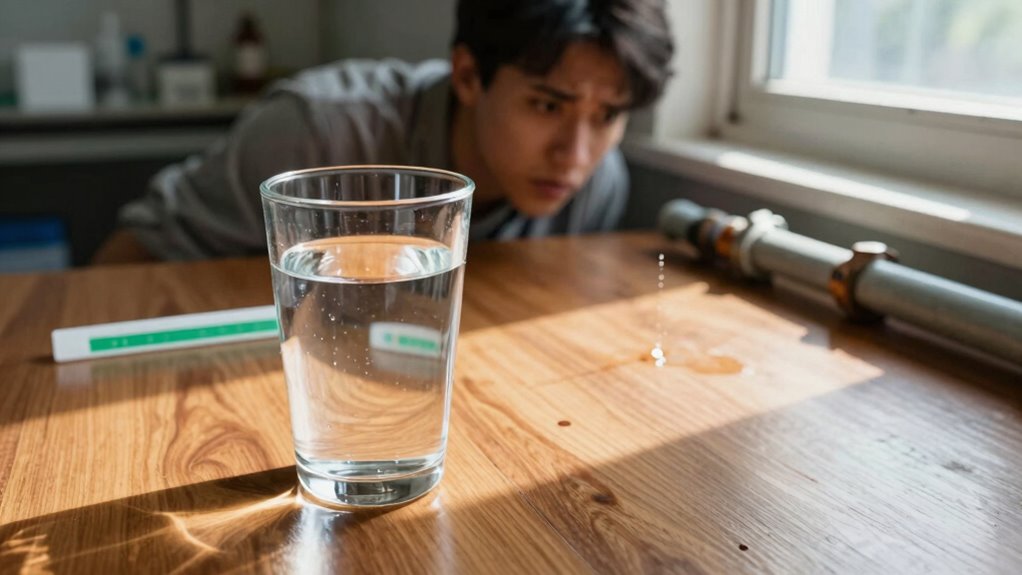

Even a well-conducted water test can lead to a bad decision if you don’t consider its limitations, scope, or timing. Tests may miss seasonal changes, new pollution sources, or contaminants below detection levels. Relying on a single test can give false confidence about water safety. To make informed choices, you need to understand what the test covers and its potential blind spots. The key to better decisions is understanding these factors—and there’s more to discover that can help you avoid costly mistakes.

Get home appliances delivered free — and shop member deals
- Fast, free delivery on millions of items
- Access to Prime Big Deal Days deals on October 6–7
- Prime Video, Amazon Music and more included
Key Takeaways
- Relying solely on a single, outdated, or limited test can give a false sense of water safety.
- Misinterpreting test results without understanding testing methodologies may lead to incorrect conclusions.
- Ignoring ongoing or seasonal changes in water quality can result in decisions based on incomplete data.
- Overlooking the scope and detection limits of tests may cause unseen contaminants to be neglected.
- Making decisions without considering multiple testing points or continuous monitoring increases the risk of health hazards.
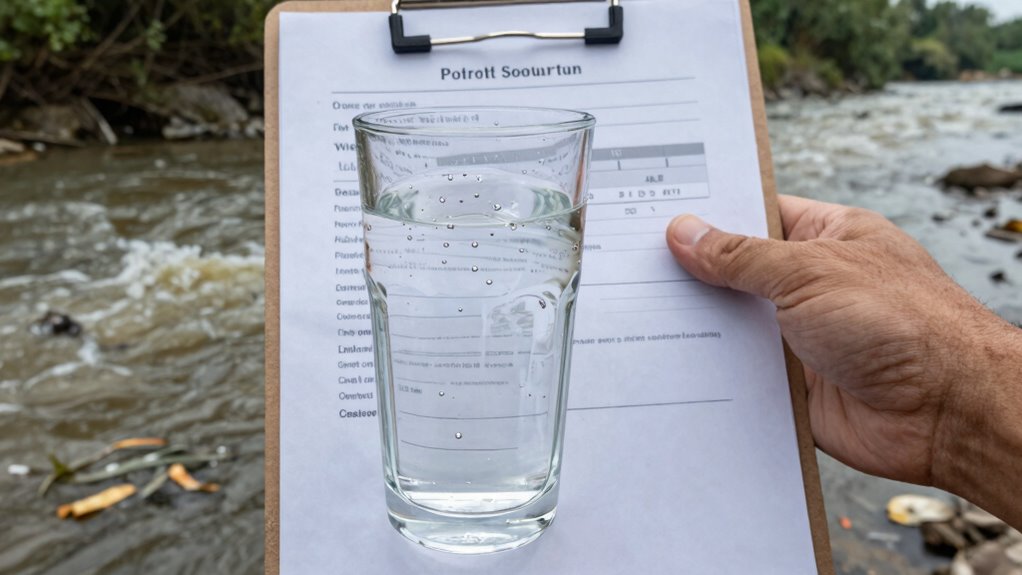
Even if your current test indicates safe levels, it might not account for seasonal changes, recent environmental events, or ongoing pollution sources that could compromise water safety later. That’s why testing accuracy is essential—if the methods used are outdated or not rigorous enough, the results can be misleading. A new test might be necessary to confirm initial findings, especially if testing scope is limited or outdated.
Further, laboratory errors, sample contamination, or improper collection techniques can distort test outcomes. A perfectly designed test can still produce inaccurate results if not executed properly. For instance, testing too infrequently or at the wrong location might not reflect the water’s true condition. If you place too much trust in a single test without considering these variables, you risk making decisions based on incomplete or inaccurate data. Additionally, understanding the testing methodology helps ensure that the results are interpreted correctly and reflect the actual water quality. Moreover, staying informed about testing standards can help you choose more reliable testing options and avoid outdated or inadequate methods. It’s also essential to consider testing frequency to track changes over time and catch potential issues early.
It’s also important to think about what the test measures versus what you actually need to know. Some tests might only check for common contaminants, leaving out less common but equally harmful pollutants. You might see a clean report and assume your water is safe, but in reality, contaminants could be present at levels just below detection limits or in forms the test doesn’t reveal. Overlooking these nuances can lead to poor decisions, like neglecting ongoing filtration needs or ignoring potential health risks.
In addition, understanding the scope of testing is crucial because different tests target different contaminants, and no single test can cover all possible pollutants comprehensively. In the end, a good water test isn’t just about the results but also about understanding its scope and limitations. You should consider multiple testing points, different types of tests, and ongoing monitoring to gain a complete picture. Otherwise, you risk making decisions based on incomplete or inaccurate information, which can jeopardize your health and safety. Remember, water quality is complex, and no single test can capture its full story.
As an affiliate, we earn on qualifying purchases.
Frequently Asked Questions
How Can Testing Be Inaccurate Despite Good Results?
Testing can be inaccurate despite good results because laboratory accuracy varies due to equipment calibration or human error. Even if your results seem consistent, testing might lack the precision needed for critical decisions. Factors like sample contamination or improper collection methods can also skew outcomes. To guarantee reliable decisions, you should verify testing procedures, ask about lab accreditation, and consider repeating tests to confirm consistent results.
What Signs Indicate Water Tests Might Be Misleading?
You might notice inconsistencies like sudden water quality changes or test results that don’t match your observations. Water testing controversies often stem from testing limitations, such as outdated methods or improper sampling. If lab results seem overly optimistic or don’t account for local contamination risks, they could be misleading. Always consider multiple tests over time and consult experts to make certain you’re not relying solely on potentially flawed data.
Are There Alternative Methods to Confirm Water Safety?
Yes, you can use alternative methods like water sampling with portable testing equipment to confirm water safety. Collect samples yourself and send them to certified labs for thorough analysis, ensuring more accurate results. Regularly inspect testing equipment for calibration and proper use, and consider multiple testing methods over time. This approach helps verify water quality beyond initial tests, giving you confidence in the safety of your water supply.
How Often Should Water Tests Be Repeated for Reliability?
Think of water testing like tending a garden—regular care guarantees health. You should test your water at least once a year to maintain reliable water quality and testing accuracy. If you notice changes in taste, smell, or appearance, test more frequently. Regular testing catches potential problems early, helping you make informed decisions about water safety and avoiding surprises that could compromise health or property.
Can Water Test Results Change Over Time?
Yes, water test results can change over time, affecting water quality and testing accuracy. Factors like seasonal shifts, nearby activities, and maintenance can impact water composition. Regular testing helps you detect these changes early, ensuring safe water. Keep in mind that even accurate tests are snapshots, so periodic testing is essential to track water quality trends and make informed decisions about your water safety.
As an affiliate, we earn on qualifying purchases.
Conclusion
Even with a clear water test, don’t let your judgment drift like a boat lost at sea. Sometimes, the numbers only tell part of the story, and your instincts or experience act like a lighthouse guiding you through foggy waters. Trust your gut, dig deeper, and remember that a good test is just one compass—use it wisely, but don’t let it steer you blindly into trouble. Navigate with care, and your decisions will stay afloat.
continuous water monitoring system
As an affiliate, we earn on qualifying purchases.
As an affiliate, we earn on qualifying purchases.
advanced water test laboratory kit
As an affiliate, we earn on qualifying purchases.
As an affiliate, we earn on qualifying purchases.
Fall yard work Picks
leaf blowers
As an affiliate, we earn on qualifying purchases.