
When installing filters in series, it’s essential to follow the flow arrows on each housing to guarantee proper direction. Proper flow maximizes filtration efficiency and prevents damage, so double-check orientation before starting the system. Correct installation also helps maintain smooth operation and reduces pressure drops. If you keep these practices in mind, you’ll optimize performance and extend filter life. Keep going to discover more tips for flawless filter setup and operation.
Key Takeaways
- Always verify flow arrows on each filter to align with the system’s flow direction before installation.
- Follow manufacturer guidelines to ensure filters are installed in the correct orientation for optimal performance.
- Properly orient filters to facilitate even pressure distribution and prevent bypassing contaminated fluid.
- Double-check filter placement and flow direction during system startup to avoid damage and inefficiency.
- Use compatible filters that match system flow rates and particle removal requirements to maintain correct flow direction.

Have you ever wondered how to improve filtration efficiency in a system? One effective way is by installing filters in series while guaranteeing the correct flow direction. When you set up multiple filters in a sequence, proper filter maintenance becomes even more critical. Each filter plays a specific role, capturing particles at different sizes or stages, so maintaining them properly ensures the entire system functions smoothly. Regular inspection and timely replacement prevent clogging, reduce pressure drops, and maintain ideal flow rates. If filters aren’t maintained correctly, debris can accumulate, leading to decreased flow and diminished filtration effectiveness, which ultimately compromises your system’s performance.
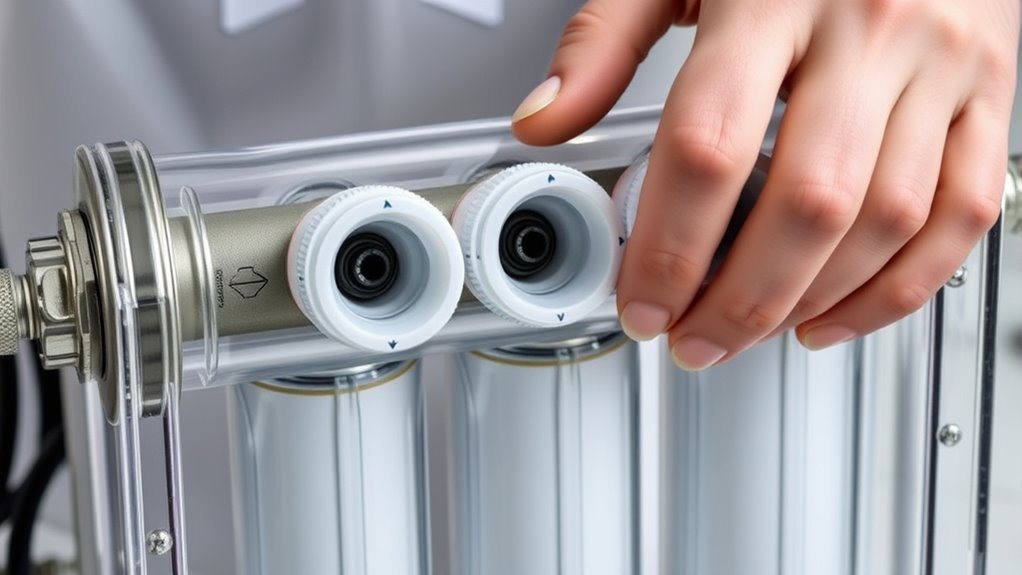
Flow optimization is key when installing filters in series. You need to guarantee that fluid moves through each filter in the proper direction, usually indicated by arrows on the filter housing. Incorrect flow direction not only reduces filtration efficiency but can also damage the filters, causing leaks or failures. When flow isn’t optimized, the system may experience uneven pressure distribution, resulting in some filters working harder than others or bypassing contaminated fluid altogether. To avoid this, double-check that all filters are installed with the correct flow orientation before starting your system. Properly aligned filters facilitate smoother fluid movement, minimizing pressure drops and ensuring each filter performs as intended. Additionally, understanding the flow dynamics within your system helps to balance pressure and maximize filtration performance.
Ensure filters are correctly installed with proper flow direction for optimal efficiency and system safety.
In addition to correct installation, flow optimization involves selecting the right filter types and sizes for your specific application. Using filters that match your system’s flow rate and particle removal requirements prevents unnecessary strain on the filters and reduces the risk of premature failure. When filters are correctly sized and properly installed, they can operate efficiently over longer periods, reducing the frequency of filter changes and downtime. This not only saves you money but also maintains consistent system performance. Remember, the goal is to balance filtration capacity with flow rate, ensuring that the fluid passes through each filter without excessive resistance or bypassing contaminated areas.
Finally, integrating a routine maintenance schedule is essential for sustaining filtration efficiency. Regularly checking for signs of clogging or wear allows you to replace filters before they become a bottleneck in your system. Clean filters promote better flow and reduce the energy required to pump fluids through the filters. When you prioritize filter maintenance and flow optimization, you’re safeguarding your entire system against inefficiencies, downtime, and costly repairs. Proper installation and ongoing upkeep create a reliable, efficient filtration process that keeps your equipment running smoothly and extends the lifespan of your filters.
Frequently Asked Questions
How Do I Identify the Correct Flow Direction on a Filter?
You identify the correct flow direction on a filter by checking its flow indicators, usually marked with arrows showing the proper flow path. Always consult the installation manual, which provides detailed instructions and confirms the flow direction. Make sure to align the flow indicators with your system’s flow, ensuring the filter functions correctly and prevents damage or inefficiency. Proper installation guarantees peak performance and longevity of your filtration system.
Can Filters Be Installed in Reverse Order?
Think of your filter setup like a one-way street; installing filters in reverse order is like driving against traffic. It disrupts the flow direction, causing inefficiency or damage. Always guarantee proper filter installation by aligning with the flow direction indicated. Reversing the order can clog filters faster and reduce system performance. So, double-check your flow direction before installing filters to keep everything running smoothly.
What Are Signs of Incorrect Flow in a Series Filter Setup?
If you notice unusual pressure drops or increased flow noise, it’s a sign of incorrect flow in your series filter setup. These issues indicate that the filters may be installed backwards or the flow isn’t following the proper direction. You should check the flow direction markings on each filter and verify the fluid moves through them in the correct order. Correcting the flow path restores efficiency and prevents damage.
How Often Should Filters in Series Be Inspected for Proper Flow?
You should inspect your filters in series at least once a month as part of your maintenance schedule. Regular inspections help you spot issues early, like pressure drops or flow restrictions. Use troubleshooting tips, such as checking for leaks or blockages, to confirm proper flow. Consistent monitoring guarantees your filters work efficiently, prolongs their lifespan, and prevents system downtime. Adjust inspection frequency based on your system’s usage and environmental conditions.
Are There Specific Tools Recommended for Verifying Flow Direction?
Think of flow direction tools as your compass, guiding you through the maze of filters. You should use specific flow direction verification tools, like flow meters or directional indicators, to confirm proper filter orientation. These tools help you verify that the flow follows the intended path, preventing misalignment. Always check with manufacturer recommendations for the best flow direction tools, ensuring your filters work efficiently and safely in series.
Conclusion
By installing filters in series with the correct flow direction, you’re building a strong shield against impurities. Think of each filter as a guardian, guiding the flow like a steady river carving its path through rugged terrain. When aligned properly, these guardians work in harmony, ensuring purity flows seamlessly. Remember, proper installation isn’t just technical—it’s about creating a clear, unobstructed journey. Trust in this process, and your system will run smoothly, like a well-tuned stream finding its perfect course.