Adding an expansion tank helps prevent dangerous thermal pressure buildup in your heating system by absorbing the extra water volume as it heats. When water expands, the tank’s air bladder compresses, maintaining a steady pressure and protecting your system from damage or leaks. Installing one at the highest point of your system guarantees safe operation and reduces wear on components. Keep going for more tips on properly installing and maintaining your expansion tank to keep your system safe and efficient.
Key Takeaways
- An expansion tank absorbs excess pressure caused by water expansion during heating, preventing system overpressure.
- Installing an expansion tank at the highest point of the system ensures effective pressure regulation.
- The tank’s air bladder separates air and water, allowing it to accommodate volume changes safely.
- Properly added expansion tanks reduce stress on system components and lower the risk of leaks or ruptures.
- They maintain consistent pressure levels, enhancing system safety, efficiency, and longevity.
Ever wonder why your heating system might be experiencing pressure issues or frequent shut-offs? The answer often lies in how well pressure regulation is managed within the system. When water heats up, it naturally expands, increasing the pressure inside your pipes and tank. If this pressure isn’t properly controlled, it can lead to dangerous situations, causing your system to shut down unexpectedly or, worse, risking damage to components. Adding an expansion tank is an effective way to manage this thermal pressure build-up, ensuring your system operates safely and efficiently.
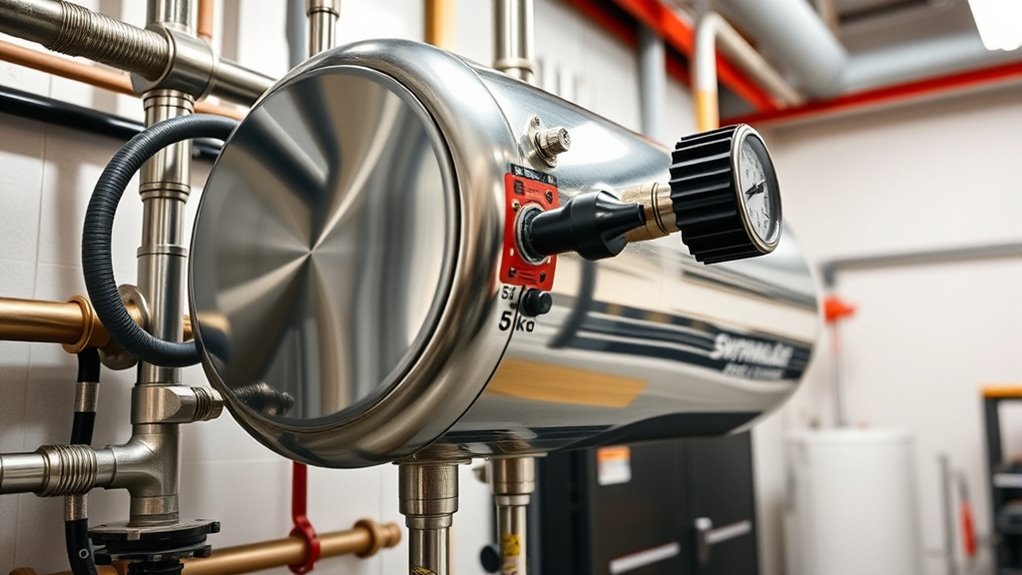
An expansion tank acts as a buffer, absorbing excess pressure caused by the heated water’s expansion. Without one, the pressure inside your system can rise beyond safe limits, triggering safety valves or shutting off the system entirely to prevent damage. By installing an expansion tank, you create a space for the extra water volume, which maintains a consistent pressure level. This not only enhances the longevity of your system but also ensures that pressure regulation remains within safe boundaries, prioritizing system safety.
You might wonder how exactly an expansion tank improves pressure regulation. When water heats up, it expands, and that extra volume causes pressure to increase. The expansion tank is connected to your water heating system, typically at the highest point, and contains an air bladder or a diaphragm that separates air from water. As the water expands, it pushes into the tank, compressing the air and preventing pressure from rising too high. When the water cools down, it contracts, and the tank releases the stored water back into the system, maintaining a stable pressure. This dynamic process keeps your system safe from pressure spikes that could lead to leaks, ruptures, or system failures.
Furthermore, adding an expansion tank is a proactive measure that can prevent costly repairs down the line. Consistent pressure regulation means your system won’t experience the stress that causes component fatigue or failure. It also reduces the likelihood of triggering safety shut-offs, which can be inconvenient and disruptive. By investing in an expansion tank, you’re not just protecting your system’s integrity; you’re also ensuring peace of mind, knowing that your heating system is equipped to handle thermal expansion securely.
Frequently Asked Questions
How Often Should I Inspect My Expansion Tank for Leaks?
You should inspect your expansion tank for leaks at least once a year, or more frequently if you notice any issues. Regular inspection frequency helps with leak detection, ensuring you catch problems early. Look for signs like water pooling around the tank, rust, or a decrease in system pressure. Promptly addressing leaks prevents damage to your system and maintains proper thermal pressure regulation, keeping everything running smoothly.
Can I Install an Expansion Tank Myself or Need Professional Help?
You can attempt a DIY installation of an expansion tank if you’re comfortable with plumbing tasks, but it’s often best to seek professional assistance. Proper installation guarantees safety and system efficiency, especially if you’re unfamiliar with the process. If you lack experience, hiring a professional minimizes risks like leaks or improper setup. Ultimately, professional help guarantees that your expansion tank functions correctly and safely, saving you potential trouble down the line.
What Are the Signs That My Expansion Tank Is Failing?
If your expansion tank is failing, you’ll notice signs like inconsistent pressure regulation, such as the pressure gauge fluctuating unexpectedly. You might also hear banging or knocking noises from your pipes, or notice water leaks around the tank. Regular tank maintenance helps spot these issues early. When you see these signs, it’s time to inspect or replace the tank to guarantee proper pressure regulation and prevent further damage.
How Does an Expansion Tank Affect Overall System Efficiency?
Kicking things off, an expansion tank helps your system run like clockwork by improving overall efficiency. It stabilizes pressure regulation, preventing fluctuations that can strain components. By maintaining consistent system energy, it minimizes the workload on your boiler or pump, saving energy and cutting costs. A well-functioning expansion tank ensures your system operates smoothly, prolonging its life and keeping everything running at peak performance.
Are There Different Types of Expansion Tanks for Specific Systems?
Yes, there are different types of expansion tanks designed for specific systems. You’ll find bladder tanks, which use a flexible membrane, and traditional open or closed tanks made from materials like steel or plastic. Your choice depends on your system’s pressure and temperature needs. Selecting the right tank material, such as corrosion-resistant plastics or durable steel, guarantees longevity and ideal performance in your heating or cooling system.
Conclusion
By adding an expansion tank, you’re planting a stable tree in your plumbing system’s garden. It absorbs the pressure like roots anchoring deep, preventing stress from causing cracks or leaks. Think of the tank as a guardian, quietly protecting your home’s flow and harmony. With this simple addition, you create a safeguard that nurtures your system’s health, ensuring it remains resilient through changing temperatures. Embrace the tank; let it be your system’s steady heartbeat.