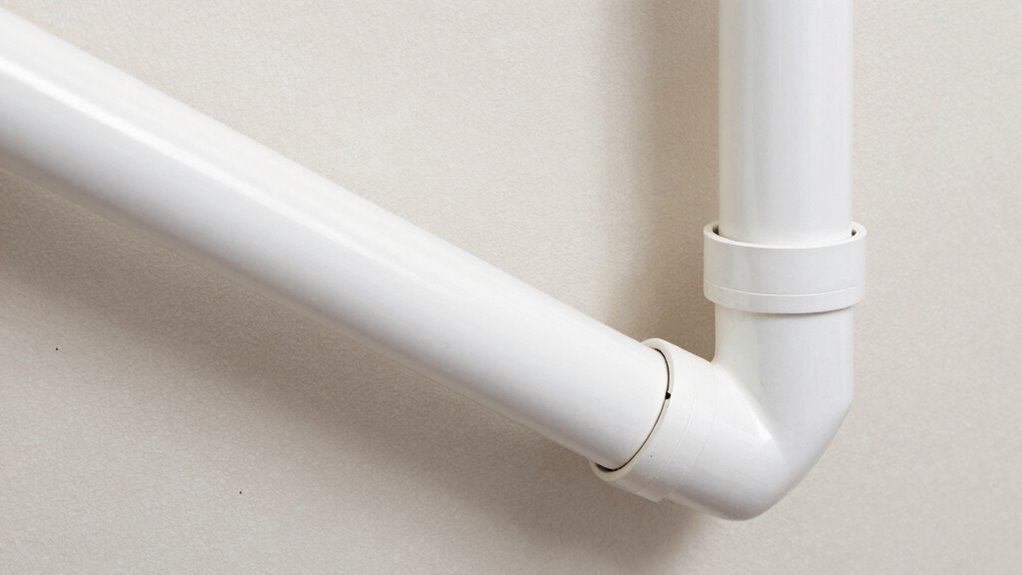
To prevent floods, make sure your drain line has a proper slope of about 1/4 inch per foot to keep water flowing smoothly and avoid clogs. Also, guarantee your air gap is correctly installed to stop contaminated water from siphoning back into your system. Ignoring these rules can lead to standing water, leaks, or even flooding. If you want to learn more about these common mistakes and how to fix them, keep exploring the details below.
Key Takeaways
- Proper drain line slope (about 1/4 inch per foot) ensures efficient water flow and prevents clogs or backups.
- Incorrect slope—either too flat or too steep—can cause standing water, debris buildup, and pipe blockages.
- An inadequately positioned or missing air gap allows contaminated water to siphon back, risking floods and health hazards.
- Maintaining correct air gap placement prevents siphoning, odors, and potential flooding in the plumbing system.
- Insulating drain pipes reduces condensation and freezing, preventing cracks, leaks, and blockages that could lead to floods.
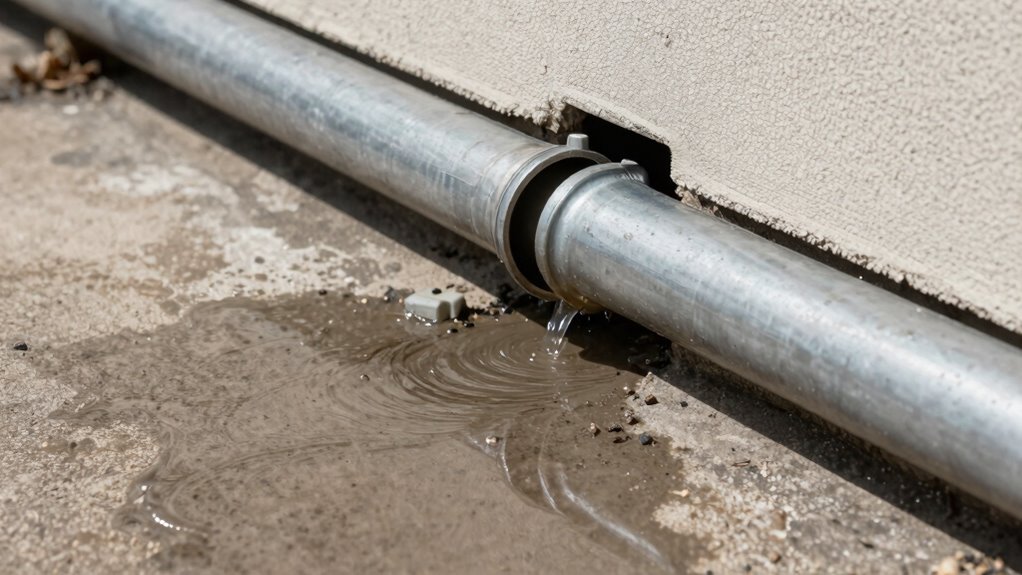
Have you ever wondered what rules govern drain lines and why they matter? Understanding these rules is essential because improper installation can lead to costly floods and water damage. One key aspect is ensuring the proper slope of your drain pipes. When pipes don’t have the correct incline—typically a gentle slope of about 1/4 inch per foot—gravity can’t do its job efficiently. This causes water to slow down or even back up, increasing the risk of clogs. Clog prevention relies heavily on maintaining this proper slope since standing water encourages debris buildup and mold growth. If your drain lines are too flat, waste and grease can accumulate, leading to blockages that might eventually cause leaks or floods. Conversely, if they’re too steep, water may flow too quickly, leaving solids behind and creating similar clog issues over time. Proper slope not only ensures smooth drainage but also reduces the need for frequent maintenance.
Additionally, understanding drain line slope is crucial for effective installation, as it directly influences flow rate and clog formation. Another critical rule involves the air gap, which is a space designed to prevent contaminated water from siphoning back into your clean water supply. An improper air gap can cause siphoning, which leads to foul odors and potential health hazards, and in some cases, can even result in flooding. Making sure that your drain lines incorporate adequate and correctly positioned air gaps keeps everything flowing safely. It’s a simple yet often overlooked detail that can save you from serious plumbing problems.
Beyond slope and air gaps, pipe insulation plays a crucial role in maintaining the integrity of your drain system. Insulating pipes prevents condensation, which can cause water to drip onto your walls or flooring, leading to mold and structural damage. It also helps maintain consistent temperature control, especially in colder climates where frozen pipes can burst if not protected. Proper pipe insulation can keep your drain lines functioning effectively, reducing the risk of cracks or leaks that might cause water to escape and cause floods. Insulation also diminishes the formation of ice, ensuring your drain lines don’t freeze and block water flow during winter.
Frequently Asked Questions
How Often Should Drain Lines Be Inspected for Blockages?
You should inspect your drain lines at least once a year to prevent blockages. Regular inspection helps you catch potential issues early, ensuring proper drainage and avoiding costly repairs. If you notice slow drains or backups, check them more frequently. Consistent inspection frequency is essential for blockage prevention, especially in areas prone to debris buildup. Stay proactive to keep your drain lines clear and functioning properly, reducing flood risks and costly damages.
What Materials Are Best for Preventing Drain Line Corrosion?
You should choose corrosion-resistant piping like PVC, CPVC, or PEX to prevent rust and degradation. These materials withstand moisture and chemicals better than metal. Regular maintenance schedules, including inspections for leaks or damage, help catch issues early. By combining durable piping with consistent upkeep, you guarantee your drain lines stay functional longer and avoid costly repairs, keeping your system running smoothly and flood-free.
Can Drain Line Slope Regulations Vary by Region?
Yes, drain line slope regulations can vary by region due to local building codes and plumbing standards. You should always check regional codes because slope variations guarantee proper drainage and prevent backups or flooding. In some areas, the required slope might be steeper or more lenient, so staying informed about your local regulations helps you install drain lines correctly and avoid costly mistakes or violations.
What Are Common Signs of Improper Drain Line Installation?
Did you know that improper drain line installation can cause over 30% of residential flooding issues? You’ll notice signs like frequent clogs, foul odors, or slow drainage, indicating poor drain line maintenance. Look out for water backups or wet spots near pipes—these suggest improper slope correction. Addressing these early helps prevent costly repairs and guarantees your drain system functions efficiently. Regular inspections and prompt repairs are key.
Are There Specific Tools Recommended for Drain Line Adjustments?
You should use drain line tools like a level, pipe wrench, and pliers to make precise adjustments. These tools help you set the correct slope and fix alignment issues effectively. When making adjustments, follow proper techniques such as checking the slope with a level and tightening fittings securely. Proper tools and techniques guarantee your drain line functions correctly, preventing leaks and potential floods caused by improper installation.
Conclusion
Think of your drain line as the river guiding water safely to its destination. When you ignore the slope or forget the air gap, it’s like blocking the river’s flow, causing floods to rise. Follow the rules, keep the water flowing smoothly, and prevent the floodwaters of trouble from spilling over. Stay vigilant, and your drainage system will flow like a well-tuned stream—steady, clear, and flood-free.