
TL;DR

Get home appliances delivered free — and shop member deals
- Fast, free delivery on millions of items
- Access to Prime Big Deal Days deals on October 6–7
- Prime Video, Amazon Music and more included
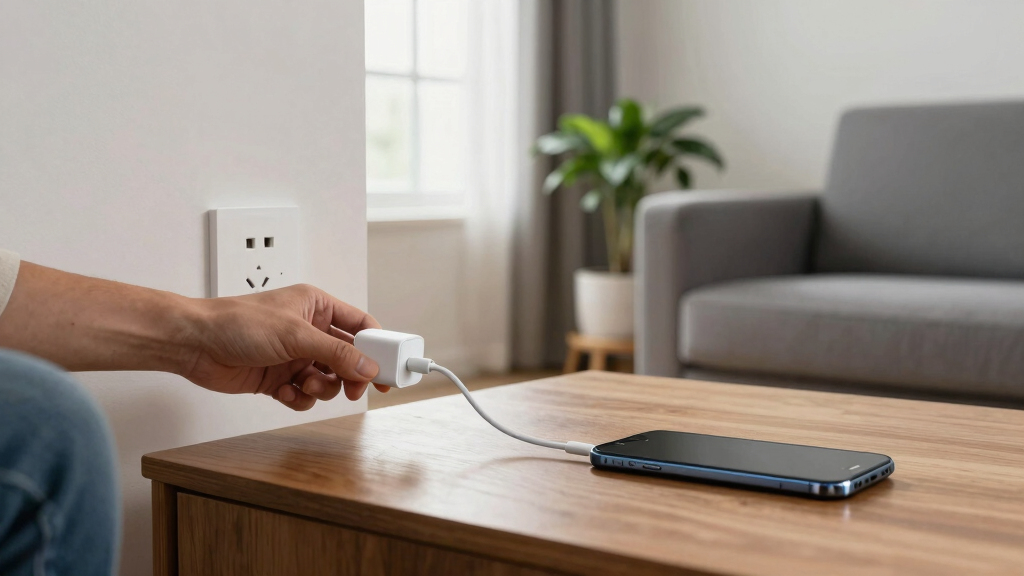
Phone chargers continue to draw small amounts of electricity when plugged in but not charging devices. This standby power use is minimal individually but can add up in homes with many chargers. The impact on energy costs is generally low but worth considering.
Phone chargers draw a small amount of electricity even when not actively charging a device, according to Engadget. This standby power consumption can contribute to household energy use and costs, especially in homes with multiple chargers plugged in across various rooms.
It is confirmed that phone chargers continue to draw electricity when plugged into an outlet, even if no device is connected. This phenomenon, known as standby power, involves the charger’s transformers and circuits remaining active to allow immediate charging when needed. The typical standby consumption ranges from 0.1 to 0.5 watts per charger, translating to roughly 2 to 24 watt-hours daily.
While individual chargers are not energy hogs, the cumulative effect can be noticeable in homes with many devices. Depending on the region, leaving a charger plugged in could add between 50 cents and $4 annually to household electricity bills. Other household electronics like computers, televisions, and microwaves also consume standby power, collectively accounting for 5 to 10 percent of home energy use, according to Canadian data.
Impact of Standby Power on Household Energy Costs
Although the energy used by a single phone charger in standby mode is minimal, the cumulative effect in homes with numerous chargers and devices can contribute to higher electricity bills over time. For consumers seeking to reduce their energy costs, unplugging chargers when not in use or using smart outlets can be effective strategies. Understanding standby power also highlights the importance of choosing energy-efficient chargers and regularly inspecting devices for wear or overheating, which can increase power draw.
As an affiliate, we earn on qualifying purchases.
Understanding Standby Power and Its Household Role
Standby power, also known as vampire power, is a common feature of many household electronics, including chargers, computers, and appliances. It accounts for a significant portion of residential energy consumption, estimated at 5 to 10 percent. While individual devices like phone chargers consume only small amounts of power, the widespread presence of multiple devices amplifies their collective impact. This issue has been recognized for years, prompting recommendations for energy-saving practices such as unplugging devices or using smart outlets.
“Chargers draw a small amount of power when plugged in, even if not actively charging a device.”
— an anonymous researcher
As an affiliate, we earn on qualifying purchases.
Unanswered Questions About Charger Efficiency
While it is confirmed that chargers use standby power, the precise impact varies based on charger quality, regional electricity rates, and household device usage. It remains unclear whether newer, energy-efficient chargers significantly reduce standby consumption compared to older models. Additionally, the overall contribution of standby power to total household energy use can differ widely depending on individual habits and device management practices.
universal phone charger with low standby power
As an affiliate, we earn on qualifying purchases.
As an affiliate, we earn on qualifying purchases.
Future Steps for Consumers and Manufacturers
Consumers are encouraged to unplug chargers when not in use or utilize smart outlets to cut power remotely. Manufacturers may continue improving charger designs for energy efficiency, and regulatory bodies could enforce stricter standards. Further research may clarify the actual savings achievable through these measures, helping consumers make informed decisions about device management and energy use.
charger power strip with individual switches
As an affiliate, we earn on qualifying purchases.
As an affiliate, we earn on qualifying purchases.
Key Questions
How much energy does a typical phone charger use when not charging?
Most chargers draw between 0.1 and 0.5 watts in standby mode, which totals about 2 to 24 watt-hours per day.
Does leaving chargers plugged in significantly increase my electricity bill?
Individually, the cost is small, generally between 50 cents and $4 annually per charger, but the total can add up in homes with many devices.
Can I reduce standby power consumption easily?
Yes, unplugging chargers when not in use or using smart outlets that can be remotely turned off can help reduce standby power use.
Are newer chargers more energy-efficient?
Many modern chargers are designed to be more efficient, but the actual savings depend on the model and usage habits. Checking for energy efficiency ratings can help.
Source: Engadget
Fall Picks
fall essentials
As an affiliate, we earn on qualifying purchases.