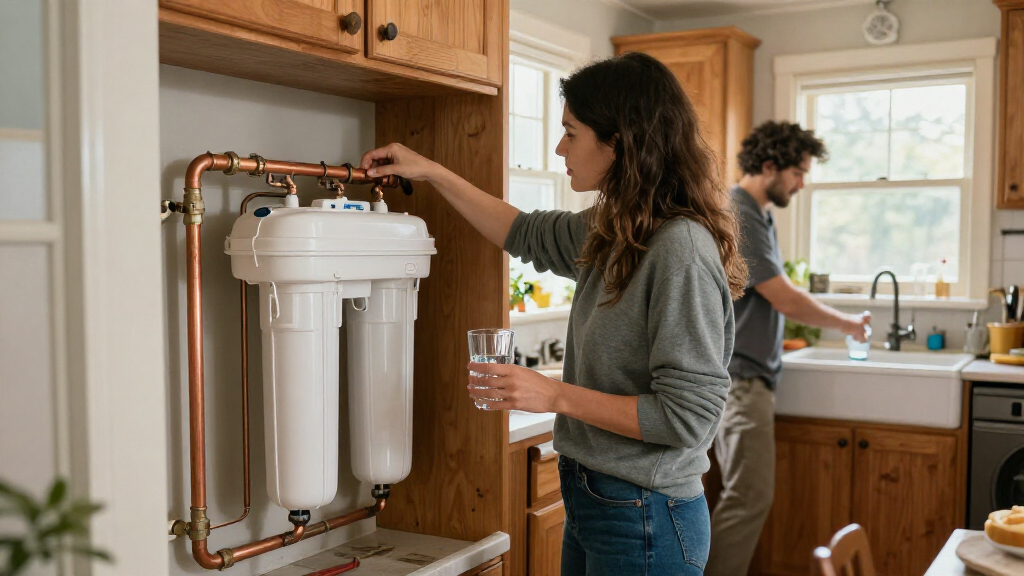
The best whole-house water filters treat water at the point it enters your home, but the right choice depends on what is in your supply and how much maintenance you want. My best overall pick is the Aquasana Whole House Water Filter System for buyers seeking a broad, established whole-home setup; the iSpring WGB32BM stands out for iron and manganese concerns, while the 3M Aqua-Pure AP904 is a simpler choice for sediment and scale-related needs. The tradeoffs are treatment range, flow capacity, filter-change workload, and whether the system addresses a tested contaminant or only general water-quality concerns. A filter that does not target your specific issue may add upkeep without solving it. Read on for the full breakdown of all 12 options and a guide to matching a system to your water.

Get home appliances delivered free with Prime
- Fast, free delivery on millions of items
- Prime Video, Amazon Music and more included
- Member-only deals all year
Complete the kit


Key Takeaways
- Water-test results should drive the shortlist: the iSpring WGB32BM is the most targeted choice here for iron and manganese, while broad claims do not replace checking a system’s certified reduction claims against your results.
- Three-stage systems are not automatically better than two-stage models: extra stages can add treatment options, but also add cartridges, service steps, and potential flow restrictions.
- The lineup splits between targeted treatment and simpler filtration: the iSpring Ultimate PFAS Protection system is aimed at a specific contaminant concern, while the 3M Aqua-Pure AP904 focuses on a more limited set of whole-home needs.
- Sediment handling can shape maintenance more than the main cartridges: the iSpring WGB32B-KDS+WSP50J and iSpring Ultimate with Auto-Flush include sediment-focused features that may suit homes with frequent particulate buildup.
- Installation and upkeep are part of the real cost: systems with multiple housings or specialized stages may call for more space and hands-on service than simpler options such as the A. O. Smith AO-WH-Filter.
| iSpring WGB32BM 3-Stage Whole House Water Filter System for Iron and Manganese |  | Best for Iron and Manganese | Filtration stages: 3 | Iron reduction: Up to 3.0 ppm | Manganese reduction: Up to 1.0 ppm | VIEW LATEST PRICE | See Our Full Breakdown |
| iSpring WGB21B Two-Stage Whole-House Water Filtration System | 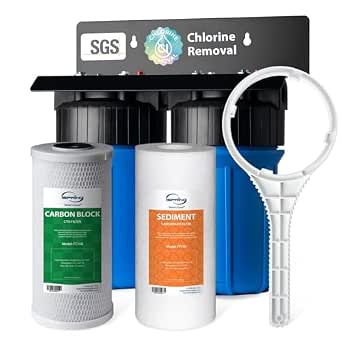 | Best Value for Basic Whole-House Filtration | Filtration stages: 2 | First-stage filter: 5-micron polypropylene sediment filter (FP15B) | Second-stage filter: CTO carbon block filter (FC15B) | VIEW LATEST PRICE | See Our Full Breakdown |
| Waterdrop WHF21-PG 2-Stage Whole House Water Filter System |  | Best Compact Pick | Filtration stages: 2-stage system; also described as 5-stage filtration | Filter types: PP sediment and coconut-shell GAC | Filter size: 10 x 4.5 inches | VIEW LATEST PRICE | See Our Full Breakdown |
| Waterdrop WHF3T-PG 3-Stage Whole House Water Filter System, 5 Micron |  | Best for Municipal or Well Water Flexibility | Filtration stages: 3-stage system; product information also mentions an 11-stage process | Maximum flow rate: 15 GPM | Filter capacity: 100,000 gallons | VIEW LATEST PRICE | See Our Full Breakdown |
| Aquasana Whole House Water Filter System |  | Best Long-Life Premium System | Model: WH-1000 | Capacity: 1,000,000 gallons | Filter life: Up to 10 years | VIEW LATEST PRICE | See Our Full Breakdown |
| HQUA WF3-01 3-Stage Whole House Water Filtration System | 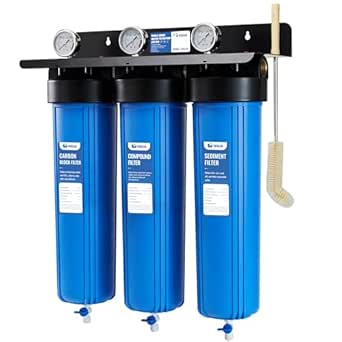 | Best for Maintenance Visibility | Filtration stages: 3 | Filter size: 20 × 5.5 in | Maximum flow rate: 15 gpm | VIEW LATEST PRICE | See Our Full Breakdown |
| iSpring WGB32B-KDS+WSP50J Whole House Water Filter System with Jumbo Sediment Filter |  | Best for Lower-Maintenance Sediment Control | Model: WGB32B-KDS+WSP50J | Capacity: 250,000 gallons | Maximum flow rate: 15 GPM | VIEW LATEST PRICE | See Our Full Breakdown |
| iSpring Ultimate PFAS Protection Whole House Water Filter System |  | Best for PFAS-Focused Filtration | Model: WGB32B-PFKDS | Filtration stages: 3 | Capacity: 100,000 gallons | VIEW LATEST PRICE | See Our Full Breakdown |
| Express Water Ultimate Protection 3-Stage Whole House Water Filter System |  | Best for Visible Sediment Monitoring | Model: WH300SCKP-S | Filtration stages: 3 | Prefilter: Reusable 50-micron spin-down sediment filter | VIEW LATEST PRICE | See Our Full Breakdown |
| 3M Aqua-Pure AP904 Whole House Water Filtration System |  | Best for High Flow and Simple Cartridge Changes | Model: AP904 | Capacity: 100,000 gallons | Flow rate: Up to 20 GPM | VIEW LATEST PRICE | See Our Full Breakdown |
| iSpring Ultimate Whole House Water Filter System with Auto-Flush Sediment Filter |  | Best for Reusable Sediment Control | Filtration stages: Reusable spin-down sediment filter, compound filter, and coconut-shell carbon block filter | Capacity: 250,000 gallons | Maximum flow rate: 15 GPM | VIEW LATEST PRICE | See Our Full Breakdown |
| A. O. Smith AO-WH-Filter Whole House Water Filter System |  | Best for Long-Life Chlorine Reduction | Filtration method: Activated carbon | Chlorine reduction: 96.9% of chlorine taste and odor | Certification: NSF/ANSI 42 | VIEW LATEST PRICE | See Our Full Breakdown |
| whole-house water filter | Capacity | Filtration stages | Maximum flow rate | Filter life |
|---|---|---|---|---|
| iSpring WGB32BM 3-Stage Whole | 100,000 gallons | 3 | 15 GPM | Up to 1 year |
| iSpring WGB21B Two-Stage Whole | Up to 50,000 gallons | 2 | 15 gpm | Up to 12 months |
| Waterdrop WHF21-PG 2-Stage Who | 50,000 gallons | 2-stage system; also described as 5-stage filtration | 15 gpm | — |
| Waterdrop WHF3T-PG 3-Stage Who | — | 3-stage system; product information also mentions an 11-stage process | 15 GPM | Up to 12 months; product information also lists a 90-day filter life cycle |
| Aquasana Whole House Water Fil | 1,000,000 gallons | — | — | Up to 10 years |
| HQUA WF3-01 3-Stage Whole Hous | 100,000 gallons | 3 | 15 gpm | — |
| iSpring WGB32B-KDS+WSP50J Whol | 250,000 gallons | — | 15 GPM | 1 year |
| iSpring Ultimate PFAS Protecti | 100,000 gallons | 3 | — | Up to 12 months, depending on water quality and usage |
| Express Water Ultimate Protect | 100,000 gallons | 3 | 17 gpm | — |
| 3M Aqua-Pure AP904 Whole House | 100,000 gallons | — | — | — |
| iSpring Ultimate Whole House W | 250,000 gallons | Reusable spin-down sediment filter, compound filter, and coconut-shell carbon block filter | 15 GPM | — |
| A. O. Smith AO-WH-Filter Whole | — | — | — | — |
More Details on Our Top Picks
iSpring WGB32BM 3-Stage Whole House Water Filter System for Iron and Manganese
For a home whose main concern is iron or manganese alongside everyday sediment and chlorine, the iSpring WGB32BM is the most targeted choice in this group. Its three stages are specified to reduce iron up to 3.0 ppm and manganese up to 1.0 ppm, while the system also addresses rust, herbicides, and industrial solvents. The 15 GPM flow rate and stated 100,000-gallon capacity suit a whole-house installation better than a small point-of-use filter. Compared with the iSpring WGB21B, it offers more specific treatment for iron and manganese, but the WGB21B is a simpler fit for sediment and chlorine concerns. The tradeoff is a sizable, permanent installation with large cartridges; neither model reduces total dissolved solids. I would choose this one when those metal contaminants are the reason for filtering, not just taste.
Pros:- Targets iron and manganese as well as sediment, chlorine, rust, herbicides, and industrial solvents.
- Supports a stated flow rate of up to 15 GPM.
- Stated capacity of 100,000 gallons and filter life of up to one year.
- Includes three filters and a wrench for installation and cartridge changes.
Cons:- Does not reduce total dissolved solids.
- Large 20 x 4.5-inch cartridges and permanent plumbing make installation more involved than a compact system.
- The stated reduction figures are limited to iron up to 3.0 ppm and manganese up to 1.0 ppm.
Best for: Homeowners with test results showing iron or manganese in their supply who want treatment at the main line.
Not ideal for: Buyers focused on lowering TDS, or renters who cannot make a permanent main-line installation.
- Filtration stages:3
- Iron reduction:Up to 3.0 ppm
- Manganese reduction:Up to 1.0 ppm
- Maximum flow rate:15 GPM
- Capacity:100,000 gallons
- Filter life:Up to 1 year
- Cartridge size:20 x 4.5 inches
- Inlet/outlet:1-inch NPT
Our verdict“Choose the WGB32BM when iron and manganese need targeted whole-house treatment; skip it if your main goal is TDS reduction or a simple, temporary setup.”
iSpring WGB21B Two-Stage Whole-House Water Filtration System
The iSpring WGB21B is a straightforward pick for households that want sediment and chlorine reduction at every tap without adding a more specialized treatment system. A 5-micron sediment filter catches particles, while the carbon block targets chlorine, cloudiness, tastes, odors, and certain VOCs. Its 1-inch ports and stated 15 gpm flow rate make it a practical main-line option for typical household use, and the pre-assembled bracket, wrench, and pressure release valve simplify setup and filter changes. Compared with the iSpring WGB32BM, this model is less suited to homes with iron or manganese concerns, but it uses a simpler two-stage arrangement for general filtration. Its stated capacity is 50,000 gallons, and filters may need replacement about every 12 months. It also retains dissolved minerals rather than reducing TDS.
Pros:- Combines sediment capture with carbon filtration for chlorine, taste, odor, and cloudiness concerns.
- 1-inch ports and a stated maximum flow rate of 15 gpm.
- Retains dissolved minerals in the water.
- Pre-assembled mounting bracket, filter wrench, and pressure release valve support setup and maintenance.
Cons:- Does not reduce total dissolved solids.
- Filter replacement is needed about every 12 months, depending on use.
- Provides less targeted treatment for iron and manganese than the iSpring WGB32BM.
Best for: Homeowners on municipal water who want basic whole-house sediment and chlorine filtration with familiar annual filter changes.
Not ideal for: Households with elevated iron or manganese, or buyers seeking TDS reduction or longer stated capacity than 50,000 gallons.
- Filtration stages:2
- First-stage filter:5-micron polypropylene sediment filter (FP15B)
- Second-stage filter:CTO carbon block filter (FC15B)
- Filter size:10 x 4.5 inches
- Capacity:Up to 50,000 gallons
- Filter life:Up to 12 months
- Maximum flow rate:15 gpm
- Inlet/outlet:1 inch
Our verdict“Pick the WGB21B for uncomplicated sediment and chlorine reduction at the main line, not for metal-specific treatment or TDS removal.”
Waterdrop WHF21-PG 2-Stage Whole House Water Filter System
Among the two-stage options here, the Waterdrop WHF21-PG has the smaller listed footprint, making it a better fit when a utility area has limited wall space. Its PP sediment filter and coconut-shell GAC stage are intended to reduce sediment and chlorine while improving taste and odor; the product also lists lead among the contaminants it addresses. It keeps the same stated 15 gpm flow rate and 50,000-gallon capacity as the iSpring WGB21B, but demands more frequent attention: the PP filter is due every 3–6 months and the GAC filter at six months. That service schedule makes the WGB21B a better choice for buyers who prefer roughly annual changes. The WHF21-PG is recommended for municipal water to extend filter life, so I would not make it my first pick for a sediment-heavy well supply.
Pros:- Compact listed dimensions compared with the iSpring WGB21B.
- Combines PP sediment filtration with coconut-shell GAC for chlorine, taste, and odor concerns.
- Stated maximum flow rate of 15 gpm and capacity of 50,000 gallons.
- No power source is required, and a wrench is included.
Cons:- PP filter replacement is specified every 3–6 months, with GAC replacement at six months.
- Recommended for municipal water to help extend filter service life.
- Installation requires appropriately applied Teflon tape.
Best for: Homeowners with municipal water and restricted installation space who are comfortable replacing filters every few months.
Not ideal for: Well-water households with heavy sediment or buyers who want an annual maintenance interval rather than 3–6-month changes.
- Filtration stages:2-stage system; also described as 5-stage filtration
- Filter types:PP sediment and coconut-shell GAC
- Filter size:10 x 4.5 inches
- Maximum flow rate:15 gpm
- Capacity:50,000 gallons
- Operating pressure range:25–90 psi
- GAC filter life:6 months
- PP filter life:3–6 months
- Dimensions:14.37 x 7.48 x 15.55 inches
Our verdict“Choose the WHF21-PG when space is tight and municipal-water filtration is the goal, provided frequent cartridge changes are acceptable.”
Waterdrop WHF3T-PG 3-Stage Whole House Water Filter System, 5 Micron
The Waterdrop WHF3T-PG is the more adaptable Waterdrop choice for households deciding between municipal and well-water use. Its three-stage system combines PP filtration with KDF, activated carbon, and carbon fiber media to help reduce sediment, rust, chlorine, heavy metals, and odors. That broader media mix gives it a different role from the compact WHF21-PG, which has a smaller listed footprint but relies on a two-filter arrangement and is recommended for municipal water. The WHF3T-PG also lists a 100,000-gallon capacity and up to 15 GPM, though its service-life information is inconsistent: it cites up to 12 months and also lists a 90-day filter life cycle. I would plan around water quality and check the cartridge schedule before buying. Its 40–100°F operating range also rules out unsuitable installation locations.
Pros:- Designed for municipal and well-water sources.
- Multiple media target sediment, rust, chlorine, heavy metals, and odors.
- Stated maximum flow rate of 15 GPM and capacity of 100,000 gallons.
- Includes three cartridges, a wrench, and expansion screws.
Cons:- Filter-life information varies between up to 12 months and a 90-day cycle.
- Actual service life depends on incoming water quality.
- The listed operating temperature range is limited to 40–100°F.
Best for: Households using municipal or well water that want multiple filtration media and have room for a full-size main-line system.
Not ideal for: Buyers who need a clearly defined long cartridge interval, a compact unit, or filtration outside the 40–100°F temperature range.
- Filtration stages:3-stage system; product information also mentions an 11-stage process
- Maximum flow rate:15 GPM
- Filter capacity:100,000 gallons
- Filter life:Up to 12 months; product information also lists a 90-day filter life cycle
- Maximum supported TDS:1,000 ppm
- Working temperature:40–100°F
- Dimensions:22.9 x 8.46 x 26.1 inches
- Weight:19.1 kg
- Certification:IAPMO R&T certified to NSF/ANSI/CAN 372 for lead-free materials
Our verdict“Choose the WHF3T-PG over the WHF21-PG when source-water flexibility matters more than compact size, but verify the replacement schedule for your water conditions.”
Aquasana Whole House Water Filter System
The Aquasana Rhino WH-1000 stands apart from the cartridge systems here with a stated capacity of 1,000,000 gallons or up to 10 years, reducing the routine replacement burden for owners planning a long-term installation. Its carbon and KDF media are specified to reduce 97% of chlorine while preserving beneficial minerals, and it requires no electricity, drain line, or back flushing. Compared with the iSpring WGB21B, the Rhino offers a much longer stated service life but needs substantially more installation space: its listed height is 46 inches. Its 14.6 gpm flow rate is also slightly below the 15 gpm figures listed for the iSpring and Waterdrop options. This is not a TDS or hardness solution, and the stated maximum TDS is 300 ppm, so I would check source-water conditions before choosing it.
Pros:- Stated capacity of up to 1,000,000 gallons or 10 years.
- Reduces 97% of chlorine while preserving beneficial minerals.
- No electricity, drain line, or back flushing required.
- Includes components for installation on 3/4-inch or 1-inch main water lines.
Cons:- Does not reduce TDS or water hardness.
- Maximum supported TDS is 300 ppm.
- Large 46-inch height and 42.1-pound weight can complicate placement and installation.
Best for: Homeowners planning a long-term whole-house installation who want chlorine reduction and fewer scheduled filter changes.
Not ideal for: Households with TDS above 300 ppm, hard water they need to soften, or limited space for a 46-inch-tall system.
- Model:WH-1000
- Capacity:1,000,000 gallons
- Filter life:Up to 10 years
- Flow rate:14.6 gpm
- Operating pressure:20–100 psi
- Maximum TDS:300 ppm
- Purification media:Copper-zinc (KDF) and carbon
- Dimensions:32 x 9 x 46 inches
- Certification:NSF/ANSI Standard 42; WQA certified to NSF/ANSI/CAN Standard 61
Our verdict“Choose the Aquasana Rhino for long service intervals and chlorine reduction if your TDS is within its stated limit and you have room for its tall tank.”
HQUA WF3-01 3-Stage Whole House Water Filtration System
The HQUA WF3-01 suits buyers who want several filtration stages and clear cues for routine upkeep. Its sediment, carbon block, and GAC+KDF cartridges target particles, chlorine, odors, and heavy metals, while the pressure gauges and 180-day timers make it easier to spot service needs than on a system without built-in reminders. Its stated 15 gpm flow rate matches the iSpring WGB32B-KDS+WSP50J, but that iSpring has a higher listed capacity and a reusable spin-down prefilter. The HQUA instead includes a housing brush, pressure-relief and drain valves, and adapters for 3/4- or 1-inch NPT fittings. The tradeoff is a large, 44-pound assembly that needs room, plus cartridge changes and housing cleaning; its timer is a reminder, not a water-quality sensor.
Pros:- Three filtration stages target sediment, chlorine, odors, heavy metals, and other chemicals.
- Pressure gauges and 180-day countdown timers help track pressure changes and scheduled service.
- Includes pressure-relief and drain valves, a housing brush, and adapters for 3/4- or 1-inch NPT fittings.
- Can be bracket-mounted or used free-standing.
Cons:- The 31-inch-high, 23-inch-wide assembly needs substantial installation space.
- Cartridges need periodic replacement, and the housings require maintenance.
- Its listed capacity is lower than the iSpring WGB32B-KDS+WSP50J’s 250,000 gallons.
Best for: Homeowners who want multi-stage filtration, visible pressure checks, and timed maintenance reminders in a system that can be mounted or left free-standing.
Not ideal for: People with little utility-room space or anyone seeking a reusable sediment prefilter and a higher stated capacity, which the iSpring WGB32B-KDS+WSP50J provides.
- Filtration stages:3
- Filter size:20 × 5.5 in
- Maximum flow rate:15 gpm
- Capacity:100,000 gallons
- Dimensions:31 in high × 23 in wide × 8 in deep
- Pipe fittings:Adapters for 3/4 in or 1 in NPT
- Filter timer:180-day countdown
- Installation:Bracket-mounted or free-standing
Our verdict“Choose the HQUA WF3-01 if you value built-in maintenance cues and flexible placement more than a compact footprint or the highest listed capacity.”
iSpring WGB32B-KDS+WSP50J Whole House Water Filter System with Jumbo Sediment Filter
The iSpring WGB32B-KDS+WSP50J is a strong fit for households that want sediment protection without treating every prefilter change as a cartridge replacement. Its reusable spin-down filter catches larger particles, while the compound and coconut-shell carbon stages address heavy metals and chlorine; a scale inhibitor helps limit buildup without removing calcium and magnesium. The stated 250,000-gallon capacity is higher than the HQUA WF3-01 and the Express Water Ultimate Protection system, though actual service life depends on water conditions. Flow is rated at 15 gpm, so it does not match the 3M Aqua-Pure AP904’s 20 gpm figure. This system also needs installation on the main supply line, and its scale treatment is not a water softener: it does not remove hardness minerals or reduce TDS.
Pros:- Reusable spin-down sediment filter can reduce the frequency of disposable prefilter replacements.
- Listed capacity of 250,000 gallons exceeds the capacities provided for the other systems in this batch.
- Three stages target sediment, chlorine, lead, mercury, and hydrogen sulfide.
- Scale inhibitor helps limit buildup while retaining calcium and magnesium in the water.
Cons:- Does not reduce TDS or remove calcium and magnesium, so it does not soften hard water.
- Requires installation at the main water supply line, which may call for plumbing help.
- Its 15 gpm maximum flow rate is below the 3M Aqua-Pure AP904’s stated 20 gpm.
Best for: Families seeking a high-capacity whole-house system with reusable sediment filtration and scale protection that leaves naturally occurring minerals in the water.
Not ideal for: Households that need softened water or TDS reduction, or owners who cannot accommodate main-line installation and its plumbing work.
- Model:WGB32B-KDS+WSP50J
- Capacity:250,000 gallons
- Maximum flow rate:15 GPM
- Filter life:1 year
- Inlet/outlet size:1 inch NPT
- Cartridge size:20 × 4.5 in
- Dimensions:18 in L × 15 in W × 27 in H
- Purification methods:Activated carbon, carbon block, scale inhibition
Our verdict“Pick this iSpring if high listed capacity and reusable sediment filtration matter more than softening, TDS reduction, or a higher maximum flow rate.”
iSpring Ultimate PFAS Protection Whole House Water Filter System
Among these five systems, the iSpring Ultimate PFAS Protection is the most directly aimed at buyers concerned about PFAS: its listed reduction targets include PFOA and PFOS, alongside chlorine, lead, mercury, and other contaminants. Three stages combine KDF, granular activated carbon, carbon block, and scale inhibition, while retaining minerals rather than reducing TDS. That makes it a more targeted choice than the HQUA WF3-01, whose description emphasizes sediment, chlorine, heavy metals, odors, and chemicals without naming PFAS. The tradeoff is that this iSpring has a stated capacity of 100,000 gallons and a filter life of up to 12 months, both dependent on water quality and use. It also needs wall space and operates within a specified 25–80 psi pressure range; buyers seeking hardness removal or TDS reduction should look elsewhere.
Pros:- Specifically lists PFAS, PFOA, and PFOS among the contaminants targeted for reduction.
- Also targets chlorine, chloramine, lead, mercury, hydrogen sulfide, radon, and other contaminants.
- Scale inhibitor helps limit mineral buildup while the system retains healthy minerals.
- Uses standard 20 × 4.5-inch housings and 1-inch NPT ports.
Cons:- Does not reduce TDS or remove hardness minerals.
- Capacity and cartridge life vary with water quality and household use.
- Wall mounting and its 25–80 psi operating range can limit installation options.
Best for: Homeowners who want a whole-house system that specifically lists PFAS, PFOA, and PFOS among its reduction targets while retaining minerals.
Not ideal for: People seeking water softening or TDS reduction, or households whose water pressure falls outside the listed 25–80 psi operating range.
- Model:WGB32B-PFKDS
- Filtration stages:3
- Capacity:100,000 gallons
- Filter life:Up to 12 months, depending on water quality and usage
- Filter housing size:20 × 4.5 in
- Inlet/outlet ports:1-inch NPT
- Operating pressure:25–80 psi
- Installation:Wall mount
Our verdict“Choose this iSpring when named PFAS reduction targets are your priority and you do not need TDS reduction or softened water.”
Express Water Ultimate Protection 3-Stage Whole House Water Filter System
The Express Water Ultimate Protection is built around practical sediment handling: a reusable 50-micron spin-down prefilter has a transparent housing, so larger trapped particles are visible, and quick-change cartridges simplify later service. It also includes pressure gauges and a stainless steel stand, giving buyers more installation and monitoring hardware than the HQUA WF3-01 lists in its product data. Its 17 gpm maximum flow rate sits between the HQUA and iSpring WGB32B-KDS+WSP50J at 15 gpm and the 3M Aqua-Pure AP904 at 20 gpm. The stated 100,000-gallon capacity is paired with a six-month filter life cycle, so buyers should plan around the shorter interval rather than capacity alone. At 66 pounds and roughly 29 × 8.5 × 30 inches, it needs a sturdy, roomy location.
Pros:- Reusable 50-micron spin-down prefilter captures larger particles before they reach the other stages.
- Transparent sediment housing and pressure gauges make inspection more straightforward.
- Quick-change cartridges simplify filter replacement.
- Includes a stainless steel stand and has a stated maximum flow rate of 17 gpm.
Cons:- Listed filter life cycle is six months, requiring more frequent service planning than the 3M AP904’s up-to-12-month interval.
- At 66 pounds, it is heavier than the HQUA WF3-01 and needs suitable support.
- Its 29 × 8.5 × 30-inch dimensions can be difficult to fit in a cramped utility area.
Best for: Homeowners with sediment concerns who want a reusable visible prefilter, pressure gauges, and quick-change cartridges in one package.
Not ideal for: Buyers with tight utility-space limits, limited mounting support, or a preference for annual rather than six-month cartridge service.
- Model:WH300SCKP-S
- Filtration stages:3
- Prefilter:Reusable 50-micron spin-down sediment filter
- Maximum flow rate:17 gpm
- Connections:1 inch
- Capacity:100,000 gallons
- Filter life cycle:6 months
- Dimensions and weight:29 × 8.5 × 30 in; 66 lb
Our verdict“Choose Express Water if visible, reusable sediment control and quick-change cartridges outweigh the heavier build and six-month service interval.”
3M Aqua-Pure AP904 Whole House Water Filtration System
The 3M Aqua-Pure AP904 is the clearest fit here for households that value flow capacity and less hands-on cartridge replacement. Its stated 20 gpm flow rate is higher than the Express Water system’s 17 gpm and the 15 gpm HQUA and iSpring systems, which may matter when several fixtures run at once. The sanitary quick-change design lets owners replace the cartridge without tools or direct contact with filter media, while the 304 stainless steel head offers a more metal-forward build than the HQUA’s ABS construction. Its focus is narrower, though: it targets sediment, chlorine taste and odor, and scale buildup, not the named PFAS reduction offered by the iSpring Ultimate PFAS Protection. Initial setup may require plumbing experience or professional installation, and the cartridge still needs periodic replacement.
Pros:- Maximum flow rate of 20 gpm is the highest among the five products in this batch.
- Sanitary Quick Change design allows tool-free cartridge replacement without touching filter media.
- 304 stainless steel head provides a durable, corrosion-resistant component.
- NSF Standards 42 and 372 certifications are listed.
Cons:- Its listed reduction focus is sediment, chlorine taste and odor, and scale, rather than the named PFAS targets of the iSpring PFAS system.
- Initial installation may call for professional help or plumbing knowledge.
- The cartridge needs replacement to maintain filtration performance.
Best for: Households with simultaneous water demands that want a high stated flow rate and tool-free, sanitary cartridge changes.
Not ideal for: Buyers who need named PFAS reduction, a reusable spin-down sediment filter, or a system that requires little plumbing knowledge for setup.
- Model:AP904
- Capacity:100,000 gallons
- Flow rate:Up to 20 GPM
- Connection size:1-inch inlet and outlet
- Head material:304 stainless steel
- Filter media:Activated carbon block with non-woven pleat media
- Certifications:NSF Standard 42 and 372
- Replacement interval:Up to 12 months
Our verdict“Pick the AP904 if high flow and cleaner, tool-free cartridge changes matter more than PFAS-specific targeting or a reusable prefilter.”
iSpring Ultimate Whole House Water Filter System with Auto-Flush Sediment Filter
The reusable auto-flush sediment filter sets this iSpring apart from cartridge-focused options such as the iSpring WGB21B: it can clear accumulated sediment without replacing that first-stage filter. Its compound and coconut-shell carbon block stages add treatment for chlorine, metals, odors, and scale formation before water reaches household fixtures. With a stated 15 GPM flow rate and 250,000-gallon capacity, it suits homes seeking broader treatment than a basic carbon filter. The tradeoff is that it does not reduce TDS, and its scale inhibitor leaves calcium and magnesium in the water rather than softening it. The 66.7-pound system also needs room and plumbing work at the main supply line, so its DIY designation does not make installation a small task.
Pros:- Auto-flushing sediment stage is reusable rather than a standard replaceable sediment cartridge.
- Three stages target sediment, chlorine, metals, odors, and scale formation.
- Stated maximum flow rate of 15 GPM supports whole-home use.
- Retains calcium and magnesium instead of reducing TDS.
Cons:- Does not soften water or remove calcium and magnesium; scale inhibition is not mineral removal.
- Does not reduce total dissolved solids.
- Large, heavy system requires space and installation at the main water supply.
Best for: Homeowners comfortable with main-line DIY plumbing who want reusable sediment control alongside carbon filtration and scale-inhibition features.
Not ideal for: Households seeking water softening or lower TDS, or buyers who need a compact system that avoids main-line installation.
- Filtration stages:Reusable spin-down sediment filter, compound filter, and coconut-shell carbon block filter
- Capacity:250,000 gallons
- Maximum flow rate:15 GPM
- Inlet/outlet:1 in. NPT
- System dimensions:25 × 22 × 17 in.
- Weight:66.7 lb
- Installation:DIY, at the home’s main water supply line
- Warranty and support:1-year manufacturer warranty and lifetime technical support
Our verdict“Choose this iSpring if reusable sediment control and multi-stage treatment matter more than softening, TDS reduction, or a compact installation.”
A. O. Smith AO-WH-Filter Whole House Water Filter System
The A. O. Smith AO-WH-Filter takes a narrower approach than the iSpring Ultimate: its activated carbon is aimed at chlorine taste and odor, with a stated reduction of 96.9%, rather than a multi-stage mix of sediment and other treatment targets. That focus makes it a straightforward fit for homes whose main complaint is chlorinated water at taps, showers, and appliances. Its 600,000-gallon or six-year filter life is also longer on paper than the iSpring’s 250,000-gallon capacity, and it does not require back flushing or create water waste. The key compromise is flow: the listed maximum is 7 GPM, with 14 GPM also highlighted in the product data, so buyers should verify which figure applies to their setup. It does not soften water or reduce TDS, sulfur, or iron.
Pros:- Activated carbon is stated to reduce 96.9% of chlorine taste and odor.
- Long stated service life of up to 600,000 gallons or six years.
- Treats water for drinking, cooking, bathing, and showering.
- No drainage, back flushing, or associated water waste.
Cons:- Does not soften water or reduce TDS, sulfur, or iron.
- Product data lists a 7 GPM maximum and also highlights 14 GPM, so buyers should confirm the applicable flow figure.
- DIY installation may require additional tools and main-line plumbing work.
Best for: Households focused on reducing chlorine taste and odor throughout the home that want a long-life carbon filter and minimal maintenance.
Not ideal for: Homes needing higher-flow capacity, sediment or iron treatment, water softening, or TDS reduction.
- Filtration method:Activated carbon
- Chlorine reduction:96.9% of chlorine taste and odor
- Certification:NSF/ANSI 42
- Capacity and filter life:600,000 gallons or up to 6 years
- Flow rate:Maximum listed as 7 GPM; 14 GPM also highlighted
- Operating pressure:20–100 psi
- Connection:3/4-inch NPT
- Dimensions:30.2 × 9.5 × 9.4 in.
- Warranty:6-year limited warranty
Our verdict“Pick the A. O. Smith for long-life chlorine taste-and-odor reduction, but choose a broader or higher-flow system if your water has other treatment needs.”
How We Picked
I compared these systems by the buyer problems they are designed to address, including sediment, iron and manganese, PFAS, and broader whole-home filtration goals. I also weighed whether the product’s stated purpose is specific enough to match a water-test result, how many stages and service tasks the setup involves, and whether the system appears suited to a household’s flow and plumbing layout. A longer stage list did not earn a higher position on its own; it had to offer a meaningful treatment or usability advantage.
The order favors systems with a clear use case and a practical balance of treatment breadth, maintenance, and installation demands. Targeted picks rank highly for buyers with matching water concerns, while simpler systems may be a better fit when the goal is limited filtration with less equipment to manage. I treated claims about contaminant reduction as something buyers should verify against current certification and performance documentation, not as a substitute for testing their water.
Factors to Consider When Choosing Best Whole-house Water Filters
Before choosing among these systems, I would start with the water problem rather than the number of stages or the label “whole-house.” These broader checks help prevent buying a filter that is difficult to maintain, mismatched to the plumbing, or unable to address the concern that prompted the search.
Match the Treatment to a Water Test
A whole-house filter only helps with contaminants its media is designed and verified to reduce. Start with a test suited to your source: municipal water and private well water can raise different questions, and a basic report may not cover every concern. Compare test results with the exact reduction claims and certification details for the system, including the conditions under which performance was measured. Do not assume that “multi-stage” means broad protection or that a carbon filter removes dissolved minerals, hardness, or every chemical. If a result is unclear, ask a qualified lab or water-treatment professional to interpret it before choosing equipment. This step can rule out attractive but irrelevant systems and may show that a targeted treatment is more appropriate than a general filter.
Check Flow Rate Against Simultaneous Use
Whole-house filtration sits upstream of every tap, so a system that restricts flow can affect showers, laundry, and kitchen use at the same time. Look beyond a headline capacity figure and check the manufacturer’s stated service flow, pressure limits, and replacement criteria. Consider how many fixtures your household commonly uses together, then compare that pattern with the system specifications. A larger home or busy household may need a higher-flow design or a professional sizing review, even if a smaller unit appears to meet the daily water-volume estimate. Sediment loading and overdue cartridges can also lower flow after installation. Buyers often overlook this because the system is selected by contaminant claims alone.
Plan for Filter Changes and Sediment Loads
Maintenance is a recurring household task, not a minor detail on the box. Find out how often each stage needs service, whether replacements are standard or proprietary, and whether the system requires depressurizing the line or using special tools. Homes with well water, older plumbing, or visible sediment may need a prefilter or more frequent sediment service, regardless of the main system’s advertised cartridge life. An auto-flush feature can reduce some manual sediment work, but it does not remove the need to inspect the unit or replace treatment media. Before buying, check that replacement parts are available and that you can reach the housings after installation. A filter that is easy to maintain is more likely to stay in service as intended.
Confirm Plumbing Fit and Installation Scope
Measure the available space near the main water line, including room beneath housings for cartridge removal and enough clearance to turn valves. Check pipe size, connection type, pressure limits, and whether the system needs a drain or nearby electrical access for any automated feature. A compact housing may fit a tight utility area, while a larger multi-stage system can require a more deliberate layout. Whole-house filtration usually involves cutting into the main line, so installation may call for plumbing skills or a licensed installer, depending on local rules and the home. Do not treat included fittings as proof that every plumbing configuration is compatible. Confirming these details first can prevent a system from arriving only to discover that the installation location is unsuitable.
Separate Filtration from Softening and Disinfection
Many buyers expect one whole-house unit to solve taste, hardness, staining, and microbial concerns, but those are different water problems. A filter may reduce selected particles or chemicals without softening hard water, and a sediment cartridge does not disinfect water. If scale is the main complaint, verify whether the system actually treats hardness or whether a separate softener or scale-control device is needed. Private-well owners may need testing for bacteria and other hazards that a standard filter is not designed to address. Combining devices can improve results, but it also adds plumbing, upkeep, and space requirements. Build a treatment plan around verified needs rather than expecting one product label to cover every issue.
Compare Long-Term Ownership, Not Just the Setup
The system’s ongoing burden includes replacement cartridges, prefilter service, water use for flushing, and any professional maintenance. Ask how a missed change affects performance and whether the system has a clear indicator or relies on a calendar reminder. A lower-complexity unit may be a better fit for a household that wants fewer service steps, while a specialized system can make sense when it targets a documented concern. Check warranty terms, replacement-part availability, and what the warranty requires you to do. If you rent or expect to move soon, a substantial plumbing installation may be less practical than a setup you can service or remove easily. The best match is the one whose treatment and upkeep remain manageable over the life of the system.
Frequently Asked Questions
Should I choose a whole-house filter before testing my water?
I would test first, especially if the water comes from a private well or has a specific issue such as staining, odor, or unusual taste. A test helps identify whether the concern is sediment, dissolved minerals, a chemical contaminant, or something that needs disinfection rather than filtration. Municipal water reports can be a useful starting point, but they may not show what changes inside your home’s plumbing. Match results to the system’s documented reduction claims and applicable certifications. If you choose first and test later, you risk paying for treatment that does not address the actual problem.
Can one whole-house filter remove hardness, iron, and PFAS at the same time?
Not necessarily, because hardness, iron, and PFAS require different treatment approaches and not every system is designed for all three. A system marketed for general filtration should not be assumed to soften water or reduce a particular contaminant without supporting performance documentation. Iron can also appear in different forms, which affects how it can be treated. Use a water test to identify the issue and check each claim against the exact product model and operating conditions. Some homes need more than one treatment device, with separate maintenance and space needs.
How do I know whether a system will reduce water pressure?
Check the system’s rated service flow and pressure specifications, then compare them with the home’s plumbing and peak simultaneous use. A rating based on a certain pressure or test setup may not predict performance in every house. Cartridge condition matters too: sediment buildup or overdue replacements can restrict flow over time. Larger households should pay particular attention to showers, appliances, and fixtures that may run together. If the product information does not make flow limits clear, ask the manufacturer or an installer before choosing.
Is an auto-flush sediment filter enough to avoid routine maintenance?
No. Auto-flushing can reduce accumulated sediment in the part of the system it serves, but it does not replace inspection or treatment-cartridge changes. The feature may also need a drain connection, suitable power, or scheduled service, depending on the model. Homes with heavy sediment can still require more frequent checks than homes with cleaner source water. Read the maintenance schedule for every stage and confirm what the flush cycle does and does not remove. Treat automation as a way to reduce one task, not as a maintenance-free promise.
When is a simpler two-stage system a better choice than a three-stage model?
A two-stage system can make more sense when its specified media matches the water concern and the household wants fewer cartridges and service points. An extra stage is useful only if it adds a treatment function that matters for your test results or improves protection against a known issue. More housings can mean greater installation space, additional replacement tasks, and more opportunities for flow restriction. Compare the exact media and performance claims rather than choosing by stage count. If you cannot identify what the added stage treats, it may not justify the extra complexity.
Conclusion
For most buyers seeking a balanced whole-home setup, I would start with the Aquasana Whole House Water Filter System as the best overall pick, while confirming its stated treatment claims match the home’s water. The iSpring WGB21B is my value-oriented choice for buyers whose needs align with its two-stage design; the lineup does not establish a universal best-value winner without comparing replacement-filter costs and local water conditions. For a premium, feature-focused setup, consider the iSpring Ultimate Whole House Water Filter System with Auto-Flush Sediment Filter if sediment management and its added system complexity fit your installation. Beginners who want a simpler starting point may prefer the A. O. Smith AO-WH-Filter, after checking that its treatment scope matches their goal. For specific needs, the iSpring WGB32BM is the targeted choice for iron and manganese concerns, while the iSpring Ultimate PFAS Protection is the focused option to investigate for PFAS. My final recommendation is to test the water, confirm certified claims, and then choose the least complicated system that addresses the identified problem.