
TL;DR
You can mow soon after aerating in some cases, but waiting a few days gives turf time to recover. If you overseed, wait until the new grass is established before mowing; if you want to break up core-aeration plugs, mowing may help but could expose mower blades to damage.
Mowing right after lawn aeration is possible, but a Hunker report advises waiting at least a few days in most cases so grass can recover. The timing matters most for homeowners planning to overseed or deciding whether to break up the soil plugs left by core aeration.

Get home appliances delivered free with Prime
- Fast, free delivery on millions of items
- Prime Video, Amazon Music and more included
- Member-only deals all year
The report cites the Ask Extension Foundation for the recommendation to give grass a few days to recover after aeration. It says the appropriate wait can vary with grass height and whether overseeding is planned. Angi recommends mowing a few weeks after aeration or when turf reaches 2 to 3 inches, though the report does not describe that range as a universal rule for every lawn.
Homeowners who plan to overseed should aerate first and then wait a couple of weeks before mowing, according to the report. It also cautions against mowing immediately after overseeding. The specific time to resume mowing can depend on the new grass and its growth, details the cited material does not set out as a single schedule.
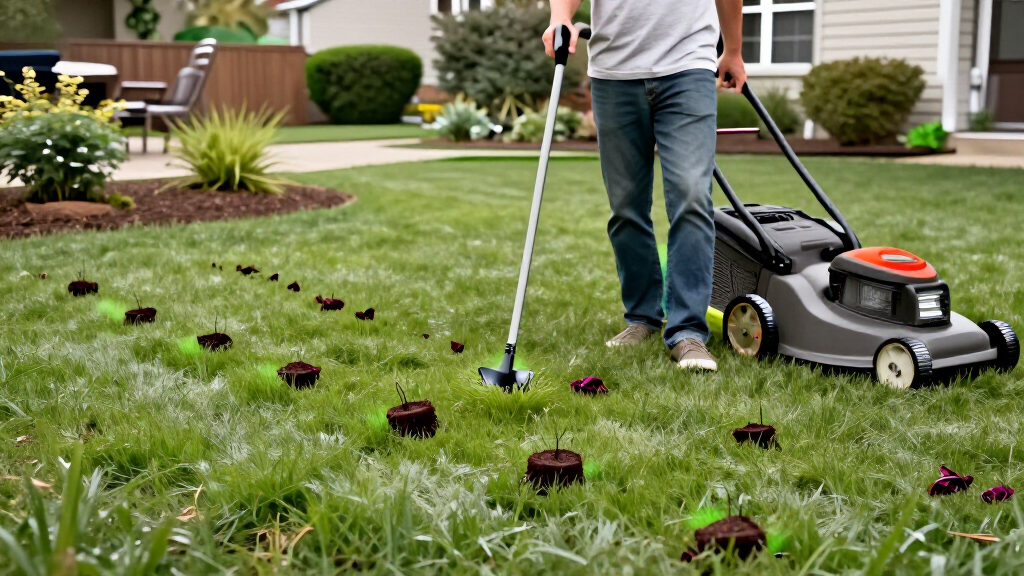
After core aeration, soil plugs left on the lawn will eventually break down. The report says mowing may speed that process if a homeowner wants to clear or flatten them for appearance or safety. However, hardened plugs could damage mower blades, so mowing over them soon after aeration carries a possible equipment risk.
Mowing Timing Can Affect New Seed
Waiting can help avoid disturbing grass while it recovers and protect new seed after overseeding. That makes the mowing decision part of planning the broader lawn-care schedule, rather than simply a question of whether the mower can run over recently aerated ground.
There is also a practical trade-off with core-aeration plugs. Leaving them in place lets them decompose naturally; mowing may break them up faster, but the report identifies a chance of blade damage from hardened plugs. The best choice depends on the lawn’s condition and the homeowner’s reason for wanting the plugs cleared.
Products Worth Considering

Ring Alarm 14-Piece Security Kit

Ring Alarm 8-Piece Home Security System Kit

Ring Alarm 5-Piece Home Security Kit
As an affiliate, we earn on qualifying purchases.
Aeration and the Lawn-Care Schedule
Aeration is used to relieve compacted soil and help oxygen reach turfgrass. The Hunker report says lawns with compacted soil or substantial foot traffic may need aeration more than once a year, but it does not give a fixed frequency for all properties.
The report distinguishes core aeration, which leaves soil plugs on the surface, from the separate issue of overseeding. Its central scheduling advice is to aerate before overseeding and allow time before mowing. It also cites Clemson Cooperative Extension guidance to alternate mowing directions and avoid heavy equipment on heavier soils, practices intended to limit compaction.
“Give the grass time to recover.”
— Ask Extension Foundation, as cited by Hunker
The Right Wait Varies by Lawn
The cited guidance does not establish one exact waiting period for every lawn. Grass type, current height, soil condition, weather and the aeration method may affect how quickly a lawn is ready, but the source material does not quantify those factors. It also does not provide a specific mowing date for newly overseeded lawns beyond advising a wait of a couple of weeks and warning against mowing immediately.
The report describes possible blade damage from hardened plugs but gives no estimate of how often it happens or how severe the damage may be. Homeowners therefore have to weigh that risk against the benefit of breaking plugs apart sooner.
Check Growth Before Restarting Mowing
After aerating, homeowners can use the report’s guidance to plan their next cut: wait a few days at minimum in ordinary cases, allow a longer interval after overseeding, and check grass height before mowing. Those relying on the cited 2-to-3-inch range should treat it as a general reference rather than a guarantee for every lawn.
For core-aeration plugs, leaving them to decompose remains an option; mowing to break them up should take account of whether the plugs have hardened and the possibility of blade damage. Alternating mowing direction and limiting heavy equipment on heavier soil can also help keep compaction in mind as routine maintenance continues.
Key Questions
Can I mow the same day I aerate?
It is possible, but the Hunker report says waiting at least a few days is generally better to give grass time to recover. The right timing depends on the lawn and whether you plan to overseed.
How long should I wait to mow after overseeding?
The report advises aerating before overseeding and waiting a couple of weeks before mowing. It also says not to mow immediately after overseeding; it does not specify one exact interval for all lawns.
Do I need to remove soil plugs after core aeration?
No. According to the report, plugs eventually decompose on their own, so leaving them in place is generally appropriate. Mowing may break them up faster, but hardened plugs could damage mower blades.
When is grass ready to mow after aeration?
Angi, as cited by Hunker, recommends mowing a few weeks after aeration or when turf is 2 to 3 inches tall. The report presents this as guidance, not a rule that fits every lawn.
Source: rss