
The best under-sink water filters depend on what you want removed, how much space you have, and whether you’re comfortable adding a faucet. My best overall pick is the Waterdrop 10UA for a straightforward, compact setup, while the iSpring RCC7AK-BN suits households seeking reverse osmosis with an alkaline remineralization stage. For a high-flow, multi-stage option, the Aquasana Claryum AQ-6300M-BN is another standout. The main tradeoff is between simpler filters that retain more minerals and reverse-osmosis systems that require more installation space and upkeep. Read on for the full breakdown of all 15 options and how to match one to your needs.

Get home appliances delivered free — and shop member deals
- Fast, free delivery on millions of items
- Access to Prime Big Deal Days deals on October 6–7
- Prime Video, Amazon Music and more included
Complete the kit
![[Genuine] Waterdrop PF-01A Water Filter Replacement for W...](https://m.media-amazon.com/images/I/41+5tl9EiKL._SX342_SY445_QL70_FMwebp_.jpg)

Key Takeaways
- Filtration type matters more than stage count: The lineup includes carbon-based systems, ultrafiltration, and reverse osmosis; they target different needs and are not interchangeable.
- The Waterdrop 10UA is the practical all-rounder: Its direct-connect format makes it a simpler fit than faucet-based systems, though it does not offer the broad treatment approach of reverse osmosis.
- Reverse osmosis adds capability and complexity: The iSpring RCC7AK-BN adds an alkaline stage, while the tankless Waterdrop G3P600 emphasizes high output; both call for more planning than a basic inline filter.
- Long filter-life claims change maintenance routines, not treatment needs: The CuZn UC-200 and Waterdrop UA-5Y reduce replacement frequency, but buyers still need to follow the maker’s stated service schedule and check water-use limits.
- Faucet and cabinet fit are real decision points: Dedicated-faucet picks such as the Waterdrop 10UB require room for extra hardware, while direct-connect options can simplify the visible setup.
| iSpring RCC7AK-BN 6-Stage Alkaline Reverse Osmosis Water Filtration System |  | Best for Reverse Osmosis and Remineralization | Filtration: 6 stages; reverse osmosis, alkaline, activated carbon, and carbon block | Certification: NSF/ANSI 58 | Maximum flow rate: 284 liters per day | VIEW LATEST PRICE | See Our Full Breakdown |
| Waterdrop 10UA Under-Sink Water Filter System | 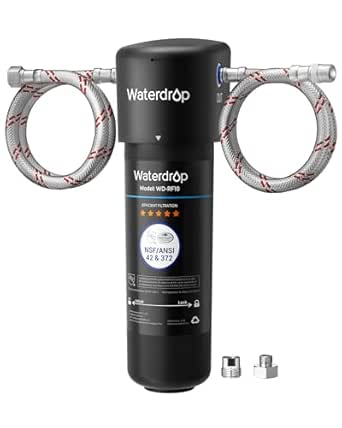 | Best Compact Pick for Municipal Water | Filtration method: Activated carbon | Certifications: NSF/ANSI 42 and 372 | Water compatibility: Cold municipal tap water | VIEW LATEST PRICE | See Our Full Breakdown |
| Waterdrop TSA 3-Stage Under-Sink Water Filter System |  | Best for Mineral Retention and Multi-Stage Carbon Filtration | Filter configuration: 3 filters; 8-stage filtration | Connection sizes: 3/8-inch and 1/2-inch cold-water lines | Maximum flow rate: 1.5 GPM | VIEW LATEST PRICE | See Our Full Breakdown |
| Waterdrop 10UA Under-Sink Water Filter System with 2 Filters |  | Best for Buyers Who Want a Spare Filter Included | Filtration method: Activated carbon | Certifications: NSF/ANSI 42 and 372 | Water compatibility: Cold municipal tap water | VIEW LATEST PRICE | See Our Full Breakdown |
| ICEPURE Under-Sink Water Filter System, 22,000-Gallon Capacity |  | Best for Long Cartridge Life and Fast Flow | Model: WFS5300A | Filtration method: Activated carbon | Capacity: 22,000 gallons | VIEW LATEST PRICE | See Our Full Breakdown |
| Aquasana Claryum 3-Stage Max Flow Under-Sink Water Filter, AQ-6300M-BN |  | Best Overall for Mineral-Retaining Filtration | Filtration stages: 3 | Purification method: Carbon block and ultrafiltration | Maximum flow rate: 0.72 gpm | VIEW LATEST PRICE | See Our Full Breakdown |
| Waterdrop UA-5Y 5-Year Under Sink Water Filter System |  | Best for Long Filter Life | Filtration method: 0.5 μm activated carbon block | Filter life: 5 years | Maximum flow rate: 1.33 gpm | VIEW LATEST PRICE | See Our Full Breakdown |
| iSpring RCC7-BN 5-Stage Under-Sink Reverse Osmosis Water Filter System |  | Best Certified Reverse Osmosis Pick | Filtration stages: 5 | Purification methods: Reverse osmosis, activated carbon, and carbon block | Certification: NSF/ANSI 58 | VIEW LATEST PRICE | See Our Full Breakdown |
| Waterdrop WD-TSA-UF Under Sink Ultrafiltration Water Filter System |  | Best for Fast Mineral-Retaining Filtration | Filtration accuracy: 0.01 μm | Filtration stages: Product information lists 8-stage and 9-stage filtration | Filters included: 3 | VIEW LATEST PRICE | See Our Full Breakdown |
| Waterdrop G3P600 Tankless Reverse Osmosis Water Filter System, 600 GPD |  | Best Premium Tankless RO System | Filtration: 8-stage reverse osmosis | Certifications: NSF/ANSI 42, 58, and 372; FCC certified | Capacity: 600 gallons per day | VIEW LATEST PRICE | See Our Full Breakdown |
| Waterdrop TSU 3-Stage Ultra Filtration Under-Sink Water Filter System | 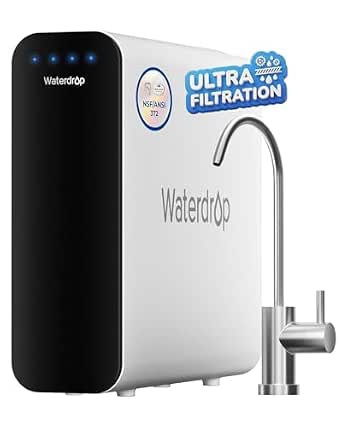 | Best for Mineral-Retaining Ultrafiltration | Filtration: 0.01-micron ultrafiltration; activated carbon; carbon block | Maximum flow rate: 1.05 GPM | Capacity: 2,200 gallons | VIEW LATEST PRICE | See Our Full Breakdown |
| CuZn UC-200 Under-Sink Water Filter, 5-Year Filter Life |  | Best for Long Replacement Intervals | Model: UC-200 | Filtration stages: 3 | Filter life: 5 years | VIEW LATEST PRICE | See Our Full Breakdown |
| Waterdrop 15UA Under-Sink Water Filter System, 19,000-Gallon Capacity |  | Best High-Capacity Direct-Connect Pick | Capacity: 19,000 gallons | Filter life: Up to 24 months | Filtration method: Activated carbon | VIEW LATEST PRICE | See Our Full Breakdown |
| Waterdrop UL12A Under Sink Water Filter |  | Best No-Drill Option for Renters | Model: WD-UL12A | Filter model: WD-FUL12 | Purification method: Activated carbon | VIEW LATEST PRICE | See Our Full Breakdown |
| Waterdrop 10UB Under-Sink Water Filter System with Dedicated Faucet |  | Best for a Dedicated Filtered-Water Faucet | Installation: Under sink; push-to-connect fittings | Purification method: Activated carbon | Water source: Municipal cold water only | VIEW LATEST PRICE | See Our Full Breakdown |
| under sink water filter | Maximum flow rate | Dimensions | Capacity | Certifications |
|---|---|---|---|---|
| iSpring RCC7AK-BN 6-Stage Alka | 284 liters per day | 15.5 × 16 × 18 inches | 75 gallons | — |
| Waterdrop 10UA Under-Sink Wate | 2.5 gpm; tested full flow 0.75 gpm at 60 psi | 3.9 × 3.6 × 12.3 inches | 11,000 gallons | NSF/ANSI 42 and 372 |
| Waterdrop TSA 3-Stage Under-Si | 1.5 GPM | — | — | NSF/ANSI 42; CT filter has IAPMO certification |
| Waterdrop 10UA Under-Sink Wate | 1.33 GPM | 3.9 × 3.6 × 12.3 inches | 11,000 gallons | NSF/ANSI 42 and 372 |
| ICEPURE Under-Sink Water Filte | 2.5 GPM at 60 PSI | 6.81 × 5.39 × 15.55 inches | 22,000 gallons | NSF/ANSI 42 and NSF/ANSI 372 |
| Aquasana Claryum 3-Stage Max F | 0.72 gpm | — | — | WQA tested and certified to NSF/ANSI 42, 53, and 401 |
| Waterdrop UA-5Y 5-Year Under S | 1.33 gpm | 3.9 × 3.6 × 16.7 inches | — | — |
| iSpring RCC7-BN 5-Stage Under- | 3.4 liters per minute | 23.62 × 15.75 × 11.81 inches | 75 gallons | — |
| Waterdrop WD-TSA-UF Under Sink | 1.5 gpm | — | — | — |
| Waterdrop G3P600 Tankless Reve | — | 18.12 × 5.67 × 17.72 inches | 600 gallons per day | NSF/ANSI 42, 58, and 372; FCC certified |
| Waterdrop TSU 3-Stage Ultra Fi | 1.05 GPM | 14.81 × 4.68 × 13.97 inches | 2,200 gallons | — |
| CuZn UC-200 Under-Sink Water F | — | 5.5 × 14 × 5.5 inches | — | — |
| Waterdrop 15UA Under-Sink Wate | 0.75 GPM at 60 psi | 3.9 × 3.6 × 16.7 inches | 19,000 gallons | — |
| Waterdrop UL12A Under Sink Wat | — | 3.9 × 3.6 × 12.3 inches | — | NSF/ANSI 42 and 372; IAPMO certified |
| Waterdrop 10UB Under-Sink Wate | 0.75 GPM at 60 psi | — | — | IAPMO certified to NSF/ANSI 42 and 372; third-party tested to NSF/ANSI 53 |
More Details on Our Top Picks
iSpring RCC7AK-BN 6-Stage Alkaline Reverse Osmosis Water Filtration System
The iSpring RCC7AK-BN is the pick for buyers who want reverse osmosis rather than a carbon filter that mainly targets taste and selected contaminants. Its NSF/ANSI 58 certification and six-stage process reduce TDS, while the final mineral stage adds minerals back to the treated water. Compared with the Waterdrop 10UA, this is a more involved system with broader treatment ambitions, but it also takes more cabinet space and includes a storage tank. The top-mounted faucet fastener and quick fittings can make installation more manageable, and the clear first-stage housing offers a visible way to check buildup. The tradeoffs are periodic filter changes, a more complex installation, and a stated capacity of 75 gallons. I’d choose it when RO treatment and remineralization matter more than simplicity.
Pros:- NSF/ANSI 58-certified reverse osmosis treatment reduces TDS.
- Six stages include an alkaline mineral stage.
- Top-mounted faucet fastener and quick fittings can simplify installation.
- Transparent first-stage housing makes visible buildup easier to monitor.
Cons:- Tank and filter assembly require substantial under-sink space.
- Multiple stages require periodic replacement and more upkeep than the Waterdrop 10UA.
- RO installation is more involved than a direct-connect carbon filter.
Best for: Households seeking an NSF/ANSI 58-certified reverse osmosis system that reduces TDS and adds minerals back, with room for a tank under the sink.
Not ideal for: Renters or owners with crowded sink cabinets who want a compact, low-maintenance carbon filter without a storage tank or periodic multi-stage replacements.
- Filtration:6 stages; reverse osmosis, alkaline, activated carbon, and carbon block
- Certification:NSF/ANSI 58
- Maximum flow rate:284 liters per day
- Capacity:75 gallons
- Operating pressure:70 psi
- Maximum supported TDS:750 ppm
- Dimensions:15.5 × 16 × 18 inches
- Power:No power needed
- Warranty:1-year manufacturer limited warranty
Our verdict“Choose the RCC7AK-BN if you want certified reverse osmosis with remineralization and can spare cabinet space for a tank.”
Waterdrop 10UA Under-Sink Water Filter System
The Waterdrop 10UA suits buyers who want a compact, direct-connect filter for cold municipal water rather than a tank-based RO setup. Its twist-and-lock fittings make cartridge changes straightforward, and its 12-month maximum filter life means less frequent replacement than the six-month interval listed for the iSpring RCC7AK-BN. The 10UA retains dissolved minerals, so it does not provide the TDS reduction that the iSpring’s reverse osmosis system offers. Its listed capacity is 11,000 gallons, and the tested full flow rate is 0.75 gpm at 60 psi, even though the maximum flow rate is higher. That gap is useful to keep in mind when judging everyday delivery. This is a focused option for taste and selected contaminants, not a fit for hot water or untreated well water.
Pros:- Compact body fits more easily beneath a crowded sink than the iSpring RCC7AK-BN tank system.
- Twist-and-lock fittings support simpler installation and cartridge replacement.
- Retains dissolved minerals while reducing chlorine and selected contaminants.
- Maximum filter life is listed as 12 months.
Cons:- Designed for cold municipal water, not well water or hot water.
- Does not reduce TDS like the iSpring RCC7AK-BN.
- Tested full flow is 0.75 gpm at 60 psi, below its stated 2.5 gpm maximum.
Best for: Households on cold municipal water that want a compact under-sink filter, retained minerals, and less frequent cartridge changes than a multi-stage RO system.
Not ideal for: Well-water users, households seeking TDS reduction, or buyers who need hot-water filtration or a verified high flow under their actual pressure conditions.
- Filtration method:Activated carbon
- Certifications:NSF/ANSI 42 and 372
- Water compatibility:Cold municipal tap water
- Maximum filter life:12 months
- Capacity:11,000 gallons
- Maximum flow rate:2.5 gpm; tested full flow 0.75 gpm at 60 psi
- Maximum supported TDS:700 ppm
- Dimensions:3.9 × 3.6 × 12.3 inches
- Replacement filter:WD-RF10
Our verdict“Pick the Waterdrop 10UA for a compact municipal-water filter when mineral retention and easy cartridge changes matter more than TDS reduction.”
Waterdrop TSA 3-Stage Under-Sink Water Filter System
The Waterdrop TSA is a useful middle ground for municipal-water households that want several filtration stages but do not want reverse osmosis. Its three filters provide eight-stage filtration, targeting chlorine, fluoride, PFAS, and other listed contaminants while retaining beneficial minerals. Unlike the iSpring RCC7AK-BN, it does not reduce TDS, so it is not the choice for buyers seeking RO-style dissolved-solids reduction. Compared with the simpler Waterdrop 10UA, the TSA offers a more layered filter arrangement and a stated maximum flow of 1.5 GPM, but filter lifespans vary by stage from six months to as long as 18 months. It connects to standard 3/8-inch or 1/2-inch cold-water lines and does not include a separate faucet. Untreated well water needs pre-filtration.
Pros:- Three filters provide eight-stage filtration.
- Targets chlorine, fluoride, PFAS, and other listed contaminants.
- Retains beneficial minerals and does not reduce TDS.
- Twist-and-lock filter replacement and push-to-connect installation reduce routine handling.
Cons:- Does not reduce TDS, unlike the iSpring RCC7AK-BN reverse osmosis system.
- Not suitable for hot water or untreated well water without pre-filtration.
- No additional faucet is included, and filter lifespans vary by stage.
Best for: Municipal-water households wanting multi-stage filtration for listed contaminants while retaining minerals and using an existing faucet.
Not ideal for: Buyers who want TDS reduction, a supplied dedicated faucet, hot-water filtration, or direct use with untreated well water.
- Filter configuration:3 filters; 8-stage filtration
- Connection sizes:3/8-inch and 1/2-inch cold-water lines
- Maximum flow rate:1.5 GPM
- Filter lifespans:6 months; 8–12 months; 12–18 months
- Water source:Municipal tap water; well water requires pre-filtration
- Water temperature:Cold water only
- TDS reduction:Does not reduce TDS
- Certifications:NSF/ANSI 42; CT filter has IAPMO certification
- Included faucet:No
Our verdict“Choose the TSA if you want layered municipal-water filtration and mineral retention, but not reverse osmosis or TDS reduction.”
Waterdrop 10UA Under-Sink Water Filter System with 2 Filters
This Waterdrop 10UA two-filter package keeps the compact, direct-connect format of the standard 10UA while adding a second filter to the supplied set. It is designed for cold municipal water and reduces chlorine, PFAS, PFOA/PFOS, and lead according to the product description. Compared with the Waterdrop TSA, the 10UA package is simpler and has a stated 12-month filter life, but it does not offer the TSA’s three-filter, eight-stage setup. It also does not match the iSpring RCC7AK-BN for TDS reduction, since this activated-carbon system is not reverse osmosis. The 1.33 GPM maximum flow rate and 11,000-gallon capacity make it a practical everyday option, while the twist-and-lock design helps with changes. Buyers should check faucet thread compatibility before installation.
Pros:- Second filter is included alongside the system.
- Targets chlorine, PFAS, PFOA/PFOS, and lead, according to the product description.
- Twist-and-lock design supports straightforward filter replacement.
- Compact dimensions suit kitchens with limited under-sink room.
Cons:- Designed for cold municipal water, not hot water or well water.
- Does not reduce TDS like the iSpring RCC7AK-BN.
- Faucet thread compatibility may need checking before installation.
Best for: Municipal-water households that prefer a compact activated-carbon system and want a second filter included for a later replacement.
Not ideal for: Well-water users, people needing hot-water filtration or TDS reduction, and buyers whose faucet connection does not match the available fittings.
- Filtration method:Activated carbon
- Certifications:NSF/ANSI 42 and 372
- Water compatibility:Cold municipal tap water
- Maximum flow rate:1.33 GPM
- Filter life:12 months
- Capacity:11,000 gallons
- Dimensions:3.9 × 3.6 × 12.3 inches
- Included filters:System supplied with 2 filters
Our verdict“Choose this 10UA package if you want a compact municipal-water carbon filter and value having a second cartridge included.”
ICEPURE Under-Sink Water Filter System, 22,000-Gallon Capacity
The ICEPURE WFS5300A prioritizes long stated capacity and fast delivery over multi-stage treatment or reverse osmosis. Its activated-carbon cartridge is rated for 22,000 gallons, with a recommended life of up to three years, and the listed flow rate is 2.5 GPM at 60 PSI. That makes it a stronger fit for households that want to avoid frequent cartridge changes than the Waterdrop 10UA, whose maximum filter life is 12 months. The tradeoff is a more focused stated purpose: reducing chlorine, taste, and odor while retaining minerals, rather than the broader contaminant targets described for the Waterdrop TSA. It connects directly to a cold-water line without requiring a countertop hole. The long service interval depends on usage conditions, and the specified thread types may not match every plumbing setup.
Pros:- 22,000-gallon stated capacity and up to three-year recommended filter life.
- Listed flow rate of 2.5 GPM at 60 PSI.
- NSF/ANSI 42 and 372 certifications.
- Direct cold-water-line connection needs no countertop hole.
Cons:- Three-year service life depends on usage conditions and should not be treated as a fixed interval.
- Limited to cold-water lines and specified 1/2-inch or 3/8-inch female NPT connections.
- More focused on chlorine, taste, and odor than the Waterdrop TSA’s broader listed contaminant targets.
Best for: Busy households seeking a direct-connect cold-water filter with high stated capacity, fast flow, and fewer planned cartridge changes.
Not ideal for: Buyers seeking reverse osmosis, broad contaminant reduction beyond the stated chlorine, taste, and odor focus, or connections outside the specified thread types.
- Model:WFS5300A
- Filtration method:Activated carbon
- Capacity:22,000 gallons
- Recommended filter life:Up to 3 years
- Maximum flow rate:2.5 GPM at 60 PSI
- Certifications:NSF/ANSI 42 and NSF/ANSI 372
- Filter outer layer:0.5 micron
- Compatible connections:1/2-inch or 3/8-inch female NPT
- Dimensions:6.81 × 5.39 × 15.55 inches
Our verdict“Pick the ICEPURE if long stated cartridge capacity and strong flow matter more than reverse osmosis or a wider set of listed contaminant targets.”
Aquasana Claryum 3-Stage Max Flow Under-Sink Water Filter, AQ-6300M-BN
I’d put the Aquasana Claryum Max Flow near the top for households that want broad contaminant reduction without switching to reverse osmosis. Its three-stage system is designed to reduce up to 78 contaminants, including lead and PFAS, while keeping beneficial minerals in the water. The 0.72 gpm flow rate also makes it more convenient for filling a glass or pot than systems built around slower RO output, such as the iSpring RCC7-BN. Aquasana includes a brushed-nickel faucet and replacement alerts, but its filters need changing every six months or 800 gallons, so maintenance is more frequent than with the Waterdrop UA-5Y. It also leaves TDS unchanged and needs 15.85 inches of cabinet clearance. I’d choose it for filtration breadth and ease of daily use, not for dissolved-solids reduction.
Pros:- Designed to reduce up to 78 contaminants, including lead, PFAS, chlorine, and microplastics
- Retains beneficial minerals and provides a 0.72 gpm maximum flow rate
- Includes a brushed-nickel faucet, installation parts, and filter-change alerts
- Twist-off replacement filters simplify routine maintenance
Cons:- Does not reduce TDS
- Filters require replacement every six months or 800 gallons
- Needs 15.85 inches of under-sink space plus room for access
Best for: Households on municipal water seeking broad contaminant reduction, a dedicated faucet, and retained minerals without reverse osmosis.
Not ideal for: Buyers who want lower TDS, infrequent filter changes, or have less than 15.85 inches of clear cabinet space.
- Filtration stages:3
- Purification method:Carbon block and ultrafiltration
- Maximum flow rate:0.72 gpm
- Filter life:Up to 6 months or 800 gallons
- Operating pressure:20–80 psi
- Required under-sink clearance:15.85 inches
- Faucet finish:Brushed nickel
- Certifications:WQA tested and certified to NSF/ANSI 42, 53, and 401
- TDS reduction:No
Our verdict“Choose the Aquasana if you want broad, mineral-retaining filtration and faster everyday dispensing than an RO system, and can keep up with regular filter changes.”
Waterdrop UA-5Y 5-Year Under Sink Water Filter System
The Waterdrop UA-5Y is the lineup’s low-maintenance pick: its stated five-year filter life means far fewer scheduled replacements than the Aquasana Claryum, which calls for changes every six months or 800 gallons. It uses a 0.5 μm activated carbon block to reduce chlorine, PFOA/PFOS, and common particles while retaining minerals, and its 1.33 gpm maximum flow rate suits busy kitchens. That long interval is appealing, but it should not be mistaken for reverse-osmosis treatment: the system is intended for municipal water, is not recommended for well water, and does not claim TDS reduction. Its NSF/ANSI 372 certification concerns lead content in materials rather than broad contaminant-reduction performance. At 16.7 inches long, it also needs a clearance check. I’d favor it over Aquasana for less frequent filter upkeep, but not for a wider stated contaminant scope.
Pros:- Stated five-year filter life reduces scheduled replacement frequency
- 1.33 gpm maximum flow rate supports quick dispensing
- Reduces chlorine, PFOA/PFOS, and several common particles while retaining minerals
- Mechanical operation requires no electricity
Cons:- Not recommended for well water
- Does not reduce TDS
- NSF/ANSI 372 certification does not establish broad contaminant-reduction claims, and the 16.7-inch length may limit fit
Best for: Municipal-water households prioritizing fewer filter changes, a simple faucet connection, and mineral retention.
Not ideal for: Well-water users or buyers seeking TDS reduction, broad third-party contaminant-reduction certification, or a compact cabinet fit.
- Filtration method:0.5 μm activated carbon block
- Filter life:5 years
- Maximum flow rate:1.33 gpm
- Dimensions:3.9 × 3.6 × 16.7 inches
- Weight:3.6 lb
- Water source:Municipal tap water; not recommended for well water
- Certification:NSF/ANSI 372
- Power source:Mechanical; no electricity required
- Warranty:5-year prorated replacement warranty
Our verdict“Pick the UA-5Y if you use municipal water and want fewer filter changes than the Aquasana, but skip it if you need TDS reduction or well-water compatibility.”
iSpring RCC7-BN 5-Stage Under-Sink Reverse Osmosis Water Filter System
For buyers who want reverse osmosis with NSF/ANSI 58 certification, the iSpring RCC7-BN offers a different kind of filtration from the mineral-retaining Aquasana Claryum and Waterdrop WD-TSA-UF. Its five stages combine RO with activated carbon and carbon block, and the product is specified to reduce up to 99% of more than 1,000 listed contaminants. That makes it the stronger fit here for people seeking RO treatment rather than a simpler carbon or ultrafiltration system. The tradeoff is a substantial under-sink footprint: at 23.62 × 15.75 × 11.81 inches and 27.5 lb, it needs careful cabinet planning. Its 3.4-liter-per-minute figure is a maximum flow specification, not a reason to assume continuous faucet flow like a direct-flow system. The brushed-nickel faucet and transparent first-stage housing add practical touches, though warranty coverage requires registration.
Pros:- NSF/ANSI 58 certified
- Five-stage RO, activated-carbon, and carbon-block filtration
- No electrical power required
- Transparent first-stage housing helps check the sediment filter
Cons:- Large, heavy installation requires substantial under-sink space
- Reverse osmosis is a more involved setup than the Aquasana Claryum or Waterdrop WD-TSA-UF
- The one-year limited warranty requires registration
Best for: Households that specifically want an NSF/ANSI 58-certified, five-stage reverse-osmosis system and have room for a multi-part under-sink setup.
Not ideal for: Renters with limited cabinet space or buyers who want a compact, mineral-retaining filter that avoids RO installation.
- Filtration stages:5
- Purification methods:Reverse osmosis, activated carbon, and carbon block
- Certification:NSF/ANSI 58
- Maximum flow rate:3.4 liters per minute
- Capacity:75 gallons
- Maximum supported TDS:750 ppm
- Dimensions:23.62 × 15.75 × 11.81 inches
- Faucet finish:Brushed nickel
- Warranty:1-year limited manufacturer warranty upon registration
Our verdict“Choose the iSpring if NSF/ANSI 58-certified reverse osmosis is your priority and your cabinet can accommodate its larger installation.”
Waterdrop WD-TSA-UF Under Sink Ultrafiltration Water Filter System
The Waterdrop WD-TSA-UF is a good fit for buyers who want a brisk dispensing rate without the TDS reduction of reverse osmosis. Its ultrafiltration membrane is rated at 0.01 μm, and the three included filters are described as helping reduce chlorine, taste and odor, fluoride, heavy metals, rust, sediment, and particles in municipal cold water. At up to 1.5 gpm, it has a higher stated flow rate than the Aquasana Claryum, while retaining dissolved minerals like that model. The system uses twist-and-lock filters and push-to-connect fittings, which can make routine replacement and DIY setup less involved. There is a data caveat: product information gives both eight- and nine-stage descriptions, so I would not treat the stage count as settled. It also does not reduce TDS, and well-water use calls for pre-filtration.
Pros:- 0.01 μm ultrafiltration membrane and three included filters
- Maximum flow rate of 1.5 gpm, higher than the Aquasana Claryum’s stated rate
- Twist-and-lock filters and push-to-connect fittings support easier maintenance
- Retains dissolved minerals and uses mechanical operation
Cons:- Does not reduce TDS
- Specified for municipal cold water; well water requires pre-filtration
- Product information lists both eight and nine filtration stages
Best for: Municipal-water households that want high-flow ultrafiltration, retained minerals, and a system designed for straightforward DIY filter changes.
Not ideal for: Well-water users without pre-filtration, households needing TDS reduction, or anyone needing a hot-water connection.
- Filtration accuracy:0.01 μm
- Filtration stages:Product information lists 8-stage and 9-stage filtration
- Filters included:3
- Maximum flow rate:1.5 gpm
- Filter lifespan:Up to 12 months, depending on filter and water quality
- Water compatibility:Municipal cold water
- Purification method:Ultrafiltration
- TDS reduction:No
- Power source:Mechanical
Our verdict“Choose the WD-TSA-UF for fast, mineral-retaining filtration on municipal cold water, but choose an RO system such as the iSpring if reducing TDS is a priority.”
Waterdrop G3P600 Tankless Reverse Osmosis Water Filter System, 600 GPD
The Waterdrop G3P600 is the premium choice for buyers who want reverse osmosis without storing water in a tank. Its 600-gallon-per-day capacity and built-in smart faucet, which displays TDS and filter life, provide more at-a-glance information than the iSpring RCC7-BN. Unlike the Aquasana Claryum and WD-TSA-UF, this RO system is designed to reduce TDS, as well as listed contaminants such as chlorine, fluoride, and arsenic. The tankless format can free cabinet space otherwise occupied by a storage tank, though the unit still measures 18.12 × 5.67 × 17.72 inches and weighs 31 lb. It needs under-sink electricity, and its specified 0.42 gpm flow rate is lower than the WD-TSA-UF’s 1.5 gpm. I’d pick it for monitoring and RO performance, not for a power-free or fastest-flow setup.
Pros:- Tankless reverse-osmosis design avoids a separate storage tank
- Smart faucet displays TDS and filter-life information
- Rated capacity of up to 600 gallons per day with a 2:1 pure-water-to-drain ratio
- Reduces TDS and listed contaminants including chlorine, fluoride, and arsenic
Cons:- Requires a corded electrical connection under the sink
- At 0.42 gpm, its specified flow rate is lower than the WD-TSA-UF’s
- The 31 lb unit still requires careful cabinet-fit planning
Best for: Households seeking tankless reverse osmosis, TDS monitoring at the faucet, and high stated daily capacity, with an outlet available under the sink.
Not ideal for: Buyers without under-sink power, those prioritizing a higher stated flow rate, or kitchens where the cabinet cannot fit a 31 lb system.
- Filtration:8-stage reverse osmosis
- Certifications:NSF/ANSI 42, 58, and 372; FCC certified
- Capacity:600 gallons per day
- Pure-water-to-drain ratio:2:1
- Flow rate:0.42 gpm
- Dimensions:18.12 × 5.67 × 17.72 inches
- Weight:31 lb
- Maximum supported water TDS:1500 ppm
- Power source:Corded electric
Our verdict“Choose the G3P600 if you want tankless RO with faucet-based TDS and filter-life monitoring and can provide power and cabinet space.”
Waterdrop TSU 3-Stage Ultra Filtration Under-Sink Water Filter System
I’d pick the Waterdrop TSU for buyers who want an under-sink system that targets a range of listed contaminants without removing dissolved minerals. Its 0.01-micron ultrafiltration works alongside activated carbon, and the system needs no electricity or drain line, unlike the roundup’s reverse-osmosis options such as the iSpring RCC7AK-BN. The 2,200-gallon capacity and UF filter rated for up to 24 months also reduce how often that stage needs replacing.
The tradeoff is that the TSU does not reduce TDS, so it is not a choice for lowering a high dissolved-solids reading. It also needs countertop drilling for its separate faucet, making the Waterdrop 15UA a simpler fit for shoppers who prefer push-to-connect installation. The TSU is intended for municipal cold water, not well water.
Pros:- Combines 0.01-micron ultrafiltration with activated carbon and carbon block
- No power use, wastewater, or drain connection
- UF filter lifespan is listed at up to 24 months, with a filter reminder panel
- Includes a brushed nickel faucet in a compact system
Cons:- Does not reduce TDS
- Separate faucet installation requires countertop drilling
- Not suitable for well water or hot water
Best for: Households on municipal cold water that want ultrafiltration, mineral retention, and a dedicated faucet without a drain line.
Not ideal for: Renters unable to drill a countertop, well-water users, or anyone seeking TDS reduction.
- Filtration:0.01-micron ultrafiltration; activated carbon; carbon block
- Maximum flow rate:1.05 GPM
- Capacity:2,200 gallons
- Filter lifespans:UF: 24 months; CT: 12 months; PP: 6 months
- Dimensions:14.81 × 4.68 × 13.97 inches
- Water compatibility:Municipal cold water; not suitable for hot water or well water
- Installation:Under sink; countertop drilling required; supports 1/2-inch and 3/8-inch water pipes
- Power:Mechanical; no power required
Our verdict“Choose the TSU if you want mineral-retaining ultrafiltration for municipal water and can accommodate a drilled faucet installation.”
CuZn UC-200 Under-Sink Water Filter, 5-Year Filter Life
The CuZn UC-200 stands apart for buyers who would rather keep filter changes infrequent than add a dedicated faucet. Its inline connection is designed for DIY installation without drilling, and its three-stage media includes sediment membranes, KDF-55, and coconut shell carbon. The listed five-year filter life is much longer than the Waterdrop 10UB’s one-year schedule, though replacement timing and actual life depend on use and water conditions.
This is a practical choice for people who want listed reductions in PFAS, PFOA/PFOS, lead, and chlorine while retaining minerals. Its main limitation is shared with several carbon-based picks, including the Waterdrop 15UA: it does not reduce TDS. The UC-200 also needs room for its wide under-sink housing and a compatible faucet connection, so it is less suited to crowded cabinets or buyers wanting a separate filtered-water tap.
Pros:- Stated filter life of five years
- Three filtration stages use sediment membranes, KDF-55, and coconut shell carbon
- DIY inline installation requires no drilling
- Designed to retain beneficial minerals
Cons:- Does not reduce TDS
- Requires an under-sink faucet connection and cabinet space
- No dedicated filtered-water faucet is listed
Best for: Homeowners seeking an inline filter with a long stated service life and no countertop drilling.
Not ideal for: Buyers who need TDS reduction, want a separate filtered-water faucet, or have limited under-sink width.
- Model:UC-200
- Filtration stages:3
- Filter life:5 years
- Filtration media:Micro sediment membranes, KDF-55, coconut shell carbon
- Connection:Inline faucet connection
- Installation:DIY; no drilling required
- Listed reductions:PFAS, PFOA/PFOS, lead, and chlorine
- Dimensions:5.5 × 14 × 5.5 inches
- Certification information:NSF/ANSI 42; NSF 42 testing certification listed
Our verdict“Pick the UC-200 if fewer scheduled filter changes matter more than TDS reduction or having a separate drinking-water faucet.”
Waterdrop 15UA Under-Sink Water Filter System, 19,000-Gallon Capacity
For buyers who want a high-capacity carbon filter with a straightforward connection, the Waterdrop 15UA makes a strong case. Its listed capacity is 19,000 gallons, with filter life of up to 24 months, and push-to-connect fittings simplify setup compared with the TSU, which requires countertop drilling for its separate faucet. The 15UA’s compact width may suit cabinets where a larger multi-stage system is awkward, although its 16.7-inch height still needs checking.
It is aimed at municipal cold water and is listed to reduce chlorine, taste and odor, lead, PFAS, PFOA/PFOS, and sediment while retaining minerals. Its 0.75-gpm flow rate is adequate for filling a glass or cooking pot, but not as brisk as the TSU’s stated 1.05 GPM. Like the CuZn UC-200, it does not lower TDS, and buyers should account for its coconut-shell carbon and replacement-filter model.
Pros:- 19,000-gallon capacity and filter life of up to 24 months
- Push-to-connect fittings simplify installation and replacement
- Listed reduction of chlorine, lead, PFAS, PFOA/PFOS, and sediment
- IAPMO certified to NSF/ANSI 42 and 372; third-party tested to NSF/ANSI 53 for lead reduction
Cons:- For cold municipal water only, not well or hot water
- 0.75-gpm flow is lower than the TSU’s listed 1.05 GPM
- Does not reduce TDS; coconut-shell carbon may not suit people with coconut allergies
Best for: Households on municipal cold water that want long stated capacity, push-to-connect installation, and a compact-width filter.
Not ideal for: Well-water users, people with coconut allergies, or buyers who need TDS reduction or a higher flow rate.
- Capacity:19,000 gallons
- Filter life:Up to 24 months
- Filtration method:Activated carbon
- Maximum flow rate:0.75 GPM at 60 psi
- Installation:Under sink; push-to-connect fittings
- Water compatibility:Cold municipal water
- Dimensions:3.9 × 3.6 × 16.7 inches
- Maximum supported TDS:700 ppm
- Replacement filter:WD-RF15
Our verdict“Choose the 15UA if you want a high-capacity, direct-connect carbon filter for municipal water and do not need TDS reduction.”
Waterdrop UL12A Under Sink Water Filter
The Waterdrop UL12A is the clearest fit here for renters or anyone who cannot drill into a countertop. Its freestanding, suction-cup-base design avoids the permanent faucet installation required by the TSU, while a smart reminder uses light and beep indicators to flag filter service. It is listed to reduce PFAS, lead, chlorine, and heavy metals, and its 11,000-gallon capacity gives it more stated volume than the TSU’s 2,200 gallons.
The compromises are a 12-month filter life and a moderate 0.75-gpm flow rate; capacity does not mean the filter should be left in place beyond its stated schedule. Like the 15UA, it uses activated carbon and retains minerals rather than reducing TDS. Check the cabinet layout and hose connections before buying, and note that its coconut-shell carbon may not suit people with coconut allergies.
Pros:- No-drill, freestanding installation with suction-cup base
- Smart filter-life reminder with beep and light indicators
- 11,000-gallon capacity with a listed 12-month filter life
- NSF/ANSI 42 and 372 standards; IAPMO certified
Cons:- Does not reduce TDS
- 0.75-gpm flow rate is moderate
- Coconut-shell activated carbon may not suit people with coconut allergies
Best for: Renters and apartment dwellers who want under-sink filtration without drilling or installing a dedicated faucet.
Not ideal for: Buyers who need TDS reduction, faster flow, or filtration for well or hot water.
- Model:WD-UL12A
- Filter model:WD-FUL12
- Purification method:Activated carbon
- Certifications:NSF/ANSI 42 and 372; IAPMO certified
- Flow rate:0.75 GPM
- Filter life:12 months or 11,000 gallons
- Dimensions:3.9 × 3.6 × 12.3 inches
- Installation:Under sink; no drill
- Maximum TDS:700 ppm
Our verdict“The UL12A suits renters who want a no-drill under-sink setup and accept annual filter changes without TDS reduction.”
Waterdrop 10UB Under-Sink Water Filter System with Dedicated Faucet
The Waterdrop 10UB makes sense for buyers who want filtered water from its own faucet rather than through the kitchen’s main tap. It includes a brushed stainless steel faucet, and push-to-connect fittings plus a twist-and-lock replacement cartridge keep installation and routine changes relatively simple. Its listed targets include chlorine, taste, odor, lead, PFAS, PFOA/PFOS, and sediment, while dissolved minerals remain in the water.
Compared with the Waterdrop 15UA, the 10UB adds a dedicated faucet but has a shorter one-year filter life rather than up to 24 months. It also needs a faucet opening, unlike the renter-oriented UL12A. The 0.75-gpm maximum flow is shared with those alternatives, and the supplied dimensions are incomplete, so cabinet fit needs checking. This is for municipal cold water, not well or hot water, and it does not reduce TDS.
Pros:- Includes a lead-free brushed stainless steel dedicated faucet
- Push-to-connect fittings and twist-and-lock filter replacement
- Listed reduction of chlorine, taste, odor, lead, PFAS, PFOA/PFOS, and sediment
- Retains dissolved minerals
Cons:- Filter life is listed at one year, shorter than the 15UA’s up-to-24-month schedule
- Dedicated faucet installation may require an available countertop opening
- Not suitable for well or hot water; does not reduce TDS
Best for: Homeowners who want a separate filtered-water tap, tool-free cartridge changes, and treatment for listed municipal-water contaminants.
Not ideal for: Renters who cannot add a faucet, well-water users, or buyers seeking TDS reduction or longer replacement intervals.
- Installation:Under sink; push-to-connect fittings
- Purification method:Activated carbon
- Water source:Municipal cold water only
- Certifications:IAPMO certified to NSF/ANSI 42 and 372; third-party tested to NSF/ANSI 53
- Maximum flow rate:0.75 GPM at 60 psi
- Filter life:1 year
- Replacement filter:WD-RF10
- Operating temperature:35–100 °F
- Faucet material:Lead-free brushed stainless steel
Our verdict“Choose the 10UB if a dedicated filtered-water faucet and easy cartridge changes matter more than longer filter life or no-drill installation.”

How We Picked
I compared these 15 systems by the decisions that most affect ownership: filtration approach, installation demands, maintenance intervals, claimed capacity, and how well each format fits common under-sink layouts. I gave more weight to useful distinctions than to stage counts alone, since a higher number of stages does not automatically mean a better fit for every household. I also considered whether a product needs a dedicated faucet, storage tank, drain connection, or room for larger cartridges.
The order favors systems that offer a strong balance of everyday usability and clearly defined buyer fit, with specialized options ranked for the people who need their particular strengths. Reverse-osmosis models earn attention for buyers seeking that treatment style, but their installation and upkeep keep them from automatically outranking simpler filters. Long-life and high-capacity claims are useful only when they match household demand and the manufacturer’s replacement guidance, so I treat them as ownership factors—not a substitute for checking contaminant reduction claims and certifications.
Factors to Consider When Choosing Best Under Sink Water Filters
Before choosing a model, I’d start with the water problem you’re trying to solve and the installation your kitchen can support. These decisions can matter more than brand or the number of filtration stages.
Match the Filter to Your Water Concern
Start with a recent water-quality report or a targeted test rather than buying based on taste alone. Different systems address different substances, and a filter’s general label does not prove it reduces the contaminant you care about. Check the product’s performance data for the exact substance and reduction claim, and look for independent certification that applies to that claim. If your concern is a specific contaminant, a system without a matching verified claim may not solve the problem even if it has several stages. Municipal reports can offer a starting point, but a private well may need testing for local risks. This step narrows the field before you compare convenience or capacity.
Choose Between Carbon, Ultrafiltration, and Reverse Osmosis
Carbon-focused filters are often a good fit for improving taste and reducing certain listed contaminants while keeping the setup relatively simple. Ultrafiltration uses a finer physical barrier, but it should not be treated as equivalent to reverse osmosis or as a universal solution for dissolved substances. Reverse osmosis can address a broader set of dissolved contaminants when the model’s claims support that use, yet typically brings more components and maintenance. A common mistake is assuming that the most intensive method is always best; it may add work without addressing your actual concern. Compare the reduction claims, water use, and replacement requirements for the specific system rather than relying on the technology name alone.
Measure the Cabinet and Check Plumbing Before Ordering
Measure the usable cabinet area after accounting for the sink bowl, garbage disposal, cleaning supplies, and plumbing bends. Then check whether the system requires a dedicated faucet, a storage tank, a drain connection, or a particular connection size. Faucet-based systems can require a hole in the sink or countertop, which may be difficult to add to some surfaces. Tankless and direct-connect designs can free up space, but still need access for cartridge changes and shutoff valves. Buyers often measure only the filter body and miss the clearance needed to twist off a cartridge. Confirm the full installation diagram and household plumbing compatibility before making a choice.
Compare Replacement Schedules With Your Household’s Use
Filter capacity is usually expressed as a volume or time estimate, and actual replacement timing can depend on water quality and how much water your household uses. A large-capacity cartridge may reduce how often you buy replacements, but it can still require replacement by a time limit or when performance changes. Check whether the system uses one cartridge or several, how easy each is to source, and whether the manufacturer provides clear service instructions. A long stated filter life can be less useful for a household with unusually high consumption or challenging incoming water. Work out the expected maintenance routine before purchase so a low-intervention design does not become an inconvenient one.
Decide Whether Reverse Osmosis Is Worth the Added Upkeep
Reverse osmosis makes the most sense when its specific reduction claims match your water concerns and you’re willing to accommodate its components. Depending on the system, installation can involve a tank or tankless unit, tubing, a drain connection, and more involved filter changes than a basic inline model. Some buyers also prefer a remineralization stage, but its presence should be treated as a preference rather than proof that a system is right for every water profile. Consider the available cabinet space, access to a drain, and the maker’s maintenance guidance before choosing. If your needs are narrower, a simpler filter may offer a more convenient ownership experience.
Treat Certifications and Claims as Model-Specific
Do not assume that every product in a brand’s range has the same certifications or performance. Check the exact model number and the standard named in its documentation, then confirm which contaminants the certification covers. A certification for material safety or structural integrity is not the same as a claim for contaminant reduction. Also compare the conditions behind stated capacity and flow information with your expected use. This extra check helps prevent a common mismatch: selecting a product because it mentions a familiar standard without confirming that the relevant reduction claim is covered. Keep the manufacturer’s installation and replacement directions with your records.
Frequently Asked Questions
Should I choose reverse osmosis or a simpler under-sink filter?
I’d choose based on the contaminant you need to reduce, not on which technology sounds more advanced. Reverse osmosis may suit buyers whose water concerns match the model’s documented reduction claims, but it commonly requires more space and maintenance. A simpler carbon or ultrafiltration system can be easier to install and maintain when its verified claims match your needs. Check the product’s exact performance data and any applicable certification before deciding. If you do not have a specific concern that calls for reverse osmosis, the added system complexity may not be worthwhile.
Do I need a dedicated faucet for an under-sink water filter?
Not always; some systems connect to an existing faucet, while others dispense through a separate faucet. A dedicated faucet keeps filtered water separate from unfiltered water, but it needs a suitable mounting hole and room for the hardware. Before buying, check whether your sink or countertop has an unused opening and whether its material can be drilled if needed. If you cannot add a hole, prioritize a model whose installation method works with your current fixtures. Confirm the installation instructions rather than assuming all under-sink systems use the same arrangement.
Are long-life filters always a better choice?
A longer stated service life can mean fewer cartridge changes, but it does not automatically mean better filtration or lower effort in every home. Capacity estimates depend on use and water conditions, and some manufacturers also set a time-based replacement limit. Check the cost and availability of the replacement cartridge, the service interval, and whether the system uses multiple filters. High household consumption may shorten the practical interval compared with a household that uses less filtered water. Treat long life as a convenience factor after confirming the product’s reduction claims fit your needs.
Can an under-sink filter work with well water?
It can, but well water should be tested before choosing a system because its quality varies by location and property. A basic taste-and-odor filter may not address problems such as specific dissolved contaminants or microbial concerns. Use test results to identify what the system needs to reduce, then verify those exact claims in the model’s performance information. A filter designed for municipal-water concerns may not be suitable for untreated well water. If test results show a health-related issue, consult a qualified water-treatment professional about an appropriate treatment plan.
How can I tell whether a filter will fit beneath my sink?
Measure the available width, depth, and height, then account for the sink basin, disposal, pipes, and space needed to change cartridges. Check the installation diagram for the complete setup, including any tank, faucet tubing, drain connection, and shutoff valves. A compact filter body may still be awkward if it sits behind a disposal or leaves no room to remove its cartridge. Confirm that the included fittings match your plumbing and that you can reach the filter for routine maintenance. If the layout is tight, compare direct-connect and tankless designs while checking their full installation requirements.
Conclusion
For most buyers seeking a balance of straightforward ownership and everyday filtration, I’d start with the Waterdrop 10UA as best overall. The ICEPURE 22,000-Gallon system is a value-minded choice for shoppers who prioritize a high stated capacity, while the Waterdrop G3P600 is the premium pick for those who want a tankless reverse-osmosis format and can accommodate its more involved setup. Beginners may find a direct-connect option such as the Waterdrop 15UA easier to approach than a multi-stage RO system, provided its claims match their water concerns. For buyers specifically seeking reverse osmosis with remineralization, the iSpring RCC7AK-BN stands apart; for a long stated service interval, compare the CuZn UC-200 and Waterdrop UA-5Y. My final advice is to confirm the exact reduction claims, replacement schedule, and cabinet fit before choosing.
Cold & flu season Picks
humidifiers
As an affiliate, we earn on qualifying purchases.