
TL;DR

Get home appliances delivered free — and shop member deals
- Fast, free delivery on millions of items
- Access to Prime Big Deal Days deals on October 6–7
- Prime Video, Amazon Music and more included
Following Hurricane Helene’s destruction, Asheville’s Firestorm Books installed a microgrid to ensure energy resilience. This development reduces reliance on the grid and improves disaster preparedness for the community.
Firestorm Books in Asheville has installed a standalone microgrid system, enabling the bookstore to operate independently of the utility grid, following the disruptions caused by Hurricane Helene in September 2024. This move enhances community resilience and ensures continued operations during future outages.
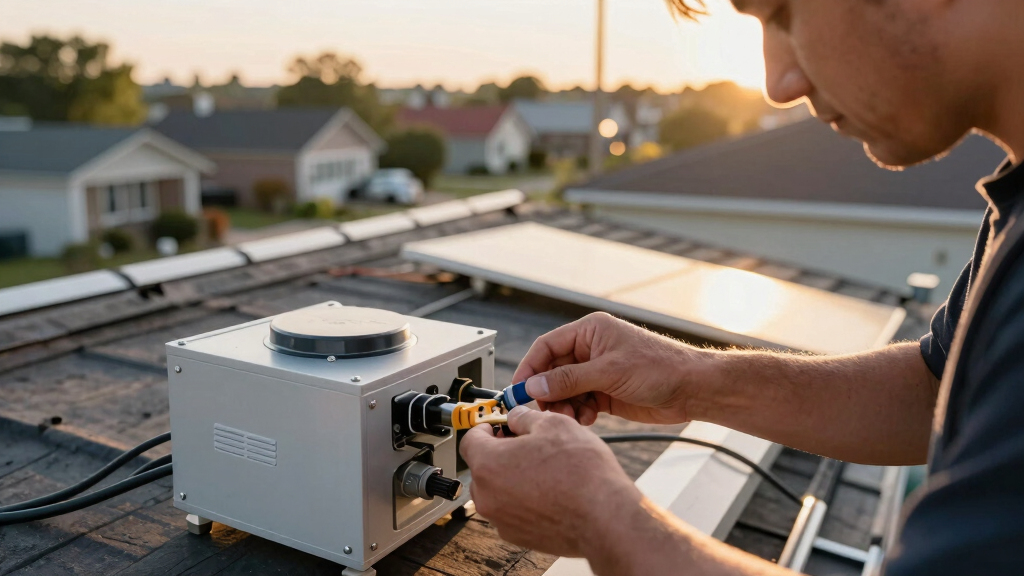
After experiencing a prolonged power outage caused by Hurricane Helene, which struck Asheville on September 27, 2024, Firestorm Books partnered with Footprint Project to develop a microgrid. The system includes four batteries and an inverter, connected to a solar array, allowing the bookstore to operate off-grid and provide critical community services during outages.
The project involved product donations from Briggs & Stratton and Sol-Ark, with installation carried out by Asheville Solar Company. The microgrid is configured for active use, with the batteries serving as backup power supplied by the solar system, which is now solely operational on-site. This setup replaces their previous grid-tied solar system, which was nonfunctional during the outage due to lack of batteries and grid dependency.
While the system does not currently generate cost savings, it provides essential resilience, especially as existing interconnection agreements with Duke Energy will end in January 2027. Beyond energy independence, Firestorm plans to explore additional climate adaptation projects, such as rainwater capture and storage.
Community Resilience Through Energy Independence
This development demonstrates how community organizations can improve disaster preparedness through renewable energy microgrids. Firestorm’s move reduces reliance on the utility grid, ensuring continuity of critical services during future outages and setting a model for other local businesses and community centers facing climate-related disruptions.
As climate change increases the frequency and severity of storms like Hurricane Helene, such resilience measures are becoming increasingly vital. The project also highlights the role of partnerships and donations in advancing sustainable infrastructure in disaster-prone areas.
As an affiliate, we earn on qualifying purchases.
Hurricane Helene’s Impact on Asheville and Community Response
Hurricane Helene made landfall in Asheville on September 27, 2024, causing historic flooding, landslides, and widespread power outages. The storm left entire communities without drinking water and disrupted transportation, with some areas relying on local hubs like Firestorm Books for aid and information. During the two weeks following the storm, the bookstore served as a grassroots relief center, providing water, meals, and organizing recovery efforts.
Initially, Firestorm’s solar array was unable to operate independently because it was grid-tied and lacked batteries. Recognizing the need for greater resilience, the organization sought to develop a standalone energy system, working with Footprint Project and local installers to deploy a microgrid that could operate during outages and support community needs.
“Already being in the community, we were able to get organized and begin distribution of supplies a full week before FEMA was operating at scale.”
— Libertie Valance, Firestorm Books member/owner
As an affiliate, we earn on qualifying purchases.
Remaining Questions About Cost and Future Expansion
It is not yet clear how much the microgrid will cost Firestorm long-term, especially after the end of the interconnection agreement with Duke Energy in 2027. The potential for expansion to other community facilities or integration with broader regional grids remains under consideration, but details are still emerging.
As an affiliate, we earn on qualifying purchases.
Next Steps for Firestorm’s Resilience Strategy
Firestorm plans to monitor the microgrid’s performance and explore additional climate resilience projects, such as rainwater harvesting. They will also prepare for the transition when the interconnection agreement ends in 2027, potentially seeking further funding or partnerships to maintain energy independence.
residential solar energy storage
As an affiliate, we earn on qualifying purchases.
As an affiliate, we earn on qualifying purchases.
Key Questions
How does the microgrid improve Firestorm’s resilience?
The microgrid allows Firestorm to operate independently of the utility grid during outages, ensuring continuous power for critical community services and operations.
Will the microgrid save money for Firestorm?
Currently, the microgrid is not generating cost savings but provides vital resilience. Cost savings are expected after the end of the interconnection agreement in 2027, when batteries may be used for peak shaving and load management.
Can this microgrid be expanded to other community sites?
While expansion is a possibility, specific plans are not yet confirmed. The focus now is on monitoring performance and assessing future resilience projects.
What role did donations play in this project?
Product donations from Briggs & Stratton and Sol-Ark, along with a grant from Footprint Project, were crucial in funding and installing the microgrid system.
Will the microgrid operate during future storms?
Yes, the microgrid is designed to operate independently during outages caused by storms or other disruptions, enhancing community safety and continuity.
Source: Solar Power World
Fall Picks
fall essentials
As an affiliate, we earn on qualifying purchases.