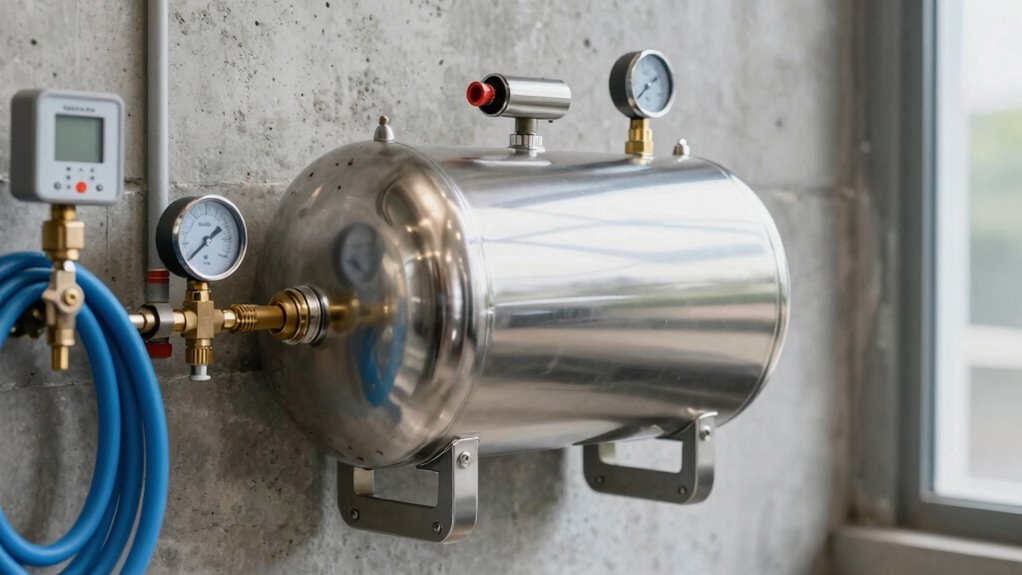

To stop your well pump from constantly cycling, it’s crucial to select the correct pressure tank size. A tank that’s too small causes frequent on/off cycles, wearing out your pump quickly, while an oversized tank may be unnecessary and costly. Properly sizing the tank based on your household’s water demand helps maintain steady pressure and extend system life. Keep exploring to find out how to determine the right tank size for maximum performance.
Open a free Amazon Business account
Business pricing, bulk buying and tax-exempt orders.
As an affiliate, we earn on qualifying purchases.
Key Takeaways
- Properly sized tanks maintain consistent pressure, reducing frequent pump cycling and preventing wear.
- Match tank capacity to household water demand for efficient pressure stabilization.
- Avoid undersized tanks that cause rapid cycling and pressure fluctuations.
- Select a tank material suitable for your environment to ensure durability and longevity.
- Correct tank sizing and material choice optimize system performance and extend equipment lifespan.
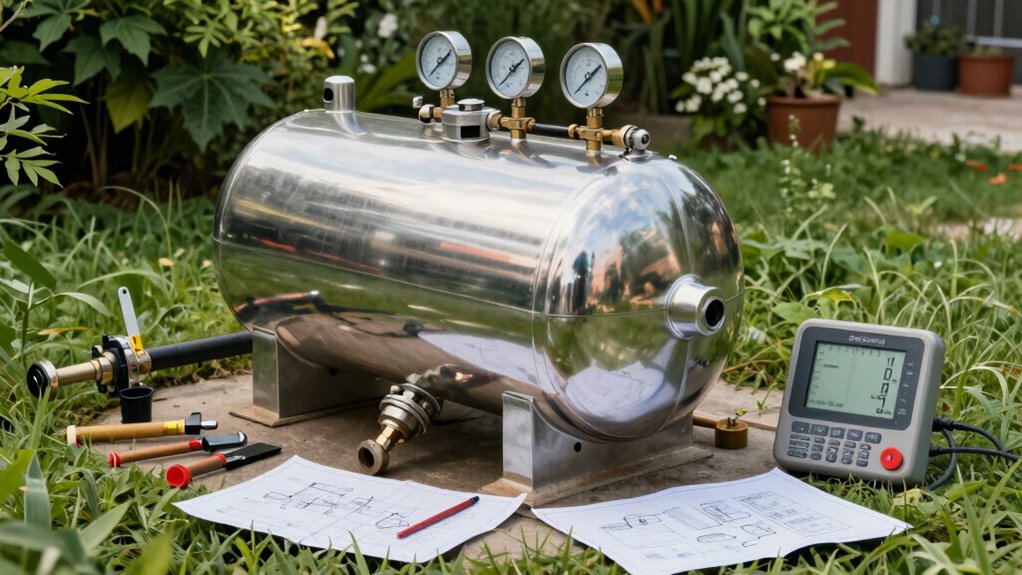
Proper well pressure tank sizing is essential to guarantee your water system operates efficiently and reliably. When your tank isn’t the right size, you risk frequent on/off cycling, which can wear out your pump prematurely and lead to inconsistent water pressure. To prevent this, it’s crucial to understand how tank size impacts water pressure stability and how the tank material plays a role in performance. A properly sized tank maintains steady water pressure, minimizes pump cycling, and extends the lifespan of your equipment.
Proper tank size ensures water pressure stability and prolongs equipment lifespan.
The size of your pressure tank directly influences water pressure consistency. If the tank is too small, your pump will turn on and off more frequently, trying to keep up with demand. This constant cycling not only reduces the lifespan of your pump but can also cause pressure fluctuations that you’ll notice as inconsistent water flow. Conversely, a tank that’s too large may seem like a good idea, but it can be more costly and cumbersome without providing significant benefits if it exceeds your actual water usage needs. The goal is to find a tank that matches your household water demand, ensuring the pump runs long enough to build pressure but not so long that it becomes inefficient.
Tank material is another vital factor to consider. Most pressure tanks are made from steel or composite materials. Steel tanks are sturdy and durable but may be prone to corrosion over time, especially in areas with high humidity or if the tank isn’t properly coated. Composite tanks, often made from fiberglass or other materials, resist corrosion better and tend to be lighter and easier to install. The material affects not just durability but also how well the tank maintains water pressure and how long it will serve your system without issues. When selecting tank material, think about your local environment and the tank’s lifespan to ensure you choose a durable option that supports consistent water pressure. Additionally, understanding the correct sizing principles can help you make an informed decision and optimize your system’s performance.
Ultimately, proper well pressure tank sizing involves balancing your household water needs with the right tank material to maximize efficiency and longevity. By selecting a tank that fits your demand, you reduce the on/off cycling that strains your pump and causes pressure fluctuations. Keep in mind that the right size and material will help your water system operate smoothly, saving you money on repairs and providing steady water pressure for your household needs. Taking the time to choose wisely now ensures your well system remains reliable and efficient for years to come.
well pressure tank size calculator
As an affiliate, we earn on qualifying purchases.
As an affiliate, we earn on qualifying purchases.
Frequently Asked Questions
How Do I Know if My Tank Is Too Small?
If your tank is too small, you’ll notice frequent pressure fluctuations and short cycling of your pump. This means the tank can’t store enough water to meet your demand, causing it to turn on and off more often. Check your tank capacity against your household water needs—if it’s not providing consistent pressure and cycles quickly, it’s likely undersized. Upgrading to a larger tank can help stabilize pressure and reduce pump wear.
What Are Signs of a Failing Pressure Tank?
You’ll notice your pressure tank’s failing when it leaks or makes unusual noises—ironic, isn’t it? Corrosion inside the tank or a loss of air charge can cause inconsistent water pressure, strange sounds, or frequent cycling. If your tank’s age or signs of rust appear, it’s time to replace it. Don’t ignore these signs; they’re the tank’s way of warning you about potential failure or internal damage.
Can I Install a Pressure Tank Myself?
You can attempt a DIY installation of a pressure tank if you’re comfortable with plumbing and electrical work, but it’s best to seek professional assistance for safety and accuracy. Proper installation guarantees your system functions correctly and prevents future issues like pressure loss or leaks. If you’re unsure or inexperienced, hiring a professional guarantees the job is done safely, correctly, and complies with local codes.
How Often Should I Replace My Well Pressure Tank?
Imagine your well pressure tank as a resilient heartbeat, steady and reliable. Typically, you should replace it every 5 to 10 years, depending on its tank lifespan and how well it’s maintained. Keep an eye out for signs like water leaks, rust, or inconsistent pressure. Following this replacement schedule helps prevent on/off cycling, ensuring your water system stays smooth, efficient, and trouble-free for years to come.
What’s the Best Maintenance Routine for a Pressure Tank?
You should inspect your pressure tank regularly, checking for tank insulation damage and signs of corrosion. Flush the tank annually to maintain water quality and prevent sediment buildup. verify the air charge is correct by testing the pressure, which helps avoid on/off cycling. Keep the tank clean and protected from extreme temperatures. Proper maintenance extends its lifespan, improves efficiency, and keeps your water system running smoothly.
pressure tank for well water system
As an affiliate, we earn on qualifying purchases.
As an affiliate, we earn on qualifying purchases.
Conclusion
Now, picture your well system as a steady heartbeat, keeping your water flowing smoothly without harsh pulses. Proper tank sizing acts like a calming breath, preventing those annoying on/off cycles that wear out your equipment. When you choose the right size, you’re giving your system room to breathe, reducing stress and extending its life. With the right tank, you’ll enjoy quiet, consistent water flow—like a gentle stream instead of a chattering faucet.
steel vs composite well pressure tanks
As an affiliate, we earn on qualifying purchases.
As an affiliate, we earn on qualifying purchases.
best pressure tanks for well water
As an affiliate, we earn on qualifying purchases.
As an affiliate, we earn on qualifying purchases.
NFL season / tailgating Picks
team gear
As an affiliate, we earn on qualifying purchases.