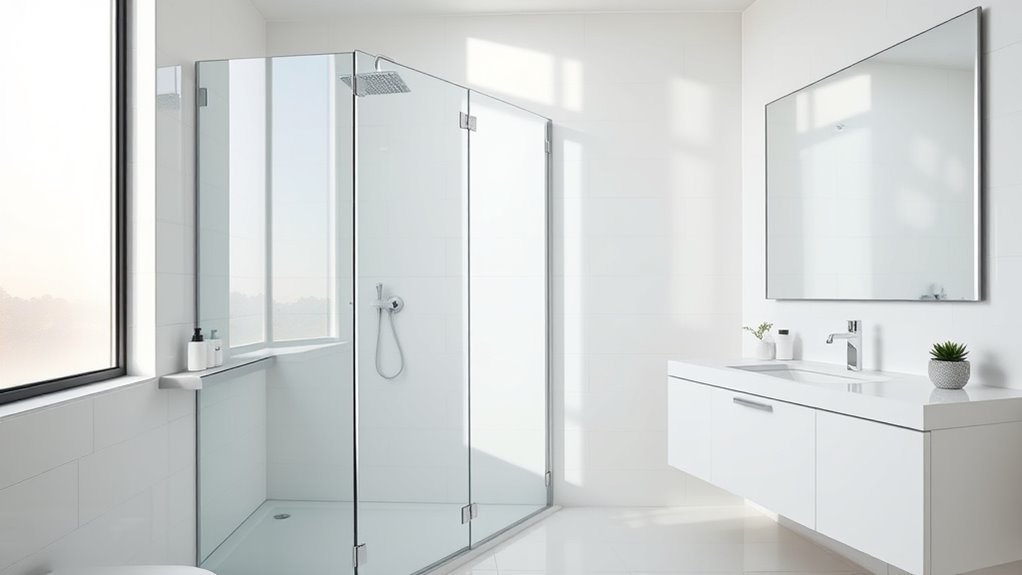

To size your bathroom fixtures properly, start by measuring your space carefully, considering door swings, clearances, and accessibility needs. Use standard dimensions for tubs, sinks, and toilets to [make certain of] a balanced layout that fits without feeling cramped. Incorporate design tools or templates to visualize options and avoid guesswork. If you stick to these guidelines, you’ll create a functional, attractive bathroom—plus, there’s more to learn for perfect planning.

Get home appliances delivered free — and shop member deals
- Fast, free delivery on millions of items
- Access to Prime Big Deal Days deals on October 6–7
- Prime Video, Amazon Music and more included
Key Takeaways
- Measure available space accurately, including door swings and clearance areas, before selecting fixtures.
- Follow industry standards for fixture sizes and clearances to ensure safety and functionality.
- Use design tools and templates to visualize layout and optimize fixture placement.
- Consider accessibility requirements, like wheelchair turning radius and grab bar space, during planning.
- Ensure plumbing and ventilation systems meet local codes and demand for proper fixture sizing.
As an affiliate, we earn on qualifying purchases.
Understanding Standard Bathroom Dimensions
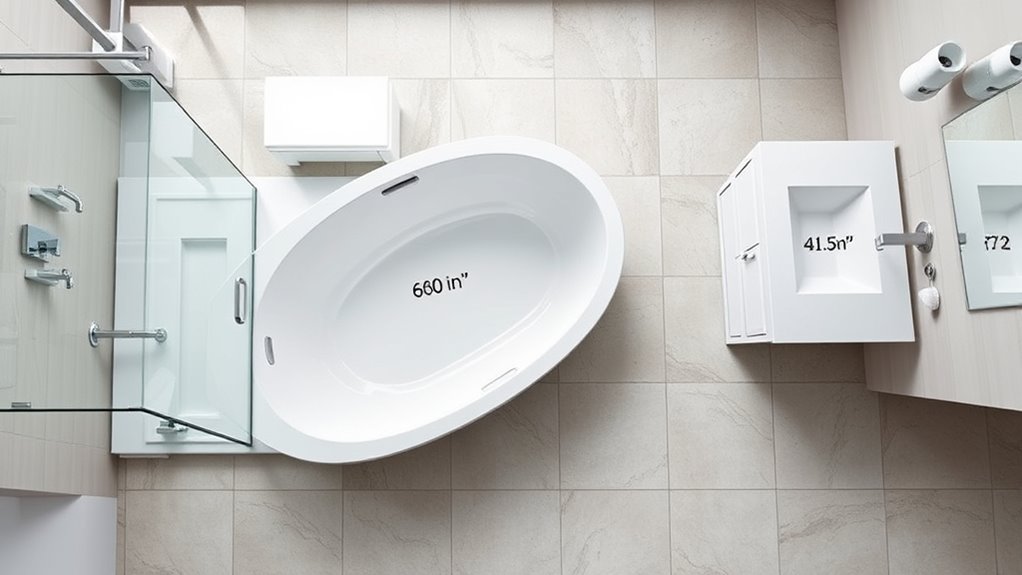
Understanding standard bathroom dimensions is essential for designing a comfortable and functional space. Knowing typical bathtub dimensions helps you plan enough room for easy entry and comfortable bathing, usually around 60 inches long and 30 inches wide. When considering sink placement, ensure there’s at least 20 inches of clearance in front of the sink for comfortable use, and allow space for plumbing. Standard vanities are about 24 to 30 inches deep, so plan your layout accordingly. Proper spacing between fixtures, like the toilet, sink, and bathtub, ensures safety and convenience. Additionally, considering symptoms of breast cancer can help in early detection and health planning, emphasizing the importance of awareness in overall well-being. By familiarizing yourself with these dimensions, you can optimize your bathroom layout, making it both practical and inviting without sacrificing style or comfort.
As an affiliate, we earn on qualifying purchases.
Calculating Space for Fixtures and Appliances

Before installing fixtures and appliances, you need to accurately measure the available space to guarantee everything fits comfortably. Start by noting dimensions of each area and the fixtures’ sizes, ensuring you account for door swings and clearance. Material selection influences your options; lightweight materials may save space and reduce installation hassle, while durable choices might cost more but last longer. Consider your budget when choosing appliances and fixtures, balancing quality with affordability. Measure plumbing and electrical connections needed for each item to avoid surprises later. Proper calculations help prevent overcrowding and ensure smooth movement within the space. Additionally, consulting industry standards can guide you in maintaining appropriate clearances and safety margins. Proper planning and measuring help you make informed decisions that align with both your space constraints and financial plan. This approach assures a functional, comfortable bathroom that meets your needs.
bathroom layout design templates
As an affiliate, we earn on qualifying purchases.
As an affiliate, we earn on qualifying purchases.
Optimal Clearances for Comfort and Accessibility
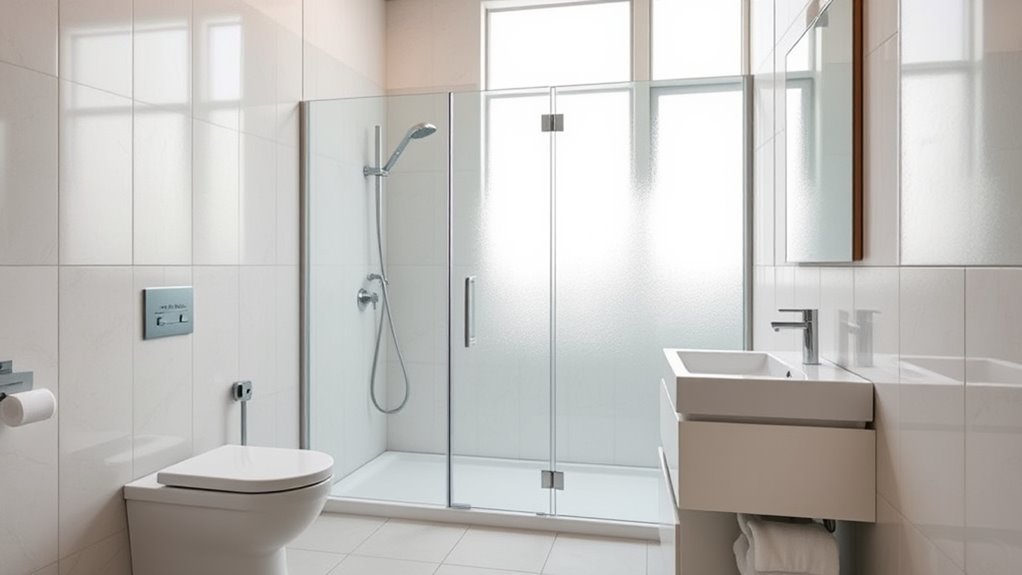
Ensuring your bathroom has the right clearances makes it comfortable and accessible for everyone. Following universal access standards helps you create a space that’s easy to use and navigate. By planning for enough room to move, you can improve both safety and convenience. Incorporating comfortable textiles can also enhance the coziness and usability of the space.
Universal Access Standards
Universal access standards set the ideal clearances needed to guarantee both comfort and safety for all users. These accessibility standards ensure spaces accommodate everyone, including those with mobility challenges. To visualize, consider these key clearances:
- A minimum of 30 inches of clear width in front of fixtures
- At least 48 inches of turning radius for wheelchair maneuvering
- A 27-inch knee clearance under sinks and counters
- Adequate space to open doors without obstruction
- Proper clearance measurements help maintain compliance with universal access standards and promote inclusive design.
Space for Movement
To create a bathroom that’s both comfortable and accessible, it’s essential to allocate sufficient space for movement. Proper door placement is key—ensure doors swing clear of fixtures and allow enough clearance for easy entry and exit. This avoids cramped areas and enhances flow. Lighting considerations also matter; well-placed lighting fixtures improve visibility and safety, especially near doorways and walkways. Keep pathways at least 30 inches wide to accommodate movement comfortably, and aim for 36 inches in main traffic areas. These clearances accommodate users with mobility aids and prevent congestion. Thoughtful placement of doors combined with strategic lighting ensures your bathroom remains functional, safe, and welcoming. Prioritizing space for movement makes a significant difference in usability and comfort. Incorporating vertical storage solutions can further maximize space and reduce clutter, enhancing overall accessibility.
As an affiliate, we earn on qualifying purchases.
Planning for Plumbing and Ventilation Needs
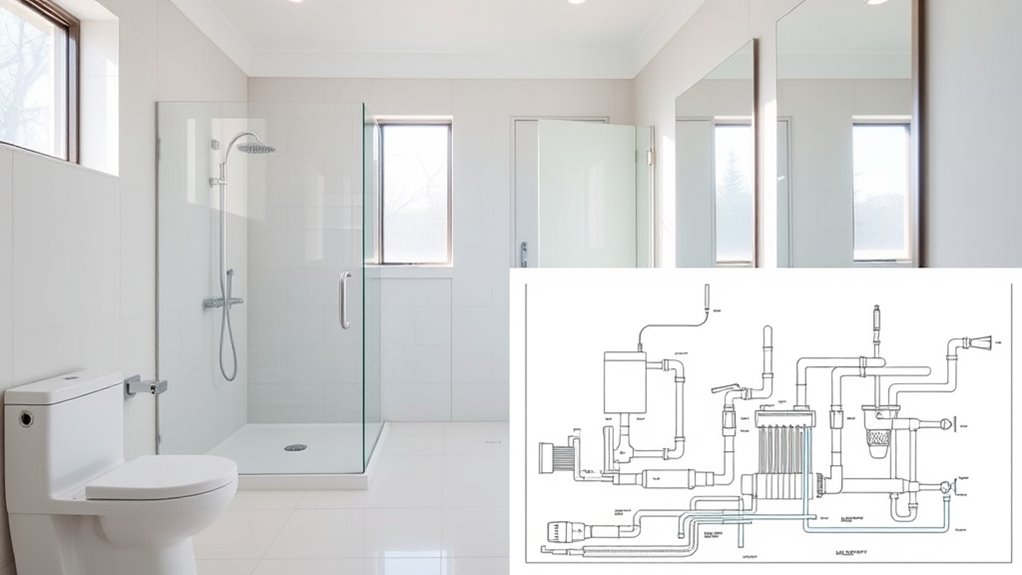
When planning your bathroom, you need to accurately calculate fixture loads to guarantee your plumbing can handle the demand. It’s also essential to design a ventilation system that effectively maintains air quality and meets building codes. Staying aware of code compliance standards helps you avoid costly modifications later on.
Calculating Fixture Loads
Calculating fixture loads is essential for guaranteeing your plumbing and ventilation systems can handle the demand of your bathroom. To determine fixture loads, you need to take into account how many bathroom fixtures you’ll install and their expected use. Here’s how to picture it:
- Count each bathroom fixture, like sinks, toilets, and showers.
- Assign fixture load values based on local codes or standards.
- Sum the fixture loads to find the total demand.
- Ensure your plumbing system can support this total without strain.
- Consider incorporating water-efficient fixtures to optimize water usage and reduce overall system load.
Ventilation System Planning
Planning your bathroom’s ventilation system is essential to guarantee proper air quality and moisture control. You should select an exhaust fan that matches the bathroom size and airflow needs. The fan helps remove humidity, odors, and airborne pollutants efficiently. Proper placement is key; install the exhaust fan near the shower or toilet for ideal performance. An appropriately sized air duct directs moist air out of the space and connects to the fan. Ensure the duct runs straight without sharp bends to minimize airflow resistance. Ventilation planning also involves calculating the necessary air changes per hour, based on bathroom size and fixture use. With correct equipment and duct routing, you’ll maintain a fresh, mold-free environment and improve overall indoor air quality. According to best arcade machines for home game rooms (2024), selecting the right equipment can significantly enhance comfort and functionality.
Code Compliance Standards
Ensuring your bathroom’s plumbing and ventilation systems meet local building codes is essential for safety, efficiency, and compliance. To do this effectively, you need to consider:
- Selecting fixtures that meet code-mandated flow rates and water-saving standards.
- Choosing materials that are durable, non-corrosive, and approved for your jurisdiction.
- Verifying fixture placement to prevent cross-connection and ensure accessibility.
- Ensuring ventilation systems comply with airflow and exhaust requirements.
Additionally, understanding dream symbols related to water or airflow can provide insight into potential issues or concerns in your design process. Focusing on fixture selection and material considerations helps you avoid costly rework and potential violations. Familiarize yourself with local standards to determine the proper fixture types, sizes, and venting methods. Staying compliant guarantees safety, reduces liability, and ensures your project passes inspections smoothly.
Choosing the Right Fixture Sizes for Your Space
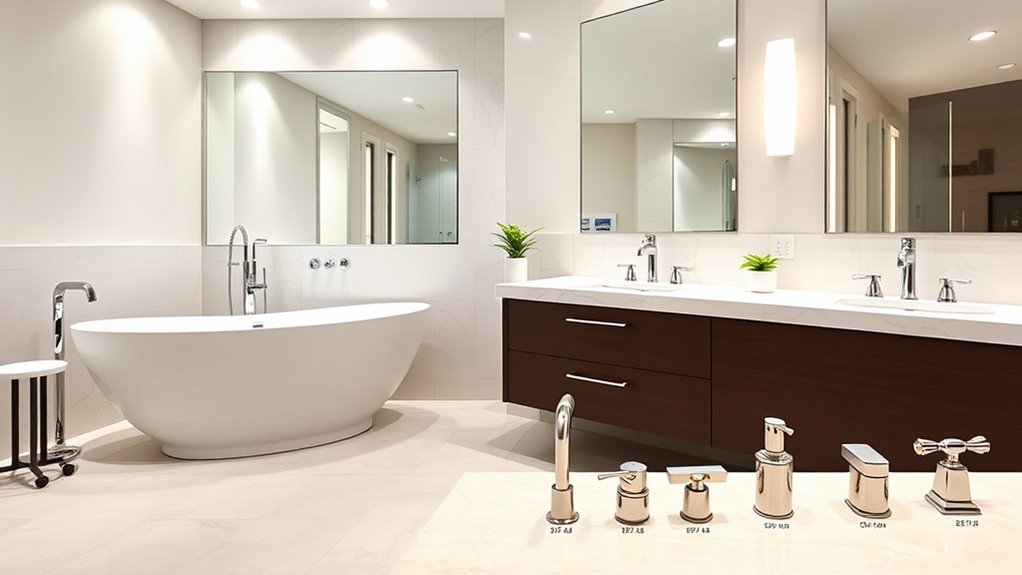
Choosing the right fixture sizes for your space is essential to create a comfortable and functional bathroom. Your fixture selection impacts both usability and aesthetic balance. Measure your available space carefully to determine appropriate sizes; oversized fixtures can make a room feel cramped, while small fixtures might look out of place. Consider the flow and proportions of your bathroom to ensure everything fits well without overcrowding. Think about how each fixture complements the overall design, balancing practicality with style. Remember, the goal is to optimize comfort while maintaining visual harmony. By selecting fixtures that match your space’s dimensions and design vision, you’ll achieve a cohesive look that’s both functional and inviting. Proper sizing prevents future problems and enhances your bathroom’s overall appeal. Retail hours today list can help you plan your shopping trips effectively to find the right fixtures at the best times.
Utilizing Design Tools and Templates for Accuracy
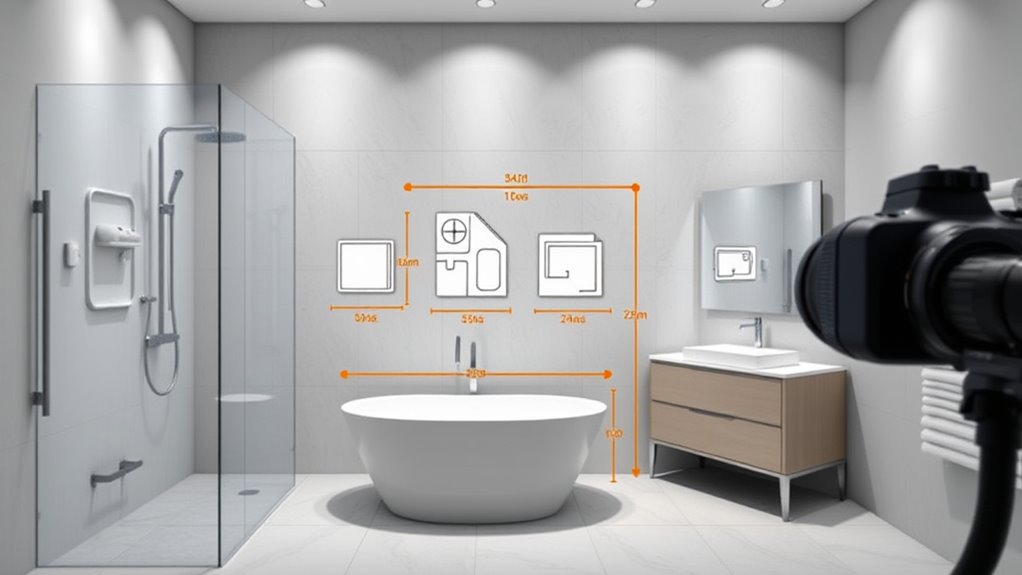
Using design tools and templates can especially improve the accuracy of your bathroom layout. They help you visualize space, ensuring proper material selection and color coordination. Here’s how you can benefit:
Design tools and templates enhance bathroom layout accuracy by visualizing space and coordinating materials effectively.
- Select templates that match your bathroom’s dimensions, preventing miscalculations.
- Use digital tools to experiment with fixture placement, optimizing space and flow.
- Apply color schemes within templates to visualize color coordination early.
- Incorporate material options into the design, ensuring durability and aesthetic harmony.
- Considering contrast ratio and other display properties can help you choose fixtures and finishes that complement your overall design.
These tools streamline decision-making, reducing guesswork and costly mistakes. By leveraging precise measurements and visual aids, you can confidently choose fixtures that fit perfectly while maintaining a cohesive look. Ultimately, they make your planning more efficient and accurate, saving time and resources.
Common Mistakes to Avoid in Bathroom Sizing

One common mistake in bathroom sizing is neglecting to measure available space accurately before selecting fixtures. This oversight can lead to cramped layouts or awkward traffic flow, affecting both functionality and bathroom aesthetics. When you skip precise measurements, you risk choosing fixtures that are too large or too small, disrupting the overall balance. Additionally, fixture color choices matter—picking colors without considering space can make the room feel cluttered or dull. For example, dark fixtures in a small bathroom can make it feel smaller, while light colors enhance openness. Avoid rushing fixture selection; instead, double-check measurements and visualize how each piece fits. Proper sizing guarantees your bathroom remains both practical and visually appealing, preventing costly adjustments later.
Adjusting Measurements for Special Requirements
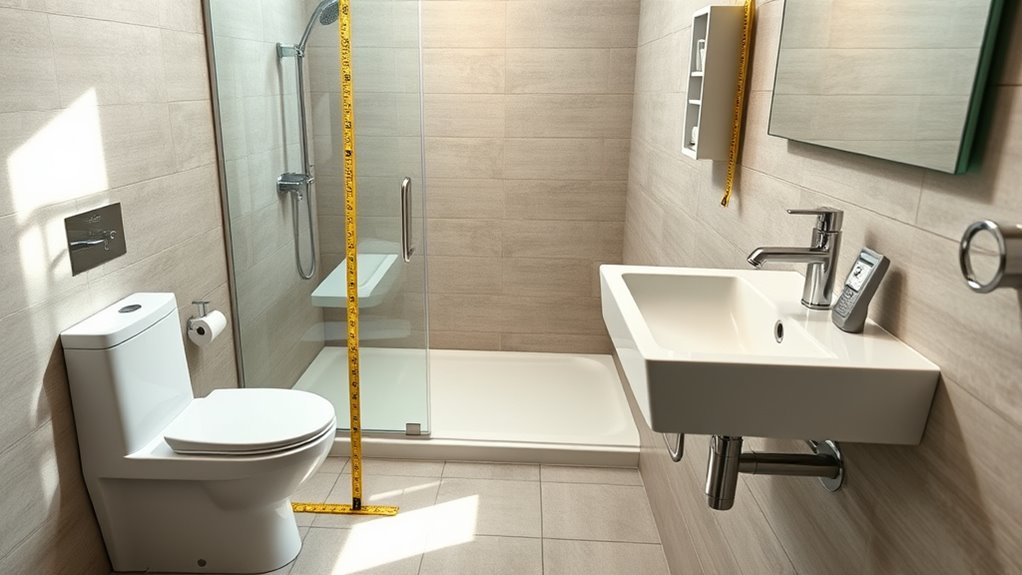
When dealing with special requirements in bathroom measurements, it’s essential to customize your approach to accommodate unique needs or physical limitations. First, consider fixture placement carefully to ensure accessibility, such as adjusting toilet height or sink position. Second, think about aesthetic considerations that blend functionality with visual harmony. Third, modify measurements for mobility aids—like wider doorways or grab bars—without compromising space. Fourth, account for any other needs, such as wheelchair turning radius or ergonomic fixtures. These adjustments ensure the bathroom meets specific requirements while maintaining comfort and style. By tailoring measurements for these factors, you create a space that’s both practical and visually pleasing, respecting individual needs without sacrificing overall design integrity.
Tips for Creating a Functional and Aesthetic Layout
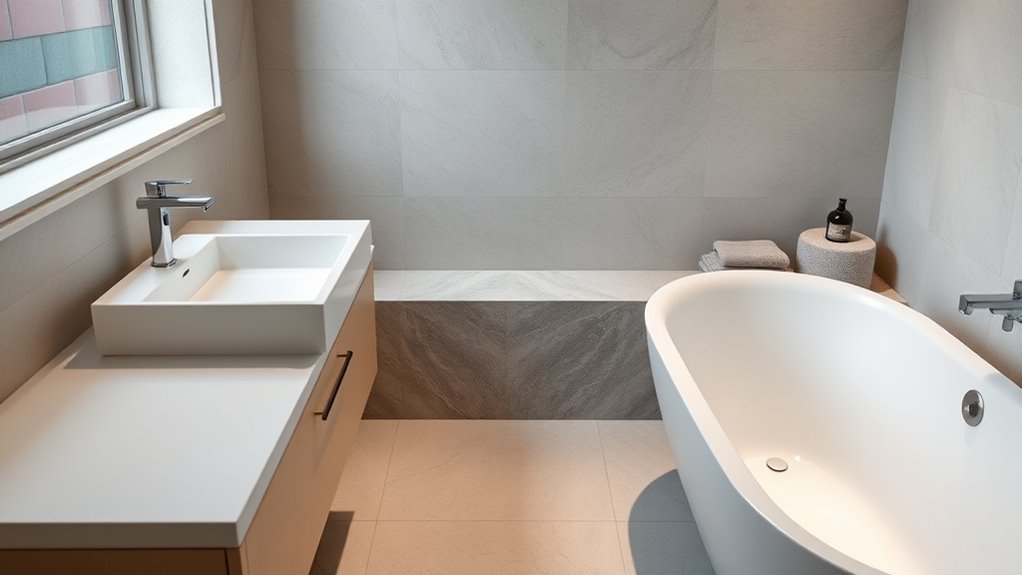
Creating a bathroom layout that balances functionality and aesthetics requires careful planning and attention to detail. Start by considering your space’s flow and how fixtures relate to each other, ensuring easy movement. Incorporate decorative accents like stylish hardware, lighting, or wall art to enhance visual appeal. Choose a cohesive color scheme that complements your overall design, making the space feel inviting and harmonious. Keep essentials accessible and well-organized, avoiding clutter. Use contrasting or complementary colors strategically to highlight specific areas or features. Remember, the goal is to create a space that’s both practical and visually pleasing. Thoughtful placement of fixtures, combined with thoughtful decorative accents and a balanced color scheme, results in a bathroom that’s both functional and beautiful.
Frequently Asked Questions
How Do I Determine the Best Bathroom Size for My Household?
You should determine the best bathroom size for your household by considering bathroom aesthetics and fixture installation needs. Assess how many people use the space daily, and plan for comfortable fixture placement without clutter. Think about storage, privacy, and accessibility to ensure the bathroom feels spacious. By balancing these factors, you create a functional, attractive bathroom that suits your household perfectly, avoiding cramped or inefficient layouts.
What Are the Cost Implications of Different Fixture Sizes?
Larger fixtures typically cost more due to increased fixture cost and material expenses, impacting your overall budget. The size impact also influences installation costs, as bigger fixtures may require more extensive plumbing work. By choosing appropriately sized fixtures, you can reduce both fixture cost and installation expenses. Smaller fixtures often save money upfront and over time, so consider your household needs carefully to balance comfort and cost efficiency.
How Can I Maximize Small Bathroom Space Effectively?
To maximize small bathroom space, carefully plan your vanity placement to optimize flow and accessibility. Choose a compact vanity that fits snugly without crowding the room. Incorporate smart storage solutions like wall-mounted cabinets or shelves to keep essentials organized and free up floor space. Mirrors can create a sense of openness, while strategic fixture placement reduces clutter, making your small bathroom feel more spacious and functional.
Are There Industry Standards for Accessible Bathroom Dimensions?
Your bathroom design shouldn’t just be good; it should be legendary. Industry standards for accessible bathrooms, guided by ADA compliance and universal design principles, recommend a minimum of 60 inches turning radius for wheelchair users. Clear floor space should be at least 30 inches wide in front of fixtures. These standards guarantee inclusivity and safety, making your bathroom not only compliant but welcoming for everyone.
How Do I Future-Proof My Bathroom Layout for Renovations?
To future-proof your bathroom, plan a flexible layout that accommodates luxury fixtures and potential upgrades. Use custom layouts that allow space for added features, ensuring accessibility and comfort over time. Incorporate wider doorways, adjustable shower areas, and ample storage. Choosing durable materials and versatile designs helps adapt to changing needs, making renovations easier. This proactive approach guarantees your bathroom remains functional, stylish, and ready for any future upgrades.
Conclusion
Now, picture your perfect bathroom—each fixture fitting seamlessly, the space feeling open and inviting. By understanding standard dimensions and planning with care, you can avoid cramped corners and awkward layouts. With precise measurements and thoughtful design, your bathroom transforms into a relaxing retreat where every fixture has room to breathe. Trust your calculations, avoid common pitfalls, and enjoy the satisfaction of creating a space that’s both functional and beautiful.
Fall yard work Picks
leaf blowers
As an affiliate, we earn on qualifying purchases.