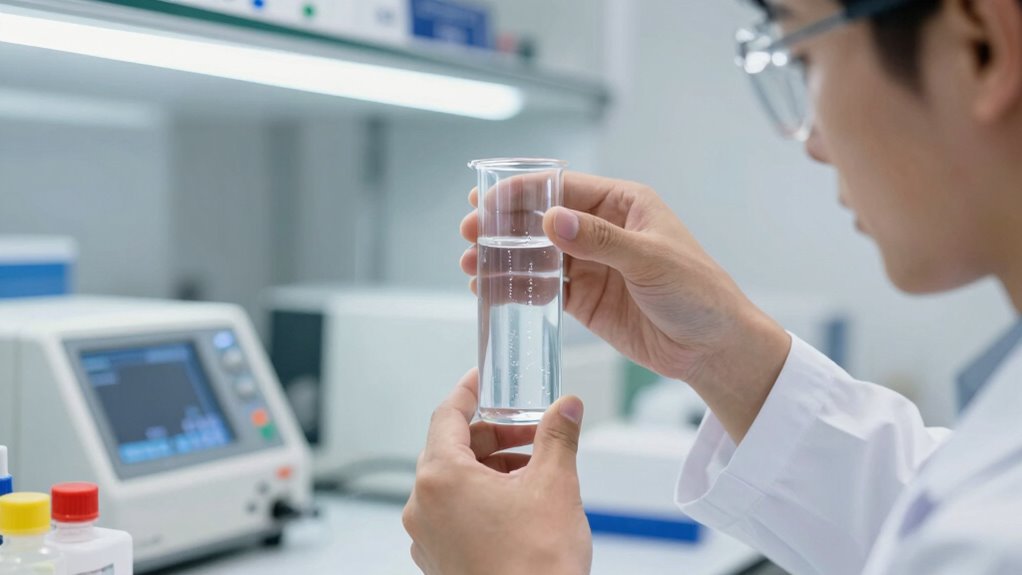

Total PFAS testing measures the overall level of per- and polyfluoroalkyl substances in a sample, giving you a complete picture of contamination. It captures a wide range of these chemicals, which vary in toxicity and structure, making it easier to assess environmental and health risks. This testing helps determine if levels exceed safety standards and guides cleanup efforts. If you want to understand what this means for your environment and health, there’s more to explore.

Get home appliances delivered free with Prime
- Fast, free delivery on millions of items
- Prime Video, Amazon Music and more included
- Member-only deals all year
Key Takeaways
- Total PFAS measures the combined levels of all PFAS chemicals in a sample, providing a comprehensive contamination overview.
- It simplifies monitoring diverse PFAS compounds, which vary in structure and toxicity, into a single assessment.
- Total PFAS testing helps determine if contamination exceeds safety standards and guides cleanup efforts.
- It reflects the persistent nature of PFAS, indicating long-term environmental and health risks.
- Regulatory agencies rely on Total PFAS data to enforce standards and prioritize remediation actions.
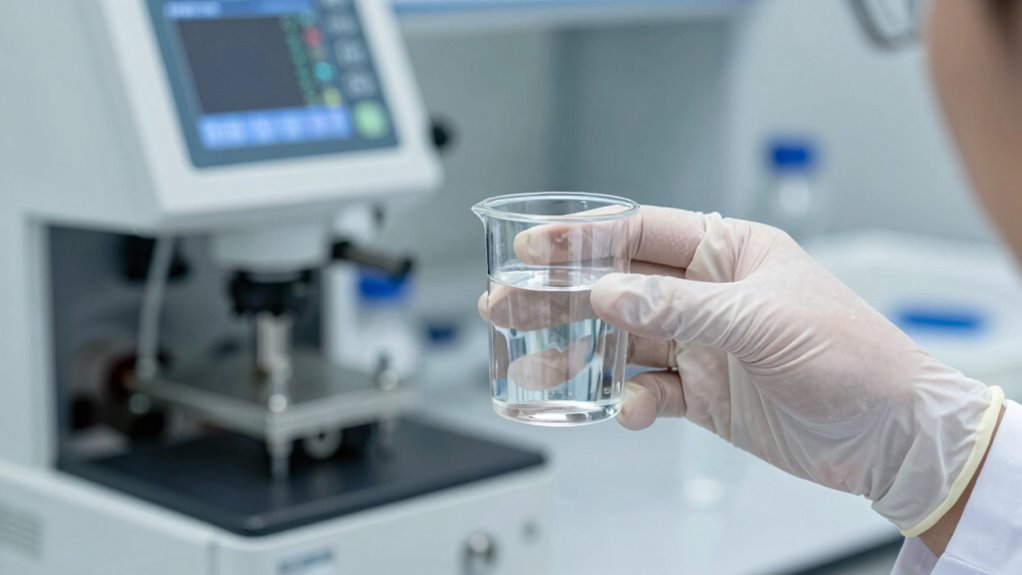
Have you ever wondered how scientists detect harmful chemicals in your water or soil? When it comes to PFAS, or per- and polyfluoroalkyl substances, understanding their presence and potential risk isn’t straightforward. That’s where PFAS testing comes into play, especially the concept of “Total PFAS.” This measurement helps to evaluate the overall contamination level by capturing a broad range of these chemicals, which vary widely in structure and toxicity. The environmental impact of PFAS can be significant, as these persistent chemicals don’t break down easily in nature. They can accumulate in water sources, soil, plants, and animals, posing health risks to humans and ecosystems alike. To protect public health, governments and regulatory agencies have established standards to limit PFAS levels in drinking water and other environmental media. These regulatory standards serve as benchmarks, guiding testing protocols and cleanup efforts.
Understanding what “Total PFAS” really means is essential for grasping the scope of contamination. Instead of testing for individual PFAS compounds, laboratories often perform detailed analyses that sum up all detectable PFAS chemicals present in a sample. This approach provides a more complete picture of overall contamination, especially since there are hundreds of different PFAS compounds, many of which have similar properties and health effects. By measuring Total PFAS, scientists can better evaluate the environmental impact and determine whether levels exceed regulatory standards. When concentrations surpass these limits, it signals the need for corrective actions, such as remediation, stricter regulation enforcement, or source control. Environmental impact of PFAS can be far-reaching, affecting not only the immediate area but also distant ecosystems through water and soil pathways.
Measuring Total PFAS provides a comprehensive view of contamination and guides necessary cleanup actions.
Testing for Total PFAS also helps agencies and communities understand the extent of contamination in a given area. It’s a critical step in evaluating potential exposure risks, informing policy decisions, and prioritizing cleanup efforts. The goal is to prevent harmful health effects associated with PFAS exposure, such as immune system disruption, hormone interference, or increased risk of certain cancers. Because regulatory standards are designed to safeguard public health, they are regularly reviewed and updated based on new scientific evidence. This means that testing methods and thresholds evolve, ensuring that they remain protective and relevant.
In essence, Total PFAS testing simplifies the complex challenge of monitoring these chemicals. It provides a detailed snapshot that supports regulatory compliance, environmental protection, and public health initiatives. By understanding what this measurement entails, you get a clearer picture of how authorities evaluate contamination levels and enforce safety standards. Ultimately, the goal is to reduce PFAS exposure and minimize the environmental impact, ensuring safer water and soil for everyone.
As an affiliate, we earn on qualifying purchases.
Frequently Asked Questions
How Does ‘Total PFAS’ Differ From Individual PFAS Measurements?
Total PFAS measurement provides a thorough testing approach by summing all detected PFAS compounds, unlike individual PFAS measurements that focus on specific chemicals. This method uses advanced measurement techniques to capture the full spectrum of PFAS present in a sample, giving you a clearer picture of overall contamination. It’s especially useful for evaluating exposure risks and making informed decisions about safety and environmental health.
What Health Risks Are Associated With Different PFAS Levels?
Sure, exposing yourself to high PFAS levels might turn you into a superhero—or so the myth goes. In reality, long-term exposure to elevated PFAS can cause health issues like immune system problems, hormonal disruption, and even cancer. Vulnerable populations, like children and pregnant women, face higher risks of adverse effects. So, while chasing mythical powers, remember that managing PFAS levels is essential for your health and those most at risk.
Are There Legal Limits for ‘Total Pfas’ in Drinking Water?
Regulatory standards and legal limits for ‘total PFAS’ in drinking water vary by region. In some areas, agencies set specific maximum contaminant levels (MCLs) for individual PFAS compounds, while others are still developing extensive limits for total PFAS. You should check local regulations, as they dictate allowable levels. Staying informed helps you understand your water quality and whether it meets safety standards.
How Often Should PFAS Testing Be Conducted?
You should conduct PFAS testing regularly, ideally every 6 to 12 months, depending on your risk level and local regulations. Establish consistent sampling frequency and testing intervals to track PFAS levels effectively and guarantee water safety. If your water source is near industrial areas or known contamination sites, more frequent testing might be necessary. Staying proactive helps you identify issues early and maintain safe drinking water standards.
Can Home Testing Kits Accurately Measure ‘Total Pfas’?
Ever wonder if home testing kits can truly measure ‘total PFAS’? Generally, their testing accuracy and kit reliability fall short of lab standards. While they might give you a rough idea, they often lack the precision needed for extensive results. Relying solely on home kits could lead to underestimating your exposure. For accurate assessment, professional laboratory testing remains the most reliable option.
As an affiliate, we earn on qualifying purchases.
Conclusion
Now that you understand what ‘total PFAS’ truly means, picture these chemicals as tiny, invisible droplets lingering in water and soil—like faint whispers of chemicals hiding in plain sight. By knowing how testing works, you can better protect yourself and your loved ones from these silent invaders. Think of it as shining a flashlight into the dark corners of your environment, revealing what’s hidden so you can take control and stay safe.
Environmental PFAS testing device
As an affiliate, we earn on qualifying purchases.
As an affiliate, we earn on qualifying purchases.
As an affiliate, we earn on qualifying purchases.
Fall yard work Picks
leaf blowers
As an affiliate, we earn on qualifying purchases.