If your pressure gauge shows fluctuating or abnormal readings, it could be a sign of a clogged filter. You might notice sluggish response times, or the needle may appear stuck or move slowly, hiding system issues. Inconsistent measurements often point to debris buildup or partial blockages. Regular inspection helps catch these issues early. Keep going to discover more about how to prevent and fix filter clogging to ensure accurate pressure checks.
Key Takeaways
- Fluctuating or inconsistent pressure readings may indicate filter clogging.
- Sluggish gauge response or failure to register pressure changes suggests debris buildup.
- Sudden or abnormal pressure spikes can be caused by restricted fluid flow from a clogged filter.
- Stuck or sluggish needle movement often points to debris obstructing the gauge or filter.
- Regular visual or functional inspections help identify early signs of filter clogging before measurement errors occur.
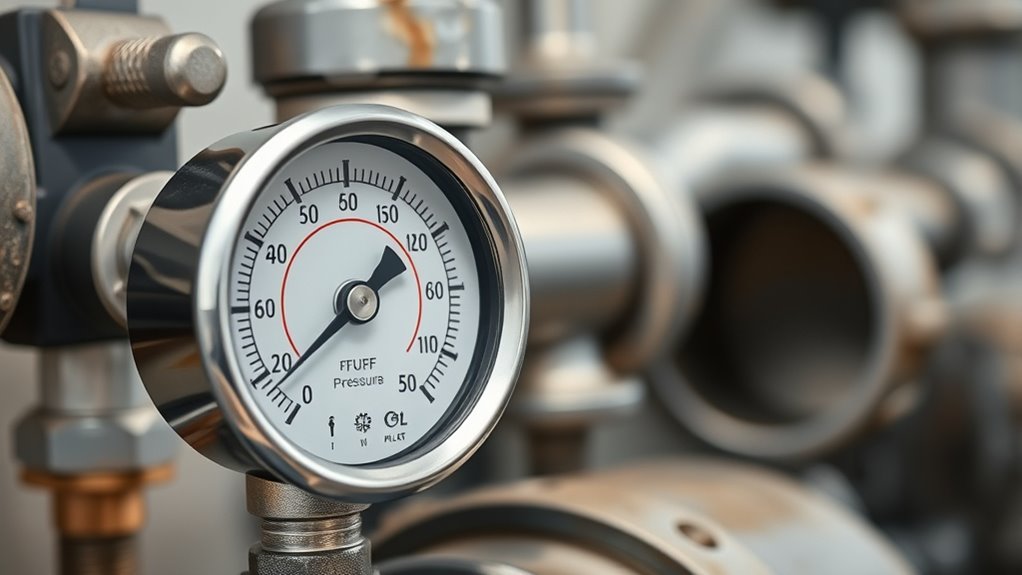
Ever wonder how pressure gauges work and why they’re essential? These devices are fundamental for monitoring the pressure within various systems, ensuring safety and maximum performance. To get accurate readings, understanding the calibration procedures is key. Calibration involves comparing your gauge’s readings against a known standard and adjusting it if necessary. This process helps maintain measurement accuracy over time. Different types of gauges—such as Bourdon tube, digital, diaphragm, and capsule gauges—each have unique calibration needs. Knowing which type you’re dealing with guides you on proper calibration procedures and guarantees your gauge provides reliable data.
Understanding calibration and gauge types ensures accurate, reliable pressure measurements over time.
Pressure gauges operate by translating pressure into a readable dial or digital display. Over time, factors like wear and tear, temperature changes, or contamination can affect their accuracy. One common issue is a clogged filter, which can cause misleading readings. Filters are incorporated into pressure gauges or their systems to trap debris and contaminants. When these filters become clogged, they restrict fluid flow, leading to inaccurate pressure measurement. Recognizing the signs of a clogged filter is essential because it can mask system problems or cause unnecessary maintenance.
If you notice inconsistent readings, it might be due to a clogged filter. For example, if your gauge shows fluctuating or abnormally high or low readings, it could be a sign that the filter is obstructed. You might also observe sluggish response times or a complete failure to register pressure changes. In some cases, the gauge’s needle could be stuck or sluggish, indicating debris buildup. Regular maintenance, including inspecting and replacing filters, helps prevent these issues. When cleaning or replacing filters, ensure you follow proper procedures to avoid introducing new contaminants or damaging the gauge. Additionally, understanding the calibration procedures for your specific gauge type ensures ongoing measurement accuracy.
Understanding the signs of clogged filters and knowing how to address them keeps your pressure measurement accurate and your system running smoothly. It’s a good idea to consult the manufacturer’s guidelines for specific maintenance routines tailored to your gauge type. Whether you have a mechanical Bourdon tube gauge or a modern digital version, adhering to proper calibration procedures and routine inspections prolongs your device’s lifespan. In addition, understanding the different types of gauges helps you choose the right one for your specific application, ensuring precise and dependable readings under various conditions. Ultimately, staying vigilant about calibration and maintenance protects your equipment and prevents costly downtime.
pressure gauge filter replacement
As an affiliate, we earn on qualifying purchases.
As an affiliate, we earn on qualifying purchases.
Frequently Asked Questions
How Often Should Pressure Gauges Be Calibrated?
You should calibrate your pressure gauges at least once a year to guarantee accuracy. Follow a regular calibration schedule based on your equipment’s usage and manufacturer recommendations. Incorporate maintenance tips like checking for signs of wear or damage before calibration. Consistent calibration helps prevent costly errors and maintains safe operation, especially in critical systems. Don’t forget, more frequent calibration might be necessary if your environment is harsh or if accuracy is crucial.
What Are Common Causes of Gauge Failure?
Ever wondered what causes your pressure gauge to fail? Common culprits include sensor accuracy issues, which can result from dirt or corrosion, and neglecting proper maintenance schedules. Vibrations and extreme temperature fluctuations also strain the gauge, leading to malfunctions. Regular inspections and timely calibration help prevent these failures, ensuring your gauge remains reliable. Don’t overlook these factors—staying proactive keeps your system running smoothly and extends the lifespan of your equipment.
Can a Clogged Filter Affect Other System Components?
Yes, a clogged filter can impact other system components by restricting flow and causing pressure drops. When you neglect filter maintenance, it forces pumps and valves to work harder, reducing overall system efficiency. This strain can lead to premature wear or damage in parts like pressure gauges, motors, or valves. Regularly checking and replacing filters helps maintain peak system performance and prevents costly repairs.
Are Digital Gauges More Reliable Than Analog?
Digital gauges are generally more reliable than analog because of their superior digital accuracy, providing precise readings that help you catch issues early. However, analog gauges often boast greater durability, standing up well to harsh environments. While digital gauges offer better accuracy, you might prefer analog for long-term durability. Ultimately, your choice depends on whether you prioritize precise measurements or rugged, long-lasting performance.
How Do Temperature Changes Impact Pressure Readings?
Temperature changes can impact pressure readings by causing thermal expansion, which increases the pressure inside the system. As temperature rises, you’ll notice pressure fluctuation on your gauge, potentially leading to inaccurate readings. Conversely, when temperatures drop, pressure may decrease unexpectedly. It’s important to account for these variations, especially in environments with significant temperature swings, to make certain your pressure gauge provides reliable data and to avoid misinterpreting the system’s performance.
digital pressure gauge calibration kit
As an affiliate, we earn on qualifying purchases.
As an affiliate, we earn on qualifying purchases.
Conclusion
Remember, your pressure gauge is a silent communicator, revealing hidden issues like clogged filters. While it may seem small and simple, neglecting its signals can lead to costly damage. Just as a clogged filter hampers flow, ignoring signs of pressure changes blocks your system’s efficiency. Stay attentive, act promptly, and keep your system running smoothly. Sometimes, the tiniest indicator holds the biggest message—don’t overlook what it’s trying to tell you.
Bourdon tube pressure gauge
As an affiliate, we earn on qualifying purchases.
As an affiliate, we earn on qualifying purchases.
pressure gauge cleaning tools
As an affiliate, we earn on qualifying purchases.
As an affiliate, we earn on qualifying purchases.