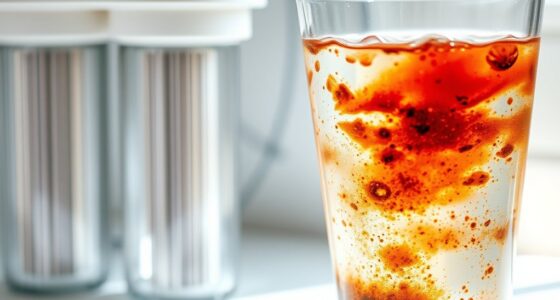
If your filters clog quickly, the issue is likely due to poor water quality, such as high debris, sediments, or organic matter that overwhelm your system. Using the wrong filter type for your water conditions or neglecting routine maintenance can also cause clogging. Additionally, water pressure issues or lack of pre-filters may contribute to the problem. Understanding and addressing these factors can help, and if you keep exploring, you’ll learn how to solve it effectively.
Key Takeaways
- Poor water quality with high debris, sediments, or contaminants accelerates filter clogging.
- Using an incompatible or undersized filter for your water conditions leads to rapid buildup.
- Inadequate or irregular maintenance causes debris accumulation, reducing filter lifespan.
- Changes in water source or worsening conditions increase the frequency of filter clogging.
- Excessive water pressure or lack of pre-filtration allows larger particles to overwhelm filters quickly.
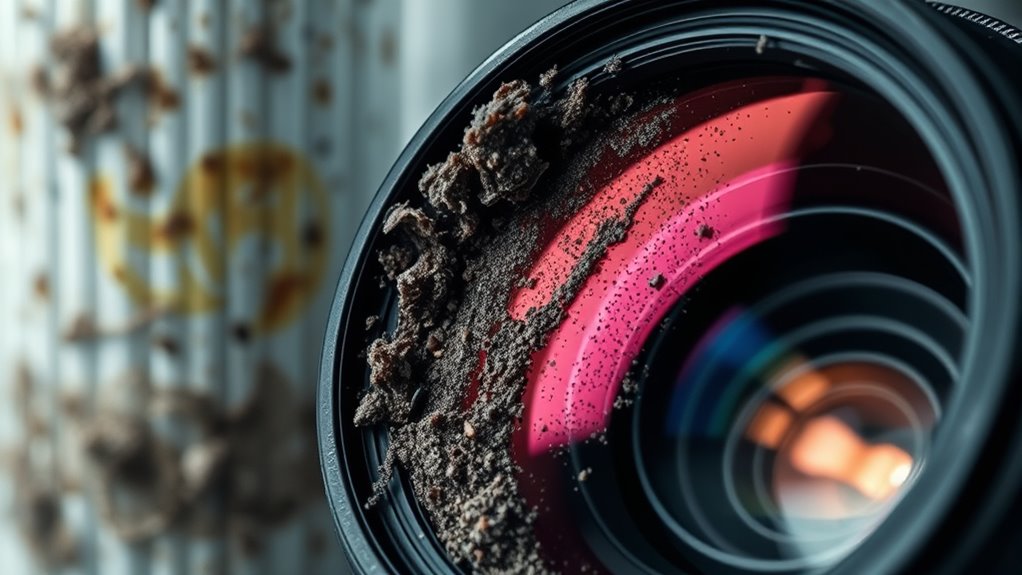
If your filters are clogging quickly, you might be frustrated with how often you need to replace or clean them. This situation can seem perplexing, but understanding the relationship between water quality and filter maintenance can help you pinpoint the cause. When filters clog rapidly, it often indicates that your water contains higher levels of debris, sediments, or contaminants than your filter is designed to handle. Poor water quality can be a major factor—if your source water is particularly muddy, mineral-heavy, or contains organic matter, it will accelerate clogging and reduce your filter’s lifespan. Regular filter maintenance becomes essential here; neglecting it can cause debris to accumulate, making filters work harder and clog faster. Additionally, using the correct filter type for your water conditions can significantly improve longevity and performance. Start by evaluating your water source. If you notice an increase in particles or discoloration, it’s a sign that your water quality has changed or worsened. You might need a more robust filtration system or pre-filters to remove larger particles before they reach your primary filter. Also, consider the age and type of your filter. Some filters are designed for specific water qualities and have limited capacity. Using a filter not suited for your water’s impurity level will lead to rapid clogging. Check the manufacturer’s guidelines for your particular filter model to ensure it matches your water conditions. Proper filter maintenance is another critical aspect. Even if your water quality is good, neglecting routine cleaning or replacement can cause clogs. Clogged filters aren’t just an inconvenience—they can also compromise your water’s purity by allowing contaminants to bypass the filter or by reducing flow rate, making your system work harder. Set a schedule for regular inspections and replacements based on your water usage and the filter’s specifications. Remember, some filters need to be cleaned more frequently if your water has high sediment content. Additionally, consider installing a pre-filter if you haven’t already. Pre-filters trap larger particles before they reach your main filter, extending its life and reducing clogging frequency. Ensure your water pressure isn’t excessively high, as this can force more debris into the filter and cause faster clogging. If you’re unsure about your water quality, getting a water test can provide valuable insights. Armed with this knowledge, you can choose the right filtration system, adjust your filter maintenance routine, and ultimately reduce how often your filters clog. Staying proactive with these steps will improve water quality, extend your filters’ lifespan, and save you money and hassle in the long run.

Bluevua Official 5-IN-1 RO Filter
- Replacement Filter: Compatible with Bluevua 5-in-1 RO system
As an affiliate, we earn on qualifying purchases.
Frequently Asked Questions
Can Using Cheaper Filters Cause Quicker Clogging?
Using cheaper filters can definitely cause quicker clogging. Cost-effective filters often have lower filter quality, which means they may not trap dirt and debris as effectively. As a result, they get clogged faster and need frequent replacement. Investing in higher-quality filters might cost more upfront, but they last longer and maintain better airflow, ultimately saving you money and preventing frequent clogging issues.
How Often Should I Replace My Filters?
You should replace your filters every 1 to 3 months, depending on usage and filter type. Regular filter maintenance is essential to keep your system running efficiently and prevent clogging. Follow your filter’s recommended replacement schedule, and check for signs of dirt buildup or reduced airflow between changes. Staying consistent with these intervals helps avoid quick clogging and guarantees ideal air quality and system performance.
Do Certain Water Sources Lead to Faster Filter Clogging?
Yes, certain water sources can cause faster filter clogging. Hard water with high mineral content increases water hardness, which deposits minerals onto your filter more quickly. Additionally, source contamination with sediments, organic matter, or pollutants can clog filters faster. If your water source has these issues, expect your filters to need replacing more often. Regular testing and using pre-filters can help reduce clogging caused by these factors.
Can Incorrect Installation Affect Filter Lifespan?
Think of your filter material like a puzzle piece: if installed wrong, it doesn’t fit properly, reducing its lifespan. An incorrect installation method can cause gaps or misalignments, letting dirt bypass the filter or clog it faster. I once saw a homeowner replace a filter only to find it was upside down—the filter wore out twice as quickly. Proper installation guarantees your filter works efficiently and lasts longer.
Is It Normal for Filters to Clog Within a Week?
It’s not normal for filters to clog within a week, but poor water quality often causes rapid buildup. Regular filter maintenance helps prevent clogging, so check and replace filters as recommended. If your water contains high levels of sediment, minerals, or contaminants, it’ll clog filters faster. Improving water quality through pre-filtration or water treatment can extend filter life. Always monitor your filter’s condition and maintain proper water quality for peak performance.

GIOTOHUN Cat Water Fountain Filter: 12 Cat Fountain Filter Replacement - 12 Pet Fountains Filters Replacement - 6 Filters & 6 Sponges - Suitable for ATMZIQXR GIOTOHUN KOOGMOON UMOCUOY IHOUONE HOOISE
- Compatible with specific cat fountains: Matches GIOTOHUN, ATMZIQXR, KOOGMOON, UMOCUOY, IHOUONE, HOOISE
- Includes 12 filters: 6 carbon filters and 6 sponges, 3-6 months supply
- Multi-stage filtration system: Activated carbon, ion exchange resin, sponge
As an affiliate, we earn on qualifying purchases.
Conclusion
So, next time your filters clog faster than your patience on a Monday morning, remember—maybe it’s not just bad luck. Perhaps your home’s secretly auditioning for a role in “Filter Frenzy.” Don’t worry, though—you’ve got this. Just keep an eye on what’s sneaking past those filters and pretend you’re some kind of detective. Who knew that simple filters could turn into such dramatic divas? Stay vigilant, and maybe invest in a good sense of humor!

Bluevua Official RO100ROPOT 4-Pack Replacement Filter Set
- Complete Filtration Set: Includes PP, CTO, PCF, and RO membrane
- Easy, Tool-Free Replacement: Replace filters quickly without tools or water shutoff
- Long-Lasting Filters: Filters last up to 1 year; RO membrane 2 years
As an affiliate, we earn on qualifying purchases.

Waterdrop G3P600 Reverse Osmosis System, 600 GPD Tankless RO Water Filter
- Certifications: NSF/ANSI 58, 42, 372, FCC, EU, UKCA
- 8-Stage Filtration: Reduces TDS, heavy metals, chemicals, and contaminants
- Smart Display Faucet: Shows water quality and filter life
As an affiliate, we earn on qualifying purchases.