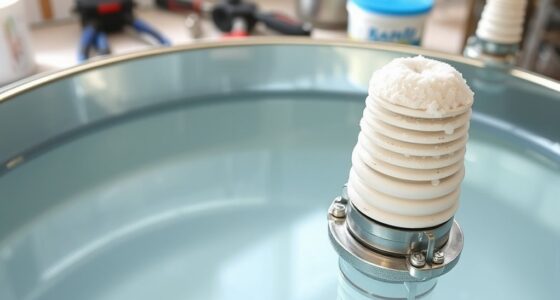

Using polyphosphate treatment helps prevent scale buildup in your appliances by sequestering calcium and magnesium ions, keeping them dissolved and preventing deposits. It interferes with mineral crystallization, so less scale forms on surfaces like water heaters, dishwashers, and coffee makers. Proper dosing and monitoring are key to its effectiveness. When applied correctly, polyphosphates extend appliance lifespan, improve efficiency, and reduce maintenance. To discover how to optimize this process for your setup, keep exploring these solutions.

Get home appliances delivered free with Prime
- Fast, free delivery on millions of items
- Prime Video, Amazon Music and more included
- Member-only deals all year
Key Takeaways
- Polyphosphates sequester calcium and magnesium ions, preventing their crystallization and scale formation on appliance surfaces.
- Proper dosing and contact time are essential for polyphosphate treatments to effectively reduce mineral deposits.
- Regular water hardness monitoring helps optimize polyphosphate use and maintain appliance efficiency.
- Using polyphosphates as part of an integrated water treatment approach extends appliance lifespan and lowers maintenance costs.
- Polyphosphate treatment fundamentally alters mineral behavior, providing continuous protection against scale buildup in appliances.
Scale buildup in plumbing and equipment can cause inefficient operation and costly repairs, but polyphosphate treatment offers an effective solution. When it comes to preventing scale, understanding the underlying scaling mechanisms is essential. Scale forms primarily when dissolved minerals like calcium and magnesium precipitate out of water, creating deposits that cling to surfaces over time. These deposits not only reduce the efficiency of appliances but can also cause blockages and damage. Polyphosphates work by interfering with these scaling mechanisms, effectively reducing the likelihood of mineral buildup.
Polyphosphates prevent mineral deposits by disrupting scale formation in plumbing systems.
The treatment efficacy of polyphosphates hinges on their ability to sequester calcium and magnesium ions. Once introduced into the water system, polyphosphates bind to these minerals, forming stable, soluble complexes. This prevents the minerals from crystallizing and forming solid scale deposits. Instead of the minerals forming hard deposits on surfaces, they stay suspended or are dispersed throughout the water. Because of this, appliances like water heaters, dishwashers, and coffee makers operate more efficiently, with less maintenance required over time.
Polyphosphate treatments are especially effective in systems where water hardness varies or where traditional descaling methods are insufficient. They provide a continuous line of defense against scale formation, which is critical for maintaining ideal performance. When you use polyphosphates, you’re not just delaying the need for descaling; you’re fundamentally altering how minerals behave within your plumbing system. This intervention helps to extend the lifespan of your appliances and reduces energy consumption since scaled components often require more energy to operate.
Furthermore, the efficacy of polyphosphate treatment depends on proper dosing and contact time. Too little might not adequately sequester minerals, reducing its preventative benefits. Too much can lead to unnecessary chemical use and potential water quality issues. It’s important to follow manufacturer guidelines and regularly monitor water conditions to maximize treatment efficacy. In addition, using polyphosphate treatments doesn’t eliminate the need for routine maintenance but considerably reduces the frequency and severity of scale-related problems. Regular monitoring of water quality, including checking for water hardness, is recommended to optimize the treatment process and prevent unexpected issues.
polyphosphate water treatment for appliances
As an affiliate, we earn on qualifying purchases.
As an affiliate, we earn on qualifying purchases.
Frequently Asked Questions
Can Polyphosphate Treatment Harm My Plumbing System?
Polyphosphate treatment generally doesn’t harm your plumbing system. It helps prevent scale buildup without causing plumbing corrosion or pipe blockages when used correctly. However, overuse or improper application might lead to mineral buildup or slight corrosion over time. To keep your plumbing safe, follow manufacturer instructions and consider regular maintenance. This way, you can enjoy the benefits of polyphosphate without risking damage or blockages in your pipes.
How Often Should I Reapply Polyphosphate Treatments?
Think of your polyphosphate treatment as a gentle guardian for your appliances. You should reapply it every 6 to 12 months, depending on your water usage and hardness. This application frequency guarantees maximum treatment longevity, preventing scale buildup effectively. Keep an eye on your system’s performance; if you notice signs of scaling sooner, consider reapplying more frequently to maintain that protective shield.
Are There Any Appliances Incompatible With Polyphosphate?
You should check your appliance’s material resistance and compatibility before using polyphosphate treatments. Generally, appliances made from materials resistant to chemical corrosion, like certain plastics and metals, work well. However, appliances with delicate parts or sensitive materials, such as rubber seals or soft metals, might be incompatible because polyphosphate could cause damage or degrade components over time. Always consult manufacturer guidelines to guarantee proper appliance compatibility.
Does Polyphosphate Affect Water Taste or Odor?
Water clarity stays high with polyphosphate treatment, but you might notice a slight change in mineral taste. It doesn’t typically affect water odor, so your water remains fresh-smelling. While it’s a small tweak, it’s worth keeping in mind since the treatment forms a thin film that can subtly influence taste. Don’t judge a book by its cover—sometimes, small changes like these are worth the benefits.
Can Polyphosphate Prevent All Types of Scale Buildup?
Polyphosphate can help prevent certain scale types, especially calcium carbonate, but it doesn’t prevent all scale buildup. Its limitations include limited effectiveness against silica or magnesium-based scales. You should understand these limitations of polyphosphate to guarantee proper scale types prevention. For thorough protection, consider combining polyphosphate with other treatments or adjustments to water chemistry, especially if your water contains multiple scale-forming minerals.
As an affiliate, we earn on qualifying purchases.
Conclusion
By using polyphosphate treatment, you’re effectively shielding your appliances from scale buildup, much like a protective shield guarding a castle. This simple step not only extends the life of your appliances but also keeps them running smoothly. Think of polyphosphate as a silent guardian, quietly working behind the scenes to prevent stubborn deposits. Embrace this proactive approach, and you’ll enjoy cleaner, more efficient appliances that stand the test of time.
water hardness monitor for appliances
As an affiliate, we earn on qualifying purchases.
As an affiliate, we earn on qualifying purchases.
As an affiliate, we earn on qualifying purchases.
Halloween Picks
halloween
As an affiliate, we earn on qualifying purchases.