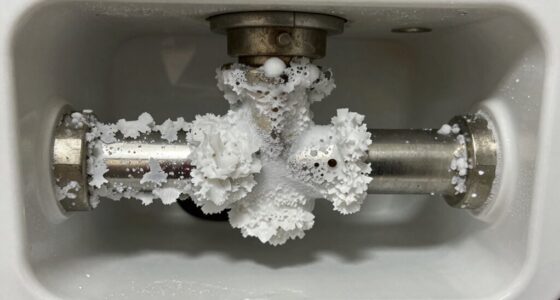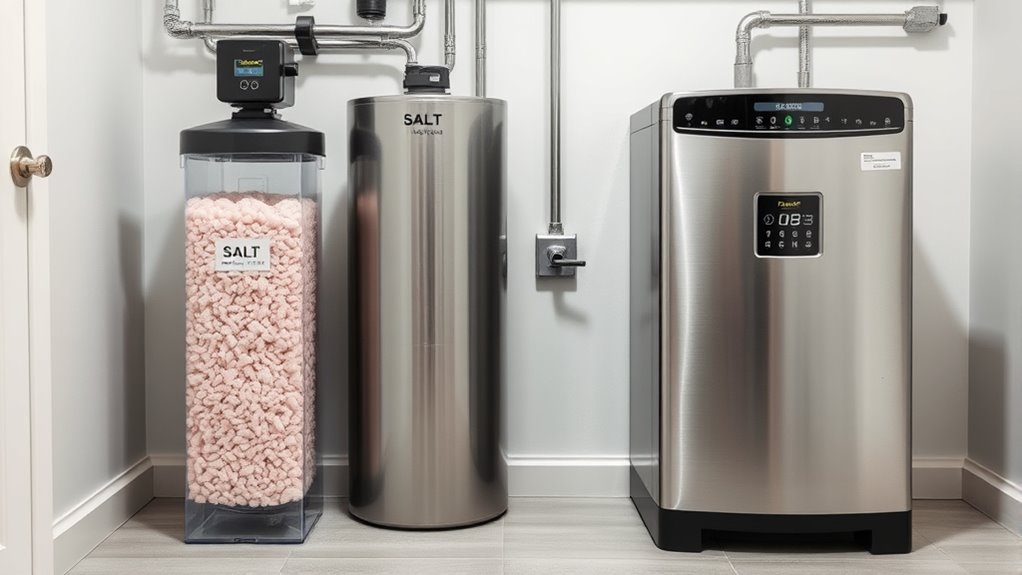

Salt-based softeners effectively remove minerals like calcium and magnesium through ion exchange, preventing scale buildup, making them ideal for severe hard water issues. However, they require ongoing salt refills and generate wastewater, impacting the environment and maintenance needs. Salt-free systems change mineral properties to reduce scale without removing minerals and need less maintenance, making them eco-friendly and good for mild hardness. To find out which solution fits your household, discover more about their advantages and drawbacks.

Get home appliances delivered free with Prime
- Fast, free delivery on millions of items
- Prime Video, Amazon Music and more included
- Member-only deals all year
Key Takeaways
- Salt-based softeners effectively remove minerals for better scale prevention but require salt refills and regeneration.
- Salt-free systems preserve minerals, are low-maintenance, and are eco-friendly, suitable for households avoiding sodium and regeneration.
- Salt-based systems are ideal for severe hard water issues and protecting appliances; salt-free systems suit mild conditions and health-conscious users.
- Salt-based softeners can increase operational costs and environmental impact due to salt and water usage during regeneration.
- Salt-free systems maintain natural mineral content and are preferable for sustainable, low-maintenance water treatment options.
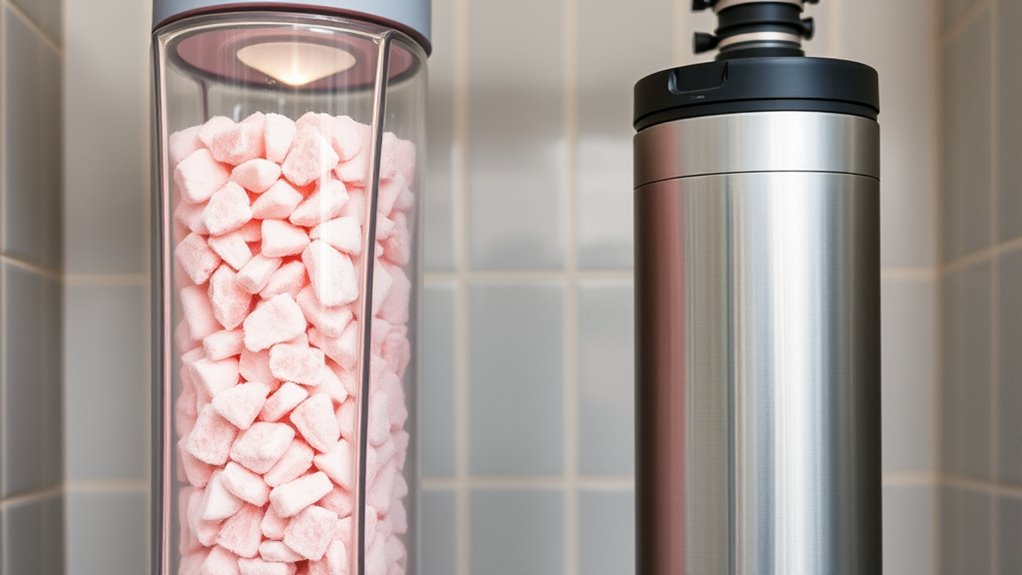
When choosing a water softener, understanding the differences between salt-based and salt-free systems is essential. One key aspect to consider is how each system affects water mineralization and the regeneration process. Salt-based softeners work by removing minerals like calcium and magnesium from your water through ion exchange. During this process, hard minerals are replaced with sodium ions, effectively softening your water. After a certain period, the system undergoes a regeneration process, where it flushes out accumulated minerals and recharges the resin beads with sodium. This cycle ensures consistent water softness but also introduces sodium into your water, which might be a concern for some individuals.
In contrast, salt-free systems don’t remove minerals but instead alter their properties through a process called template-assisted crystallization or other conditioning methods. These systems don’t require regeneration, as they don’t rely on resin beads or salt. Instead, they change the way minerals interact with surfaces, preventing scale buildup without substantially affecting water mineralization. Because there’s no regeneration process involved, salt-free systems are generally low-maintenance and don’t produce wastewater or require salt refills. They’re ideal if you’re looking for a more environmentally friendly option or have concerns about sodium intake.
When it comes to water mineralization, salt-based systems considerably reduce mineral content, leading to truly softened water. This can be beneficial for appliances and plumbing, as it prevents scale buildup. However, it also means your water’s mineral profile is altered, which some people believe can affect taste or the water’s health benefits. Salt-free systems, on the other hand, maintain the mineral content, just changing their form or interaction. This means your water retains its natural mineralization, which some prefer for taste and health reasons, but it might not prevent scale as effectively as a salt-based softener.
The regeneration process in salt-based systems is a critical factor to consider. It involves flushing the resin beads with a brine solution, which can consume a substantial amount of water and salt. This process is essential for maintaining the resin’s effectiveness but adds to operational costs and environmental impact. Salt-free systems skip this step altogether, making them more eco-friendly and easier to maintain. They’re best suited for households with mild hard water issues or those who prioritize low maintenance and sustainability.
Additionally, advancements in water treatment technology have led to more efficient and environmentally friendly systems, broadening options for consumers. Ultimately, your choice depends on your priorities—whether you want the most effective scale prevention through traditional softening or prefer a low-maintenance, environmentally friendly system that preserves mineral content. Both systems have their pros and cons, but understanding these key differences helps you make an informed decision tailored to your needs.
As an affiliate, we earn on qualifying purchases.
Frequently Asked Questions
Can Salt-Free Softeners Remove Existing Scale Buildup?
Salt-free softeners can’t remove existing scale buildup, but they prevent new scale from forming. If you want to tackle existing buildup, you’ll need a descaling treatment or a water softener that uses salt to dissolve and flush out the minerals. Salt-free systems work by conditioning water, so they’re great for ongoing prevention, but they don’t provide the scale removal needed for existing deposits.
How Do Salt-Based and Salt-Free Systems Compare Environmentally?
You’ll notice a huge difference in environmental impact between salt-based and salt-free systems right away. Salt-free options are practically eco warriors, using minimal energy and producing no brine waste, making them super eco friendly. Salt-based systems, on the other hand, consume more energy and generate wastewater that can harm the environment. So, if you care about the planet, salt-free softeners are your best bet for a greener future!
Are Salt-Free Softeners Suitable for High-Hardness Water?
Salt-free softeners aren’t ideal for high-hardness water because they mainly prevent scaling rather than actually softening water. If you’re dealing with extreme hardness, you might experience less scaling but could still notice mineral buildup and altered water taste. For high-hardness water, a salt-based system offers more effective scaling prevention and better softening, ensuring your appliances last longer and your water tastes cleaner.
Do Salt-Based Systems Require Regular Maintenance?
Yes, salt-based systems require regular maintenance routines like salt replenishment to keep them functioning properly. You’ll need to check the brine tank periodically, especially after heavy water usage, to make sure there’s enough salt. This prevents salt bridges and clogs, which could hinder water softening. Staying proactive with maintenance helps your system work efficiently, saving you from costly repairs and ensuring consistently soft water.
Which Softener Type Is Better for Sensitive Skin or Health?
If you have sensitive skin or health concerns, salt-free water softeners are often better because they don’t add sodium or other chemicals that might irritate your skin. Salt-based systems can sometimes cause dryness or skin reactions, especially for those with skin sensitivity. Consider your health considerations carefully and choose a system that minimizes potential irritants, ensuring safer, gentler water for your daily use.
As an affiliate, we earn on qualifying purchases.
Conclusion
Choosing between salt-based and salt-free water softeners depends on your needs. Did you know that over 85% of households with hard water opt for salt-based systems for their proven effectiveness? If you want softer water and fewer mineral deposits, a salt-based softener might be best. But if you prefer a maintenance-free, eco-friendly option, salt-free systems work well. Consider your water quality, budget, and lifestyle to make the best choice for your home.
As an affiliate, we earn on qualifying purchases.
eco-friendly water softening system
As an affiliate, we earn on qualifying purchases.
As an affiliate, we earn on qualifying purchases.
Halloween Picks
halloween
As an affiliate, we earn on qualifying purchases.