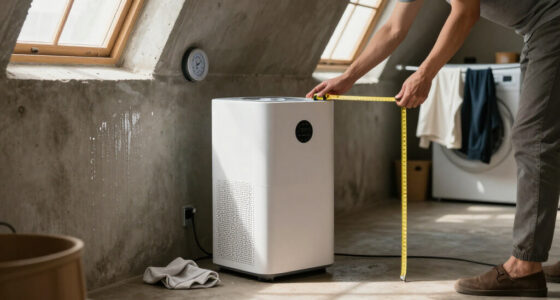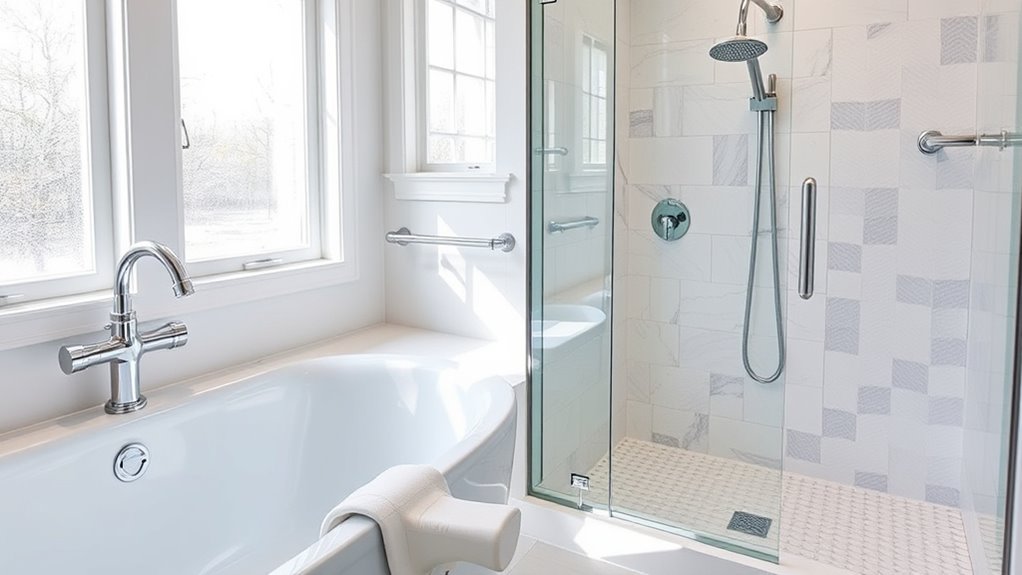

To confidently size bathroom fixtures safely, start by measuring your space carefully, including door swings and clearance. Choose fixtures like toilets, sinks, and showers that fit your dimensions and support accessibility. Guarantee proper placement to prevent overcrowding and hazards, and check water supply and pressure needs for reliable operation. Incorporate safety features such as grab bars and non-slip mats. Continue exploring how to optimize your bathroom for safety and comfort throughout your project.

Get home appliances delivered free — and shop member deals
- Fast, free delivery on millions of items
- Access to Prime Big Deal Days deals on October 6–7
- Prime Video, Amazon Music and more included
Key Takeaways
- Measure bathroom dimensions accurately to ensure proper fixture placement and safe clearance spaces.
- Select fixture sizes that match user needs and space constraints for comfort and functionality.
- Ensure adequate water supply and pressure to prevent operational issues and maintain safety.
- Incorporate safety features like grab bars, non-slip mats, and clear pathways to enhance accessibility and prevent accidents.
- Follow standardized measurements and layout principles to avoid costly mistakes and ensure a safe, user-friendly bathroom environment.
As an affiliate, we earn on qualifying purchases.
Understanding Standard Bathroom Dimensions and Layouts
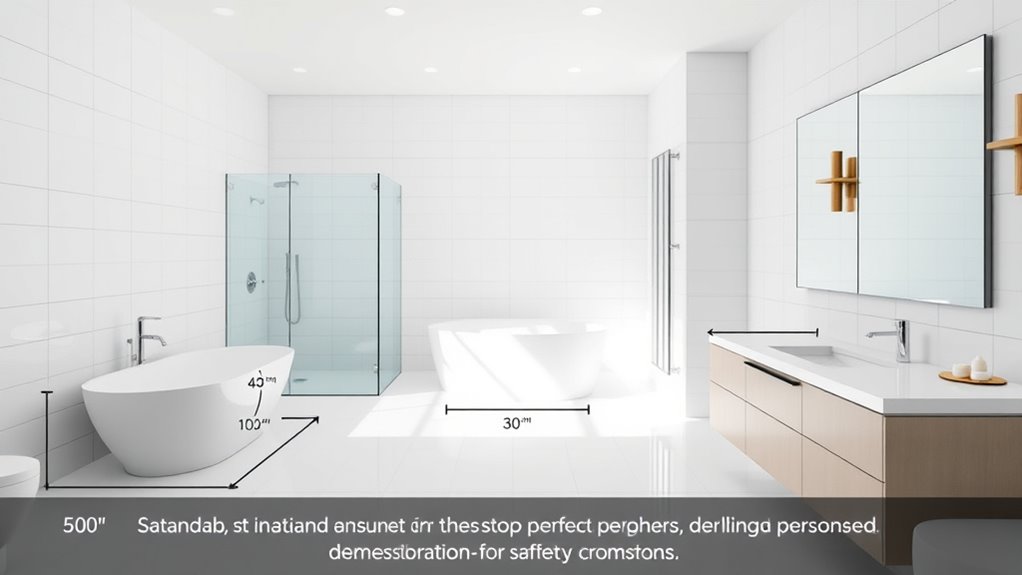
Understanding standard bathroom dimensions and layouts is essential for ensuring safety and functionality. Proper design includes adhering to ventilation standards to prevent moisture buildup and mold, which can compromise safety. Typically, bathrooms should have a minimum ceiling height of 7 feet, providing enough space for air circulation and comfort. Lighting guidelines recommend sufficient illumination, especially around mirrors and fixtures, to prevent accidents and improve usability. Layouts should prioritize accessibility, such as placing the toilet, sink, and shower within easy reach, while maintaining clear pathways of at least 24 inches. Incorporating standardized measurements ensures consistent safety and usability across different spaces. Combining these standards helps you create a space that’s both safe and practical. By following these key considerations, you’ll ensure your bathroom meets safety codes and offers a comfortable environment for daily routines.
As an affiliate, we earn on qualifying purchases.
Measuring Your Space Accurately Before Buying Fixtures

Before purchasing bathroom fixtures, you need to measure your space accurately to guarantee everything fits properly. Start by noting the available dimensions for each area, including clearance space for doors and movement. Use a tape measure to record the length, width, and height of spots where fixtures will go. Be mindful of existing plumbing connections, as they influence where you can install new fixtures. Knowing the fixture materials helps determine weight and compatibility with your space, especially if you’re considering heavier options like cast iron or lightweight composites. Accurate measurements prevent surprises and ensure your fixtures, such as sinks, tubs, or showers, will fit seamlessly. Taking these steps minimizes costly mistakes and guarantees your bathroom fixtures enhance both safety and functionality. Additionally, reviewing water park safety guidelines can offer insights into durable fixture choices and installation considerations.
compact toilet for small bathrooms
As an affiliate, we earn on qualifying purchases.
As an affiliate, we earn on qualifying purchases.
Choosing the Right Toilet Size for Comfort and Functionality
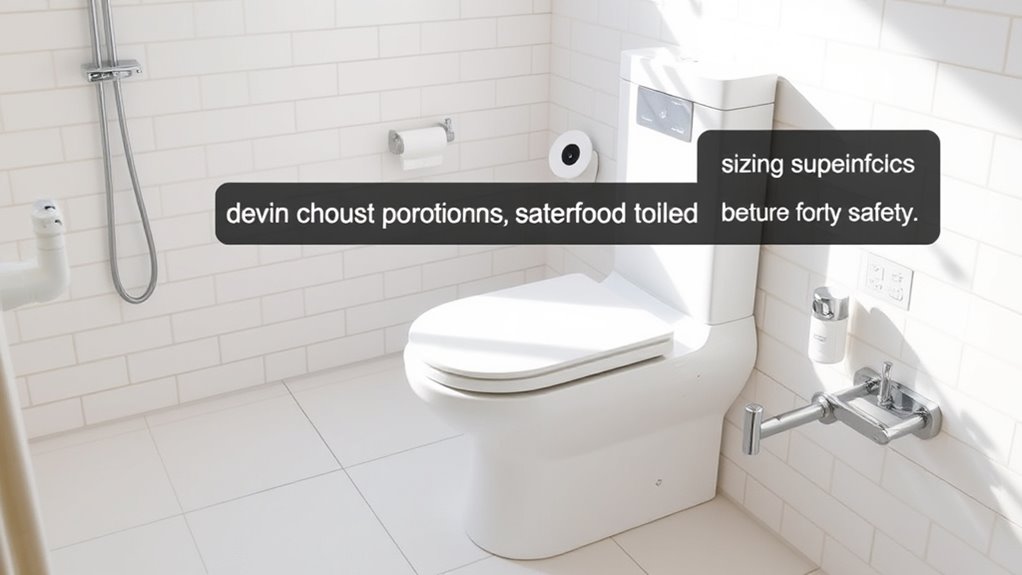
Choosing the right toilet size is essential for both comfort and functionality in your bathroom. Start by considering the toilet height, which affects ease of use, especially for children or elderly family members. Standard heights typically range from 15 to 17 inches, but comfort-height models around 17 to 19 inches may suit taller individuals better. Additionally, pay attention to the fixture weight; a lighter toilet can be easier to handle during installation, but ensure it’s sturdy enough for daily use. Compact models save space without sacrificing comfort, while elongated bowls provide added sitting area. By selecting a toilet with the appropriate height and manageable fixture weight, you’ll maximize comfort and ensure your bathroom functions smoothly for years to come. Understanding good grief and the needs of end-of-life care can also inform thoughtful planning for future adjustments or modifications in your home environment.
bathroom fixture measurement tools
As an affiliate, we earn on qualifying purchases.
As an affiliate, we earn on qualifying purchases.
Selecting Sinks and Vanities That Fit Your Bathroom’s Scale
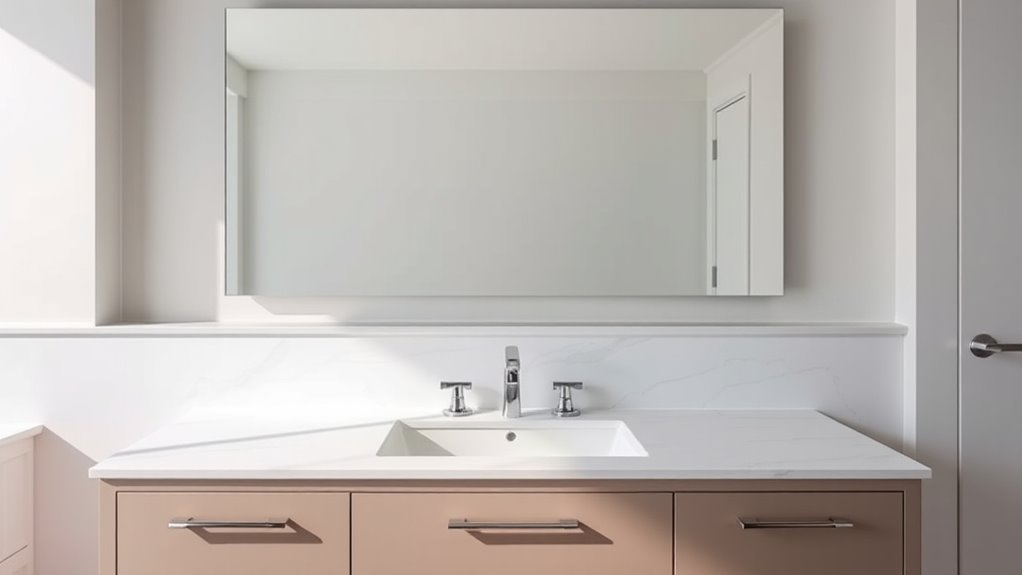
Selecting sinks and vanities that match your bathroom’s scale guarantees both functionality and visual harmony. You want pieces that complement your decor style without overwhelming the space. For smaller bathrooms, opt for sleek, streamlined vanities with compact sinks to maximize floor area. Larger baths can accommodate substantial vanity units that serve as focal points. Consider material durability to ensure longevity, especially in high-moisture environments. Materials like solid wood, stone, or high-quality composites resist warping and damage over time. The right scale and sturdy materials create a balanced look that feels comfortable and cohesive. Ultimately, choosing fixtures that fit your bathroom’s size ensures you enjoy both practicality and aesthetic appeal, making your space more inviting and easier to maintain.
Ensuring Shower and Bathtub Sizes Meet Usage Needs
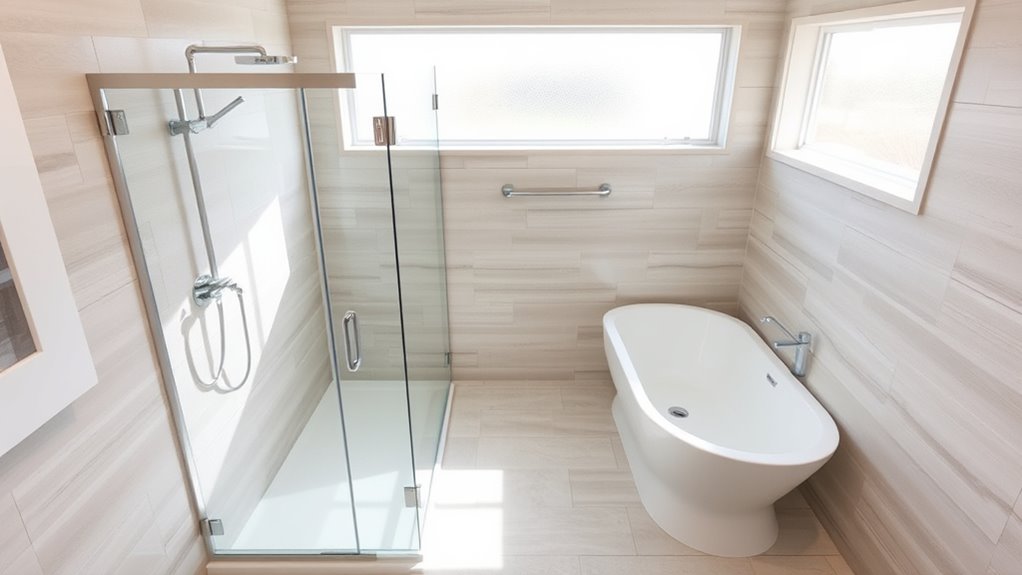
To guarantee your shower and bathtub sizes suit your needs, you should consider standard dimensional guidelines and how they fit your space. Comfort and accessibility are essential, so think about the users’ mobility and preferences. Additionally, make sure there’s enough safety clearance to prevent accidents and meet safety requirements. Incorporating space optimization strategies can help you make the most of your bathroom layout while ensuring the fixtures are appropriately sized.
Standard Dimensional Guidelines
Ensuring shower and bathtub sizes meet usage needs starts with adhering to standard dimensional guidelines that prioritize both comfort and safety. These guidelines help you select fixtures that balance functionality with fixture aesthetics, guaranteeing the space looks appealing without sacrificing usability. For showers, typical minimum dimensions are around 30 inches by 30 inches, providing enough room to move comfortably. Bathtubs should be at least 60 inches long for adult use, with width and depth based on user preferences. Material durability is also critical; choosing fixtures made from high-quality, resilient materials ensures longevity and maintains their aesthetic appeal over time. Additionally, incorporating safety features such as non-slip surfaces and grab bars can further enhance bathroom safety. Following these standards guarantees your bathroom fixtures are both practical and attractive, helping you create a safe, functional, and visually pleasing space.
Comfort and Accessibility Considerations
Making sure your shower and bathtub sizes support comfort and accessibility is essential for a functional bathroom. Proper sizing ensures users have enough space to move comfortably and safely. When planning, consider ideal grab bar placement to provide stability, especially for those with mobility challenges. Confirm the shower or tub area has non-slip flooring to prevent falls and enhance safety. A larger shower or bathtub allows easier entry and exit, making daily routines more comfortable. Keep in mind that ample space also accommodates assistive devices or seating if needed. Clear pathways and well-placed grab bars contribute to a more accessible environment. Additionally, selecting fixtures with universal design features can further enhance safety and usability for everyone. By prioritizing these aspects, you create a bathroom that’s both practical and welcoming for everyone.
Safety Clearance Requirements
Are your shower and bathtub sizes meeting safety clearance standards to accommodate all users comfortably? Proper clearance is essential to prevent slip hazards and ensure safe movement within the space. Adequate space minimizes the risk of falls and injuries, especially for those with limited mobility. Consider ventilation needs as well—poor airflow can lead to moisture buildup, increasing slip hazards and mold growth. Make sure there’s enough room around fixtures to allow easy access and movement without feeling cramped. Clearances should follow local building codes and safety guidelines, typically providing at least 24 inches of space in front of fixtures. Meeting these requirements helps create a safer, more functional bathroom that reduces accidents and enhances overall safety for every user. Additionally, industrial juice manufacturing process standards emphasize the importance of proper spacing and safety measures to ensure consistency and safety in production environments.
Safety Factors to Consider When Installing Bathroom Fixtures
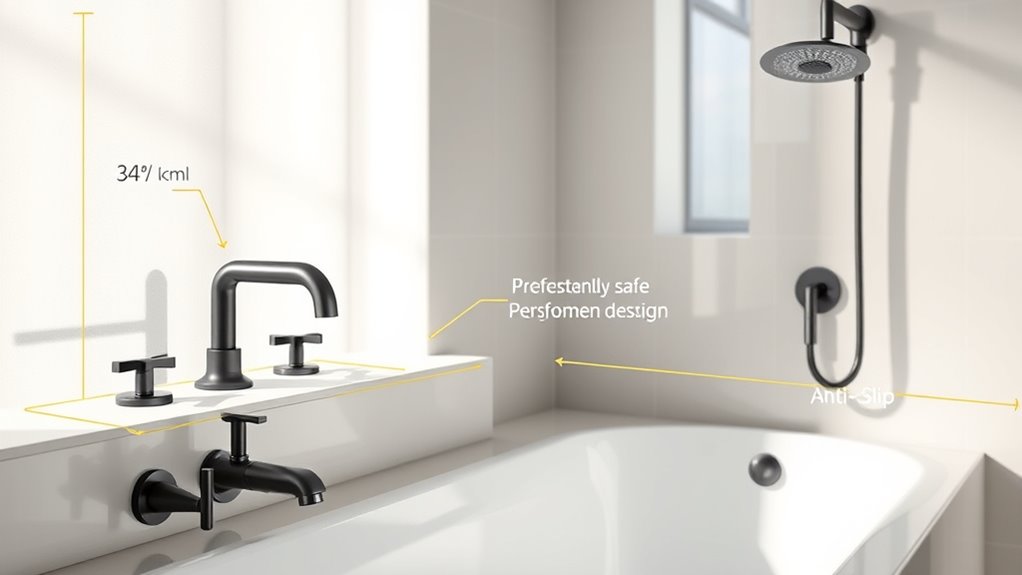
When installing bathroom fixtures, you need to pay close attention to proper fixture placement to prevent accidents and guarantee comfort. Make sure your water supply is adequate to handle peak usage without causing pressure issues or delays. These safety factors are essential for creating a functional and secure bathroom environment. Additionally, consider the filtration system of your water supply to ensure the water quality remains safe and clean for daily use.
Proper Fixture Placement
Proper fixture placement is essential to guarantee safety and functionality in your bathroom. When planning fixture installation, consider accessible locations that minimize strain and reduce the risk of accidents. Make certain plumbing connections are correctly aligned to prevent leaks or water damage, which could compromise safety. Position sinks, toilets, and showers at appropriate heights for comfort and ease of use. Avoid placing fixtures too close to each other or walls, allowing enough space for movement and cleaning. Proper fixture placement also involves coordinating with electrical outlets and ventilation systems to prevent hazards. By thoughtfully arranging your fixtures, you reduce the chance of plumbing mishaps and improve overall bathroom safety. Accurate planning during fixture installation ensures your bathroom is both safe and practical for everyday use. Additionally, consulting with experienced professionals can help you avoid common installation errors that may compromise safety.
Adequate Water Supply
Ensuring an adequate water supply is essential for the safety and functionality of your bathroom fixtures. Without sufficient water flow, fixtures like toilets, sinks, and showers won’t perform properly, causing inconvenience and potential safety hazards. To optimize plumbing efficiency, consider water conservation measures that reduce unnecessary usage without sacrificing performance. Properly sizing your water lines and ensuring adequate pressure helps maintain consistent flow, preventing issues like low water pressure or fixture failure. Check your main water supply and pressure regulator to confirm they meet your fixture demands. Additionally, monitoring the expiration of vape juice can help prevent safety hazards associated with spoiled liquids. By planning for enough water volume and flow, you create a safe, efficient bathroom environment that conserves resources and minimizes plumbing problems. Proper water supply setup is a vital step toward a reliable and safe bathroom installation.
Tips for Maintaining Safety and Accessibility in Your Bathroom

To keep your bathroom safe and accessible, focus on simple, proactive measures that prevent accidents and accommodate mobility needs. Install elderly friendly fixtures like grab bars, non-slip mats, and accessible sinks. Consider child proof bathroom designs with safety locks and rounded edges to protect little ones. Regularly check lighting to prevent falls and keep pathways clear of clutter. Keep emergency contact numbers visible and within reach. Use a sturdy shower chair if needed. Here’s a quick guide:
| Safety Feature | Purpose | Tips |
|---|---|---|
| Grab Bars | Prevent falls in critical areas | Install at shower, toilet |
| Non-slip Mats | Reduce slipping risks | Place in shower/bath |
| Childproof Locks | Keep children safe from hazards | Use on cabinets and toilets |
Frequently Asked Questions
How Do I Determine the Best Fixture Placement for Safety?
You determine the best fixture placement by prioritizing fixture accessibility and fixture maintenance. Position fixtures where users can easily reach them without straining, ensuring safety for all ages. Avoid tight corners or obstructed areas, and leave enough space for cleaning and repairs. Consider traffic flow and potential hazards, like water splashes or slips. Proper planning guarantees safe, functional bathrooms that are easy to maintain and accessible for everyone.
What Are the ADA Guidelines for Bathroom Fixture Heights?
You should position bathroom fixtures to meet ADA compliance, ensuring they are accessible for everyone. Typically, the ADA recommends a toilet height of 17-19 inches from floor to top of seat for comfort and accessibility. Sinks should be mounted 29-34 inches high, with clear knee space underneath. These fixture heights promote accessibility and safety, making your bathroom compliant with ADA guidelines and easy for all users to use comfortably.
How Can I Prevent Water Damage With Proper Fixture Sizing?
Did you know water damage causes billions in repairs annually? To prevent this, guarantee proper fixture sizing by considering water pressure and pipe insulation. Use correct pipe sizes to reduce pressure spikes, and insulate pipes to prevent freezing and leaks. Properly sized fixtures help maintain consistent flow, minimizing overflow risks. Regularly check for leaks and maintain fixtures to avoid water damage, keeping your space safe and dry.
What Safety Features Are Recommended for Children’s Bathrooms?
You should install childproof locks on cabinets and toilet lids to prevent accidents. Use slip-resistant mats in the bathtub and on the bathroom floor to reduce slips and falls. Keep sharp objects and cleaning supplies out of children’s reach. Make certain faucets have temperature controls to prevent scalding. These safety features help create a secure environment, giving you peace of mind while your children enjoy the bathroom safely.
How Often Should Bathroom Fixtures Be Inspected for Safety?
Think of your bathroom fixtures as guardians of safety that need regular check-ups. You should inspect them at least once every six months to catch any wear or damage early. Consistent fixture maintenance guarantees they’re secure, leaks are prevented, and safety features remain effective. By sticking to regular inspection schedules, you protect everyone, especially children, and keep your bathroom a safe, reliable space.
Conclusion
By understanding standard sizes and prioritizing safety, you can confidently design a bathroom that’s both functional and secure. It’s true that proper measurements and thoughtful fixture choices reduce accidents and improve comfort. Think of your bathroom as a sanctuary—every fixture should fit perfectly and support safety. When you size right and install wisely, you’re not just creating a beautiful space—you’re ensuring peace of mind every time you step inside.
Fall yard work Picks
leaf blowers
As an affiliate, we earn on qualifying purchases.