
TL;DR

Get home appliances delivered free with Prime
- Fast, free delivery on millions of items
- Prime Video, Amazon Music and more included
- Member-only deals all year
A Hunker report citing mold and air-quality expert Michael Rubino says diluted 3% hydrogen peroxide may help lift some organic stains and grime from walls. It is not a complete mold-removal method: physical cleanup, moisture control and, in some cases, professional remediation may be needed.
Hydrogen peroxide may help with some wall stains and everyday grime, but it should not be treated as a complete solution for mold, according to a Hunker report citing Michael Rubino, a mold and indoor-air-quality expert. The guidance matters because applying a cleaner can lighten visible marks without removing contamination embedded in a porous surface such as drywall.
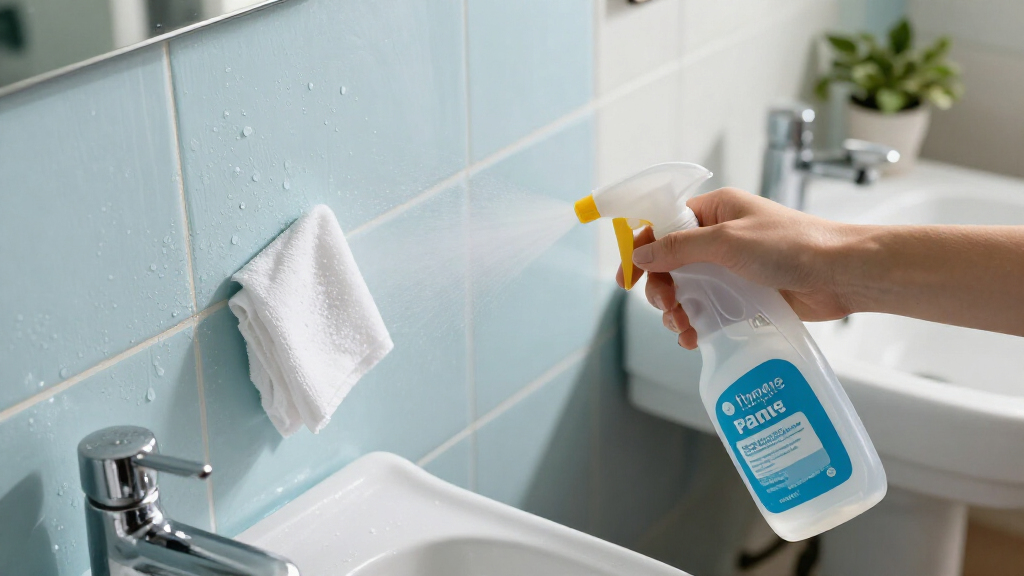
Rubino told Hunker that hydrogen peroxide’s oxidizing properties can break down some organic residue and lighten certain stains. He said it may also help with grime such as sticky or greasy fingerprints. For routine spot-cleaning, the report describes using 3% hydrogen peroxide with a little dish soap, applying it gently with a clean rag, and testing the mixture first on an inconspicuous area. Afterward, residue should be rinsed away with clear water.
The advice comes with limits. Rubino said hydrogen peroxide can play a role in mold remediation, but spraying it on a wall is not a complete cleanup process. Depending on the surface and contamination, remediation may also involve HEPA vacuuming and physically cleaning the material. Bubbles that appear during application do not establish that mold is present, or that the surface is clean once the bubbling ends.
Rubino also cautioned that dead mold can leave behind spores, fragments and other microscopic particles. If mold has grown into drywall, he said removal and replacement may be preferable to surface treatment. For everyday dirt and grease, he recommended considering a gentle detergent made for the task, which may be less likely to discolor or damage painted walls than an unsuitable cleaner.
Why Surface Treatment Has Limits
The distinction between lightening a stain and removing contamination affects how homeowners respond to both routine marks and suspected mold. A cleaner may improve a wall’s appearance without addressing material that remains on or inside it. In mold cases, relying only on a spray could leave particles behind or allow the problem to return if the underlying moisture source remains.
That is why the advice is not simply to use or avoid hydrogen peroxide. Its possible role depends on the type of residue and the wall surface. A small, washable spot is different from extensive mold growth on porous drywall. Treating those situations as equivalent could lead to repeated cleaning without resolving the cause.
Moisture control is also part of the reported guidance. Rubino said improving airflow or using a dehumidifier may help address conditions that support mold growth. Without dealing with the source of moisture, a cleaned or treated area may become affected again.
Products Worth Considering

Roborock Qrevo CurvX Robot Vacuum and Mop

Dyson Ball Animal 3 Corded Upright Vacuum

Dyson Car+Boat Cordless Handheld Vacuum
As an affiliate, we earn on qualifying purchases.
The Report’s Cleaning Guidance
The source is a Hunker article about using hydrogen peroxide on interior walls, based on an interview with Michael Rubino. It covers fingerprints, scuffs and other visible marks, then distinguishes those routine cleaning jobs from mold remediation. The material supplied for this article does not include a publication date, laboratory testing, or a detailed product-by-product comparison.
Its practical guidance centers on a cautious spot test and gentle application of a 3% solution, with a small amount of dish soap for certain grime. The article does not describe this as a universal recipe for all paints or wall coverings. It also says the suitability of hydrogen peroxide for mold treatment depends on the surface and the cleanup process.
For larger or recurring mold concerns, the report points readers toward a qualified mold inspector or remediation professional. Rubino’s advice is presented as expert guidance in an interview, not as a guarantee that hydrogen peroxide will work on every stain, finish or contaminated material.
“Hydrogen peroxide can be useful in some situations for some types of residue, particularly organic buildup and staining.”
— Michael Rubino, as quoted by Hunker
What the Advice Does Not Establish
The source does not provide controlled test results showing how well hydrogen peroxide works across different wall paints, stains or levels of contamination. It also does not specify a universal contact time or a single procedure suitable for every surface. The recommendation to test a small, hidden area reflects that results may vary by finish and material.
For mold, the article does not set out a do-it-yourself threshold for when treatment is safe or sufficient. The extent of contamination, whether it has penetrated porous drywall and the source of moisture can change what work is needed. Bubbling alone cannot confirm mold or prove that a wall has been cleaned. The source material also does not give a publication date, so the timing of the report cannot be independently established from the information provided.
Steps Before Treating a Wall
For a small, ordinary stain, readers following the report’s advice can first check the wall’s finish and test a small, inconspicuous spot. If they use the suggested mixture, the article advises gentle application and rinsing away residue with clear water. Anyone using a cleaning product should follow its label directions and avoid assuming that a successful spot test on one surface applies to another.
If mold is extensive, grows back after cleaning, or is accompanied by a persistent musty smell, Rubino recommended seeking a qualified mold inspector rather than repeatedly treating the surface. The next step may involve identifying and controlling moisture and determining whether porous material needs removal. The report does not identify a specific product approval, inspection deadline or follow-up date.
Key Questions
Can hydrogen peroxide clean stains from painted walls?
It may help lighten some organic stains and grime, according to Rubino’s comments in the Hunker report. Test a small, hidden area first because finishes can react differently.
What mixture does the report describe for wall grime?
The article describes 3% hydrogen peroxide mixed with a little dish soap, applied gently with a clean rag. It advises rinsing the area with clear water after the stain lifts.
Do bubbles show that a wall has mold?
No. Rubino said bubbling can result from organic material or certain enzymes; it does not by itself confirm mold or prove the surface is clean.
Is hydrogen peroxide enough to remove mold from drywall?
Not necessarily. The report says mold cleanup may require physical removal of contamination, and Rubino said drywall with mold growth within the material may need to be removed and replaced.
When should someone seek professional help?
Rubino recommended contacting a qualified mold inspector if mold returns after treatment or a musty smell persists. Extensive growth or suspected contamination inside porous material may also call for an assessment rather than repeated surface cleaning.
Source: hunker.com