
TL;DR

Get home appliances delivered free with Prime
- Fast, free delivery on millions of items
- Prime Video, Amazon Music and more included
- Member-only deals all year
An Ideal Home report says householders may get less heat from radiators if they are dusty, contain trapped air or are blocked by furniture. Experts quoted in the report recommend cleaning radiators before the heating season, checking for signs that they need bleeding and avoiding obstructions; the article does not establish how widespread these problems are.
Ideal Home has published advice on radiator problems that may make homes harder to heat, including dust buildup, trapped air and furniture blocking heat circulation. Experts quoted in the report recommend basic maintenance and checking radiator placement, but the article does not show how common these issues are or establish that every cold room is caused by radiator use.
Dust and debris can collect inside radiators during months when heating is not being used. Martin Garbutt, head of technical governance at home services platform Ding, told Ideal Home that dust may reduce a radiator’s efficiency by up to 10%. That figure is an expert’s stated estimate in the report, rather than a result or measurement described in the article.
Garbutt recommends switching a radiator off and letting it cool before cleaning. He suggests using a hairdryer or narrow vacuum attachment to remove dust from inside the fins, with a towel underneath to catch debris. For the outside, he advises a microfiber cloth and, for a deeper clean, warm water with a small amount of dish soap or white vinegar. Cleaning should be done only once the radiator is cool.
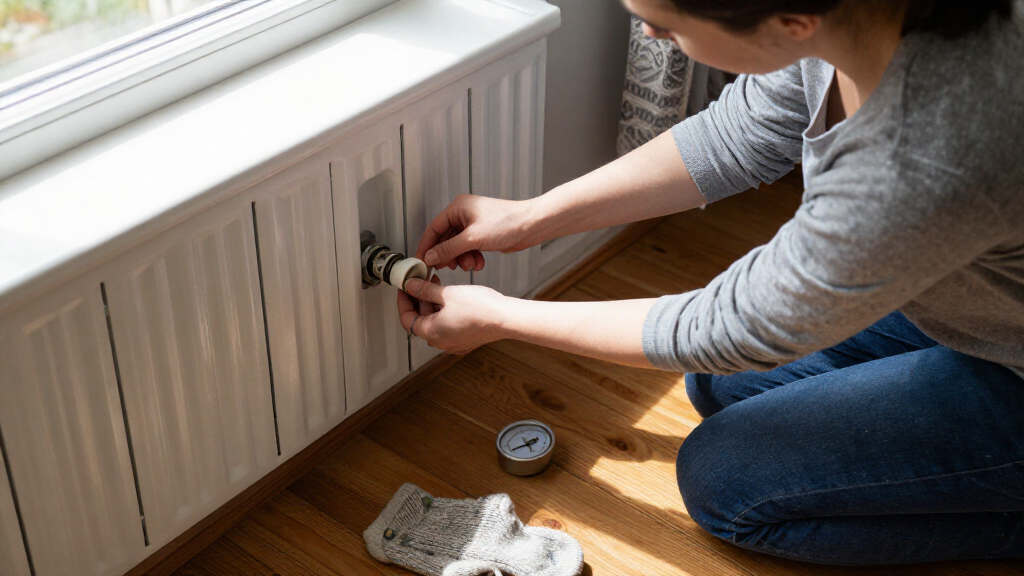
Trapped air is another possible cause of uneven heating. Ian Palmer-Smith, a service and repair expert at Domestic & General, said a radiator that is cold at the top and hot at the bottom may need bleeding. Gurgling or banging noises can also be signs of trapped air, he said, and he recommends bleeding radiators at least once a year as standard maintenance. If uneven heating continues after bleeding, Ant Langston of HeatandPlumb.com said a system-balancing issue may be involved.
Small Checks That Affect Room Heat
The advice matters to households trying to keep rooms warm without assuming that turning the heating up will solve the problem. Dust, trapped air and blocked airflow are different issues, but each can affect how heat is delivered or felt in a room. Identifying a basic maintenance problem may help explain why one radiator or room seems colder than others.
The report also points to the limits of these fixes. Furniture placed directly in front of a radiator can impede heat circulation, but cleaning or bleeding a radiator will not correct poor insulation or draughts. The writer’s account describes a cold, draughty older house, underscoring that radiator performance is only one factor in indoor comfort. The article does not provide a cost comparison, measured household energy savings or evidence that its suggestions will produce a particular temperature change.
Products Worth Considering

Roborock Q7 M5+ Robot Vacuum and Mop

Dyson Ball Animal 3 Corded Upright Vacuum

LG C2 Series 65-Inch OLED evo 4K Smart TV (OLED65C2PUA, 2022)
As an affiliate, we earn on qualifying purchases.
What the Expert Advice Covers
The report is framed around a homeowner’s experience of a house that remains cold even when central heating is running. Its author says draughts and weak insulation may be part of the problem, then asks heating and home-services specialists about radiator care. It is a consumer-advice article, not a new government rule, product recall or scientific study.
Alongside cleaning and bleeding, the article warns against hiding radiators behind furniture, coats or other obstructions. Garbutt told Ideal Home that large items such as wardrobes and drawers can trap heat and reduce circulation through a room. The report also mentions radiator valves: Langston says the lockshield valve, opposite the thermostatic valve, may need adjustment if radiators remain uneven after bleeding. That adjustment is a system-balancing task, not a universal instruction to turn valves by a fixed amount.
The supplied report excerpt begins a discussion of thermostats and thermostatic radiator valves but ends before giving the expert advice in that section. It therefore does not support specific claims about thermostat settings or how to configure a particular heating system.
“A radiator that feels cold at the top and hot at the bottom may have trapped air inside.”
— Ian Palmer-Smith, service and repair expert at Domestic & General, as quoted by Ideal Home
What the Article Does Not Establish
The report does not establish how many homes have the problems it describes, or how much cleaning, bleeding or valve adjustment would improve heating in a particular property. The efficiency figure for dust is attributed to Garbutt, but the article does not explain its source, testing conditions or whether it applies across radiator types.
It is also unclear from the supplied excerpt what thermostat guidance the full article gives: the text stops as the author begins describing a thermostat and thermostatic radiator valves. The report does not diagnose the writer’s own heating system or show that radiator maintenance would resolve the cold conditions in the house. Insulation, draughts, boiler performance and other system faults may also need attention.
Checks Before Heating Season
For householders following the report’s advice, the immediate steps are to clear dust from cool radiators, keep furniture and other items from blocking them, and look for signs of trapped air before relying on the heating regularly. If bleeding does not resolve uneven warmth, the article points to system balancing as a possibility rather than a confirmed diagnosis. Persistent cold spots or unusual noises may warrant advice from a qualified heating professional, particularly if the cause is not clear.
The source provides no announced follow-up, official deadline or planned investigation. Its practical next step is routine inspection and maintenance, while the appropriate remedy will depend on the condition and layout of each heating system.
Key Questions
What are signs that a radiator may need bleeding?
Ian Palmer-Smith told Ideal Home that a radiator cold at the top and hot at the bottom may contain trapped air. Gurgling or banging sounds can also be signs, though the report does not say these symptoms prove trapped air is the cause.
How should a radiator be cleaned?
Martin Garbutt advises turning it off and letting it cool first. He suggests removing dust with a hairdryer or narrow vacuum attachment, then wiping the exterior with a microfiber cloth. The report also describes warm water with a little dish soap or white vinegar for a deeper clean.
Can furniture make a room feel colder?
According to Garbutt, large furniture close to or in front of a radiator can trap heat and limit circulation around the room. The report does not quantify how much this changes room temperature.
What if some radiators stay cooler after bleeding?
Langston said uneven heating may point to a balancing issue involving the lockshield valve. The report does not give a universal adjustment setting, so persistent problems may need assessment by a heating professional.
Source: rss