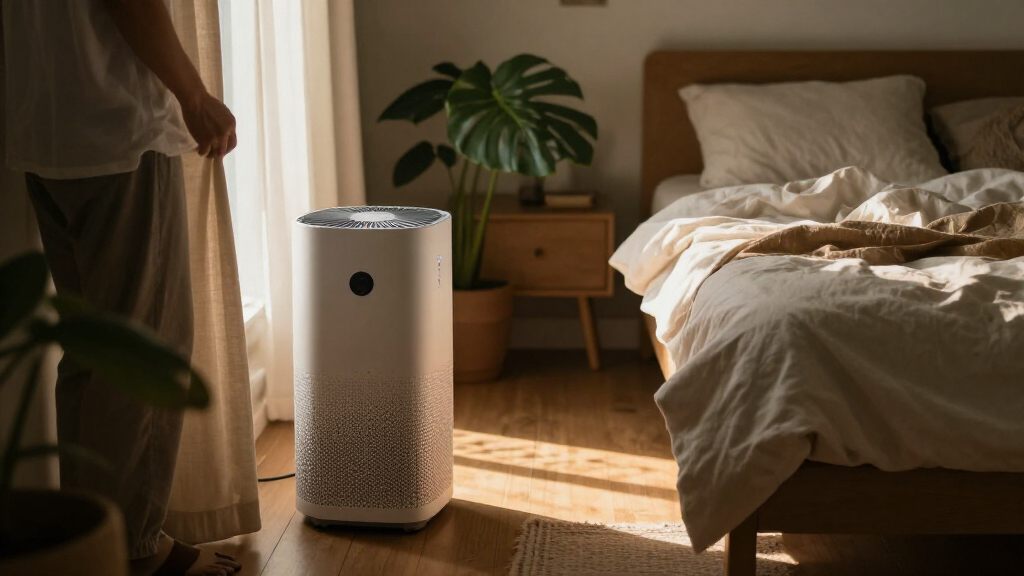
The best smart air purifier for a bedroom balances room coverage and useful app controls with noise and light levels you can live with overnight. I rank the Blueair Blue Pure 511i Max as the best overall choice for a bedroom-focused setup, while the Levoit Core 200S-P is a more compact smart pick and the DREO Smart Air Purifier with PM2.5 monitor stands out for people who want live air-quality feedback. The key tradeoff is that larger coverage and more sensors can bring extra size, cost, or interface complexity, while compact models may be a weaker fit for larger rooms. Filter availability, sleep settings, and how much automation you actually want also matter. Read on for the full breakdown of all 13 options and how I’d match each one to a bedroom.

Get home appliances delivered free with Prime
- Fast, free delivery on millions of items
- Prime Video, Amazon Music and more included
- Member-only deals all year
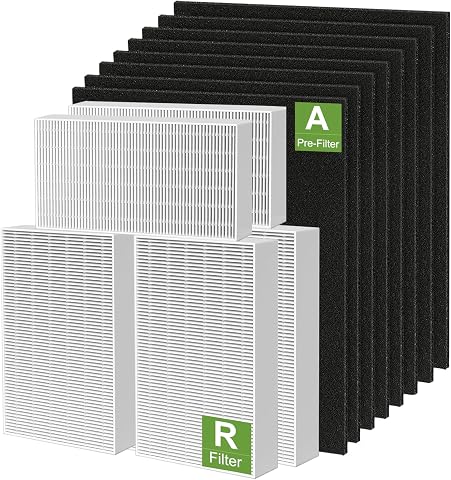
Complete the kit


Key Takeaways
- Bedroom fit matters more than headline coverage: The Blueair Blue Pure 511i Max and compact Levoit Core 200S-P represent different priorities, so match the purifier to your room rather than buying by the largest stated area.
- Smart features are not interchangeable: The DREO model with a PM2.5 monitor offers a more informative feedback loop, while app and voice controls on other models may be enough if you mainly want remote adjustments and schedules.
- Mini models trade reach for a smaller footprint: The Levoit Core Mini-P and GoveeLife Smart Mini options suit tighter spaces better than buyers seeking one purifier for a larger bedroom.
- Several models share close family roles: The two GoveeLife Smart Mini entries and the two DREO options call for checking exact model features and filter compatibility rather than choosing by brand name alone.
- Coverage claims need context: Models such as the ECOSELF and FreAire advertise broad room coverage, but buyers should compare those claims with bedroom size, operating speed, noise, and how often air is circulated.
| Blueair Blue Pure 511i Max Air Purifier for Home and Bedroom |  | Best for Quiet Smart Bedroom Use | Filtration technology: HEPASilent dual filtration | Particle capture: 99.97% down to 0.1 microns | Noise level: As low as 19 dB | VIEW LATEST PRICE | See Our Full Breakdown |
| Levoit Eleva 300X HEPA Air Purifier |  | Best for Detailed Air-Quality Monitoring | Filtration: Sealed HEPA system with separate HEPA and activated carbon filters | Particle capture: 99.97% of particles as small as 0.3 µm | CADR: 161 CFM | VIEW LATEST PRICE | See Our Full Breakdown |
| Levoit Core Mini-P Air Purifier for Bedroom, Dorm, and Office |  | Best Compact Pick | Model: Core Mini-P | Certification: AHAM VERIFIDE | Filter type: Pre-filter and main filter | VIEW LATEST PRICE | See Our Full Breakdown |
| GoveeLife Air Purifier for Bedroom |  | Best for Voice-Controlled Mid-Size Rooms | CADR: 150 CFM | Coverage area: Up to 581 sq ft | Sleep-mode noise: 24 dB | VIEW LATEST PRICE | See Our Full Breakdown |
| Levoit Core 300-P Air Purifier for Home |  | Best Non-Smart Bedroom Workhorse | Model: Core 300-P | Filter type: 3-in-1 filtration | Filtration efficiency: 99.97% for 0.1–0.3 micron particles | VIEW LATEST PRICE | See Our Full Breakdown |
| GoveeLife Smart Mini Air Purifier for Bedroom |  | Best for Scheduled Smart Control | Room coverage: 376 sq. ft. at one air change per hour | Air intake: Dual-channel 360° | Sleep Mode noise: As low as 24 dB | VIEW LATEST PRICE | See Our Full Breakdown |
| ECOSELF HEPA Air Purifier for Rooms up to 1,800 sq. ft. |  | Best for Large Bedrooms | Coverage area: Up to 1,800 sq. ft. | Air intake: 360° | Filtration: Pre-filter, HEPA filter, and activated carbon layer | VIEW LATEST PRICE | See Our Full Breakdown |
| DREO Smart Air Purifier with HEPA Filter, PM2.5 Monitor, Wi-Fi and Voice Control |  | Best for Verified Bedroom Performance | Model: DR-HAP008S (Dreo 338S) | Clean Air Delivery Rate: 115 CFM; AHAM Verified | Room coverage: Up to 178 sq. ft. at 4.8 ACH; up to 856 sq. ft. at 1 ACH | VIEW LATEST PRICE | See Our Full Breakdown |
| Levoit Core 200S-P Smart Air Purifier |  | Best for Compact Smart Bedrooms | Room coverage: 140 sq. ft. | Air changes: 4.8 times per hour | Noise level: As low as 27 dB | VIEW LATEST PRICE | See Our Full Breakdown |
| Honeyuan Air Purifier with H13 HEPA Filter, White |  | Best Simple, Quiet Pick | Filter: Three-stage H13 True HEPA | Air intake: 360-degree surround | Coverage: Up to 1,095 sq. ft. | VIEW LATEST PRICE | See Our Full Breakdown |
| FreAire KN6391RGB Air Purifier for Bedroom (Up to 1086 Sq Ft) |  | Best for Large Bedrooms | Model: KN6391RGB | Color: Black | Coverage area: Up to 1,086 sq. ft. | VIEW LATEST PRICE | See Our Full Breakdown |
| GoveeLife Smart Mini Air Purifier for Bedroom |  | Best Smart Compact Pick | Coverage area: 376 sq. ft., once per hour | Air intake: Dual-channel 360° | Noise level: 24 dB in sleep mode | VIEW LATEST PRICE | See Our Full Breakdown |
| DREO DR-HAP008 Air Purifier with HEPA Filter and PM2.5 Monitor |  | Best for Verified Small-Room Cleaning | Model: DR-HAP008 (Dreo 338) | Clean Air Delivery Rate: 115 CFM | Room coverage: Up to 178 sq. ft. at 4.8 ACH; up to 856 sq. ft. at 1 ACH | VIEW LATEST PRICE | See Our Full Breakdown |
More Details on Our Top Picks
Blueair Blue Pure 511i Max Air Purifier for Home and Bedroom
The Blueair Blue Pure 511i Max is my pick for sleepers who want smart controls without adding much noise to a bedroom. Its 19 dB minimum noise level is quieter on paper than the Levoit Eleva 300X’s 20 dB sleep mode, while app control and auto-adjusting sensors can handle routine fan changes for you. Blueair also specifies capture of 99.97% of particles down to 0.1 microns, a finer stated particle size than the Eleva 300X’s 0.3-micron rating. The tradeoff is that the Blueair’s compact bedroom focus is a better fit for a single room than broad home coverage, despite its stated coverage figure. Filter replacement costs may also add up. Choose it for quiet, sensor-led bedroom operation; skip it if replacement-filter economy is your main priority.
Pros:- 19 dB minimum noise level is well suited to sleep-sensitive rooms.
- App control, air-quality sensors, and filter reminders support hands-off operation.
- Specified to capture 99.97% of particles down to 0.1 microns.
- Compact body and 360° air intake suit tighter bedroom layouts.
Cons:- Replacement-filter costs may become a meaningful ongoing expense.
- Its compact bedroom-oriented format is less suited to whole-home air cleaning.
- The listed coverage figure may not reflect the needs of buyers seeking strong cleaning across multiple rooms.
Best for: Light sleepers who want app monitoring and automatic fan adjustments in a bedroom, nursery, or compact apartment.
Not ideal for: Buyers prioritizing low ongoing filter costs or a purifier intended to serve several rooms at once.
- Filtration technology:HEPASilent dual filtration
- Particle capture:99.97% down to 0.1 microns
- Noise level:As low as 19 dB
- Coverage area:Up to 1,138 sq ft
- Smart features:App control, auto-adjusting sensors, filter reminders
- Air intake:360°
- Design and color:Compact Scandinavian-inspired design; blue
Our verdict“Choose the Blueair if quiet, app-controlled bedroom cleaning matters more than minimizing filter expenses.”
Levoit Eleva 300X HEPA Air Purifier
The Levoit Eleva 300X earns its place for bedroom buyers who want more than a basic auto setting: it reports PM1.0, PM2.5, and PM10, then pairs that information with app and voice controls. Its sealed HEPA system and separate HEPA and carbon filters offer a more clearly divided filter setup than the Levoit Core 300-P, which lacks smart connectivity and auto mode. Sleep mode runs at 20 dB with automatic display dimming, so its monitoring features need not mean a bright bedside screen. Its 161 CFM CADR is also a useful stated airflow figure for bedroom cleaning. The caveat is that the advertised two-year filter life depends on test conditions, and some specialized carbon filters are optional upgrades. Pick it for information-rich smart control; skip it if you want the simplest filter setup.
Pros:- Tracks PM1.0, PM2.5, and PM10 for more detailed air-quality feedback.
- App, Alexa, and Google Assistant support allow flexible remote control.
- 20 dB sleep mode and automatic display dimming suit nighttime use.
- Separate HEPA and activated carbon filters can be replaced individually.
Cons:- The stated filter life of up to two years depends on specified conditions and usage.
- Some specialized activated carbon filters are optional upgrades.
- Its sensor and control features may be unnecessary for buyers who only want simple manual operation.
Best for: Bedroom users who want to track multiple particle sizes and control their purifier through an app or voice assistant.
Not ideal for: Buyers who prefer a straightforward, low-feature purifier or expect every carbon-filter option to come standard.
- Filtration:Sealed HEPA system with separate HEPA and activated carbon filters
- Particle capture:99.97% of particles as small as 0.3 µm
- CADR:161 CFM
- Air-quality monitoring:PM1.0, PM2.5, and PM10
- Sleep-mode noise:20 dB
- Smart features:VeSync app, Alexa, and Google Assistant support
- Filter life:Up to 2 years, depending on conditions and use
- Certifications:AHAM certified; ECARF recognized; ENERGY STAR 3.0
Our verdict“Choose the Eleva 300X if detailed particle monitoring and smart control matter more than a basic setup.”
Levoit Core Mini-P Air Purifier for Bedroom, Dorm, and Office
The Levoit Core Mini-P makes the most sense when bedside space is limited and the room is small. At 6.5 × 6.5 × 10.4 inches, it is far easier to place on a crowded floor or in a dorm than the larger Levoit Core 300-P. AHAM VERIFIDE certification gives buyers an independently tested reference point for performance, safety, and energy efficiency, while sleep mode and an auto-off display keep nighttime operation simple. It also includes an aromatherapy feature, a niche extra rather than a substitute for filtration. The tradeoff is scale: the supplied specs do not give a coverage figure, and its compact format is not the pick for open-plan spaces or buyers seeking smart app control. Choose it for a small personal room, not broader bedroom coverage.
Pros:- Small 6.5 × 6.5 × 10.4-inch footprint fits tight bedside and desk spaces.
- AHAM VERIFIDE certification provides independently tested performance information.
- Sleep mode and auto-off display support a quieter, darker bedroom setup.
- Pre-filter and main filter address common particles, with optional aromatherapy.
Cons:- Compact size limits its suitability for large bedrooms and open spaces.
- No app control or smart air-quality monitoring is listed.
- Aromatherapy requires careful oil use, limited to 2–3 drops.
Best for: Dorm residents, office workers, and apartment dwellers who need a small purifier for a compact personal space.
Not ideal for: People with large bedrooms or open-plan rooms, or anyone who wants app-based monitoring and automatic smart controls.
- Model:Core Mini-P
- Certification:AHAM VERIFIDE
- Filter type:Pre-filter and main filter
- Noise level:27–45 dB
- Dimensions:6.5 × 6.5 × 10.4 inches
- Input voltage:100–240 V, 50/60 Hz
- Additional feature:Optional aromatherapy
Our verdict“Choose the Core Mini-P for a certified, space-saving purifier in a dorm or small bedroom, not a large room.”
GoveeLife Air Purifier for Bedroom
The GoveeLife Air Purifier balances bedroom-friendly noise with enough stated airflow for rooms beyond a tiny sleep space. Its 150 CFM CADR and coverage claim of up to 581 sq ft give it a clearer mid-size-room profile than the Levoit Core Mini-P, which is aimed at compact spaces and has no listed CADR here. Auto mode uses air-quality sensors to adjust fan speed, while Alexa, Google Assistant, and app control offer several ways to manage it. At 24 dB in sleep mode, it is quiet, though not as quiet on paper as the Blueair Blue Pure 511i Max at 19 dB. The main setup catch is Wi-Fi: it only supports 2.4GHz. Regular pre-filter cleaning is also part of keeping the unit operating well.
Pros:- 150 CFM CADR and stated coverage up to 581 sq ft suit more than a compact personal room.
- Auto mode adjusts fan speed based on air-quality sensor readings.
- App, Alexa, and Google Assistant support give multiple control options.
- 24 dB sleep mode is designed for quiet bedroom use.
Cons:- Wi-Fi support is limited to 2.4GHz networks.
- The detachable pre-filter needs regular cleaning.
- Its 24 dB sleep mode is louder on paper than the Blueair Blue Pure 511i Max’s 19 dB minimum.
Best for: Smart-home users who want voice control and sensor-led operation in a medium-sized bedroom.
Not ideal for: Households using only 5GHz Wi-Fi, or sleepers whose first priority is the lowest stated noise level.
- CADR:150 CFM
- Coverage area:Up to 581 sq ft
- Sleep-mode noise:24 dB
- Filtration efficiency:99.97% particle capture
- Smart features:App control, Alexa, Google Assistant, auto mode
- Wi-Fi compatibility:2.4GHz only; 5GHz not supported
- Certifications:Energy Star, ETL, FCC, CA65
Our verdict“Choose this GoveeLife model for voice-controlled cleaning in a mid-size bedroom if your Wi-Fi supports 2.4GHz.”
Levoit Core 300-P Air Purifier for Home
The Levoit Core 300-P is the practical choice for bedroom buyers who want substantial stated coverage but do not need an app or automatic mode. Its 3-in-1 filter is specified to capture 99.97% of particles measuring 0.1–0.3 microns, and the unit lists separate smoke, dust, and pollen CADR figures. That makes its performance information more specific than the Levoit Core Mini-P’s supplied specs, though the Mini-P is much smaller for cramped rooms. Sleep mode runs at 24 dB, and a timer plus filter indicator cover basic daily operation. The compromise is clear: unlike the Blueair Blue Pure 511i Max, it has no smart connectivity or auto mode, and filters are recommended every 6 to 8 months. It is also designed for US use only.
Pros:- 3-in-1 filtration is specified to capture 99.97% of particles measuring 0.1–0.3 microns.
- Separate smoke, dust, and pollen CADR figures help buyers compare its stated airflow performance.
- 24 dB sleep mode, timer, and filter indicator support simple bedroom use.
- AHAM Verified certification and listed coverage up to 1,073 sq ft provide useful selection details.
Cons:- No smart connectivity or Auto Mode is included.
- Replacement filters are recommended every 6 to 8 months.
- Designed for use only in the United States.
Best for: Bedroom owners who want a high stated coverage figure, quiet sleep mode, and straightforward controls without smart features.
Not ideal for: Buyers who want app control, sensor-driven automatic adjustments, longer stated filter intervals, or a purifier for use outside the United States.
- Model:Core 300-P
- Filter type:3-in-1 filtration
- Filtration efficiency:99.97% for 0.1–0.3 micron particles
- CADR:Smoke: 143 CFM; dust: 153 CFM; pollen: 167 CFM
- Room coverage:Up to 1,073 sq ft
- Sleep-mode noise:24 dB
- Dimensions and weight:8.7 × 8.7 × 14.2 in; 7.9 lbs
- Controls and certifications:Touch controls; AHAM Verified, FCC Certified, ETL Listed, CARB Compliant
- Power and voltage:56 watts; 120 V
Our verdict“Choose the Core 300-P if you want broad stated coverage and quiet basic operation, not app-based control.”
GoveeLife Smart Mini Air Purifier for Bedroom
The GoveeLife Smart Mini is a good fit for bedroom buyers who want quiet operation and flexible routines more than a built-in air-quality readout. Its app, Alexa, and IFTTT controls let me set fan schedules and reminders, while Sleep Mode runs as low as 24 dB. The 376-square-foot rating is stated at one air change per hour, so it is not directly comparable to the DREO purifier’s 178-square-foot rating at 4.8 air changes per hour; the DREO gives a clearer measure for frequent room cleaning. GoveeLife’s aroma pad is a useful extra, but automatic fan adjustment requires a separately sold monitor. Buyers should also check their router: this model supports 2.4 GHz Wi-Fi only. I’d choose it for routine-based control, not for standalone air-quality automation.
Pros:- App, Alexa, and IFTTT controls support schedules, fan settings, and filter reminders.
- Sleep Mode operates as quietly as 24 dB.
- 360-degree intake and stated coverage of 376 sq. ft. at one air change per hour.
- Built-in aroma pad includes three pads.
Cons:- Does not connect to 5 GHz Wi-Fi networks.
- Automatic fan adjustment requires a separately sold air-quality monitor.
- Coverage is specified at one air change per hour, rather than the more intensive rate listed for the DREO.
Best for: Bedroom users who want app, voice, and IFTTT scheduling, quiet sleep operation, and an aroma pad in a compact purifier.
Not ideal for: People with only 5 GHz Wi-Fi or buyers who want automatic air-quality response without purchasing a separate monitor.
- Room coverage:376 sq. ft. at one air change per hour
- Air intake:Dual-channel 360°
- Sleep Mode noise:As low as 24 dB
- Controls:App, Alexa, and IFTTT
- Wi-Fi:2.4 GHz; 5 GHz networks not supported
- Aromatherapy:Built-in aroma pad; add 4–5 drops of essential oil
- Certifications:Energy Star, ETL, FCC, and CA65
- Included accessories:Pre-installed filter, three aroma pads, power adapter, quick start guide, and user manual
Our verdict“Choose the GoveeLife Smart Mini if scheduled smart control and a quiet, aroma-ready design matter more than built-in sensor automation.”
ECOSELF HEPA Air Purifier for Rooms up to 1,800 sq. ft.
The ECOSELF stands apart from the smaller bedroom-focused choices with a stated coverage area up to 1,800 square feet, making it the capacity-first pick here. Its PM2.5 sensor can adjust the fan in Auto Mode, while the 20 dB Sleep Mode shuts off the display and indicator lights—helpful for a dark, quiet sleeping space. Compared with the DREO, ECOSELF claims much broader room coverage but does not provide the same specific CADR and air-change details in the supplied specs, so I would not treat the figures as a like-for-like comparison. Its three-stage filter combines a pre-filter, HEPA layer, and activated carbon for dust, pet hair, and everyday odors. The tradeoff is upkeep: the filter is due every three to six months, and the description recommends genuine ECOSELF replacements.
Pros:- Stated coverage reaches up to 1,800 sq. ft.
- PM2.5 sensor supports automatic fan adjustment.
- 20 dB Sleep Mode turns off the display and indicator lights.
- Three-stage filtration includes a pre-filter, HEPA filter, and activated carbon layer.
Cons:- Replacement is recommended every three to six months, depending on use and conditions.
- The description recommends genuine ECOSELF replacement filters.
- Supplied data does not include a CADR or air-change rate for comparing cleaning performance with the DREO.
Best for: Buyers with a large bedroom or open sleeping area who want sensor-led fan adjustment and a display-free sleep setting.
Not ideal for: People who need independently comparable CADR or air-change figures, or who want fewer filter replacements and broader replacement-filter flexibility.
- Coverage area:Up to 1,800 sq. ft.
- Air intake:360°
- Filtration:Pre-filter, HEPA filter, and activated carbon layer
- Air-quality sensor:PM2.5
- Sleep Mode noise:20 dB
- Fan speeds:Three
- Timer:1–24 hours
- Filter replacement interval:Every 3–6 months
- Additional features:Auto Mode, four-color air-quality indicator, light control, Child/Pet Lock, and filter reset reminder
Our verdict“Pick the ECOSELF if broad stated coverage and a quiet sensor-driven mode outweigh the need for more detailed performance ratings.”
DREO Smart Air Purifier with HEPA Filter, PM2.5 Monitor, Wi-Fi and Voice Control
The DREO earns its place for buyers who want clearer performance context alongside smart controls. Its AHAM Verified 115 CFM CADR and rating of 178 square feet at 4.8 air changes per hour make it easier to judge for a typical bedroom than the ECOSELF’s much larger coverage claim, which lacks a comparable rate in the supplied data. A live PM2.5 display, app and voice control, and Auto Mode let me monitor conditions and hand over fan adjustments; Sleep Mode offers a quieter alternative at night. The 3-in-1 filter captures up to 99.97% of particles as small as 0.3 microns and adds activated carbon for odors. Its main limitation is room size at the stated frequent-cleaning rate: larger rooms may suit the ECOSELF better. Essential oils for the aroma pad are not included.
Pros:- AHAM Verified CADR of 115 CFM provides a useful performance reference.
- PM2.5 sensor and AQI display support informed Auto Mode use.
- App, Wi-Fi, Alexa, and Google Assistant controls.
- 3-in-1 filter combines pre-filter, HEPA, and activated carbon layers.
Cons:- Rated for 178 sq. ft. at 4.8 air changes per hour, much less than ECOSELF’s stated maximum coverage.
- Replacement filters are recommended to be original DREO DR-HPA032 filters.
- Essential oils for the aroma pad are not included.
Best for: Bedroom buyers who prioritize a verified CADR, real-time PM2.5 readings, and app or voice control in a room up to 178 sq. ft.
Not ideal for: People who need frequent air cleaning in a large bedroom or want an aroma pad ready to use without buying essential oils.
- Model:DR-HAP008S (Dreo 338S)
- Clean Air Delivery Rate:115 CFM; AHAM Verified
- Room coverage:Up to 178 sq. ft. at 4.8 ACH; up to 856 sq. ft. at 1 ACH
- Filter:3-in-1 pre-filter, HEPA filter, and activated carbon layer
- Particle filtration:Up to 99.97% of particles as small as 0.3 μm
- Air-quality sensor:PM2.5 sensor with AQI display from 1–999
- Modes and fan speeds:Auto, Turbo, Sleep, and Normal; four adjustable speeds
- Connectivity:App, Wi-Fi, Alexa, and Google Assistant
- Energy use and certification:Approximately 125 kWh annually; ENERGY STAR certified
Our verdict“Choose the DREO for a bedroom where verified cleaning performance and live air-quality feedback matter more than maximum room coverage.”
Levoit Core 200S-P Smart Air Purifier
For a small bedroom, the Levoit Core 200S-P keeps the proposition simple: 360-degree intake, app and voice control, and filtration rated for 140 square feet. It handles common bedroom concerns such as dust, pollen, and dander, with activated carbon to help reduce odors. At up to 27 dB, it is quiet enough to suit sleep-focused use, and the display-off option avoids a bright panel at night. Compared with the DREO, the Levoit covers less area and does not list a PM2.5 monitor or AHAM-verified CADR in the supplied data; the DREO is the stronger choice if measurable air-quality feedback matters. The Levoit’s advantage is its compact, straightforward fit for a smaller room. Buyers should plan around its stated 140-square-foot coverage and the recommendation to use genuine Levoit replacement filters.
Pros:- Compact coverage is specified for rooms up to 140 sq. ft. with 4.8 air changes per hour.
- Operates as quietly as 27 dB and offers a display-off option.
- App and voice control include in-app filter-life monitoring.
- Multi-stage filtration includes activated carbon to help reduce odors.
Cons:- 140 sq. ft. coverage is smaller than the DREO’s 178 sq. ft. rating at 4.8 air changes per hour.
- No PM2.5 sensor or real-time air-quality display is listed in the supplied data.
- Replacement filters are recommended to be genuine Levoit filters.
Best for: People furnishing a smaller bedroom who want app and voice control, low operating noise, and in-app filter-life tracking.
Not ideal for: Owners of large bedrooms or buyers who want a built-in PM2.5 display and the performance details listed for the DREO.
- Room coverage:140 sq. ft.
- Air changes:4.8 times per hour
- Noise level:As low as 27 dB
- Air intake:360-degree
- Particle filtration:Removes 99.97% of particles 0.1–0.3 microns in size
- Filter types:Nylon pre-filter, main filter, and activated carbon filter
- Controls:App and voice control
- Filter monitoring:In-app filter-life monitoring
Our verdict“Choose the Levoit Core 200S-P for a smaller bedroom where quiet smart control matters more than sensor readouts or broader coverage.”
Honeyuan Air Purifier with H13 HEPA Filter, White
The Honeyuan is the least connected option in this smart-bedroom lineup, but it may suit buyers who value straightforward controls and quiet operation over app features. It has three fan speeds, Sleep Mode, a timer, and a filter reminder, with noise as low as 24 dB. The stated 1,095-square-foot coverage looks broad beside the Levoit’s 140-square-foot rating, but Honeyuan gives a clean-air delivery range of 90–120 m³/h and its coverage figures are not independently verified in the supplied data. I would judge it as a basic bedroom purifier rather than assume it will deliver frequent air changes across a large room. Unlike the app-enabled Levoit or DREO, it offers no listed Wi-Fi or voice control. The separate replacement filter purchase is another ownership cost to plan for.
Pros:- Sleep operation is rated as quiet as 24 dB.
- Three fan speeds, a timer, and a filter replacement reminder provide simple controls.
- Three-stage H13 True HEPA filtration with 360-degree intake.
- Wide voltage range of 100–240 V.
Cons:- No app, Wi-Fi, voice control, or air-quality sensor is listed.
- Replacement filter must be purchased separately.
- Coverage and clean-air delivery claims are provided without independent verification.
Best for: Sleepers who want a basic purifier with a quiet mode, timer, and filter reminder, and do not need app or voice control.
Not ideal for: Smart-home users who expect Wi-Fi scheduling, sensor-based automation, or independently verified coverage for a large bedroom.
- Filter:Three-stage H13 True HEPA
- Air intake:360-degree surround
- Coverage:Up to 1,095 sq. ft.
- Clean Air Delivery:90–120 m³/h
- Fan speeds:Three
- Timer:1–9 hours
- Noise level:As low as 24 dB
- Certifications:UL, CE, FCC; CARB compliant
- Warranty:1 year
Our verdict“Pick the Honeyuan if quiet, simple controls matter more than the connected features and verified performance details offered by the Levoit or DREO.”
FreAire KN6391RGB Air Purifier for Bedroom (Up to 1086 Sq Ft)
The FreAire KN6391RGB is the roomier choice here: its stated coverage reaches 1,086 sq. ft., while the DREO DR-HAP008 is rated for more frequent cleaning in a much smaller 178-square-foot room. That makes the FreAire a possible fit for a large bedroom or an open sleeping area, but the missing CADR figure makes its real-world cleaning pace harder to compare. Its 20 dB sleep mode is the lowest stated noise level among these three, a useful point for light sleepers. Three ambient light modes and an essential-oil function add bedside atmosphere, though those extras may not matter to buyers focused on filtration. Compared with the app-connected GoveeLife Smart Mini, this model’s listed strengths center on quiet operation and broad coverage rather than smart controls. I would skip it if you need a clearly stated CADR or app-based monitoring.
Pros:- Stated coverage of up to 1,086 sq. ft. suits larger sleeping areas
- 20 dB sleep mode has the lowest stated sleep-mode noise of these three
- Three-layer HEPA filtration targets smoke, pollen, pet dander, and particles down to 0.3 microns
- Ambient lighting and an aromatherapy function offer optional bedside comforts
Cons:- No CADR rating is provided, making cleaning speed difficult to compare
- Essential oils are not included
- No app, voice control, or air-quality monitor is listed
Best for: Light sleepers with a large bedroom or open sleeping area who want very quiet operation and optional ambient lighting.
Not ideal for: Buyers who want a stated CADR, app control, or measurable air-quality feedback before choosing a purifier.
- Model:KN6391RGB
- Color:Black
- Coverage area:Up to 1,086 sq. ft.
- Filtration:3-level HEPA
- Particle size:Down to 0.3 microns
- Noise level:20 dB in sleep mode
- Listed features:Ambient lights, aromatherapy, dual-channel inlet
Our verdict“Choose the FreAire for a large sleeping area and quiet nighttime operation, but not if you need clear CADR data or smart monitoring.”
GoveeLife Smart Mini Air Purifier for Bedroom
The GoveeLife Smart Mini is the most connected option in this trio, with app control, Alexa, and IFTTT support for buyers who want to adjust a bedroom purifier without reaching for its controls. Its 376-square-foot coverage is more modest than the FreAire KN6391RGB’s stated reach, but it is a better match for a typical bedroom than a broad-coverage unit meant for larger spaces. At 24 dB in sleep mode, it is designed for quiet nighttime use, and the 360-degree intake supports air drawn in from around the compact unit. One limitation affects the smart pitch: Auto mode requires a separately sold air-quality monitor, so app connectivity does not by itself provide automatic air-based adjustment. Its 2.4GHz-only Wi-Fi may also rule it out for some home networks. Choose the DREO DR-HAP008 instead if a built-in PM2.5 sensor matters more than voice and app control.
Pros:- App, Alexa, and IFTTT support provide multiple control options
- Compact design and 360-degree intake suit bedroom placement
- 24 dB sleep mode is specified for quieter nighttime operation
- Filter reminders and timer add practical maintenance and scheduling tools
Cons:- Connects to 2.4GHz Wi-Fi only
- Auto mode requires a separately sold air-quality monitor
- Coverage is smaller than the FreAire KN6391RGB’s stated area
Best for: Bedroom users with a 2.4GHz Wi-Fi network who want app or Alexa control in a compact purifier for a room up to 376 sq. ft.
Not ideal for: Buyers with only 5GHz Wi-Fi, or anyone who expects automatic air-quality adjustments without buying a separate monitor.
- Coverage area:376 sq. ft., once per hour
- Air intake:Dual-channel 360°
- Noise level:24 dB in sleep mode
- Connectivity:2.4GHz Wi-Fi, app, Alexa, IFTTT
- Modes:Auto, Custom, Sleep
- Features:Aromatherapy, filter-change reminders, timer
- Certifications:Energy Star, ETL, FCC, CA65
Our verdict“Pick the GoveeLife Smart Mini for compact, connected bedroom control if your network supports 2.4GHz and you can accept the separate monitor requirement for Auto mode.”
DREO DR-HAP008 Air Purifier with HEPA Filter and PM2.5 Monitor
The DREO DR-HAP008 is the clearest pick here for buyers who want evidence tied to a bedroom-sized room: it is AHAM Verified, lists a CADR of 115 CFM, and is rated for 178 sq. ft. at 4.8 air changes per hour. That smaller, more specific rating is easier to interpret than the FreAire KN6391RGB’s much larger coverage claim, which comes without a CADR figure. A PM2.5 sensor and AQI display give you a visible reading, while Auto mode can change fan speed as air quality shifts. Its tradeoff is scale: a larger room gets fewer air changes, and the 856-square-foot figure is based on just one air change per hour. Unlike the GoveeLife Smart Mini, the listed features do not include app or voice control. Noise levels are also unspecified, so light sleepers have less information to judge nighttime sound.
Pros:- AHAM Verified with a stated CADR of 115 CFM
- PM2.5 sensor and AQI display provide real-time air-quality information
- Auto mode adjusts purification speed based on detected air quality
- Sleep mode turns off display lights
Cons:- Rated for 178 sq. ft. at 4.8 air changes per hour; larger spaces receive fewer air changes
- Noise levels are not specified
- App and voice control are not listed, unlike the GoveeLife Smart Mini
Best for: Buyers furnishing a small bedroom who want independently verified cleaning performance and a built-in PM2.5 reading with automatic adjustment.
Not ideal for: People with large bedrooms who need frequent air changes, or light sleepers who need a specified noise level before buying.
- Model:DR-HAP008 (Dreo 338)
- Clean Air Delivery Rate:115 CFM
- Room coverage:Up to 178 sq. ft. at 4.8 ACH; up to 856 sq. ft. at 1 ACH
- Filter:Three-layer filter: pre-filter, high-efficiency filter, activated carbon
- Air-quality monitoring:PM2.5 sensor; AQI display from 1–999
- Modes and fan speeds:Auto, Turbo, Sleep, Normal; four fan speeds
- Annual energy use:Approximately 125 kWh
- Certification:AHAM Verified; ENERGY STAR certified
Our verdict“Choose the DREO for a small bedroom where verified CADR and air-quality feedback matter more than broad coverage or connected controls.”
How We Picked
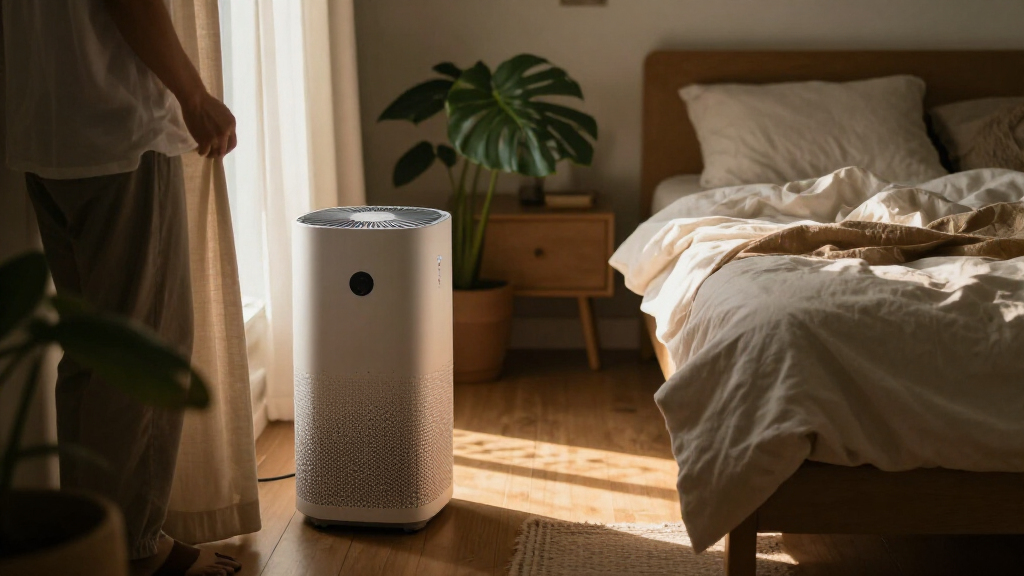
I ranked these models around the bedroom use case, not feature count alone. My main criteria were room-size fit, smart controls that can make nightly use easier, sleep-oriented operation, air-quality feedback where available, filter upkeep, and the practical footprint of the unit. I also weighed whether a model’s advertised coverage appears suited to a bedroom role or points toward a more general room purifier.
The order favors options with a useful balance of bedroom scale, control, and day-to-day practicality. Models with clear smart or monitoring advantages rank above basic compact options when those features solve a real buyer need, while mini units remain strong choices for small rooms and limited space. Broad-coverage models are not automatically ranked higher: a larger unit can be a poor bedroom match if its size, controls, or filter needs are less convenient. Where two products appear closely related, I treat exact model identification and filter fit as part of the buying decision.
Factors to Consider When Choosing Smart Air Purifiers For Bedrooms
Before choosing among these smart air purifiers for bedrooms, work out what you want the smart functions to do. Remote control can be useful without advanced monitoring; a sensor is more valuable if you plan to adjust fan speed in response to changing air quality. The factors below help separate practical bedroom benefits from features that may add little to your routine.
Match Room Coverage to How You’ll Run It
Use your bedroom’s floor area as a starting point, then check what operating speed a manufacturer uses for its coverage claim. A purifier may cover a larger area on a high setting, but that setting could be too loud for sleeping or long overnight use. Choosing a unit sized only to a generous maximum can leave you relying on a speed you rarely use. A smaller room may benefit more from a comfortable lower setting than from a high coverage number. If your bedroom has an open doorway or connects to a larger space, treat the bedroom measurement as only part of the picture. Pick for the area you expect to clean with the door and normal airflow conditions you actually have.
Decide Which Smart Features You’ll Use
Smart control ranges from simple app-based power and speed changes to scheduling, voice commands, and air-quality monitoring. Before paying for more connectivity, decide whether you need to adjust the purifier from bed, set a routine, or respond to sensor readings. A PM2.5 display can help explain why the fan changes speed, but readings are only useful if you understand what the device measures and how its automatic mode responds. Voice control is convenient when it works with the services and devices already in your home. App-only control may be enough if you mostly set a schedule once and leave the purifier running. Avoid choosing on a long feature list if the controls add setup steps you would rather not manage.
Treat Sleep Comfort as a Daily-Use Requirement
Bedroom use changes the value of features that might be secondary in a living room. Check whether a purifier offers a sleep or low-speed mode, and look for controls that let you reduce display light if you are sensitive to LEDs at night. A quieter setting is not automatically a good choice if it moves too little air for your room, so balance comfort with the room’s needs. Think about where the purifier will sit: a unit beside the bed may make fan noise and indicator lights more noticeable than one across the room. If you expect to run it every night, prioritize controls that are easy to set before bedtime. This can matter more than an extra mode you rarely use.
Check Filter Replacement Before Choosing a Model
A smart purifier is only convenient if its filters are easy to identify and replace. Check the exact model number against the replacement filter, since similar product names can refer to different sizes or generations. Look at the maker’s replacement guidance and account for how dust, smoke, pets, and operating hours may affect filter life. A filter indicator can remind you to inspect or replace a filter, but it does not replace checking the filter itself. Do not assume that a lower-maintenance unit has a lower overall burden if replacement parts are hard to source. Confirm availability before buying, especially for less familiar brands or closely named variants.
Choose a Footprint You Can Live With
Measure the space where the purifier will sit, including room for unobstructed air intake and outlet flow. Compact models can fit a nightstand or a tight corner, but a small footprint may come with less coverage or fewer controls. Larger units can serve broader spaces yet compete with furniture and may be harder to reposition. Avoid tucking a purifier behind curtains or placing it flush against a wall if the instructions call for clearance. Think about the cord path as well as the unit’s dimensions, since a convenient outlet can determine whether the purifier can sit in a useful airflow position. A good fit is one you can keep running without rearranging the bedroom.
Know What Air Purifiers Can and Cannot Address
Air purifiers can filter airborne particles, but they do not replace removing a source of pollution or improving ventilation where needed. If odors, cooking fumes, or chemical vapors are your main concern, check what filtration the model uses rather than assuming a HEPA-style filter handles every gas. For dust or seasonal allergens, regular cleaning and keeping bedroom textiles clean can complement filtration. A purifier also cannot fix moisture problems or their source; those need a separate response. Choose based on the problem you want to address, then check that the product’s filter type matches it. This keeps smart features from distracting from the basic question of what the device can actually filter.
Frequently Asked Questions
Should I choose a mini purifier or a full-size unit for a small bedroom?
Start with the bedroom’s size and the speed you are willing to run overnight, rather than choosing by the unit’s name. Mini models such as the Levoit Core Mini-P or GoveeLife Smart Mini can suit a tight room or limited surface space, but may be less suitable if you need broader coverage. A full-size purifier can offer more headroom, though its footprint and fan sound may be less convenient near the bed. Check coverage guidance alongside sleep-mode details, not as separate decisions. If you are unsure, prioritize a unit that can run comfortably at a setting you will use consistently.
Is a PM2.5 monitor worth choosing for a bedroom purifier?
A PM2.5 monitor is most useful if you want feedback on changing particle levels or expect to rely on automatic fan adjustments. The DREO smart model with monitoring is a stronger match for that preference than a purifier whose smart controls focus mainly on remote operation. Readings can help you understand when the unit responds, but they are not a full measure of every indoor pollutant. If you prefer to set a steady speed or a bedtime schedule and leave it alone, monitoring may not change your routine much. Decide whether you want information or simply convenience before treating a sensor as a must-have.
Can I leave a smart air purifier running while I sleep?
Many buyers run bedroom purifiers overnight, but suitability depends on the model’s settings and your tolerance for sound and light. Check for a sleep or low-speed mode and confirm whether the display can be dimmed or switched off. Automatic mode can change fan speed when readings shift, which some people may notice during the night. Placement also affects perceived noise; a purifier beside the bed may be more noticeable than one positioned farther away with clear airflow. If you are sensitive to sound, favor a setting you can comfortably leave on rather than relying on an aggressive speed you plan to avoid.
How do I compare room-coverage claims from different brands?
Do not compare maximum coverage numbers without checking the conditions behind them. Brands may report coverage using different assumptions about air changes, fan speed, or room use, so the figures may not describe identical performance. Match the model to your bedroom size and ask whether it can provide the coverage you need at a tolerable operating speed. The ECOSELF and FreAire listings advertise broad coverage, but that does not automatically make either the best bedroom choice. Consider footprint, airflow clearance, and noise alongside the stated area. When the stated coverage is much larger than your room, convenience may matter more than the extra headroom.
What should I check when two listings have nearly the same product name?
Compare the exact model number, included filter, app functions, sensor features, and physical dimensions rather than relying on the product family name. This matters in this roundup because some GoveeLife and DREO entries have closely related names, and similar labels do not prove that their specifications match. Verify that the replacement filter is made for the exact unit you plan to buy. Check whether the listing describes Wi-Fi, voice control, or air-quality monitoring explicitly instead of assuming those features carry over from another version. If any detail is unclear, use the manufacturer’s model documentation before making a choice.
Conclusion
For most bedroom buyers, I’d start with the Blueair Blue Pure 511i Max as the best overall balance of bedroom fit and practical use. Choose the Levoit Core 200S-P as a value-oriented smart option if you want app control in a compact format, and consider the DREO Smart Air Purifier with PM2.5 monitor as the best premium-style choice for buyers who want air-quality feedback alongside smart control. Beginners who prefer a simple, smaller unit can look at the Levoit Core Mini-P, while shoppers with limited space may prefer a GoveeLife Smart Mini. For broader coverage claims, compare the ECOSELF and FreAire against your room size and intended operating speed before choosing. The right pick is the one that fits your bedroom, runs comfortably when you sleep, and has filters you can readily maintain.