
TL;DR
Prime for Young Adults — start your free trial
Fast free delivery, streaming and member deals for eligible 18–24 year olds.
As an affiliate, we earn on qualifying purchases.
A house fire in Kleve, Germany, involving a home with integrated solar roof tiles required 65 firefighters and lasted nearly five hours. The incident underscores safety concerns related to building-integrated photovoltaics.
A fire at a single-family home in Kleve, Germany, involving integrated photovoltaic roof tiles required about 65 firefighters and lasted nearly five hours. No injuries were reported, and the fire was confined to the roof. The incident highlights safety challenges associated with building-integrated solar systems.
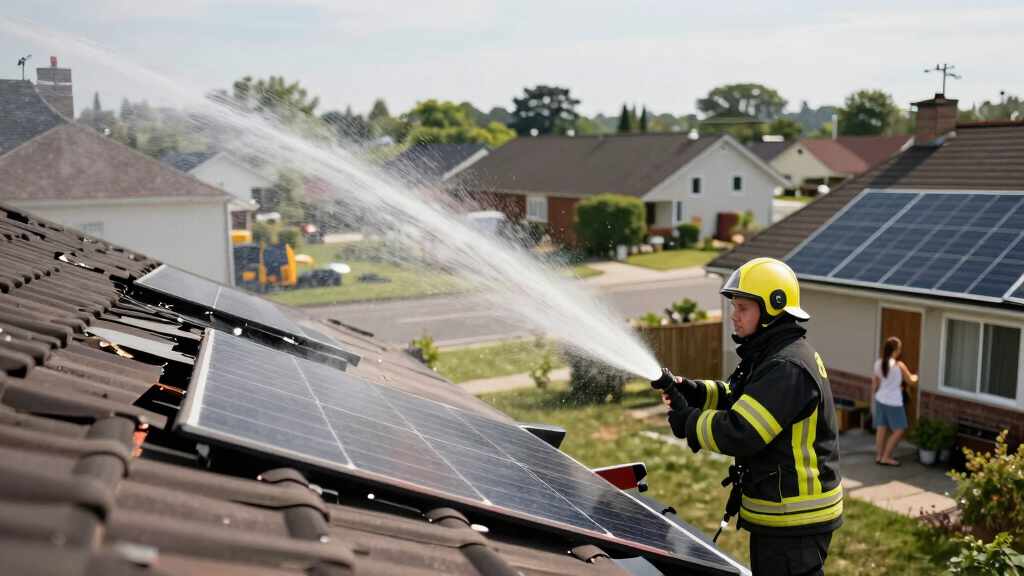
The fire broke out on June 9 at a home fitted with solar roof tiles and a green roof system. Firefighters faced difficulties due to hidden hotspots and energized solar modules that can generate voltage in sunlight, complicating firefighting efforts. The fire was primarily confined to the roof structure, with the interior remaining unaffected. All residents evacuated safely, and no injuries were reported. Fire crews partially dismantled the roof to access and extinguish hotspots, with operations concluding around 7:00 p.m.
Florian Pose, a spokesperson for the Kleve fire department, explained that integrated photovoltaic tiles are built into the roof structure, making access and firefighting more complex compared to traditional systems. He noted that these modules remain energized when exposed to sunlight, posing electrical hazards during firefighting. The cause of the fire is still under investigation. This incident follows a similar event in Gütersloh, where a firefighter was injured by electric shock while dismantling photovoltaic roof tiles during a fire.
Implications of Solar Roof Fires for Safety Protocols
This fire underscores the ongoing safety challenges posed by building-integrated photovoltaics (BIPV). The persistent electrical generation in sunlight and difficulty accessing wiring or modules complicate firefighting efforts and pose risks to emergency responders. As the adoption of solar tiles increases across Europe, fire services may need to adapt protocols and safety procedures to mitigate these hazards and prevent injuries.
As an affiliate, we earn on qualifying purchases.
Rising Use of Integrated Solar Roofs and Safety Concerns
Building-integrated photovoltaics, including solar roof tiles, have become increasingly popular in Europe for their aesthetic and efficiency benefits. However, incidents like the Kleve fire and the May event in Gütersloh highlight emerging safety issues. In Gütersloh, a firefighter was injured by electric shock during a roof fire involving photovoltaic tiles, raising awareness of the electrical risks associated with these systems. Fire departments are now facing new operational challenges, including the difficulty of detecting hotspots and the danger of energized modules during firefighting.
“When the sun is shining, these modules are always energized.”
— Florian Pose, Kleve fire department
solar roof tile fire extinguisher
As an affiliate, we earn on qualifying purchases.
As an affiliate, we earn on qualifying purchases.
Unresolved Aspects of the Kleve Fire Investigation
It is not yet clear what caused the fire or whether the photovoltaic system contributed directly to the ignition. Details about the specific fault or failure are still under investigation, and the extent of electrical hazards during the firefighting process remains to be fully assessed.
solar roof tile maintenance tools
As an affiliate, we earn on qualifying purchases.
As an affiliate, we earn on qualifying purchases.
Next Steps in Fire Safety and System Regulation
Authorities and fire departments are expected to review and update protocols for handling fires involving integrated photovoltaic roofs. Further investigations will clarify the cause of the Kleve fire and assess the risks associated with solar tiles. Industry stakeholders may also consider developing safer design standards and emergency procedures for building-integrated solar systems.
building-integrated photovoltaic systems
As an affiliate, we earn on qualifying purchases.
As an affiliate, we earn on qualifying purchases.
Key Questions
Are solar roof tiles more dangerous for firefighters than traditional roofing?
Yes, because solar roof tiles can remain energized in sunlight, creating electrical hazards that complicate firefighting efforts and increase the risk of electric shock.
What safety measures can fire crews take when responding to fires involving solar tiles?
Fire crews may need specialized training, use of insulated equipment, and protocols for identifying energized modules. Partially dismantling roofs to access hotspots is also common, but safety remains a concern.
Has there been any injury reported from this fire?
No injuries were reported in the Kleve incident, and all residents evacuated safely.
What is the cause of the Kleve fire?
The cause is still under investigation; details have not been publicly confirmed.
Will this lead to stricter regulations for solar roof installations?
Potentially, as authorities and industry stakeholders evaluate safety risks and update firefighting protocols for building-integrated photovoltaics.
Source: PV Magazine
Fall yard work Picks
leaf blowers
As an affiliate, we earn on qualifying purchases.