
A good pressure-relief strategy in a modern water room relies on continuous monitoring with accurate sensors, combined with mechanical devices like relief valves that open at preset limits. You should implement clear emergency protocols, guarantee staff are trained, and use automated controls for quick response to pressure surges. Regular maintenance and system integration help prevent failures, while redundancy measures keep everything running smoothly. Keep exploring to see how these elements work together for maximum safety.

Get home appliances delivered free — and shop member deals
- Fast, free delivery on millions of items
- Access to Prime Big Deal Days deals on October 6–7
- Prime Video, Amazon Music and more included
Key Takeaways
- Integrate automated pressure monitoring with real-time alarms and control systems for immediate response.
- Employ properly calibrated mechanical relief devices, such as valves and rupture disks, set at safe pressure thresholds.
- Develop comprehensive emergency protocols and conduct regular staff training and drills.
- Maintain rigorous system maintenance, including sensor calibration, predictive checks, and device inspections.
- Ensure system redundancy and remote diagnostics for continuous safety during equipment failures or power outages.
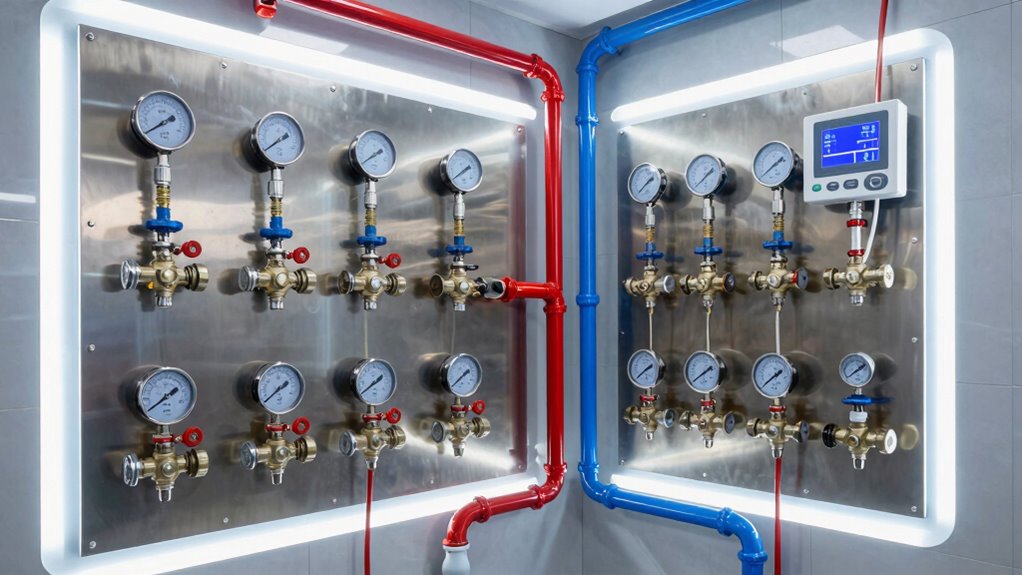
In water rooms, managing pressure effectively is essential to prevent structural damage and guarantee safety. A good pressure-relief strategy hinges on a combination of well-designed systems, clear procedures, and real-time monitoring. You need to verify that pressure levels stay within safe limits, preventing any risk of leaks, bursts, or other failures. When pressure exceeds these limits, emergency protocols must activate immediately to mitigate damage and protect personnel. These protocols should be clearly defined, regularly reviewed, and drilled so everyone knows their role during a pressure surge. Fast, decisive action can mean the difference between a minor incident and a major disaster.
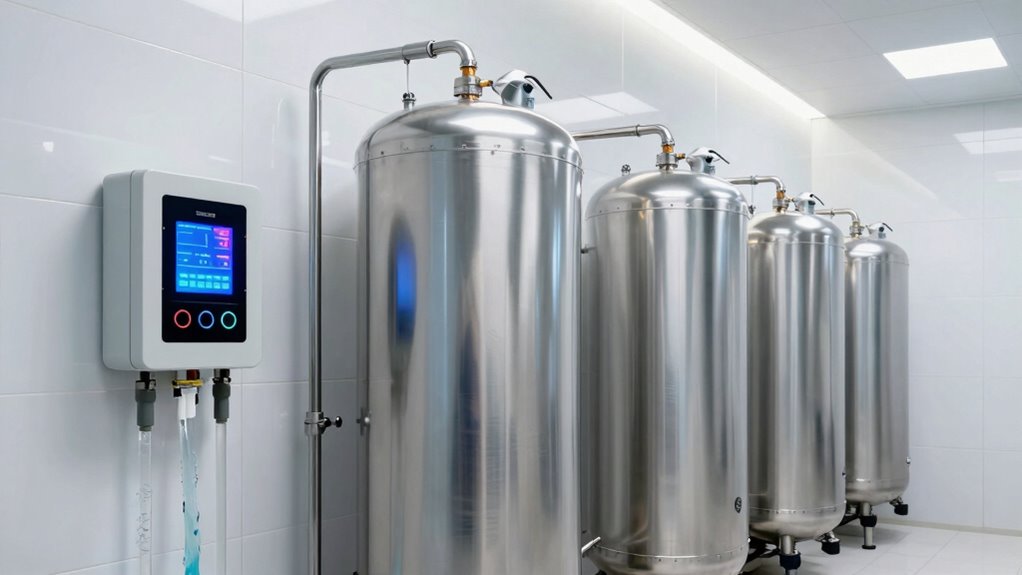
Monitoring systems are the backbone of an effective pressure-relief strategy. Advanced sensors and gauges provide continuous, real-time data on pressure levels throughout the water room. These systems must be accurately calibrated and maintained to avoid false readings or delays in response. When monitoring detects abnormal pressure spikes, alarms should trigger automatically, alerting operators to assess the situation. Visual and auditory alerts help confirm immediate attention, while automated controls can initiate pressure relief mechanisms without delay. This proactive approach minimizes risk and guarantees safety even if operators are temporarily unavailable or overwhelmed. Ensuring sensor calibration is maintained regularly is crucial for reliable data and timely responses. Additionally, implementing automated control systems can enhance responsiveness and reduce human error. Maintaining proper system redundancy ensures continuous operation in case of component failures, further strengthening safety measures. Incorporating predictive maintenance techniques enables early identification of potential system failures before they escalate.
Advanced sensors and alarms ensure real-time pressure monitoring and swift response, safeguarding water room safety effectively.
A modern water room’s pressure-relief strategy also involves reliable mechanical devices like pressure relief valves and rupture disks. These devices are designed to open or rupture at pre-set pressure thresholds, releasing excess pressure in a controlled manner. Regular inspections and maintenance are essential to keep these devices functioning properly. Integration with monitoring systems allows for remote diagnostics, so you can quickly identify any device malfunctions before they compromise safety. Combining these mechanical elements with automated controls creates a layered defense, making sure pressure stays within safe limits at all times. Proper documentation and adherence to manufacturer guidelines ensure these devices perform optimally over time.
Emergency protocols should include clear steps for operators to follow if monitoring systems detect dangerous pressure levels. This includes shutting down pumps, isolating affected sections, and activating backup relief devices if necessary. Training staff regularly on these procedures guarantees that responses are swift and effective. Documenting each step and practicing drills helps embed a culture of safety and preparedness. Additionally, you should always have contingency plans for power failures or sensor malfunctions, ensuring that pressure management doesn’t rely on a single system. Robust redundancy measures are key to maintaining continuous safety in critical situations.
pressure relief valves for water rooms
As an affiliate, we earn on qualifying purchases.
As an affiliate, we earn on qualifying purchases.
Frequently Asked Questions
How Often Should Pressure-Relief Valves Be Inspected and Maintained?
You should inspect and maintain pressure-relief valves at least annually, but more frequent checks are advisable if your water room experiences high usage or temperature fluctuations. During maintenance scheduling, focus on valve calibration to guarantee proper pressure settings and reliable operation. Regular inspections help catch wear or corrosion early, preventing failures, and ensuring your water system stays safe and compliant with industry standards.
What Are Common Signs of Pressure-Relief System Failure?
You’ll notice signs of pressure-relief system failure through inconsistent pressure readings during pressure monitoring and valve calibration issues. If valves leak or don’t open or close properly, it indicates malfunction. Watch for unusual noises or sudden pressure drops. Regular inspections help identify these problems early, ensuring your system operates safely. Ignoring these signs can lead to equipment damage or safety hazards, so stay vigilant and maintain your pressure-relief components properly.
Can Pressure-Relief Strategies Vary by Water Room Size?
Like dial-up internet, pressure-relief strategies do vary by water room size. In small rooms, simple pressure regulation techniques often suffice, focusing on compact, efficient systems. Larger spaces demand more sophisticated pressure management, incorporating multiple relief valves and advanced monitoring. Water room design adapts to these needs, ensuring safety and efficiency regardless of size. You’ll want tailored solutions that match your specific space to prevent pressure issues and maintain system integrity.
What Safety Protocols Are Essential During Pressure-Relief Testing?
During pressure-relief testing, you must wear safety gear like gloves, goggles, and protective clothing to prevent injuries. Make certain emergency procedures are clear and accessible, so you know how to shut down systems quickly if needed. Always communicate with your team, monitor pressure levels constantly, and verify that safety valves function properly. These protocols help minimize risks and ensure a safe, efficient testing process.
How Do Environmental Factors Affect Pressure-Relief System Performance?
Like dialing up a vintage radio, environmental impacts and external influences can greatly affect your pressure-relief system’s performance. Changes in temperature, humidity, and atmospheric pressure can cause material expansion or contraction, impacting valve operation. External influences like debris or corrosion from nearby sources may clog or damage components. To guarantee safety and reliability, monitor environmental conditions regularly, and adapt your system to counteract these influences, maintaining ideal pressure relief functionality.
automated pressure monitoring sensors
As an affiliate, we earn on qualifying purchases.
As an affiliate, we earn on qualifying purchases.
Conclusion
A good pressure-relief strategy keeps your water room safe, reliable, and efficient. It prevents overpressure, protects your equipment, and guarantees safety for everyone. It anticipates issues before they arise, responds quickly when problems occur, and maintains consistent performance over time. By integrating proactive measures, responsive systems, and continuous monitoring, you create a resilient environment. Ultimately, a well-designed pressure-relief strategy safeguards your operations, preserves your investment, and provides peace of mind—today, tomorrow, and well into the future.
rupture disks for pressure safety
As an affiliate, we earn on qualifying purchases.
As an affiliate, we earn on qualifying purchases.
system redundancy pressure relief devices
As an affiliate, we earn on qualifying purchases.
As an affiliate, we earn on qualifying purchases.
NFL season / tailgating Picks
team gear
As an affiliate, we earn on qualifying purchases.