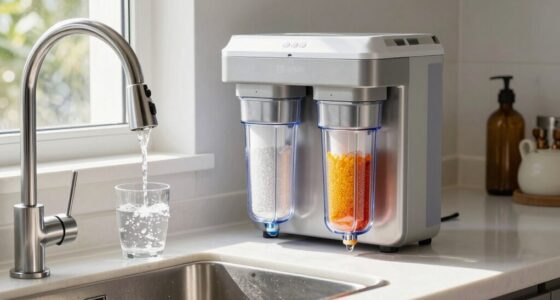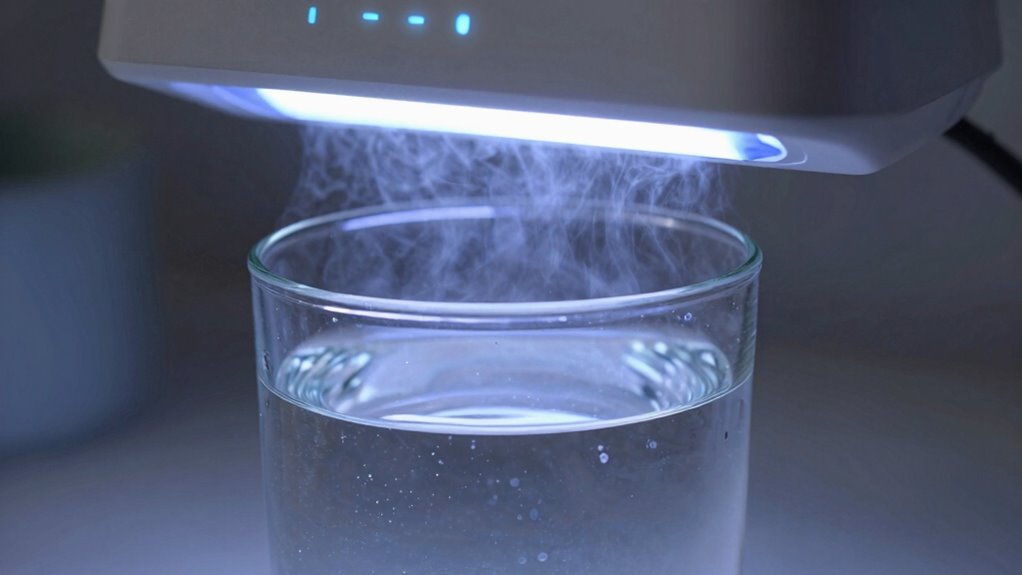

Installing a UV system before fully evaluating your water quality can hide risks that threaten safety and efficiency. Poor water clarity, high minerals, or organic matter can block UV light, reducing disinfection and letting harmful contaminants remain. Rushing the process may cause deposits on UV parts, increasing maintenance and lowering lifespan. To avoid these issues, you need thorough testing, proper pretreatment, and ongoing checks. If you keep exploring, you’ll discover how to keep your system functioning safely and effectively.

Get home appliances delivered free — and shop member deals
- Fast, free delivery on millions of items
- Access to Prime Big Deal Days deals on October 6–7
- Prime Video, Amazon Music and more included
Key Takeaways
- Premature UV installation can fail to disinfect effectively if water quality isn’t fully evaluated.
- Poor water clarity and high mineral content reduce UV light penetration and system efficiency.
- Lack of pretreatment leads to deposits on UV components, decreasing performance and increasing maintenance costs.
- Without proper monitoring, UV systems may give a false sense of safety, risking health.
- Delaying UV installation until water is properly tested prevents costly repairs and ensures safe, clean water.
Installing ultraviolet (UV) disinfection systems before your water is fully ready can seem like a proactive step, but it may actually pose hidden risks. When you rush to install UV systems without thoroughly evaluating your water quality, you risk compromising their effectiveness. UV disinfection relies heavily on the clarity and composition of your water; if the water contains high levels of sediments, organic matter, or other contaminants, the UV light can become less effective. These particles can shield bacteria and viruses, preventing the UV rays from penetrating and neutralizing harmful microorganisms. As a result, you might assume your water is safe when, in fact, it isn’t fully disinfected.
Understanding the importance of water quality is critical before installing UV systems. If your water contains excessive iron, manganese, or other minerals, these can absorb UV light, reducing disinfection efficiency. Similarly, cloudy or turbid water diminishes UV effectiveness because the light cannot reach microorganisms embedded within particles. If you don’t address these issues first—such as through filtration or sediment removal—you’re fundamentally giving your UV system a false sense of security. Proper pretreatment is essential for optimal UV performance, ensuring your system functions as intended and provides truly safe water. This highlights the importance of evaluating water quality parameters beforehand. To achieve this, regular testing of water quality parameters is essential, especially in areas with known contamination issues. It’s also crucial to understand how contaminants can impact UV effectiveness and the need for tailored treatment solutions. Conducting comprehensive water testing can help identify potential issues early and prevent costly mistakes later. Neglecting to address these factors can lead to persistent health risks, especially if contaminated water passes through undetected.
Another key point is that installing UV systems prematurely might lead to increased maintenance costs down the line. When water quality isn’t ideal, the UV lamp and quartz sleeve can become coated with deposits, decreasing their ability to generate effective UV doses. You might find yourself frequently cleaning or replacing components, which isn’t just costly but also inconvenient. Without proper pretreatment, UV systems can suffer from reduced lifespan and performance, making the initial investment less effective overall. It’s important to recognize that proper water treatment isn’t just a one-time step but an ongoing process to maintain system efficiency.
Furthermore, the efficacy of UV disinfection is not just about installing the equipment but ensuring it operates under the right conditions. You need to measure and monitor water parameters, such as turbidity, pH, and contaminant levels, before relying on UV. If these aren’t within suitable ranges, the UV system may give you a false sense of security, leaving you vulnerable to waterborne illnesses. Proper testing and treatment first help maximize UV effectiveness, ensuring your water is genuinely safe to drink and use. Regular maintenance and monitoring are also vital to sustain optimal performance over time.
In short, installing UV disinfection systems before your water is fully prepared can undermine their purpose. Prioritize water quality evaluations and necessary pretreatments to maximize UV effectiveness. Only then can you truly trust that your system will provide safe, clean water, rather than serving as a costly, ineffective barrier.
As an affiliate, we earn on qualifying purchases.
Frequently Asked Questions
How Long Should Water Sit Before Installing UV Systems?
You should wait until your water’s pH stabilizes and the pipe material is clean and free of debris before installing UV systems. Typically, letting water sit for 24 to 48 hours allows pH levels to balance, reducing risks of corrosion or scale buildup that can harm the UV unit. This waiting period guarantees the water is truly ready, preventing damage and ensuring effective disinfection.
Can Premature UV Installation Cause Long-Term Water Quality Issues?
Installing UV prematurely can cause long-term water quality issues because it triggers chemical reactions and microbial buildup inside the system. When water isn’t fully stable, these reactions may produce unwanted byproducts, and microbes can grow unchecked, leading to contamination. This buildup can reduce UV effectiveness over time and compromise water safety. To avoid these risks, make sure your water is properly settled and tested before installing the UV system.
What Are Signs Water Isn’t Ready for UV Treatment?
You’ll notice water isn’t ready for UV treatment if the chemical balance is off, making disinfection less effective. Additionally, high sediment levels can shield microorganisms from UV light, reducing its efficiency. If your water has visible sediment or the chemical readings are inconsistent, it’s a sign to improve sediment removal and achieve proper chemical balance first. Waiting until these issues are resolved guarantees your UV system functions at its best, safeguarding your water quality.
How Does Water Temperature Affect UV Disinfection Effectiveness?
Water temperature greatly impacts UV disinfection effectiveness, especially concerning water temperature thresholds. If water is too cold or too hot, UV systems may not deliver best pathogen destruction. You need to regularly monitor water temperature to guarantee it stays within the perfect range for your UV system. Proper UV system maintenance includes checking that water temperatures remain consistent, preventing inefficiencies and maintaining safe, clean water.
Are There Specific Water Contaminants That UV Can’t Address?
You should know that UV disinfection can’t effectively address chemical contaminants or certain water filtration issues. UV light targets microorganisms like bacteria and viruses, but it doesn’t remove chemicals such as pesticides, heavy metals, or organic compounds. If your water has chemical pollutants, you need additional treatment methods like activated carbon filters or other filtration systems. Relying solely on UV might leave harmful chemicals in your water, so consider extensive treatment options.
As an affiliate, we earn on qualifying purchases.
Conclusion
If you rush to install UV before your water’s truly ready, you risk turning your system into a ticking time bomb—a silent disaster waiting to happen. Don’t let impatience sabotage your water quality or waste your hard-earned money. Take the time to make sure your water is properly prepared; otherwise, you could face a flood of problems more overwhelming than a hurricane. Patience now saves you from chaos later—trust me, it’s worth every second.
sediment filter for water purification
As an affiliate, we earn on qualifying purchases.
As an affiliate, we earn on qualifying purchases.
As an affiliate, we earn on qualifying purchases.
Fall yard work Picks
leaf blowers
As an affiliate, we earn on qualifying purchases.