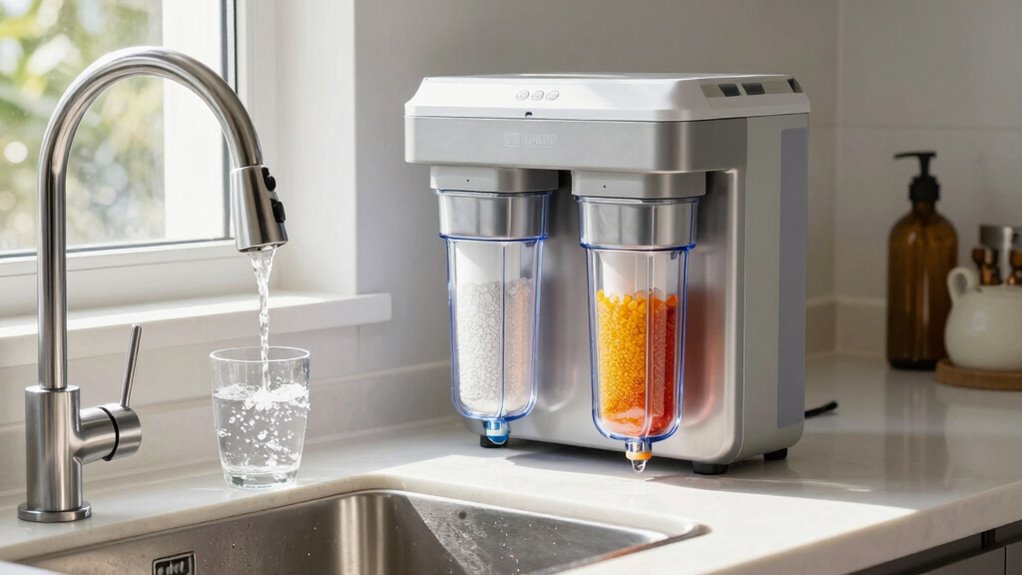

Combining reverse osmosis and whole-house filtration makes sense if your water has high dissolved contaminants, metals, or chemicals that need ultra-pure treatment. Whole-house filters protect your plumbing and improve taste, while RO guarantees the cleanest water for drinking and cooking. However, if your water only has minor issues or manageable contaminants, a single system can often do the job effectively and save you money. To find out which setup suits your needs best, consider the details ahead.

Get home appliances delivered free — and shop member deals
- Fast, free delivery on millions of items
- Access to Prime Big Deal Days deals on October 6–7
- Prime Video, Amazon Music and more included
Key Takeaways
- Combining both systems suits homes with high dissolved contaminants needing ultra-pure water.
- Use both when improving taste, odor, and chemical removal before RO enhances overall water quality.
- A single system may suffice if water issues are limited to specific contaminants or mineral balance.
- Dual treatment is less necessary for relatively clean water with minor pH or mineral concerns.
- Proper water testing guides whether combining systems is beneficial or if a single, targeted solution suffices.
Ever wondered how you can guarantee every drop of water in your home is pure and safe? If so, considering a combination of reverse osmosis (RO) and whole-house filtration might seem like the perfect solution. These systems work together to provide cleaner, healthier water throughout your home, but it’s essential to understand when they actually make sense and when they might be overkill.
First, let’s look at what each system offers. An RO system is excellent at removing contaminants like heavy metals, salts, and certain chemicals. It produces extremely pure water, but it also strips away beneficial minerals and can substantially alter water pH, often making it more acidic. If your water has a naturally high or low pH, or if you notice a metallic or off-taste, an RO system can help stabilize the quality. However, because RO systems require regular membrane replacements and filter changes, their maintenance costs can add up over time. You’ll need to budget for these ongoing expenses, especially if your household consumes a lot of water.
RO systems remove heavy metals and salts but require regular maintenance and can affect water pH.
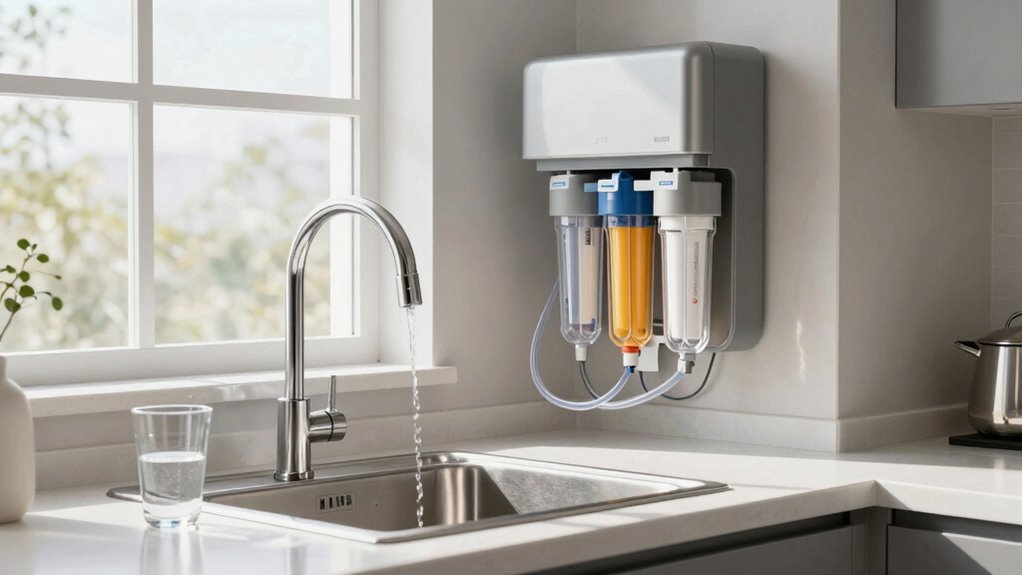
Whole-house filtration, on the other hand, is designed to treat water at the point of entry, filtering out sediments, chlorine, volatile organic compounds, and other impurities. It’s typically less aggressive than RO, meaning it preserves the water’s natural mineral content and maintains a stable pH, which is vital for plumbing longevity and your health. This system is especially useful if your water source contains high levels of sediment or chemicals that affect taste, odor, or safety. Plus, because whole-house filters usually require less maintenance than reverse osmosis units, their ongoing costs tend to be lower.
Deciding whether to combine these systems depends on your specific water quality issues. If your water has a high level of dissolved contaminants, a whole-house filter can be a first line of defense, improving taste and reducing chemicals. If you need ultra-pure water—for drinking, cooking, or sensitive appliances—adding an RO system after the whole-house filter makes sense. Just keep in mind that while this combination provides comprehensive treatment, it also increases upfront costs and maintenance efforts.
However, in many cases, an RO system alone might be sufficient, especially if your primary concern is removing specific contaminants. If your water is relatively clean but has pH or mineral balance issues, a simple whole-house filter might do the trick. Remember, the key is to assess your water’s quality first; over-treating can be unnecessary and costly. Properly water testing your source can help determine the most effective treatment approach. By understanding your water’s unique characteristics and balancing maintenance costs with your needs, you can make an informed choice that guarantees safe, great-tasting water without overspending.
reverse osmosis water filter system
As an affiliate, we earn on qualifying purchases.
As an affiliate, we earn on qualifying purchases.
Frequently Asked Questions
How Often Should I Replace Filters in a Combined System?
You should replace filters in a combined system every 6 to 12 months, depending on sediment buildup and water quality. Regularly check the filters for signs of clogging or reduced flow, which indicate the end of their filter lifespan. If your water has higher sediment levels, consider replacing filters more frequently to maintain ideal performance and guarantee your system continues to effectively remove impurities.
Can RO and Whole-House Systems Remove Beneficial Minerals?
You might worry about losing beneficial minerals with RO and whole-house systems, but don’t panic. These systems can remove minerals like calcium and magnesium, affecting taste and health. Luckily, water remineralization filters or additives can restore these essential minerals, ensuring your water remains balanced and nutritious. So, you get clean, safe water without sacrificing the minerals that support your well-being.
What Is the Typical Cost of Installing Both Systems?
The typical cost of installing both RO and whole-house systems ranges from $3,000 to $10,000, depending on factors like system size, complexity, and your location. When comparing costs, installation expenses can be higher if additional plumbing or electrical work is needed. You should consider a detailed cost comparison to determine if the investment aligns with your water quality needs and budget, ensuring you get the best value.
Are There Specific Water Conditions Requiring Both Systems?
Think of your water system as a filter cake, catching impurities before they reach you. If your source water issues stem from poor regional water quality or high mineral content, both systems are often needed. Hard water, heavy metals, or contaminants like pesticides may require the combined effort. You’ll benefit most when regional water conditions threaten your health or appliances, making dual filtration a smart choice.
How Do Maintenance Requirements Differ Between RO and Whole-House Filters?
You’ll find that maintenance requirements differ between RO and whole-house filters. RO systems usually need filter replacements every 6 to 12 months, depending on water quality, affecting their lifespan and maintenance frequency. Whole-house filters typically require less frequent maintenance, often changing filters every 6 to 12 months as well, but their lifespan depends on water usage and sediment levels. Regular checks ensure peak performance and water quality.
whole house water filtration system
As an affiliate, we earn on qualifying purchases.
As an affiliate, we earn on qualifying purchases.
Conclusion
If you’re considering RO and whole-house filtration, remember that over 85% of homes have water contaminants that could benefit from treatment. Combining both can be effective, but it’s not always necessary. Assess your water quality first, and consult a professional to determine the best solution. When used appropriately, these systems can guarantee safer, cleaner water for your entire household—giving you peace of mind every time you turn on the tap.
RO and whole house water filter combo
As an affiliate, we earn on qualifying purchases.
As an affiliate, we earn on qualifying purchases.
best water purification system for high contaminants
As an affiliate, we earn on qualifying purchases.
As an affiliate, we earn on qualifying purchases.
Fall yard work Picks
leaf blowers
As an affiliate, we earn on qualifying purchases.