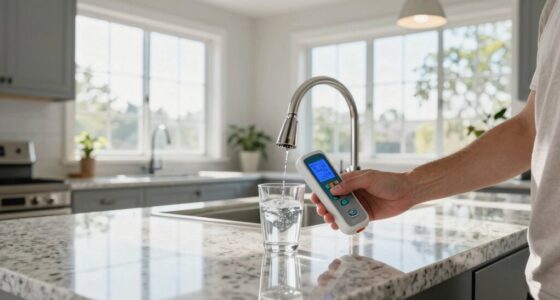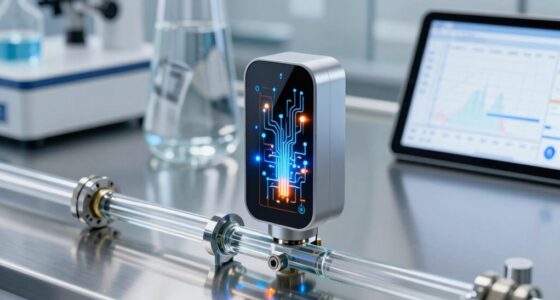

To think like a water lab without being one, focus on understanding key water quality parameters like pH, temperature, and chemical levels. Pay attention to signs of contamination, such as unusual odors or colors, and investigate their sources. Familiarize yourself with safety standards and regulations to interpret data accurately. Approaching water assessment with analytical thinking and attention to detail helps you identify risks and guarantee safety—if you keep exploring, you’ll gain even deeper insights.

Get home appliances delivered free with Prime
- Fast, free delivery on millions of items
- Prime Video, Amazon Music and more included
- Member-only deals all year
Key Takeaways
- Adopt a systematic approach to testing, analyzing, and validating water samples for accuracy and reliability.
- Understand and interpret water quality standards and regulatory thresholds for informed decision-making.
- Develop keen observational skills to identify anomalies like unusual odors, colors, or tastes.
- Continuously monitor environmental factors that influence water parameters, such as weather and human activity.
- Communicate findings clearly, emphasizing public health safety and compliance with environmental regulations.
Have you ever wondered how water labs detect impurities or guarantee water quality? It’s a fascinating process that involves meticulous environmental monitoring and precise water quality analysis. Think of it as a detective mission, where every droplet of water is scrutinized for signs of contamination, pollutants, or any deviation from safety standards. To think like a water lab without being one, you need to approach water with a keen eye for detail and an understanding of what makes water safe or unsafe.
Start by considering the importance of environmental monitoring. A water lab constantly observes various environmental factors—like temperature, pH levels, chemical concentrations, and microbial presence—that influence water quality. When you analyze water, you’re not just looking at the water itself but at the environment around it. This means you focus on what might have entered the water from natural sources, industrial discharges, or everyday human activity. Monitoring these parameters helps identify potential risks before they become serious health issues. Additionally, understanding water quality parameters enables more accurate assessments and informed decision-making. Recognizing the dynamic nature of water quality, which can fluctuate due to weather patterns and seasonal changes, further emphasizes the need for ongoing assessment. Incorporating knowledge about environmental factors can improve your ability to anticipate changes in water safety and quality. A thorough understanding of contaminant sources enhances your ability to trace pollution back to its origin and address it effectively.
Monitoring environmental factors like pH, temperature, and contaminants is essential to identify risks before health issues arise.
Next, water quality analysis involves breaking down water samples into measurable components. You think like a water lab when you prioritize accuracy and systematic testing. You would use specialized instruments such as spectrophotometers, chromatographs, and microbial test kits to detect contaminants. It’s about understanding the significance of each measurement—knowing that high levels of certain chemicals or bacteria indicate pollution or health hazards. You also recognize that water quality isn’t static; it varies with weather, usage, and environmental changes, so continuous assessment is key.
Furthermore, developing a mindset like a water lab means adopting a problem-solving approach. When you notice anomalies—like unusual odors, colors, or taste—your instinct should be to investigate further, just as a lab technician would. You’d consider possible sources, analyze data, and hypothesize about the contamination’s origin. This analytical thinking extends to understanding regulatory standards, knowing what levels are considered safe, and ensuring compliance with environmental laws. Being familiar with regulatory standards allows you to better interpret your findings and advocate for safety.
Lastly, thinking like a water lab involves a commitment to accuracy, safety, and public health. You recognize that every decision you make or observation you record can impact communities and ecosystems. It’s about maintaining a rigorous, methodical approach—questioning assumptions, validating results, and communicating findings clearly. By doing so, you embody the essence of environmental monitoring and water quality analysis, ensuring water remains safe and clean for everyone.
As an affiliate, we earn on qualifying purchases.
Frequently Asked Questions
How Can I Apply Water Lab Thinking to Non-Scientific Situations?
To apply water lab thinking to non-scientific situations, focus on flow adaptability and curiosity cultivation. Embrace change like water, adjusting your approach as circumstances evolve. Stay curious about different perspectives, asking questions and exploring solutions. This mindset helps you navigate challenges smoothly and keeps your thinking flexible, much like water flows effortlessly around obstacles. By fostering curiosity and adapting, you’ll handle various situations with resilience and innovative problem-solving.
What Mental Habits Help Think Like a Water Lab Daily?
To think like a water lab daily, you need to cultivate habits that foster flow adaptability and observation precision. Stay curious and flexible, adjusting your approach when faced with new challenges. Practice keen observation, noticing small details others might miss. Keep an open mind, and don’t jump to conclusions. By doing so, you’ll develop a mindset that’s adaptable and precise, turning everyday situations into opportunities for insight—like catching water’s subtle flow.
Are There Specific Tools to Improve Water Lab Mindset?
Yes, there are specific tools to improve your water lab mindset. Using reliable water quality testing procedures helps you develop a detail-oriented approach, emphasizing accuracy and consistency. Invest in digital thermometers, pH meters, and turbidity meters to enhance your testing accuracy. Keep a well-organized logbook to track results systematically. These tools sharpen your focus on water quality, encouraging a mindset that values precision and continuous improvement.
How Does Water Lab Thinking Enhance Problem-Solving Skills?
Ever wonder how water lab thinking boosts your problem-solving skills? It sharpens your focus on water quality and demands lab precision, helping you analyze issues more effectively. By adopting this mindset, you learn to approach challenges systematically, considering every detail and potential variable. This meticulous attention strengthens your ability to identify root causes and develop solutions efficiently, making you better equipped to tackle complex problems in any field.
Can Water Lab Thinking Improve Team Collaboration?
Yes, water lab thinking can improve your team collaboration. By practicing emotional intelligence, you become more attuned to your teammates’ feelings and perspectives. Creative visualization helps you imagine shared goals and innovative solutions. When you approach teamwork with this mindset, you foster open communication and trust, making collaboration smoother. This approach encourages everyone to contribute ideas, adapt to challenges, and work cohesively toward common objectives.
As an affiliate, we earn on qualifying purchases.
Conclusion
Thinking like a water lab might seem complex, but it’s really about adopting a mindset of curiosity and precision. Some might worry it’s too technical or demanding. But you don’t need a fancy lab—just ask questions, analyze data carefully, and stay curious. By doing so, you’ll make smarter decisions and see the world more clearly. So, go ahead—embrace this mindset, and watch how your perspective shifts, without needing to be a scientist.
As an affiliate, we earn on qualifying purchases.
As an affiliate, we earn on qualifying purchases.
NFL season / tailgating Picks
team gear
As an affiliate, we earn on qualifying purchases.