If you’re dealing with well sediment and want cleaner, clearer water throughout your home, choosing the right whole house filter is essential. Among the top contenders are the 3-Stage Whole House Water Filter System with 9 Filters, which offers comprehensive filtration for sediment, chlorine, and odors; the iSpring WGB21B 2-Stage System, known for its large capacity and straightforward maintenance; and the Waterdrop WHF21-FG, which excels at removing heavy metals and providing high flow. Each has unique strengths and tradeoffs: the 3-stage system covers more impurity types but lacks mineral retention, while the others focus on specific contaminants with different installation and maintenance considerations.

Get home appliances delivered free — and shop member deals
- Fast, free delivery on millions of items
- Access to Prime Big Deal Days deals on October 6–7
- Prime Video, Amazon Music and more included
Complete the kit


Key Takeaways
- The 3-stage system provides thorough sediment and chlorine removal but doesn’t reduce TDS or heavy metals.
- The iSpring WGB21B is ideal for larger households seeking high capacity and easy DIY installation.
- Waterdrop offers superior removal of heavy metals and high flow rates but may require more plumbing knowledge for installation.
- Choosing between these depends on your water source quality, budget, and maintenance willingness.
- All options effectively target well sediment but differ in additional contaminant removal and ease of use.
| 3-Stage Whole House Water Filter System with 9 Filters, 0.5 Micron |  | Best Overall for Sediment and Chlorine Removal | Filter Stages: 3 | Micron Rating: 0.5 | Includes: 9 filters (PP, GAC, CTO), wrench, tape, valves, faucet connectors, filter housing, user manual | VIEW ON AMAZON | See Our Full Breakdown |
| iSpring WGB21B 2-Stage Whole House Water Filtration System, 50,000 Gallons | 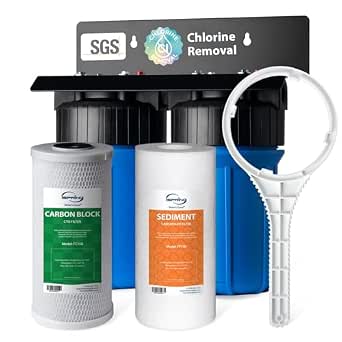 | Best for Capacity and DIY Install | Filtration Stages: 2 | Filter Capacity: 50,000 gallons | Filter Size: 10″x4.5″ | VIEW ON AMAZON | See Our Full Breakdown |
| Waterdrop WHF21-FG 2-Stage Whole House Water Filter System, NSF/ANSI 372 |  | Best for Heavy Metal and Flow Rate | Filter Size: 10″ x 4.5″ | Flow Rate: Up to 15 GPM | Filter Capacity: 50,000 gallons or 6 months | VIEW ON AMAZON | See Our Full Breakdown |
| whole house water filter system for well sediment | Filter Capacity | Filter Size | Inlet/Outlet Size |
|---|---|---|---|
| 3-Stage Whole House Water Filt | — | — | — |
| iSpring WGB21B 2-Stage Whole H | 50,000 gallons | 10"x4.5" | 1 inch |
| Waterdrop WHF21-FG 2-Stage Who | 50,000 gallons or 6 months | 10" x 4.5" | 1" NPT |
More Details on Our Top Picks
3-Stage Whole House Water Filter System with 9 Filters, 0.5 Micron
This system stands out for its comprehensive 3-stage filtration process, effectively reducing sediment, chlorine, and odors. It includes three complete filter sets, which helps lower replacement costs and ensures long-term performance. The built-in shut-off valves make filter changes easier, and its compact design fits well in tight spaces. Compared with the others, it offers a more complete approach to sediment removal while maintaining affordability. However, it doesn’t address heavy metals or TDS reduction, making it less suitable for water with mineral concerns. Installation requires some basic plumbing skills, but it’s manageable for most DIYers.
Pros:- Effective removal of sediment, chlorine, and odors
- Includes three complete filter sets, saving replacement costs
- Built-in shut-off valves simplify filter changes
- Compact and easy to install in small spaces
Cons:- Does not reduce TDS or heavy metals
- Requires initial setup and periodic filter replacement
- Limited to impurities like sediment and chlorine
Best for: Homeowners needing thorough sediment and chlorine removal with easy maintenance
Not ideal for: Households looking to reduce heavy metals or TDS levels
- Filter Stages:3
- Micron Rating:0.5
- Includes:9 filters (PP, GAC, CTO), wrench, tape, valves, faucet connectors, filter housing, user manual
- Filter Lifespan:1.5–2 years
- Plumbing Size:3/4 inch
Our verdict“The best all-around choice for comprehensive sediment and chlorine filtration in a compact design.”
iSpring WGB21B 2-Stage Whole House Water Filtration System, 50,000 Gallons
The iSpring WGB21B offers a straightforward two-stage filtration, perfect for families seeking long-term, low-maintenance filtering. It combines a sediment filter with a CTO carbon filter, removing dirt, rust, chlorine, and unpleasant tastes while retaining beneficial minerals. Its large capacity of 50,000 gallons makes it suitable for those who prefer a set-and-forget approach, with an easy DIY installation process. Compared to the 3-stage system, it’s less comprehensive but excels in capacity and simplicity. Its main limitation is that it doesn’t reduce TDS, so minerals stay in your water, which may be a plus or minus depending on your needs.
Pros:- Effective at removing dirt, rust, chlorine, and odors
- High capacity supports a year of filtered water for a family of four
- Easy to install with included tools and pre-assembled parts
- Retains beneficial minerals in water
Cons:- Does not reduce TDS or heavy metals
- DIY installation may challenge some users
- Limited to basic sediment and chlorine filtration
Best for: Families wanting high capacity and ease of installation
Not ideal for: Those needing heavy metals or TDS reduction
- Filtration Stages:2
- Filter Capacity:50,000 gallons
- Filter Size:10″x4.5″
- Inlet/Outlet Size:1 inch
- Warranty:1 year, with extended options
Our verdict“Ideal for larger households that prioritize capacity and straightforward maintenance over complex contaminant removal.”
Waterdrop WHF21-FG 2-Stage Whole House Water Filter System, NSF/ANSI 372
The Waterdrop WHF21-FG is distinguished by its ability to reduce heavy metals like iron and manganese, along with chlorine, making it suitable for well or municipal sources with contamination concerns. Its high flow rate of up to 15 GPM supports multiple fixtures, which is a significant advantage for larger households or busy homes. The long-lasting filters mean less frequent replacements, though the installation might be more involved, requiring some plumbing skills. It’s particularly effective at removing metals, but this focus means it might not be as comprehensive for sediment alone, and costs can add up over time due to filter replacements.
Pros:- Reduces iron, manganese, chlorine, and heavy metals effectively
- Supports high flow rates up to 15 GPM
- Long filter lifespan minimizes maintenance
- Easy to install with pre-installed filters
Cons:- Installation may require some plumbing knowledge
- Filter replacement costs could be higher over time
- Performance depends on water quality
Best for: Homes with heavy metal contamination or high flow needs
Not ideal for: Those primarily seeking sediment removal or on a tight budget
- Filter Size:10″ x 4.5″
- Flow Rate:Up to 15 GPM
- Filter Capacity:50,000 gallons or 6 months
- Inlet/Outlet Size:1″ NPT
- Standards:NSF/ANSI 372, 61, 42, 44, 53, 58
Our verdict“Best suited for homes needing heavy metal reduction and high flow, with some plumbing expertise required.”
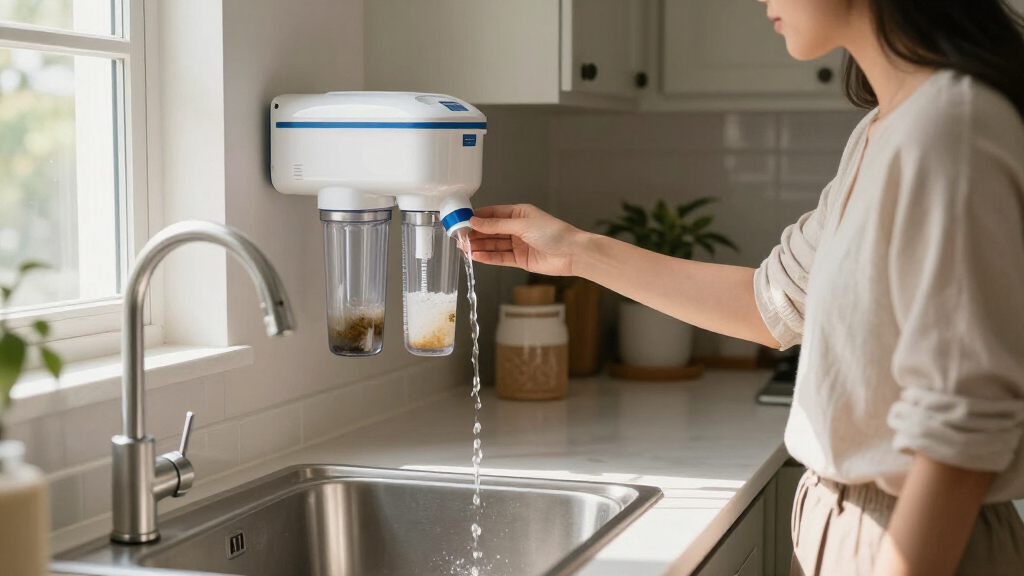
How We Picked
To select the best whole house water filter systems for well sediment, I focused on models that prioritize sediment removal while considering ease of installation, maintenance, capacity, and affordability. I compared the filtration stages, micron ratings, flow rates, and filter lifespans, emphasizing how each product handles sediment and other common well contaminants. I also balanced features against potential drawbacks like installation complexity, ongoing costs, and whether the system retains beneficial minerals or reduces harmful ones. The goal was to identify options suitable for different household needs, from basic sediment filtration to more comprehensive contaminant reduction.
Factors to Consider When Choosing Whole House Water Filter System For Well Sediment
Choosing the right whole house water filter for well sediment involves understanding your water quality, household size, and maintenance preferences. Key factors include filter micron rating, capacity, flow rate, and additional contaminant reduction features. A system with a lower micron rating (like 0.5) will better trap fine sediment, but may require more frequent filter changes. Capacity determines how long filters last before replacement, while flow rate ensures your household fixtures operate smoothly without pressure drops. Consider whether you need multi-contaminant removal or specific metals reduction to match your well water profile.
Filtration Effectiveness and Contaminants
Look for systems rated to remove sediment down to at least 0.5 microns for effective sediment trapping. If your well water contains heavy metals or iron, prioritize filters designed for those contaminants. For general sediment and chlorine removal, multi-stage systems provide comprehensive coverage, but they may come with higher upfront costs. Matching your water testing results with the filter’s capabilities ensures you target your specific issues.
Capacity and Maintenance
Consider how much filtered water your household needs daily. Larger capacity units support longer intervals between filter changes, reducing maintenance frequency. However, bigger or more complex systems might be more difficult to install or require professional help. Balance your household’s water use with the filter’s lifespan and ease of replacement to avoid ongoing frustrations.
Flow Rate and Installation
High flow rates, like 15 GPM, support multiple fixtures at once, ideal for busy homes or those with high water demand. Make sure your plumbing can accommodate the inlet and outlet sizes specified, typically 1″ NPT. If you lack plumbing experience, systems with pre-assembled parts and clear instructions ease installation, but some models may still demand basic skills.
Additional Contaminant Removal
If your well water has iron, manganese, or heavy metals, select a system specifically rated for those contaminants. Systems like Waterdrop excel here, while others focus more on sediment or chlorine. Clarify your water testing results to pick a system that addresses your primary concerns without overpaying for features you don’t need.
Frequently Asked Questions
How often should I replace the filters in my whole house system?
The frequency depends on your water quality and household usage. For example, the 3-stage system with 1.5-2 year filter lifespan requires replacement based on water conditions, while the iSpring and Waterdrop systems typically last around 6 months to a year. Regularly checking pressure drops or following manufacturer guidelines helps ensure optimal performance and prevents clogged filters from reducing flow or effectiveness.
Can these systems remove all types of contaminants from well water?
While each system targets specific issues like sediment, chlorine, or heavy metals, none can remove every possible contaminant. For instance, the 3-stage system excels at sediment and chlorine but doesn’t reduce TDS or viruses. The Waterdrop model targets metals and offers high flow, but may not be ideal for general sediment. Matching your water test results with the system’s filtration capabilities is key.
Is professional installation necessary for these systems?
It depends on your plumbing skills and the system chosen. The iSpring WGB21B and Waterdrop units are designed for DIY installation, with clear instructions and pre-assembled parts. The 3-stage system may require more plumbing knowledge due to additional components and valves. If unsure, hiring a professional can ensure proper setup and optimal performance.
Will these systems reduce TDS levels in my water?
Most whole house sediment filters, including the ones reviewed here, do not affect TDS levels because they primarily remove suspended solids and chlorine. If TDS reduction is a priority, consider additional RO (reverse osmosis) systems. For well water with high mineral content, some systems like Waterdrop can reduce heavy metals but won’t significantly lower TDS.
How do I know which system is best for my well water?
The best way is to test your water first. Understanding your contaminant levels helps you pick a system that addresses your primary concerns—whether sediment, heavy metals, or chlorine. For homes with high sediment or iron, systems like Waterdrop excel, while larger households needing capacity might prefer the iSpring WGB21B. Matching your specific water issues with the system’s features ensures effective and cost-efficient filtration.
Conclusion
For homeowners dealing mainly with sediment, the 3-Stage Whole House Water Filter System offers comprehensive filtration suitable for most needs, especially if you want effective chlorine removal alongside sediment. Larger families or those seeking high capacity and straightforward DIY setup may find the iSpring WGB21B ideal. If heavy metals like iron and manganese are your concern, the Waterdrop WHF21-FG provides powerful reduction with high flow support. Your choice should reflect your specific water quality issues, maintenance preferences, and household size to ensure the best results.
Fall yard work Picks
leaf blowers
As an affiliate, we earn on qualifying purchases.