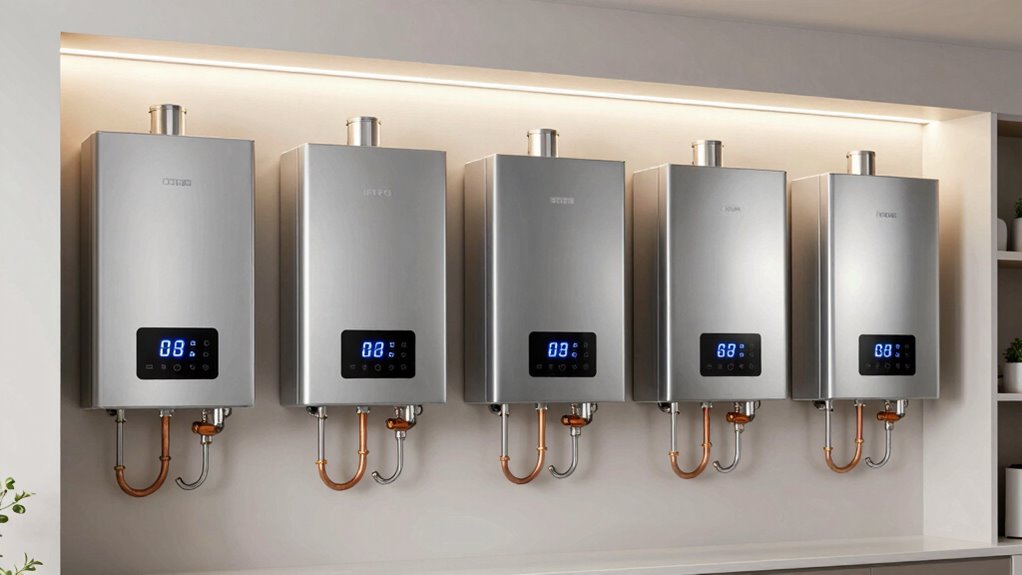

When searching for a tankless water heater with built-in recirculation, you’re looking for a solution that offers instant hot water without wasting energy or water. The best models balance quick response times, energy efficiency, and ease of installation. The Rinnai RXP160iN stands out for its smart technology, while the Rheem Prestige RTGH-RH11DVLN offers robust performance for larger households. However, these units often involve tradeoffs like higher upfront costs or complex installation. Keep reading to explore the top picks and what makes each unique.

Get home appliances delivered free with Prime
- Fast, free delivery on millions of items
- Prime Video, Amazon Music and more included
- Member-only deals all year
Complete the kit


Key Takeaways
- Models with integrated recirculation boost hot water delivery times significantly, reducing wait times for fixtures far from the heater.
- High efficiency ratings often correlate with condensing technology, but they may come at a premium price point.
- Smart features like app control or sensors improve usability but can add complexity and potential maintenance needs.
- Size and flow rate are critical; larger households need higher GPM ratings, but this can increase costs and installation requirements.
- Installation complexity varies; some units require professional setup, especially if integrated recirculation loops are added.
| Rheem Prestige Condensing Tankless Gas Water Heater, 11.0 GPM, Indoor Natural Gas, RTGH-RH11DVLN |  | Best Overall for High Efficiency and Compact Design | Flow Rate: 11.0 GPM | Fuel Type: Natural Gas | Installation: Indoor | VIEW ON AMAZON | See Our Full Breakdown |
| Rinnai RXP160iN Condensing Smart Sense Tankless Water Heater |  | Best for Smart Technology and Versatile Installation | Flow Rate: 9 GPM | Fuel Type: Propane or Natural Gas | Installation: Indoor or outdoor | VIEW ON AMAZON | See Our Full Breakdown |
| Rinnai RE199iN Non-Condensing Natural Gas Tankless Water Heater |  | Best for Long-Lasting Performance and Easy Maintenance | Flow Rate: 9.8 GPM | BTU: 199,000 | Warranty: 15-year on heat exchanger | VIEW ON AMAZON | See Our Full Breakdown |
| Rheem IKONIC 11.2 GPM Natural Gas Tankless Water Heater Indoor |  | Best for High Capacity and Remote Control | Flow Rate: 11.2 GPM | BTUs: 199,900 | Features: Wi-Fi, Recirculation | VIEW ON AMAZON | See Our Full Breakdown |
| GASLAND Gasmart E 199,000 BTU Tankless Water Heater, Up to 7.6 GPM, CSA Certified, Indoor Natural Gas Installation |  | Best Budget-Friendly Choice for Basic Needs | BTU: 199,000 | Flow Rate: 7.6 GPM | Certification: CSA | VIEW ON AMAZON | See Our Full Breakdown |
| Rheem IKONIC 11.2 GPM Liquid Propane Tankless Water Heater Indoor | | Best Overall for High Capacity and Smart Control | Flow Rate: 11.2 GPM | Fuel Type: Liquid Propane | BTUs: 199,900 | VIEW ON AMAZON | See Our Full Breakdown |
| APUS Propane Tankless Water Heater, 140,000 BTU, Up to 6.8 GPM, Indoor |  | Best for Moderate Flow and Smart Control on a Budget | Flow Rate: 6.8 GPM | BTU: 140,000 | Maximum Temperature: 140°F | VIEW ON AMAZON | See Our Full Breakdown |
| GASLAND Gasmart C Propane Gas Tankless Water Heater, 5 GPM, 113,000 BTU, Indoor |  | Best Compact Whole-Home Solution with Safety Features | Flow Rate: 5 GPM | BTU: 113,000 | Voltage: 120 Volt | VIEW ON AMAZON | See Our Full Breakdown |
| Rinnai RU160iN Condensing Tankless Hot Water Heater, 9 GPM, Natural Gas | 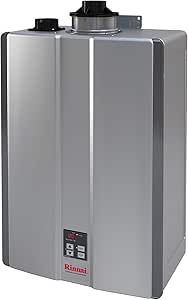 | Best for Whole-Home Efficiency and High Flow | Flow Rate: 9 GPM | Fuel Type: Natural Gas | Energy Efficiency: 0.97 EF | VIEW ON AMAZON | See Our Full Breakdown |
| tankless water heater with built in recirculation | Flow Rate |
|---|---|
| Rheem Prestige Condensing Tank | 11.0 GPM |
| Rinnai RXP160iN Condensing Sma | 9 GPM |
| Rinnai RE199iN Non-Condensing | 9.8 GPM |
| Rheem IKONIC 11.2 GPM Natural | 11.2 GPM |
| GASLAND Gasmart E 199,000 BTU | 7.6 GPM |
| Rheem IKONIC 11.2 GPM Liquid P | 11.2 GPM |
| APUS Propane Tankless Water He | 6.8 GPM |
| GASLAND Gasmart C Propane Gas | 5 GPM |
| Rinnai RU160iN Condensing Tank | 9 GPM |
More Details on Our Top Picks
Rheem Prestige Condensing Tankless Gas Water Heater, 11.0 GPM, Indoor Natural Gas, RTGH-RH11DVLN
This Rheem model stands out for combining high energy efficiency with a space-saving form factor, making it an excellent choice for homeowners replacing traditional tank heaters. Its auto-learn programming helps optimize hot water delivery, while leak detection adds safety. Compared with the Rheem IKONIC, it offers a slightly lower flow rate but excels in safety features and space-saving design. However, it requires proper natural gas hookup and professional installation, which can add complexity. This pick makes the most sense for those prioritizing energy savings and minimal space usage, willing to invest in proper setup.
Pros:- High energy efficiency reduces operating costs
- Space-saving compact design ideal for tight spaces
- Auto-learn programming optimizes hot water delivery
- Leak detection enhances safety
Cons:- Requires natural gas supply and professional installation
- Setup can be complex for inexperienced users
Best for: Homeowners looking to upgrade to an efficient, space-saving gas tankless heater with safety features.
Not ideal for: DIYers or those without access to natural gas supply, as installation complexity may be a barrier.
- Flow Rate:11.0 GPM
- Fuel Type:Natural Gas
- Installation:Indoor
- Features:Auto-Learn Programming, Water & Gas Leak Detection
Our verdict“This model is best suited for homeowners seeking a reliable, efficient, and space-conscious gas tankless water heater with advanced safety features.”
Rinnai RXP160iN Condensing Smart Sense Tankless Water Heater
The Rinnai RXP160iN excels in offering flexible installation options, supporting both indoor and outdoor setups, which makes it ideal for varied home layouts. Its high flow rate of 9 GPM supports multiple fixtures, and the WiFi control, compatible with other smart home devices, adds convenience. Compared with the Rheem RTGH-RH11DVLN, it offers slightly lower flow but gains in smart features and versatility. The need for a vent cap for outdoor use and the separate WiFi module can introduce additional costs and setup steps. This model is perfect for tech-savvy users wanting remote control and flexible placement.
Pros:- Supports indoor and outdoor installation
- High flow rate supports multiple fixtures
- WiFi control for remote operation
- Smart technology improves recirculation efficiency
Cons:- WiFi module sold separately, increasing cost
- Requires professional installation for proper venting
Best for: Tech-oriented homeowners seeking a smart, versatile tankless heater capable of outdoor or indoor use.
Not ideal for: Users seeking the highest possible flow rate or those uncomfortable with installing WiFi modules and venting components.
- Flow Rate:9 GPM
- Fuel Type:Propane or Natural Gas
- Installation:Indoor or outdoor
- Energy Efficiency:UEF .97
Our verdict“Ideal for users who want a compact, smart-enabled heater with flexible installation options and decent flow capacity.”
Rinnai RE199iN Non-Condensing Natural Gas Tankless Water Heater
Compared with the condensing Rinnai RXP160iN, the RE199iN offers a slightly higher flow rate of 9.8 GPM, making it better suited for larger households. Its industry-leading 15-year warranty on the heat exchanger supports long-term reliability. The unit’s diagnostic features facilitate maintenance, and its space-efficient wall-mounted design fits well in tight spaces. However, it requires professional installation and venting, which can add to upfront costs. WiFi monitoring is an option but needs an additional module. This model makes sense for those prioritizing durability and easy maintenance over smart features.
Pros:- Supports multiple fixtures simultaneously
- Long 15-year warranty on heat exchanger
- Compact, wall-mounted design
- Diagnostic features simplify maintenance
Cons:- Requires professional installation and venting
- WiFi monitoring needs a separate module
Best for: Households needing a durable, long-lasting heater with support for multiple fixtures and easy diagnostics.
Not ideal for: DIY installers or users seeking integrated smart controls without extra purchases.
- Flow Rate:9.8 GPM
- BTU:199,000
- Warranty:15-year on heat exchanger
- Installation:Indoor, wall-mounted
Our verdict“This heater is best for homeowners who prioritize durability and easy maintenance over smart features and require high flow capacity.”
Rheem IKONIC 11.2 GPM Natural Gas Tankless Water Heater Indoor
This Rheem model offers a higher flow rate of 11.2 GPM, making it suitable for larger households or high-demand scenarios. Its Wi-Fi connectivity supports remote control and monitoring, and the recirculation feature helps reduce wait times for hot water. Compared with the GASLAND Gasmart E, it provides more capacity and a more refined control experience but comes at a higher price point. Proper venting and installation are essential, and the upfront cost can be significant. This makes it a solid choice for those wanting continuous hot water with convenience features, and willing to invest in installation.
Pros:- Supports multiple simultaneous uses
- Wi-Fi control for remote operation
- Recirculation feature reduces wait times
- High flow rate supports busy households
Cons:- Requires proper venting and installation space
- Potentially higher initial cost
Best for: Large households or users needing continuous hot water with remote control capabilities.
Not ideal for: Small apartments or budget-conscious buyers who don’t need high flow capacity or smart features.
- Flow Rate:11.2 GPM
- BTUs:199,900
- Features:Wi-Fi, Recirculation
- Efficiency:Super High Efficiency
Our verdict“Best suited for large households needing high flow capacity and remote control features, with the willingness to handle more complex installation.”
GASLAND Gasmart E 199,000 BTU Tankless Water Heater, Up to 7.6 GPM, CSA Certified, Indoor Natural Gas Installation
The GASLAND Gasmart E offers a reliable 7.6 GPM flow rate, making it suitable for smaller households or individual use. Its compact design and CSA certification provide peace of mind and ease of installation. Unlike higher-end models, it doesn’t feature Wi-Fi or recirculation, limiting convenience but keeping costs low. Compared with the Rheem IKONIC, it’s less feature-rich but more affordable and easier to install for those with a strict budget. It requires a natural gas supply and proper venting, which adds some installation considerations. This model fits buyers looking for dependable hot water without extra bells and whistles.
Pros:- Provides reliable hot water on demand
- Compact and easy to install
- CSA certified for safety
- Energy-efficient and space-saving
Cons:- No recirculation or smart features
- Limited flow rate for larger households
Best for: Small households or individuals needing straightforward, reliable hot water at an affordable price.
Not ideal for: Large families or users requiring smart controls, recirculation, or the highest flow rates.
- BTU:199,000
- Flow Rate:7.6 GPM
- Certification:CSA
- Installation Type:Indoor
Our verdict“A practical, budget-friendly option for small households seeking dependable hot water without advanced features.”
Rheem IKONIC 11.2 GPM Liquid Propane Tankless Water Heater Indoor
The Rheem IKONIC stands out for its impressive flow rate of 11.2 GPM, making it ideal for large households that need continuous hot water for multiple fixtures simultaneously. Compared to the Rinnai RU160iN, which offers a slightly lower flow rate, the IKONIC’s eco-friendly condensing technology delivers higher efficiency and lower emissions, though it comes with a higher upfront cost. Its Wi-Fi connectivity enables remote monitoring and control, adding convenience but also dependency on a stable internet connection. The model’s flexible indoor installation supports various setups, but requires ample space and professional setup to optimize performance. While the advanced features justify its premium price, those with smaller budgets or simpler needs might find it unnecessary.
Pros:- Exceptional flow rate suitable for multiple simultaneous uses
- Wi-Fi connectivity for remote control and monitoring
- High efficiency with condensing, eco-friendly operation
Cons:- Higher initial cost due to advanced features
- Requires sufficient installation space and proper setup
- Dependent on Wi-Fi for remote functions
Best for: Large families or busy households that need high flow capacity and remote control features
Not ideal for: Small apartments or budget-conscious buyers who prioritize affordability over high-tech features
- Flow Rate:11.2 GPM
- Fuel Type:Liquid Propane
- BTUs:199,900
- Efficiency:Super High Efficiency
- Technology:Condensing, Ultra-Low NOx
- Wi-Fi Enabled:Yes
Our verdict“This pick is best for large households seeking high capacity, smart features, and energy efficiency, accepting a higher upfront investment.”
APUS Propane Tankless Water Heater, 140,000 BTU, Up to 6.8 GPM, Indoor
The APUS propane heater is a strong contender for those needing reliable hot water with a flow rate of up to 6.8 GPM, supporting two fixtures comfortably at once. Unlike the GASLAND Gasmart C, which offers a slightly lower BTU but similar flow, the APUS provides a more balanced combination of power and efficiency, especially with its smart Wi-Fi control via the Tuya app. Its safety features like freeze and overheat protection make it suitable for various climates, though it’s limited to indoor use and may require professional installation for optimal setup. This model suits smaller households or those with moderate hot water demands, but larger households might find its capacity insufficient.
Pros:- Supports multiple fixtures with consistent temperature
- Smart Wi-Fi remote control for convenience
- Balanced power output with safety features
Cons:- Limited to indoor installation only
- Installation complexity may require professional help
- Flow rate might be insufficient for very high demands
Best for: Small to medium households needing reliable hot water with smart features and moderate flow
Not ideal for: Large families or homes with high simultaneous hot water needs, where capacity could fall short
- Flow Rate:6.8 GPM
- BTU:140,000
- Maximum Temperature:140°F
- Wattage:44 watts
- Voltage:120 volts
- Smart Control:WiFi via Tuya APP
Our verdict“Ideal for small to mid-sized homes seeking smart, reliable hot water without the high cost of larger units.”
GASLAND Gasmart C Propane Gas Tankless Water Heater, 5 GPM, 113,000 BTU, Indoor
The GASLAND Gasmart C offers a solid 5 GPM flow rate, making it suitable for smaller households or as a supplement to existing systems. Its compact, wall-mounted design is advantageous for limited spaces, and the modern touch screen simplifies operation. Compared to the Rinnai RU160iN, which provides a higher flow rate, the GASLAND unit emphasizes safety and durability with features like freeze protection and a flame sensor. Installation demands a well-ventilated area and professional setup, especially with its 3-inch exhaust pipe requirement. While it excels in safety and space efficiency, it may fall short for larger households needing higher flow rates, and venting complexity could be a hurdle for some.
Pros:- Compact, space-saving wall-mounted design
- Modern touch screen control for ease of use
- Robust safety features including freeze and flame protection
Cons:- Requires professional installation and proper venting
- Limited flow rate for larger households
- Not suitable for high-altitude locations above 2000 feet
Best for: Small homes or as a secondary unit where space-saving and safety are priorities
Not ideal for: Large households or those requiring high flow rates for multiple appliances simultaneously
- Flow Rate:5 GPM
- BTU:113,000
- Voltage:120 Volt
- Exhaust Pipe Diameter:3 inches
- Safety Certifications:CSA
- Material:Oxygen-Free Copper
Our verdict“A practical choice for small spaces prioritizing safety and modern controls, but not meant for high-demand households.”
Rinnai RU160iN Condensing Tankless Hot Water Heater, 9 GPM, Natural Gas
The Rinnai RU160iN is designed to supply up to 9 GPM, supporting multiple appliances simultaneously with high efficiency and durability. Its ENERGY STAR qualification and 0.97 EF translate into lower operating costs over time, especially compared with the propane options, which typically have higher fuel costs. The advanced recirculation technology ensures quick hot water delivery, reducing wait times. While installation is best handled by professionals, its compact size fits well into indoor spaces. The Wi-Fi monitoring, though sold separately, adds a layer of convenience for proactive system management. This model appeals to homeowners who prioritize efficiency, longevity, and reliable performance for large households.
Pros:- High flow rate for multiple appliances
- Energy-efficient, ENERGY STAR qualified
- Long warranty on heat exchanger
Cons:- Requires professional installation
- Wi-Fi monitoring sold separately
- Higher initial cost compared to less advanced models
Best for: Large households or busy homes requiring high flow and energy-efficient operation
Not ideal for: Small apartments or users who prefer standalone units without Wi-Fi features or higher upfront costs
- Flow Rate:9 GPM
- Fuel Type:Natural Gas
- Energy Efficiency:0.97 EF
- Warranty:15-year heat exchanger
- Installation:Indoor
- Wi-Fi Monitoring:Optional
Our verdict“Best suited for those seeking a high-capacity, energy-efficient solution for whole-home hot water needs, with an emphasis on durability.”

How We Picked
These products were selected based on a combination of performance, build quality, ease of installation, and smart features. Priority was given to units that integrate recirculation systems effectively, providing fast hot water delivery. We also considered energy efficiency, user reviews, and manufacturer reputation to ensure reliability. The ranking reflects a balance between value, functionality, and suitability for different household sizes and budgets, aiming to help buyers find the best fit for their needs.Factors to Consider When Choosing Tankless Water Heater With Built In Recirculation
Choosing a tankless water heater with built-in recirculation involves understanding several key factors that influence performance, cost, and convenience. Beyond basic capacity, it’s essential to consider how the recirculation system is integrated, whether it suits your home’s plumbing, and how much you’re willing to spend. This guide highlights the most important considerations to help you make an informed decision.Flow Rate and Capacity
The flow rate, measured in gallons per minute (GPM), determines how many fixtures can run simultaneously. Larger households or homes with multiple bathrooms typically need higher GPM ratings to ensure everyone gets hot water promptly. Failing to match the unit’s capacity to your household size can lead to inadequate hot water or increased energy use. Balance your household’s needs with the unit’s maximum flow to avoid overspending on unnecessary capacity or settling for insufficient performance.
Recirculation System Integration
Not all built-in recirculation systems are created equal. Some units include smart recirculation controls that activate only when hot water is needed, saving energy. Others may require dedicated plumbing loops or additional pumps, increasing installation complexity and cost. Consider whether your home’s plumbing can accommodate the system and if you prefer manual control or automatic, sensor-based recirculation. Proper integration is key to maximizing convenience without excessive energy waste.
Energy Efficiency and Technology
Condensing units tend to offer higher efficiency by extracting more heat from exhaust gases, reducing operating costs over time. However, they are often more expensive upfront. Non-condensing models may be simpler and cheaper but can waste more energy. Look for units with good Energy Star ratings or similar certifications, especially if long-term savings are a priority. Keep in mind that smart features, like app control or auto shut-off, can further improve efficiency and user experience.
Installation and Maintenance
Proper installation is vital for optimal performance and safety. Units with integrated recirculation systems may require professional plumbing and electrical work, especially for complex recirculation loops. Additionally, consider maintenance needs—some models have self-diagnostic features or easier access for servicing. Budgeting for installation and ongoing upkeep ensures the unit performs reliably and lasts longer, preventing costly surprises down the road.
Cost and Value
Initial purchase price varies widely, with premium models offering advanced features and higher GPM ratings. While spending more can mean better efficiency and durability, it’s important to evaluate whether the added features align with your household’s needs. Sometimes, a mid-range model provides the best value by balancing upfront costs with long-term savings. Be cautious of units that are cheap initially but expensive to operate or maintain.
Frequently Asked Questions
Can I install a tankless water heater with built-in recirculation myself?
While some experienced DIYers might handle basic installations, most homeowners will find that installing a unit with built-in recirculation involves complex plumbing and electrical work. Properly integrating the recirculation loop is critical for performance and safety, making professional installation a wise choice for most cases. Incorrect installation can lead to leaks, inefficiency, or even damage, so consulting a licensed plumber is highly recommended to ensure optimal operation.
How does built-in recirculation affect energy consumption?
Built-in recirculation systems are designed to reduce water waste by delivering hot water faster. However, they can increase energy use if not managed properly, since the recirculation pump runs to keep water hot in the pipes. Modern units incorporate smart controls or timer-based systems to minimize unnecessary pump operation, balancing convenience with efficiency. Proper setup and usage habits can help you enjoy quick hot water without significantly increasing your energy bills.
Is a higher GPM rating always better for my home?
Not necessarily. A higher GPM rating ensures more hot water can be supplied simultaneously, which is beneficial for larger households. However, if your household uses only a few fixtures at the same time, overspending on a high-capacity unit may not be cost-effective. Conversely, a unit with a lower GPM might struggle during peak usage, leading to cold water. Match the unit’s capacity to your household’s actual needs to avoid unnecessary expense or performance issues.
What are the main differences between condensing and non-condensing units?
Condensing units are more efficient because they reclaim heat from exhaust gases, reducing energy waste and lowering operating costs over time. They typically cost more upfront but can pay for themselves through energy savings. Non-condensing models are simpler and less expensive initially but tend to consume more energy, which can add to long-term costs. Your choice depends on your budget, energy-saving priorities, and the specific demands of your household.
How important is smart technology in a tankless water heater with recirculation?
Smart technology can significantly enhance convenience and efficiency by allowing remote control, scheduling, and automatic recirculation adjustments. These features help reduce water and energy waste while ensuring hot water is available when needed. However, they may add cost and complexity, and could require ongoing software updates or troubleshooting. If you value modern convenience and long-term savings, a smart-enabled model is worth considering, but for straightforward needs, simpler units may suffice.
Conclusion
For most households, the Rinnai RXP160iN offers the best combination of smart features, efficient recirculation, and reliable performance—ideal for those seeking a premium experience. The Rheem Prestige RTGH-RH11DVLN represents the best overall choice, especially for larger families needing high flow rates and durability. Budget-conscious buyers will find the GASLAND Gasmart E provides good value despite fewer advanced features. Beginners or those installing in smaller homes might prefer simpler models like the GASLAND Gasmart C. Ultimately, selecting the right unit depends on household size, budget, and desired convenience features.Fall yard work Picks
leaf blowers
As an affiliate, we earn on qualifying purchases.