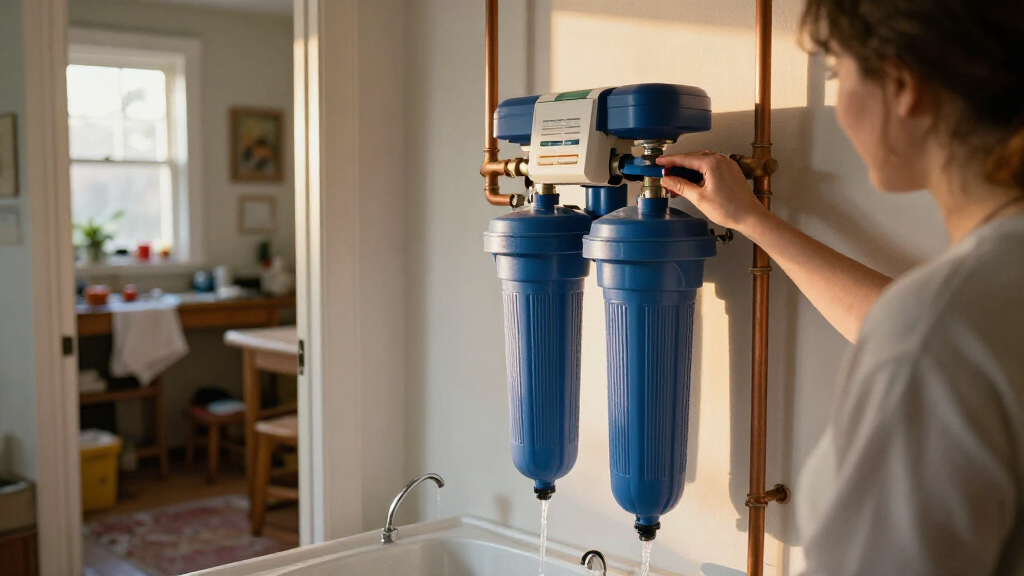

For most households comparing whole house water filter systems, I would start with the iSpring WGB32B for its straightforward three-stage approach to common sediment and taste concerns. The PRO+AQUA Elite 5-Stage bundle is a stronger match for well owners who also need softening, while the HQUA WF3-03 adds UV treatment for buyers focused on microbial risks. The main tradeoffs are treatment scope, flow capacity, installation complexity, and ongoing filter changes; no single system addresses every water problem. I compare all 14 options by fit and practical compromises below, so continue reading to find the right setup for your water source and household.

Get home appliances delivered free with Prime
- Fast, free delivery on millions of items
- Prime Video, Amazon Music and more included
- Member-only deals all year
Complete the kit


Key Takeaways
- The best fit depends on the water problem: the PRO+AQUA softener-and-filter bundle targets hardness alongside filtration, while standard carbon and sediment systems do not soften water.
- Three-stage designs are the main pattern in this lineup: iSpring WGB32B, HQUA WF3-01, and Express Water offer layered treatment, but cartridge type and maintenance matter more than stage count alone.
- UV is a distinct treatment choice, not a substitute for filtration: HQUA WF3-03 adds UV to its filtration setup for buyers with microbial concerns, but it brings power and maintenance requirements.
- Compact or simpler systems trade scope for easier ownership: GE GXWH20T and iSpring WGB21B may suit narrower needs, but they do not match the broader treatment stages of larger configurations.
- Several products address specialized ownership priorities: the iSpring WGB32BM adds a mineral-reduction focus, while the VEVOR 4.5 × 20-inch system emphasizes larger-format housings that require space and compatible replacement filters.
| PRO+AQUA Elite 5-Stage Whole-House Water Softener and Filter Bundle for Well Water |  | Best for Well Water and Hardness | Filtration stages: 5 | Water softener capacity: 80,000 grains | Maximum flow rate: 10.31 gpm | VIEW LATEST PRICE | See Our Full Breakdown |
| HQUA WF3-01 3-Stage Whole House Water Filtration System | 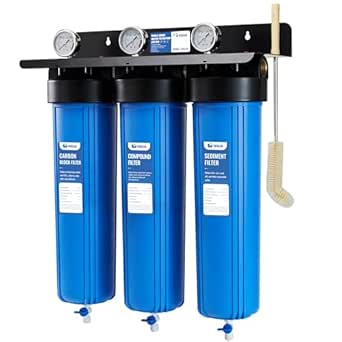 | Best for Filter-Maintenance Monitoring | Filtration stages: 3 | Filter size: 20 × 5.5 in | Maximum flow rate: 15 gpm | VIEW LATEST PRICE | See Our Full Breakdown |
| iSpring WGB32B 3-Stage Whole House Water Filtration System |  | Best DIY Filter-Only Choice | Filtration stages: 3 | Filter size: 20 × 4.5 in | Maximum flow rate: 15 gpm | VIEW LATEST PRICE | See Our Full Breakdown |
| PRO+AQUA Elite Series GEN2 PRO-100-E 3-Stage Whole-House Water Filtration System |  | Best for City or Well Water Flexibility | Filtration stages: 3 | Recommended household size: 1–3 bathrooms | Maximum flow rate: 15 gpm | VIEW LATEST PRICE | See Our Full Breakdown |
| Waterdrop WHF3T-PG 3-Stage Whole House Water Filter System, 5 Micron |  | Best for Higher-TDS Source Flexibility | Filtration stages: Listed as 3-stage; content also describes an 11-stage process | Maximum flow rate: 15 gpm | Filter life: Up to 12 months, depending on water quality | VIEW LATEST PRICE | See Our Full Breakdown |
| HQUA WF3-03 3-Stage Whole-House Water Filtration System with UV Filter | 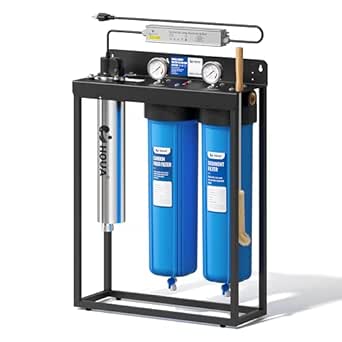 | Best for UV Treatment | Filtration stages: 3 | UV filter: 55W; 12 GPM | Maximum flow rate: 15 GPM | VIEW LATEST PRICE | See Our Full Breakdown |
| Express Water Ultimate Protection 3-Stage Whole House Water Filter System |  | Best for Scale and Heavy-Metal Filtration | Filtration stages: 3 | Purification methods: Activated carbon, KDF, polyphosphate | Maximum flow rate: 17 GPM | VIEW LATEST PRICE | See Our Full Breakdown |
| GE GXWH20T Whole House Water Filtration System |  | Best for Sediment Pre-Filtration | Model: GXWH20T | Connection size: 3/4 inch | Compatible filters: FXWTC, FXPWC, FXWSC, FXUSC | VIEW LATEST PRICE | See Our Full Breakdown |
| 3-Stage Whole House Water Filter System with 9 Filters |  | Best for Included Replacement Filters | Filtration stages: 3 | Included filters: 9 total: 3 PP sediment, 3 GAC carbon, 3 CTO carbon block | Maximum flow rate: 15 GPM | VIEW LATEST PRICE | See Our Full Breakdown |
| Whole House Water Softener and 3-Stage Filter System, 0.5 Micron, 3 Filter Sets |  | Best for Cartridge-Based Hard-Water Treatment | Filtration stages: 3 | Filter pore size: 0.5 micron | Maximum flow rate: 10 GPM | VIEW LATEST PRICE | See Our Full Breakdown |
| iSpring WGB21B 2-Stage Whole House Water Filtration System, 50000 Gallons | 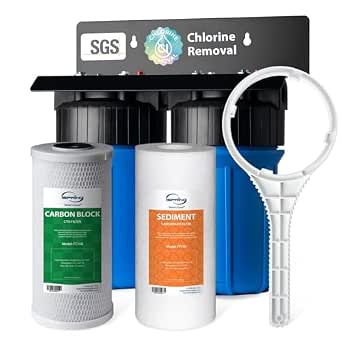 | Best Simple Chlorine-and-Odor Pick | Filtration stages: 2 | Filter types: 5-micron sediment filter and CTO carbon block | Maximum flow rate: 15 GPM | VIEW LATEST PRICE | See Our Full Breakdown |
| iSpring WGB32BM 3-Stage Whole House Water Filter System |  | Best for Iron and Manganese | Filtration stages: 3 | Iron reduction: Up to 3.0 ppm | Manganese reduction: Up to 1.0 ppm | VIEW LATEST PRICE | See Our Full Breakdown |
| Express Water Ultimate Protection 3-Stage Whole House Water Filter System |  | Best for Maintenance Monitoring | Filtration stages: 3 | Reusable sediment filter: 50 microns | Maximum capacity: 100,000 gallons | VIEW LATEST PRICE | See Our Full Breakdown |
| VEVOR 3-Stage Whole House Water Filter System, 4.5 × 20 in |  | Best for Flexible Installation | Filtration stages: 3: sediment, KDF, and activated carbon (CTO) | Cartridge size: 4.5 × 20 in. | Flow rate: 15 GPM | VIEW LATEST PRICE | See Our Full Breakdown |
| whole house water filter system | Filtration stages | Maximum flow rate | Dimensions and weight | Capacity |
|---|---|---|---|---|
| PRO+AQUA Elite 5-Stage Whole-H | 5 | 10.31 gpm | — | — |
| HQUA WF3-01 3-Stage Whole Hous | 3 | 15 gpm | — | 100,000 gallons |
| iSpring WGB32B 3-Stage Whole H | 3 | 15 gpm | 24.5 × 8 × 28 in; 45 lb | 100,000 gallons |
| PRO+AQUA Elite Series GEN2 PRO | 3 | 15 gpm | 22.98 × 27 × 8 in; 50 lb | 100,000 gallons |
| Waterdrop WHF3T-PG 3-Stage Who | Listed as 3-stage; content also describes an 11-stage process | 15 gpm | 22.9 × 8.46 × 26.1 in; 19.1 kg | 100,000 gallons |
| HQUA WF3-03 3-Stage Whole-Hous | 3 | 15 GPM | 22 × 9.5 × 28 inches; 44 pounds | 100,000 gallons |
| Express Water Ultimate Protect | 3 | 17 GPM | 29 × 8.5 × 30 inches; 63 pounds | 100,000 gallons |
| GE GXWH20T Whole House Water F | — | — | — | — |
| 3-Stage Whole House Water Filt | 3 | 15 GPM | 14 × 13 × 10 inches; 12 pounds | 10,000 gallons |
| Whole House Water Softener and | 3 | 10 GPM | — | 10,000 gallons |
| iSpring WGB21B 2-Stage Whole H | 2 | 15 GPM | — | — |
| iSpring WGB32BM 3-Stage Whole | 3 | 15 GPM | 24.5 × 8 × 28 in.; 55 lb | — |
| Express Water Ultimate Protect | 3 | 17 GPM | 29 × 8.5 × 30 in.; 66 lb | — |
| VEVOR 3-Stage Whole House Wate | 3: sediment, KDF, and activated carbon (CTO) | — | 22.6 × 9.8 × 31.5 in.; 48.9 lb | — |
More Details on Our Top Picks
PRO+AQUA Elite 5-Stage Whole-House Water Softener and Filter Bundle for Well Water
For homes on a private well dealing with both hardness and unwanted sediment, this bundle goes further than the filter-only systems in this lineup. It combines a three-stage filter, well-water treatment, and an 80,000-grain softener, targeting issues such as iron, manganese, chlorine, and odors while also reducing hardness. Automatic regeneration cuts down on routine manual work, though the system still needs room for its substantial equipment and a suitable installation setup.
Compared with the iSpring WGB32B, which focuses on filtration and retains minerals, the PRO+AQUA bundle addresses scale-forming hardness too. That broader treatment comes with a 325-pound weight and more complex installation. Some contaminant reduction depends on the well-water conditions, so this is a stronger fit for buyers who can match the system to a water test than for those seeking a simple city-water filter.
Pros:- Combines filtration, well-water treatment, and water softening in one bundle.
- Targets hardness along with iron, manganese, chlorine, sediment, and odors.
- Automatic regeneration reduces routine hands-on operation.
- Includes free lifetime technical support.
Cons:- At 325 pounds, it is much heavier and more demanding to install than the filter-only systems here.
- Its size and multiple components require substantial installation space.
- Some contaminant reduction claims depend on the home’s well-water conditions.
Best for: Owners of small-to-medium homes on well water who need both hardness control and filtration for issues such as iron or manganese.
Not ideal for: City-water households that only need basic sediment and chlorine filtration, or buyers without space and installation support for a 325-pound system.
- Filtration stages:5
- Water softener capacity:80,000 grains
- Maximum flow rate:10.31 gpm
- Dimensions:13 × 12.99 × 57 in
- Weight:325 lb
- Intended household size:Small to medium households; listed for 3–4 bathrooms
- Included components:PRO-100-E, PRO-WELL-1E, PRO-S-80E
Our verdict“Choose this bundle when well-water hardness and multiple contaminants call for more than the filtration-only coverage of the iSpring WGB32B.”
HQUA WF3-01 3-Stage Whole House Water Filtration System
The HQUA WF3-01 is a practical pick for homeowners who want visible reminders of system condition rather than relying only on a calendar. Its pressure gauges help track changes across the filter housings, while the 180-day timers make cartridge service easier to plan. Three stages—sediment, carbon block, and GAC+KDF—are intended to reduce sediment, chlorine, odors, and some heavy metals throughout the house.
Like the iSpring WGB32B, it supports a stated 15-gpm flow rate and 100,000-gallon capacity, but the HQUA package includes more maintenance and installation accessories. The tradeoff is a sizable 31 × 23 × 8-inch assembly, and cartridges still need periodic replacement. Its listing describes installation as under-sink despite its whole-house positioning, so buyers should confirm the intended plumbing configuration before purchase.
Pros:- Three stages target sediment, chlorine, odors, and several heavy metals.
- Pressure gauges provide a visual way to monitor filter conditions.
- 180-day timers help prompt scheduled cartridge maintenance.
- Includes service valves, a housing brush, and adaptable fittings.
Cons:- The 31 × 23 × 8-inch assembly needs substantial mounting and service clearance.
- Replacement cartridges require ongoing maintenance.
- The product data lists under-sink installation, which may need clarification for a whole-house setup.
Best for: Homeowners seeking a whole-house filter with gauges, timed maintenance reminders, and included service accessories.
Not ideal for: Buyers with limited utility-room space, or anyone who needs a compact system or wants to avoid recurring cartridge changes.
- Filtration stages:3
- Filter size:20 × 5.5 in
- Maximum flow rate:15 gpm
- Capacity:100,000 gallons
- Operating temperature:40–125 °F
- Maximum supported TDS:500 ppm
- Overall dimensions and weight:31 × 23 × 8 in; 44 lb
- Included accessories:Pressure gauges, 180-day timers, pressure relief and drain valves, housing brush, pipe fittings, maintenance card
Our verdict“Pick the HQUA WF3-01 over the simpler iSpring WGB32B if included maintenance indicators and service accessories are a priority.”
iSpring WGB32B 3-Stage Whole House Water Filtration System
The iSpring WGB32B makes the most sense for buyers who want straightforward whole-house filtration without adding a softener or powered treatment. A 5-micron sediment filter works alongside two coconut-shell carbon block filters to address sediment, rust, chlorine, tastes, and odors. Its stated 15-gpm flow rate is suited to households that want filtration at multiple fixtures without giving up a whole-house approach.
Compared with the PRO+AQUA Elite bundle, this is a simpler and lighter filter-only system, but it does not treat hardness or remove total dissolved solids. The included wrench and manual support DIY installation, and the stated 100,000-gallon capacity gives buyers a clear planning reference. Still, the manufacturer recommends annual filter replacement, and actual service needs can depend on incoming water quality.
Pros:- Three-stage design targets chlorine, sediment, rust, tastes, and odors.
- Supports a maximum flow rate of 15 gpm.
- DIY-oriented package includes a housing wrench and user manual.
- Designed to retain healthy minerals rather than remove total dissolved solids.
Cons:- Does not remove total dissolved solids or soften water.
- Filters are recommended for replacement about once a year.
- Its 24.5 × 8 × 28-inch size requires a suitable installation area.
Best for: DIY-minded homeowners who want whole-house sediment and chlorine filtration while retaining healthy minerals in the water.
Not ideal for: Households with hard water, high TDS concerns, or well-water problems that call for dedicated softening or specialized treatment.
- Filtration stages:3
- Filter size:20 × 4.5 in
- Maximum flow rate:15 gpm
- Capacity:100,000 gallons
- Filter life:About 1 year
- Inlet/outlet:1-inch NPT
- Dimensions and weight:24.5 × 8 × 28 in; 45 lb
- Warranty:1-year limited
Our verdict“Choose the WGB32B for uncomplicated DIY whole-house filtration, but pick the PRO+AQUA bundle if hardness treatment is also needed.”
PRO+AQUA Elite Series GEN2 PRO-100-E 3-Stage Whole-House Water Filtration System
This PRO+AQUA system suits households that want one filter setup for either city or well water, without the added softener hardware found in the brand’s Elite bundle. Its three stages are designed to reduce sediment, dissolved metals, chlorine, VOCs, pesticides, and odors, while pressure gauges help monitor the system. The stated 100,000-gallon capacity and 15-gpm maximum flow rate place it in the same broad performance class as the iSpring and Waterdrop options.
Its main distinction is low operating complexity: the description says it needs no electricity, backwashing, or draining. That makes it less involved than the bundled PRO+AQUA softener system, but it will not address hardness through softening. Filter replacement is recommended every six months, and the product data conflicts on power—listing electric power in the specs while describing operation without electricity—so buyers should confirm that detail before installation.
Pros:- Designed for both city and well-water supplies.
- Targets sediment, metals, chlorine, VOCs, pesticides, and odors.
- Pressure gauges help track system conditions.
- Description specifies no backwashing, draining, or electricity requirement.
Cons:- Filter replacement is recommended every six months.
- The 22.98 × 27 × 8-inch unit needs dedicated installation space.
- Product data conflicts on whether the system requires electricity.
Best for: Owners of one-to-three-bathroom homes on city or well water who want multi-contaminant filtration without backwashing or regeneration.
Not ideal for: Households seeking water softening, buyers with little filter-service access, or anyone who needs the power requirements clearly established before purchase.
- Filtration stages:3
- Recommended household size:1–3 bathrooms
- Maximum flow rate:15 gpm
- Capacity:100,000 gallons
- Recommended filter cycle:6 months
- Operating pressure:Up to 80 psi
- Maximum supported TDS:500 ppm
- Dimensions and weight:22.98 × 27 × 8 in; 50 lb
- Port size and warranty:1 inch; 5 years
Our verdict“Choose this PRO+AQUA model for broad filtration with minimal operating steps, but select the Elite bundle if water softening is also required.”
Waterdrop WHF3T-PG 3-Stage Whole House Water Filter System, 5 Micron
The Waterdrop WHF3T-PG stands out for its listed 1,000-ppm maximum supported TDS, higher than the 500-ppm limits listed for the HQUA WF3-01 and PRO+AQUA PRO-100-E. That specification does not mean the system removes TDS; it indicates a higher stated input limit. Its three-stage setup uses PP filters, KDF media, activated carbon, and carbon fiber to help reduce sediment, chlorine, rust, heavy metals, and odors, and it is described for both well and municipal water.
Like the iSpring WGB32B, it offers a 15-gpm maximum flow and 100,000-gallon stated capacity, with filter life up to 12 months depending on water quality. The Waterdrop includes three cartridges and mounting accessories, but its actual service interval can vary. It also must not be used below 40°F, and the listing’s descriptions of three stages and an 11-stage process are inconsistent.
Pros:- Listed maximum supported TDS is 1,000 ppm.
- Designed for municipal and well-water sources.
- Helps reduce sediment, chlorine, rust, heavy metals, and odors.
- Includes three cartridges, a wrench, and expansion screws.
Cons:- A higher supported TDS limit does not mean the system removes TDS.
- Filter life varies with source-water quality.
- The product data describes both a three-stage system and an 11-stage process.
Best for: Homeowners on municipal or well water who need a filter system with a higher listed maximum supported TDS and a stated flow rate of 15 gpm.
Not ideal for: Buyers who expect TDS reduction, need dependable use below 40°F, or want an unambiguous account of the filtration-stage configuration.
- Filtration stages:Listed as 3-stage; content also describes an 11-stage process
- Maximum flow rate:15 gpm
- Filter life:Up to 12 months, depending on water quality
- Capacity:100,000 gallons
- Maximum supported TDS:1,000 ppm
- Working temperature:40–100°F
- Inlet/outlet:1 inch
- Dimensions and weight:22.9 × 8.46 × 26.1 in; 19.1 kg
- Certification:IAPMO R&T certified to NSF/ANSI/CAN 372 for lead-free materials
Our verdict“Pick the Waterdrop over the PRO+AQUA PRO-100-E if its higher listed TDS support fits your source water, but not if you need TDS removal.”
HQUA WF3-03 3-Stage Whole-House Water Filtration System with UV Filter
The HQUA WF3-03 stands apart from the carbon-and-sediment systems in this group by adding a 55W UV stage, aimed at reducing microorganisms as well as addressing contaminants such as chlorine, PFAS, and heavy metals. Its stated maximum flow of 15 GPM suits many whole-home setups, while three pressure gauges and filter-life timers help make maintenance easier to track. Compared with the Express Water Ultimate Protection, which focuses on carbon, KDF, and scale control, this HQUA is the more relevant choice when UV treatment is a priority. The tradeoff is a larger, 44-pound unit that needs room near the plumbing, plus periodic cartridge care. Its stated 100,000-gallon capacity does not remove the need to follow replacement guidance or confirm contaminant claims for your water.
Pros:- Combines sediment, carbon, and a 55W UV stage
- Freestanding or wall-mounted installation offers placement flexibility
- Three pressure gauges and timers help track system condition and upkeep
- Maximum flow rate is listed at 15 GPM
Cons:- The 22 × 9.5 × 28-inch unit requires substantial installation space
- Filter cartridges need periodic replacement
- UV treatment adds equipment beyond a basic sediment-and-carbon setup
Best for: Households seeking whole-home UV treatment alongside sediment and carbon filtration, with room for a larger installation.
Not ideal for: Buyers who need a compact, simple sediment prefilter or who do not want to accommodate UV equipment and ongoing cartridge maintenance.
- Filtration stages:3
- UV filter:55W; 12 GPM
- Maximum flow rate:15 GPM
- Operating pressure:25–116 PSI
- Connections:1-inch FNPT inlet/outlet
- Capacity:100,000 gallons
- Dimensions and weight:22 × 9.5 × 28 inches; 44 pounds
- Installation:Freestanding or wall-mounted
Our verdict“Choose the HQUA WF3-03 if you want UV treatment as part of a high-flow whole-house system and can make room for its larger footprint.”
Express Water Ultimate Protection 3-Stage Whole House Water Filter System
Where the HQUA WF3-03 adds UV treatment, the Express Water Ultimate Protection takes a different route: activated carbon, KDF, and polyphosphate are intended to address chlorine and several heavy metals while helping limit scale buildup. That makes it a stronger fit for households focused on those concerns rather than UV treatment. Its 17 GPM maximum flow is the highest listed among these five products, and the stainless steel stand, pressure gauges, and release buttons make the freestanding setup easier to monitor and service. The tradeoff is substantial size and weight at 63 pounds, along with a stated six-month filter cycle despite its 100,000-gallon capacity. Compared with the small GE GXWH20T, this is a much broader, more involved system—not a basic sediment guard.
Pros:- Uses activated carbon, KDF, and polyphosphate in a three-stage setup
- Designed to reduce chlorine and several named heavy metals
- 17 GPM maximum flow rate is the highest listed in this batch
- Stand, gauges, and pressure release buttons support monitoring and servicing
Cons:- At 63 pounds and 29 × 8.5 × 30 inches, it needs a sturdy, spacious installation area
- Filter life cycle is listed as six months
- Freestanding installation may be less adaptable than a compact in-line housing
Best for: Homeowners who want a freestanding whole-house system targeting chlorine, listed heavy metals, and scale, with a high stated flow rate.
Not ideal for: People with limited utility-room space, buyers needing UV treatment, or households seeking a lightweight sediment-only prefilter.
- Filtration stages:3
- Purification methods:Activated carbon, KDF, polyphosphate
- Maximum flow rate:17 GPM
- Capacity:100,000 gallons
- Filter life cycle:6 months
- Operating pressure:20–80 PSI
- Maximum supported TDS:800 ppm
- Dimensions and weight:29 × 8.5 × 30 inches; 63 pounds
- Installation and material:Freestanding; stainless steel
Our verdict“Pick the Express Water system for a high-flow freestanding setup focused on scale and heavy-metal reduction, provided you have room for its large frame.”
GE GXWH20T Whole House Water Filtration System
The GE GXWH20T is the simplest option here: a whole-house prefilter for sand, sediment, and rust, not a multi-stage system intended to address a broad range of dissolved contaminants. Its clear housing lets you see when debris has collected, and the three-position bypass valve allows cartridge changes without shutting off household water. Unlike the larger HQUA WF3-03 or Express Water system, this GE is light and compact, making it a practical first stage ahead of other treatment equipment. The limitation is equally clear: cartridges are sold separately, and the housing alone does not provide carbon, UV, or softening treatment. A three-month replacement interval also means more frequent filter attention than the six-month cycles listed for some alternatives.
Pros:- Targets sand, sediment, and rust throughout the home
- Clear housing makes collected debris visible
- Three-position bypass valve supports filter changes without shutting off water
- Lightweight housing and included installation kit simplify placement
Cons:- Filter cartridge is not included
- Listed replacement interval is every three months
- Sediment prefiltration alone does not provide the broader treatment offered by HQUA WF3-03
Best for: Homeowners who need a compact whole-house sediment prefilter to protect plumbing or downstream treatment equipment.
Not ideal for: Buyers seeking a complete multi-stage system for chlorine, heavy metals, microorganisms, or hard-water minerals.
- Model:GXWH20T
- Connection size:3/4 inch
- Compatible filters:FXWTC, FXPWC, FXWSC, FXUSC
- Filter replacement interval:Every 3 months
- Material:Plastic
- Weight:3.6 pounds
- Included components:Filtration housing and installation kit
Our verdict“Choose the GE GXWH20T as a straightforward sediment prefilter, not as a stand-alone solution for broad whole-house water treatment.”
3-Stage Whole House Water Filter System with 9 Filters
This three-stage system earns its place through its nine included filters: three each of PP sediment, GAC carbon, and CTO carbon block. That gives buyers replacement cartridges to hand from the outset, unlike the GE GXWH20T, which does not include a filter cartridge. Clear housings make sediment buildup easy to inspect, and dual valves allow service without shutting off the main supply. The stated 15 GPM maximum flow and compatibility with well or city water make it a more complete filtration setup than GE’s sediment-only housing. Still, its stated capacity is 10,000 gallons, far below the 100,000-gallon figures listed for the HQUA and Express Water systems, and it does not reduce TDS. One product-data caveat: the listed installation type says “under sink,” so confirm its intended whole-house plumbing fit before buying.
Pros:- Includes three complete sets of sediment and carbon filters
- Three stages address sediment, chlorine, rust, and odors while preserving minerals
- Clear housings allow visual inspection of trapped debris
- Dual valves support filter changes without shutting off the main water supply
Cons:- Listed capacity is 10,000 gallons, below the HQUA and Express Water systems’ stated capacities
- Does not reduce TDS levels
- Product data lists installation type as under sink, which warrants checking before whole-house use
Best for: Households wanting a three-stage sediment-and-carbon setup with spare filter sets included and a bypass-friendly service arrangement.
Not ideal for: Buyers who need TDS reduction, long stated capacity, or a product with unambiguous whole-house installation specifications.
- Filtration stages:3
- Included filters:9 total: 3 PP sediment, 3 GAC carbon, 3 CTO carbon block
- Maximum flow rate:15 GPM
- Capacity:10,000 gallons
- Filter life cycle:6 months
- Connections:Standard 3/4-inch inlet/outlet
- Dimensions and weight:14 × 13 × 10 inches; 12 pounds
- Compatible water sources:Well water and city water
Our verdict“Consider this system if included replacement filters matter most, but verify the installation configuration and accept its lower stated capacity.”
Whole House Water Softener and 3-Stage Filter System, 0.5 Micron, 3 Filter Sets
This system combines sediment, GAC, and softener cartridges in one whole-house unit, making it the only option in this batch explicitly aimed at hard-water minerals as well as rust, chlorine, and odors. Compared with the 3-Stage Whole House Water Filter System with 9 Filters, it adds a softening stage but has a lower stated maximum flow of 10 GPM. That lower flow may suit a smaller household, while larger homes should check whether it matches simultaneous fixture demand. The 0.5-micron specification and three included filter sets add useful detail, and the bypass valve simplifies maintenance. Its 10,000-gallon capacity and six-month filter cycle call for regular cartridge changes. It also does not reduce TDS, so buyers seeking dissolved-solids reduction need another treatment approach.
Pros:- Includes a softener cartridge alongside sediment and carbon filtration
- Designed to address rust, chlorine, odors, and hard-water minerals
- Bypass valve allows maintenance without shutting off the home’s main supply
- Includes three complete replacement filter sets
Cons:- Maximum flow rate is 10 GPM, below the 15 GPM options in this batch
- Does not reduce total dissolved solids
- Cartridges have a listed six-month life cycle and require periodic replacement
Best for: Households with hard-water concerns that want cartridge-based softening and filtration in one whole-house unit, especially at moderate flow demand.
Not ideal for: Large households needing higher simultaneous flow, or buyers who expect TDS reduction from a whole-house filter.
- Filtration stages:3
- Filter pore size:0.5 micron
- Maximum flow rate:10 GPM
- Capacity:10,000 gallons
- Filter life cycle:6 months
- Port size:3/4-inch brass threaded ports
- Dimensions:20 × 6 × 16 inches
- Included replacement filters:3 complete sets
- Purification methods:Carbon block, granular activated carbon, and softener cartridge
Our verdict“Choose this system if cartridge-based softening is a priority and its 10 GPM flow rating fits your household’s demand.”
iSpring WGB21B 2-Stage Whole House Water Filtration System, 50000 Gallons
I’d choose the iSpring WGB21B for a home whose main concerns are chlorine taste, odors, and sediment—not iron or mineral content. Its 5-micron sediment filter and carbon block are designed to reduce chlorine and many VOCs while leaving beneficial minerals in the water. The stated 15 GPM flow rate suits a typical family of four, and the preassembled mounting hardware and included wrench make setup more approachable than the heavier iSpring WGB32BM. The tradeoff is narrower treatment: unlike the WGB32BM, it isn’t specified for iron and manganese reduction, and its 50,000-gallon capacity is lower than that model’s 100,000 gallons. It also won’t lower TDS, so I wouldn’t choose it to address dissolved salts or hardness.
Pros:- Two stages target sediment, chlorine, odors, and many VOCs.
- Rated capacity of 50,000 gallons, or about a year for a typical family.
- Preassembled bracket and included wrench support DIY installation.
- Uses water pressure and requires no electricity.
Cons:- Does not reduce TDS or soften water.
- Does not offer the stated iron and manganese reduction of the iSpring WGB32BM.
- Annual filter replacement is part of ongoing upkeep.
Best for: Households on treated municipal water that want to reduce chlorine taste, odors, and sediment with a relatively straightforward DIY whole-house setup.
Not ideal for: Well-water households dealing with iron or manganese, or buyers seeking TDS reduction, water softening, or a capacity above 50,000 gallons.
- Filtration stages:2
- Filter types:5-micron sediment filter and CTO carbon block
- Maximum flow rate:15 GPM
- Filter life cycle:12 months
- Dimensions:26 × 19 × 11 in.
- Operating pressure:80 psi
- Temperature range:40–100 °F
Our verdict“Choose the WGB21B for basic whole-house sediment and chlorine treatment, but pick the WGB32BM if iron and manganese are concerns.”
iSpring WGB32BM 3-Stage Whole House Water Filter System
Among these picks, the iSpring WGB32BM has the clearest case for homes with iron or manganese in their water: its listed reduction levels are up to 3.0 ppm iron and up to 1.0 ppm manganese, alongside sediment and chlorine filtration. Its 100,000-gallon capacity is twice the WGB21B’s stated capacity, while both models support flow up to 15 GPM. That larger capacity and broader target list come with a substantial installation footprint: the system weighs 55 pounds and connects to the main supply line. Compared with the Express Water Ultimate Protection system, the iSpring lists specific iron and manganese reduction figures, while Express Water offers a reusable spin-down prefilter and pressure gauges. Neither is a TDS-reduction system, so I’d look elsewhere for dissolved-solids treatment.
Pros:- Three stages target sediment, chlorine, iron, and manganese.
- Lists reduction levels up to 3.0 ppm iron and 1.0 ppm manganese.
- Rated for up to 100,000 gallons and flow up to 15 GPM.
- Includes three filters and a wrench; DIY guidance and technical support are offered.
Cons:- A 55-pound permanent system requires space and main-line installation.
- Does not reduce TDS or remove healthy minerals.
- Filter life is listed as up to one year, so replacement remains a recurring task.
Best for: Homeowners with test results showing iron or manganese who want a built-in whole-house filter with a stated 15 GPM flow rate.
Not ideal for: Renters, households without space or access for main-line installation, and buyers whose priority is reducing TDS or softening water.
- Filtration stages:3
- Iron reduction:Up to 3.0 ppm
- Manganese reduction:Up to 1.0 ppm
- Maximum flow rate:15 GPM
- Filter capacity:100,000 gallons
- Filter life:Up to 1 year
- Inlet/outlet:1 in. NPT
- Dimensions and weight:24.5 × 8 × 28 in.; 55 lb
Our verdict“Pick the WGB32BM when iron and manganese reduction matter more than compact installation or TDS treatment.”
Express Water Ultimate Protection 3-Stage Whole House Water Filter System
I’d shortlist the Express Water Ultimate Protection if I want visible cues for upkeep rather than a basic enclosed cartridge setup. Its pressure gauges help track system pressure, and the transparent housing makes it easier to see sediment collecting in the reusable 50-micron prefilter. That prefilter can catch larger particles before they reach the other stages; the system is also rated for 17 GPM, higher than the 15 GPM listed for the iSpring WGB32BM and VEVOR. The tradeoffs are a sizeable 66-pound assembly and a listed six-month filter cycle, shorter than the annual cycle specified for the iSpring WGB32BM. Its stated capacity reaches 100,000 gallons, but that figure doesn’t remove the need to follow the cartridge replacement schedule.
Pros:- Reusable 50-micron spin-down prefilter helps intercept larger particles.
- Pressure gauges and a transparent sediment housing aid maintenance checks.
- Maximum flow rate is listed at 17 GPM.
- Rated capacity is up to 100,000 gallons.
Cons:- At 66 pounds, the system is heavy and may take more effort to install.
- Listed filter life cycle is six months, shorter than the iSpring WGB32BM’s up-to-one-year specification.
- Its 29 × 8.5 × 30-inch dimensions call for substantial installation space.
Best for: Homeowners who want a higher listed flow rate, a reusable coarse sediment prefilter, and gauges to help monitor a whole-house system.
Not ideal for: Buyers with limited utility-room space, anyone needing a lightweight installation, or households seeking a year between scheduled cartridge changes.
- Filtration stages:3
- Reusable sediment filter:50 microns
- Maximum capacity:100,000 gallons
- Maximum flow rate:17 GPM
- Filter life cycle:6 months
- Connections:1 in.
- Operating pressure:20–80 psi
- Dimensions and weight:29 × 8.5 × 30 in.; 66 lb
Our verdict“Choose Express Water if you value visible maintenance cues and higher listed flow, and have room for a heavy system with six-month filter upkeep.”
VEVOR 3-Stage Whole House Water Filter System, 4.5 × 20 in
The VEVOR YMT001 earns its place for buyers who need a choice between wall mounting and floor standing. Its three stages—sediment, KDF, and activated carbon—are intended to target rust, sand, chlorine, heavy metals, and odors, while the included pressure gauge offers a basic way to monitor the system. At 15 GPM, it matches the listed flow of the iSpring WGB32BM, though that iSpring provides specific iron and manganese reduction figures that VEVOR’s supplied details don’t. VEVOR lists capacity up to 100,000 gallons, but cartridge life is only specified as six to 12 months depending on use. The 48.9-pound frame is lighter than Express Water’s 66-pound system, yet it still needs a dedicated installation area and main-line access.
Pros:- Three stages use sediment, KDF, and activated carbon for a range of stated targets.
- Supports either wall-mounted or floor-standing installation.
- Pressure gauge provides a system-monitoring point.
- Rated capacity up to 100,000 gallons and flow up to 15 GPM.
Cons:- Cartridge life varies from six to 12 months, making replacement timing less predictable.
- The 48.9-pound system requires a sturdy, dedicated installation location.
- Provided product details do not state specific iron or manganese reduction levels, unlike the iSpring WGB32BM.
Best for: Homeowners choosing between wall and floor installation who want three-stage sediment, KDF, and carbon filtration with a pressure gauge.
Not ideal for: Renters or buyers needing a compact, lightweight unit, and households that require clearly specified iron or manganese reduction levels.
- Filtration stages:3: sediment, KDF, and activated carbon (CTO)
- Cartridge size:4.5 × 20 in.
- Flow rate:15 GPM
- Filter capacity:Up to 100,000 gallons
- Filter life:6–12 months
- Connection:1 in. NPT
- Installation:Wall mount or floor standing
- Dimensions and weight:22.6 × 9.8 × 31.5 in.; 48.9 lb
Our verdict“Choose VEVOR if installation-position flexibility matters and its variable six-to-12-month cartridge schedule fits your maintenance routine.”
How We Picked
I compared these whole-house systems by the problems they are designed to address, including sediment, chlorine-related taste and odor, hardness, and microbial concerns. I also weighed installation demands, stated flow and capacity information where available, cartridge access, replacement-filter needs, and how clearly each system’s intended use is defined. A higher stage count did not earn a higher position on its own: the treatment media and fit for a household’s water source mattered more.
The ranking favors systems with a clear use case, practical maintenance, and useful treatment breadth for the buyer they target. That puts a versatile, relatively straightforward configuration ahead for general household use, while systems that add softening or UV rank for narrower needs because they introduce more equipment and upkeep. Where two listings appear similar, I treat them as separate options only when the named model or configuration suggests a meaningful difference; buyers should verify included cartridges and replacement compatibility before ordering.
Factors to Consider When Choosing Whole House Water Filter Systems
Choosing a whole-house system starts with the water entering your home, not the number of filter stages. I would use the following checks to avoid paying for treatment you do not need or buying a system that cannot address the problem you have.
Start With a Water Test, Not a Filter Count
A lab test for private-well water, or a current utility water report for municipal supply, can identify what needs treatment. Sediment, chlorine, hardness, iron, and microbial risks call for different approaches, so a generic three-stage label tells you little by itself. A system that improves taste may not remove dissolved minerals, and a sediment cartridge will not address microorganisms. For well water, test for relevant contaminants and repeat testing as local guidance recommends. For city water, focus on the reported issues and any taste or odor problems in your home. This step can prevent buying a softener when you only need filtration, or assuming a carbon filter makes unsafe water safe.
Match Treatment to the Water Source
Municipal and well supplies pose different buying questions. City-water households often prioritize chlorine taste and particles, while wells may have sediment, hardness, iron, or microbial concerns that need targeted testing and treatment. UV systems such as the HQUA WF3-03 are relevant when a microbial treatment step is appropriate, but UV does not remove sediment or dissolved chemicals and works best with suitable prefiltration. A softener-filter combination may fit hard well water, yet it adds equipment and salt use that a standard filter does not require. Check local water conditions before choosing a broad bundle simply because it claims several stages.
Check Flow Rate and Peak Household Demand
A filter can affect water pressure if it is undersized, clogged, or asked to handle more flow than its design supports. Estimate simultaneous demand from showers, laundry, dishwashing, and outdoor taps rather than choosing only by the number of bathrooms. Compare the manufacturer’s stated flow rate and pressure-drop information at the conditions that matter to your home. Large-format housings can offer more cartridge capacity, but they also need installation space and compatible replacement elements. Do not assume a 5-micron rating alone means a system will maintain strong flow; cartridge area, media, and loading all play a part. If your home has high demand, confirm performance details with the manufacturer or an installer before purchase.
Budget for Replacement Filters and Routine Work
The purchase is only one part of owning a whole-house filter. Cartridge life varies with water quality and household use, so published capacity figures should be treated as estimates rather than a guarantee of the same service interval in every home. Check the exact replacement cartridge model, availability, and whether each stage has its own schedule. Systems with UV add a lamp and power requirement, while softeners require salt and periodic regeneration settings. A system with inexpensive initial hardware can become inconvenient if its replacement elements are hard to source. I would compare a year of expected upkeep, not just the included filter sets.
Plan the Installation Before Buying
Whole-house equipment usually sits near the main water line, where shutoff access, drainage, clearance, and a sturdy mounting surface matter. Measure the space and leave room to remove housings for cartridge changes; a tight installation can turn routine maintenance into a plumbing job. Some buyers can manage a basic filter installation, while softeners and UV systems may call for additional plumbing, electrical access, or drain connections. Confirm pipe size and connection compatibility rather than assuming fittings match your home. If a leak or service interruption would be costly, include a plumber’s installation cost in the decision. A simpler system may be a better fit when the utility area is cramped or difficult to reach.
Know What a Whole-House Filter Cannot Do
Whole-house treatment serves the incoming water across multiple fixtures, but it does not automatically make every contaminant safe or improve every drinking-water concern. Some households may still want a separate under-sink treatment system for drinking and cooking, especially when testing points to contaminants the main filter does not target. Check certification and performance data for the specific contaminant you care about rather than relying on broad phrases such as “purifies water.” A filter’s micron rating describes particle size under stated conditions, not its ability to remove dissolved substances. Be wary of buying extra stages without a clear treatment purpose. The right system is the one whose documented performance matches verified water needs.
Frequently Asked Questions
Should I choose a softener-and-filter bundle or a standard whole-house filter?
I would choose a bundle only if testing shows hardness is a problem and you want to treat it throughout the home. A standard sediment-and-carbon filter can reduce particles and some taste or odor issues, but it does not remove hardness minerals. The PRO+AQUA Elite bundle combines filtration with softening, while the iSpring WGB32B represents a simpler filtration route. Softening adds salt use, settings, space, and maintenance, so it is not an automatic upgrade. Check your water hardness and plumbing needs before choosing the added equipment.
Does a UV whole-house filter replace a regular filter?
No; UV and cartridge filtration perform different jobs. UV treatment targets microorganisms under appropriate operating conditions, while sediment and carbon stages address particles and certain taste or odor issues. The HQUA WF3-03 pairs UV with filtration, but a UV unit alone would not remove sediment or dissolved chemicals. UV also needs electrical power and periodic lamp maintenance, and cloudy water can interfere with treatment. I would select it only when microbial concerns are supported by testing or professional advice.
Can I install a whole-house water filter myself?
Some simpler filter setups may suit a capable DIY installer, but installation depends on pipe type, available shutoff access, mounting space, and local plumbing rules. Systems that include a softener, UV unit, or drain connections add steps beyond fitting a filter housing. A mistake on the main water line can cause leaks or leave the household without water, so a plumber may be the safer choice. Before buying, confirm connection sizes, required clearance, and whether bypass plumbing is needed. Include labor and any electrical work in your total ownership plan.
How do I know whether a whole-house filter will reduce my water pressure?
Look for the system’s rated flow and pressure-drop data, then compare those figures with your home’s peak simultaneous use. A small cartridge or a loaded filter can restrict flow, even when the system’s headline rating appears suitable. Homes with several bathrooms or frequent overlapping appliance use need more capacity than a low-demand household. Larger housings, such as the VEVOR 4.5 × 20-inch configuration, still need to be matched to the manufacturer’s performance data and compatible cartridges. Ask an installer to check pipe size and household demand if specifications are unclear.
Do I still need a separate drinking-water filter after installing a whole-house system?
That depends on what your whole-house system is certified and designed to reduce, and what your water test or utility report shows. Whole-house units in this roundup target different combinations of sediment, taste-related compounds, hardness, or microbial concerns; none should be assumed to address every drinking-water contaminant. A separate under-sink filter can provide more targeted treatment at the kitchen tap when a specific need remains. Check performance claims for the exact contaminant and the relevant certification, not just a general filtration description. If your water is unsafe, use a treatment system recommended for the identified hazard.
Conclusion
For a broadly useful starting point, I recommend the iSpring WGB32B as best overall for households seeking a conventional three-stage whole-house filter without the extra equipment of a softener or UV unit. The iSpring WGB21B is my value-oriented pick for buyers who want a simpler two-stage setup and have a narrower treatment need, while the PRO+AQUA Elite 5-Stage bundle is the premium choice for well owners whose test results support both filtration and softening. For beginners, I would favor a clearly specified, simpler cartridge system such as the GE GXWH20T, provided its treatment scope matches the water problem. Choose the HQUA WF3-03 for a targeted UV need, or the iSpring WGB32BM when its mineral-reduction focus matches your water. Before ordering, confirm your test results, replacement filters, flow requirements, and installation space; those checks matter more than adding stages without a defined purpose.