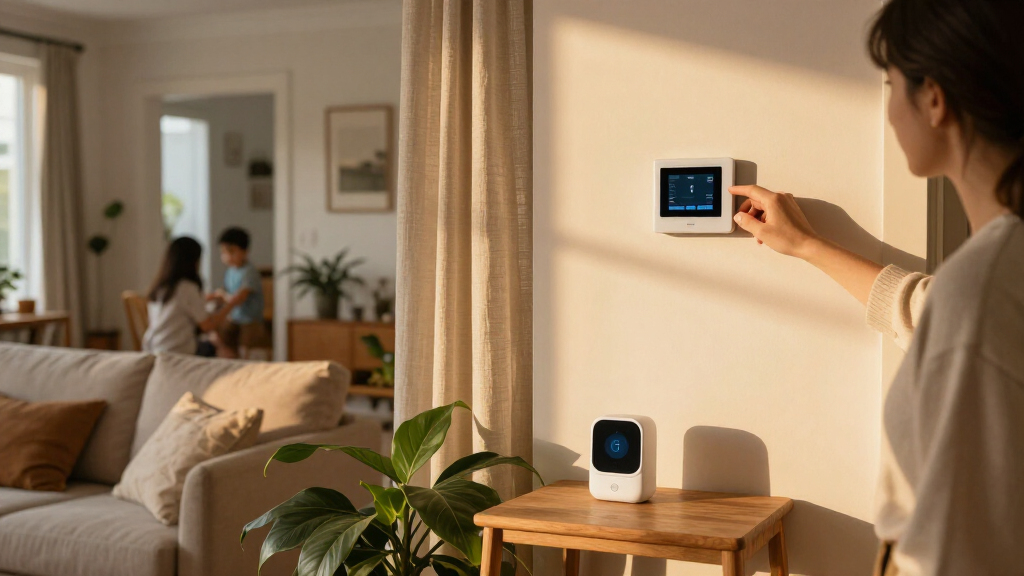
Smart thermostats with room sensors can help prioritize rooms that a thermostat in one spot may not represent well. My best overall pick is the Honeywell Home T9 for buyers who want a thermostat and dedicated room sensor in one system; the ecobee Smart Thermostat Premium stands out for broader smart home features, while the Nest Learning Thermostat (4th Gen) pairs adaptive scheduling with a temperature sensor. The main tradeoffs are sensor compatibility, how occupancy affects heating or cooling, and whether premium controls justify a more involved setup. Some models in this roundup have no bundled room sensor, so buyers should check what accessories they need. Read on for the full breakdown and help matching a system to your home.

Get home appliances delivered free — and shop member deals
- Fast, free delivery on millions of items
- Access to Prime Big Deal Days deals on October 6–7
- Prime Video, Amazon Music and more included
Complete the kit



Key Takeaways
- The T9 is the clearest sensor-first choice: its room sensor is part of the product proposition, while several other thermostats need a compatible sensor purchased or selected separately.
- ecobee Premium offers the broadest feature mix: it combines SmartSensor support with voice assistant options, making it a better fit for connected homes than the simpler Essential model.
- Nest separates learning from basic control: the 4th Gen Learning Thermostat is bundled with a Nest Temperature Sensor, while the standard Nest Thermostat models are simpler options without the same sensor-led package.
- Honeywell’s X8S pair gives shoppers a premium-style alternative: both listed versions include a room sensor, so the choice between them should hinge on the exact model and finish rather than assuming the names signal different sensor capabilities.
- Not every thermostat listed is a complete room-sensor setup: models such as the amazon.com/dp/B08HRPDYTP?tag=wholehousewaterlab-20&ascsubtag=dc-1099333″ target=”_blank” rel=”nofollow sponsored noopener”>Google Nest Thermostat, Amazon Smart Thermostat, and ecobee Essential may appeal for straightforward control, but buyers should verify compatible add-on sensors before choosing them for room prioritization.
| TQX Matter Over Wi-Fi Thermostat with Occupancy and Remote Sensors |  | Best for Occupancy-Based Sensing | Connectivity: Wi-Fi through a Matter-enabled smart-home speaker | Occupancy detection: Millimeter-wave sensor with occupancy learning | Remote sensors: Supports up to 5 QSZ Remote Sensors | VIEW LATEST PRICE | See Our Full Breakdown |
| Honeywell Home T9 Wi-Fi Smart Thermostat with Smart Room Sensor |  | Best for Room Prioritization | Included sensor: 1 Smart Room Sensor | Sensor range: Up to 200 ft, depending on home construction | Control: Touchscreen, Resideo app, Amazon Alexa, Apple HomeKit, and Google Assistant | VIEW LATEST PRICE | See Our Full Breakdown |
| Google Nest Thermostat, Smart Wi-Fi Thermostat, Snow |  | Best for Google Home Scheduling | Connectivity: Wi-Fi | Color: Snow | Certification: ENERGY STAR | VIEW LATEST PRICE | See Our Full Breakdown |
| Honeywell Home X8S Premium Smart Wi-Fi Thermostat with Room Sensor, Black |  | Best Premium Display | Display: 5-inch customizable touchscreen | Included sensor: Wireless Room Sensor, up to 200 ft range | Heat pump compatibility: Up to 3 heat and 2 cool with electric backup | VIEW LATEST PRICE | See Our Full Breakdown |
| ecobee Smart Thermostat Essential, Wi-Fi, Energy Star Certified |  | Best Expandable Sensor Setup | Connectivity: Wi-Fi | Display: Color touchscreen | Certification: ENERGY STAR | VIEW LATEST PRICE | See Our Full Breakdown |
| ecobee Smart Thermostat Premium with Wi-Fi, Siri and Alexa, and SmartSensor |  | Best Overall for Room-by-Room Comfort | Connectivity: Wi-Fi | Included sensor: SmartSensor | Voice assistants: Siri and Alexa | VIEW LATEST PRICE | See Our Full Breakdown |
| Honeywell Home X8S Smart Wi-Fi Thermostat with Room Sensor |  | Best for Matter Smart Homes | Display: 5-inch customizable touchscreen | Included sensor: Wireless room sensor, range up to 200 ft | Smart-home compatibility: Matter, Alexa, Google Assistant, and Apple Home | VIEW LATEST PRICE | See Our Full Breakdown |
| Google Nest Learning Thermostat (4th Gen) with Nest Temperature Sensor (2nd Gen), Obsidian |  | Best for Adaptive Scheduling | Thermostat generation: 4th generation | Included sensor: Nest Temperature Sensor (2nd Gen) | Color: Obsidian | VIEW LATEST PRICE | See Our Full Breakdown |
| ecobee Comfort and Security Bundle with Smart Thermostat Premium and SmartSensor |  | Best for Built-In Home Monitoring | Included devices: Smart Thermostat Premium and SmartSensor | System compatibility: Compatible with 95% of HVAC systems | Certification: ENERGY STAR certified | VIEW LATEST PRICE | See Our Full Breakdown |
| Sensi Touch 2 Wi-Fi Smart Thermostat, Alexa Compatible, ENERGY STAR Certified (ST76) |  | Best for Flexible Scheduling | Model: ST76 | Connectivity: Wi-Fi | Smart assistant: Alexa | VIEW LATEST PRICE | See Our Full Breakdown |
| Google Nest Smart Thermostat, Charcoal |  | Best for Hands-Off Scheduling | Color: Charcoal | Connectivity: Wi-Fi 2.4 GHz and 5 GHz; Bluetooth Low Energy | Energy certification: ENERGY STAR certified | VIEW LATEST PRICE | See Our Full Breakdown |
| Amazon Smart Thermostat with Alexa and Ring Compatibility |  | Best for Alexa-Based Homes | Compatibility: Alexa and Ring | Installation: DIY installation with Alexa app guidance | Wiring requirement: C wire required | VIEW LATEST PRICE | See Our Full Breakdown |
| Google Nest Learning Thermostat (4th Gen) with Nest Temperature Sensor (2nd Gen), Silver |  | Best for Room-Specific Comfort | Thermostat generation: 4th | Included sensor: Nest Temperature Sensor (2nd gen) | Color: Silver | VIEW LATEST PRICE | See Our Full Breakdown |
| smart thermostats with room sensor | Connectivity | Certification |
|---|---|---|
| TQX Matter Over Wi-Fi Thermost | Wi-Fi through a Matter-enabled smart-home speaker | — |
| Honeywell Home T9 Wi-Fi Smart | — | — |
| Google Nest Thermostat | Wi-Fi | ENERGY STAR |
| Honeywell Home X8S Premium Sma | — | ENERGY STAR |
| ecobee Smart Thermostat Essent | Wi-Fi | ENERGY STAR |
| ecobee Smart Thermostat Premiu | Wi-Fi | ENERGY STAR certified |
| Honeywell Home X8S Smart Wi-Fi | — | ENERGY STAR |
| Google Nest Learning Thermosta | Google Home app, Alexa, Siri, Google Assistant, and Matter | — |
| ecobee Comfort and Security Bu | — | ENERGY STAR certified |
| Sensi Touch 2 Wi-Fi Smart Ther | Wi-Fi | ENERGY STAR |
| Google Nest Smart Thermostat | Wi-Fi 2.4 GHz and 5 GHz; Bluetooth Low Energy | — |
| Amazon Smart Thermostat with A | — | — |
| Google Nest Learning Thermosta | — | — |
More Details on Our Top Picks
TQX Matter Over Wi-Fi Thermostat with Occupancy and Remote Sensors
The TQX suits buyers who want occupancy-aware temperature balancing and already use a compatible Matter-enabled smart-home speaker. Its millimeter-wave sensor learns occupancy patterns, while support for up to five QSZ sensors lets it factor in conditions beyond the thermostat’s location. That approach is different from the Honeywell Home T9, which can prioritize occupied rooms or a chosen schedule. TQX combines readings to adjust the home’s overall temperature; it does not independently regulate each room. That can help address a cold or warm room without promising separate room control. The wide system support, including some fan coil configurations and auxiliary outputs, is a plus for compatible setups. I would skip it for line-voltage heating or if room-by-room control is the main goal.
Pros:- Occupancy sensing with learning can factor room use into temperature adjustments.
- Supports up to five QSZ remote sensors.
- Works with several system configurations, including specified fan coil setups.
- Supports local and remote app control through a compatible Matter-enabled smart-home speaker.
Cons:- Remote sensor readings adjust the overall temperature rather than controlling rooms independently.
- Not compatible with 120V or 240V line-voltage systems.
Best for: Smart-home users with compatible HVAC who want occupancy learning and sensor-informed whole-home temperature adjustment.
Not ideal for: Households with 120V or 240V baseboard heating, or buyers who need each room controlled independently.
- Connectivity:Wi-Fi through a Matter-enabled smart-home speaker
- Occupancy detection:Millimeter-wave sensor with occupancy learning
- Remote sensors:Supports up to 5 QSZ Remote Sensors
- Conventional systems:Up to 2 heat and 2 cool
- Heat pumps:Up to 4 heat and 2 cool
- Fan coils:Binary output for 2-pipe or 4-pipe systems
- Auxiliary outputs:Up to 2 for humidification, dehumidification, or mechanical ventilation
- Room control:Combined sensor data adjusts overall temperature; rooms are not regulated independently
Our verdict“Choose the TQX if you want occupancy-aware whole-home adjustments and your HVAC system is compatible.”
Honeywell Home T9 Wi-Fi Smart Thermostat with Smart Room Sensor
The T9 makes the most sense when comfort in a few frequently used rooms matters more than a feature-rich display. Its room sensors can prioritize occupied rooms or a schedule, so the thermostat can respond to where people are instead of relying only on its own location. That gives it a more direct room-prioritization approach than the TQX, whose sensors inform one overall temperature. The T9 also offers app, touchscreen, and voice-assistant control, with broad support for forced air, hot water, steam, and heat pumps with electric backup. One sensor is included, and more can be used for wider coverage. The tradeoffs are practical: installation needs a C-wire or included adapter, and electric baseboard heat is unsupported. Compared with the Google Nest Thermostat, the T9 is the clearer fit for buyers putting room sensors at the center of their choice.
Pros:- Can prioritize rooms by occupancy or a chosen schedule.
- Includes one Smart Room Sensor and supports additional sensors.
- Offers touchscreen, app, and compatible voice-assistant control.
- Supports several forced-air, boiler, steam, and heat-pump systems.
Cons:- Does not support 120–240V electric baseboard heat.
- Requires a C-wire or the included low-voltage power adapter.
- Heating-only oil furnace systems require a C-wire.
Best for: Households with uneven temperatures that want to prioritize occupied bedrooms or living areas on a schedule.
Not ideal for: Homes with electric baseboard heat or installations without a C-wire or suitable low-voltage power adapter.
- Included sensor:1 Smart Room Sensor
- Sensor range:Up to 200 ft, depending on home construction
- Control:Touchscreen, Resideo app, Amazon Alexa, Apple HomeKit, and Google Assistant
- Compatible systems:Forced air, hot water, steam, and heat pumps with electric backup
- Power:C-wire or included low-voltage power adapter
- Unsupported heating:Electric baseboard heat (120–240V)
Our verdict“Pick the T9 if you want sensor-based room prioritization and have compatible low-voltage HVAC wiring.”
Google Nest Thermostat, Smart Wi-Fi Thermostat, Snow
The Nest Thermostat is the simplest fit here for someone who wants app-based schedules and energy suggestions within Google Home. It can adjust heating and cooling remotely and monitor the HVAC system for alerts, but the supplied product details do not list a room sensor. That makes it less suited to balancing hot and cold rooms than the Honeywell Home T9, which includes a sensor and can prioritize rooms. The Nest’s strength is a straightforward connected thermostat experience, with ENERGY STAR certification and compatibility with Google Assistant, Alexa, and Matter-certified voice assistants. Wiring is another difference: a C-wire is unnecessary in most homes, though some systems need one or a compatible power accessory. Choose it for schedule-based control; look at the T9 or sensor-ready ecobee Smart Thermostat Essential if remote room readings are central to the decision.
Pros:- Programmable schedules and automatic adjustments can support energy management.
- Remote control and HVAC alerts are available through the Google Home app.
- ENERGY STAR certified.
- Supports Google Assistant, Alexa, and Matter-certified voice assistants.
Cons:- Product details do not specify an included room sensor for balancing temperatures across rooms.
- Some systems require a C-wire or compatible power accessory.
- Voice control requires a compatible smart device.
Best for: Google Home households seeking remote schedule control and HVAC alerts without requiring room-sensor balancing.
Not ideal for: Buyers who need included remote sensors to prioritize occupied rooms or address uneven temperatures.
- Connectivity:Wi-Fi
- Color:Snow
- Certification:ENERGY STAR
- C-wire:Not required in most homes; some systems need a C-wire or compatible power accessory
- Smart home compatibility:Google Assistant, Alexa, and Matter-certified voice assistants
- App control:Google Home app
Our verdict“Choose the Nest Thermostat for Google Home scheduling and alerts if room-sensor balancing is not a priority.”
Honeywell Home X8S Premium Smart Wi-Fi Thermostat with Room Sensor, Black
The X8S stands out for buyers who want a large customizable touchscreen alongside room sensing and smart-home integration. Its included wireless sensor can support more targeted comfort, while Matter, Apple Home, Alexa, and Google Assistant give it broader platform options than a Google-first choice such as the Nest Thermostat. The 5-inch screen can also communicate with compatible Ring or First Alert video doorbells, a distinctive convenience if those devices are already part of the home. Compared with the Honeywell Home T9, the X8S adds the premium display and doorbell connection; the T9 has a more explicit room-prioritization description and broad system compatibility. The X8S requires a C-wire and compatible HVAC, and some air-quality functions need extra equipment. It also cannot serve line-voltage baseboard systems.
Pros:- Includes a wireless room sensor with a stated range of up to 200 ft.
- 5-inch customizable touchscreen.
- Supports Matter, Apple Home, Alexa, and Google Assistant.
- Can display and communicate with compatible Ring or First Alert video doorbells.
Cons:- Requires a C-wire; an adapter voucher is included if one is needed.
- Does not work with 120–240V electric baseboard heat.
- Some air-quality features may require additional HVAC equipment or accessories.
Best for: Smart-home households that want an included room sensor, a large touchscreen, and compatible doorbell viewing in one thermostat.
Not ideal for: Homes without compatible HVAC or a C-wire, and households with 120–240V electric baseboard heat.
- Display:5-inch customizable touchscreen
- Included sensor:Wireless Room Sensor, up to 200 ft range
- Heat pump compatibility:Up to 3 heat and 2 cool with electric backup
- Conventional compatibility:Up to 2 heat and 2 cool
- Wi-Fi:2.4 or 5 GHz; 802.11ax/ac/a/b/g/n
- Smart home compatibility:Matter, Amazon Alexa, Google Assistant, and Apple Home
- C-wire:Required; C-Wire Adapter voucher included if needed
- Certification:ENERGY STAR
- Doorbell compatibility:First Alert VX1 and Ring streaming doorbells
Our verdict“Choose the X8S if the touchscreen and smart-home extras matter as much as sensor-informed comfort.”
ecobee Smart Thermostat Essential, Wi-Fi, Energy Star Certified
The ecobee Essential is a good starting point for buyers who want broad HVAC compatibility now and the option to add room sensing later. It supports SmartSensor compatibility, but the sensor is sold separately, so it does not deliver the out-of-box room monitoring of the Honeywell Home T9 or X8S. That distinction matters for this roundup: the Essential becomes a room-sensor setup only after an additional purchase. Its color touchscreen, app, and support for Apple HomeKit, Google Assistant, and Alexa make everyday scheduling flexible, while humidity detection and time-of-use energy management add useful control. It covers many 24 VAC systems, including boilers and heat pumps. The compromise is setup: homes without a C-wire need a separately sold Power Extender Kit, and buyers must add a SmartSensor to get remote room readings.
Pros:- Supports a broad range of 24 VAC systems, including boilers and heat pumps.
- Compatible with Apple HomeKit, Google Assistant, and Alexa.
- Color touchscreen and app provide multiple control options.
- Includes humidity detection, schedule assistance, and time-of-use energy management.
Cons:- SmartSensor is compatible but sold separately.
- Homes without a C-wire need a separately sold Power Extender Kit.
Best for: DIY homeowners with compatible 24 VAC HVAC who want to start with a smart thermostat and add room sensors later.
Not ideal for: Buyers who want an included room sensor or need a power adapter included for a home without a C-wire.
- Connectivity:Wi-Fi
- Display:Color touchscreen
- Certification:ENERGY STAR
- System compatibility:Most 24 VAC HVAC systems; compatible with 85% of systems
- Supported systems:Gas, oil, electric, dual fuel, forced air, conventional systems, heat pumps, and boilers
- Smart home compatibility:Apple HomeKit, Google Assistant, and Alexa
- C-wire alternative:Power Extender Kit sold separately
- Room sensor:Compatible with SmartSensor, sold separately
- Additional features:Humidity detection, schedule assistant, and time-of-use energy management
Our verdict“Pick the ecobee Essential if you want broad system support and are comfortable adding a SmartSensor later.”
ecobee Smart Thermostat Premium with Wi-Fi, Siri and Alexa, and SmartSensor
The included SmartSensor makes this ecobee a strong all-around pick for homes where the thermostat’s hallway reading misses the rooms people use most. Occupancy sensing can help direct comfort toward active spaces, while the built-in air quality monitor adds useful alerts and filter reminders. Compared with the Sensi Touch 2, which needs separately purchased room sensors, ecobee is ready for room-based adjustments out of the box. It also adds a smart speaker with Siri and Alexa, though Siri requires an Apple home hub. The tradeoff is a broader feature set that may be unnecessary if you only want temperature scheduling, and HVAC compatibility still needs checking before installation. Some security functions also require a subscription.
Pros:- Included SmartSensor supports room-by-room comfort adjustments
- Occupancy sensing can prioritize rooms in use
- Built-in air quality monitoring, alerts, and filter reminders
- Power Extender Kit and Trim Kit support DIY installation
Cons:- Siri control requires an Apple home hub
- Some security features require an ecobee subscription
- HVAC compatibility must be confirmed before purchase
Best for: Households that want an included room sensor, air quality alerts, and voice control in one thermostat
Not ideal for: Buyers who want basic room sensing without a smart speaker or extra connected-home features
- Connectivity:Wi-Fi
- Included sensor:SmartSensor
- Voice assistants:Siri and Alexa
- HVAC compatibility:Compatible with 95% of HVAC systems
- Certification:ENERGY STAR certified
- Air quality:Built-in monitor with alerts and filter reminders
- Installation accessories:Power Extender Kit and Trim Kit
- Warranty:3 years
Our verdict“Choose this ecobee if you want room sensing, air quality monitoring, and voice features together, and are comfortable checking system compatibility.”
Honeywell Home X8S Smart Wi-Fi Thermostat with Room Sensor
Matter support and a 200-foot sensor range make the Honeywell Home X8S a good fit for buyers building a connected home across several platforms. Its included wireless room sensor can help address temperature differences away from the thermostat, while the 5-inch touchscreen gives local controls more space than the simpler interface on the Sensi Touch 2. Humidity and ventilation controls add another layer for homes that need more than heating and cooling adjustments. The tradeoffs are practical: installation requires a C-wire, and this model does not work with 120–240V electric baseboard heat. Doorbell viewing and intercom features depend on a compatible Ring or First Alert VX1 camera, sold separately, so those extras add setup requirements.
Pros:- Wireless room sensor is included and has a range up to 200 feet
- Matter support connects with major smart-home platforms
- Controls humidity and ventilation as well as temperature
- Customizable 5-inch touchscreen
Cons:- Requires a C-wire; an adapter voucher is included
- Not compatible with 120–240V electric baseboard heat
- Compatible doorbell camera is sold separately
Best for: Smart-home households that want an included room sensor, Matter connections, and touchscreen controls
Not ideal for: Homes with electric baseboard heat or no C-wire, and buyers who do not want to add a compatible doorbell camera
- Display:5-inch customizable touchscreen
- Included sensor:Wireless room sensor, range up to 200 ft
- Smart-home compatibility:Matter, Alexa, Google Assistant, and Apple Home
- Wi-Fi:2.4 or 5 GHz; 802.11ax/ac/a/b/g/n
- Wiring:C-wire required; C-wire adapter voucher included
- System compatibility:Up to 3 heat/2 cool heat pump with electric backup, or 2 heat/2 cool conventional
- Other supported systems:Hot water heat and forced air (gas, oil, or electric)
- Certification:ENERGY STAR
Our verdict“Pick the X8S if broad smart-home compatibility and a long-range included sensor matter more than simple wiring or doorbell-free setup.”
Google Nest Learning Thermostat (4th Gen) with Nest Temperature Sensor (2nd Gen), Obsidian
Learning schedules paired with an included room sensor make this Nest a good match for people who want temperature adjustments to follow changing routines. The sensor lets buyers target comfort in a particular room, while Matter and app or voice controls give it more smart-home flexibility than a thermostat focused mainly on remote scheduling, such as the Sensi Touch 2. Its compatibility with many 24V systems and the fact that a C-wire is unnecessary in most homes can also simplify the buying decision. That wiring caveat is not universal, though: some installations still need a C-wire, and system compatibility depends on the home’s equipment. Buyers who want more explicit humidity or ventilation controls may prefer the Honeywell Home X8S.
Pros:- Learns temperature preferences and adapts to routines
- Includes a second-generation temperature sensor
- Supports many common 24V heating and cooling systems
- Works with Google Home, Alexa, Siri, and Matter
Cons:- A C-wire may still be required in some homes
- System compatibility depends on the home’s heating and cooling equipment
Best for: Households with changing routines that want a thermostat to learn schedules and target a specific room
Not ideal for: Buyers who need guaranteed C-wire-free installation or want dedicated humidity and ventilation controls
- Thermostat generation:4th generation
- Included sensor:Nest Temperature Sensor (2nd Gen)
- Color:Obsidian
- System compatibility:Most 24V systems, including gas, electric, oil, forced air, heat pump, and radiant
- C-wire:Not required for installation in most homes
- Connectivity:Google Home app, Alexa, Siri, Google Assistant, and Matter
- Display:60% larger than the previous generation
Our verdict“Choose this Nest if you want adaptive scheduling with an included room sensor and your system checks out for compatibility.”
ecobee Comfort and Security Bundle with Smart Thermostat Premium and SmartSensor
This ecobee bundle pairs room sensing with home monitoring, making it the most security-focused option in this group. The SmartSensor helps address uneven temperatures away from the thermostat, while motion detection and entryway alerts tie comfort control to activity around the home. Compared with the standalone ecobee Smart Thermostat Premium, it puts more emphasis on security features; compared with the Google Nest Learning Thermostat, it offers a more explicit combination of room sensing and entryway response. That added scope has a cost in complexity: some security alerts require an ecobee Smart Security subscription, and compatibility still depends on the HVAC system. It makes the most sense when the buyer wants these functions together, rather than just room-based temperature control.
Pros:- Includes Smart Thermostat Premium and SmartSensor
- Combines temperature control with motion and entryway monitoring
- Air quality monitoring and filter reminders are included
- Power Extender Kit and Trim Kit support DIY installation
Cons:- Some security alerts and features require an ecobee Smart Security subscription
- HVAC compatibility depends on the home’s system
Best for: Homeowners who want an included room sensor alongside motion detection, entryway alerts, and thermostat control
Not ideal for: Buyers who only need room-by-room temperature balancing or want security alerts without a subscription
- Included devices:Smart Thermostat Premium and SmartSensor
- System compatibility:Compatible with 95% of HVAC systems
- Certification:ENERGY STAR certified
- Heating and cooling savings:Up to 26% per year
- Motion detection:Up to 120° arc and 16 feet
- Entryway response:Turns off HVAC and sends a notification if an entryway is left open for 5 minutes
- Installation accessories:Power Extender Kit (PEK) and Trim Kit
- Subscription:Some security alerts and features require an ecobee Smart Security subscription
Our verdict“Choose the bundle if you want room sensing and home monitoring together, and accept subscription requirements for some security features.”
Sensi Touch 2 Wi-Fi Smart Thermostat, Alexa Compatible, ENERGY STAR Certified (ST76)
Flexible schedules, remote access, and usage reports give the Sensi Touch 2 a practical focus for buyers who want control and system information without a more feature-heavy setup. It works with Sensi Room Sensors, so it can support room-based comfort, but those sensors are sold separately. That makes it less ready out of the box than the ecobee Smart Thermostat Premium or Google Nest Learning Thermostat, both of which include a room sensor. In return, the Sensi offers HVAC performance alerts and maintenance reminders that help owners keep track of system issues. DIY setup is app-guided, but installation still requires a C-wire. Its listed energy savings are potential, not a guarantee for every home.
Pros:- Remote access and flexible scheduling
- Usage reports help track HVAC operation
- HVAC performance alerts and maintenance reminders
- App-guided DIY installation with Bluetooth
Cons:- Room sensors are sold separately
- Requires a C-wire
- Potential energy savings vary with the home’s system and use
Best for: Alexa users who want scheduling, usage reports, and the option to add room sensors later
Not ideal for: Buyers who want room sensing included or cannot provide a C-wire
- Model:ST76
- Connectivity:Wi-Fi
- Smart assistant:Alexa
- Certification:ENERGY STAR
- Room sensor compatibility:Sensi Room Sensors, sold separately
- Installation:DIY app-guided setup with universal Bluetooth
- Wiring:C-wire required
- Potential HVAC energy savings:About 23%
Our verdict“Pick the Sensi Touch 2 if you value scheduling and system reports and are willing to add compatible room sensors separately.”
Google Nest Smart Thermostat, Charcoal
The Google Nest Smart Thermostat suits households that want schedules and automatic away adjustments without making a separate room sensor central to the setup. Its Google Home app controls and energy-saving schedule suggestions make routine temperature changes easier to manage remotely. Compared with the Google Nest Learning Thermostat (4th Gen) with Nest Temperature Sensor (2nd Gen), this model does not include a room sensor or learn preferences in the same way, so it is less suited to correcting temperature differences between rooms. Its strength is straightforward home and away management, backed by HVAC alerts and maintenance reminders. The main installation caveat is power: most homes can use it without a C wire, but some systems need one or a compatible accessory. Voice control also depends on a compatible device.
Pros:- Can adjust settings automatically when the home is empty
- Supports remote control and energy-efficient scheduling through the Google Home app
- Provides HVAC issue alerts and maintenance reminders
- Offers schedule-saving suggestions and ENERGY STAR certification
Cons:- Does not include a room sensor for room-by-room temperature management
- Some HVAC systems need a C wire or compatible power accessory
- Voice control requires a compatible smart device
Best for: Google Home households that want remote control, scheduled comfort, and automatic adjustments when the home is empty
Not ideal for: Buyers who need room-by-room temperature management or want an included sensor to prioritize a particular room
- Color:Charcoal
- Connectivity:Wi-Fi 2.4 GHz and 5 GHz; Bluetooth Low Energy
- Energy certification:ENERGY STAR certified
- Control:Google Home app, compatible voice assistants, and remote access
- Power:Designed to work without a C wire in most homes; some systems require a C wire or compatible power accessory
- HVAC monitoring:Alerts for potential system issues and maintenance reminders
Our verdict“Choose this Nest for convenient Google Home scheduling and away adjustments; choose the Nest Learning Thermostat with sensor if room-specific comfort is the priority.”
Amazon Smart Thermostat with Alexa and Ring Compatibility
The Amazon Smart Thermostat is a practical fit for buyers who already manage their home through Alexa and want schedules or automatic temperature adjustments through compatible Alexa devices. Alexa and Ring compatibility give it a clear place in this roundup, though it does not come with a room sensor. Compared with the Honeywell Home T9 Wi-Fi Smart Thermostat with Smart Room Sensor, it is less focused on directing comfort toward specific rooms; its appeal is a guided DIY setup and familiar app control. The thermostat uses Honeywell Home thermostat technology, but installation has a firm prerequisite: a C wire is required. Automatic control also depends on compatible Alexa devices, so buyers without those devices may get less from its presence-based features.
Pros:- Supports scheduled temperature control
- Can be monitored and controlled through the Alexa app
- Works with compatible Alexa and Ring setups
- Provides DIY installation guidance in the Alexa app
Cons:- Requires a C wire
- Automatic temperature adjustments depend on compatible Alexa devices
- Does not include a room sensor for room-specific temperature management
Best for: Alexa and Ring households with a C wire that want app-guided installation and scheduled or device-assisted temperature control
Not ideal for: Homes without a C wire, or buyers who want an included room sensor to manage uneven temperatures between rooms
- Compatibility:Alexa and Ring
- Installation:DIY installation with Alexa app guidance
- Wiring requirement:C wire required
- Technology:Honeywell Home thermostat technology
- Control:Alexa app and compatible Alexa devices
- Temperature control:Schedules and automatic adjustments based on readings or presence
Our verdict“Pick this model for Alexa-centered control and guided DIY setup if your home has a C wire and you do not need room sensing.”
Google Nest Learning Thermostat (4th Gen) with Nest Temperature Sensor (2nd Gen), Silver
For a roundup centered on room sensors, this Nest Learning Thermostat (4th Gen) has the clearest advantage: the second-generation Nest Temperature Sensor is included, so buyers can manage comfort with room readings rather than relying only on the thermostat’s location. It also learns preferred temperatures and routines, while broad 24V system compatibility covers many common heating and cooling setups. Compared with the Google Nest Smart Thermostat, Charcoal, it offers a more sensor-focused approach and a larger display, but requires more attention to system compatibility and may need a C wire in some homes. Matter support and Alexa, Siri, and Google Assistant voice control help it fit into varied smart homes. The sensor makes this a stronger room-comfort pick, though it cannot eliminate HVAC compatibility checks.
Pros:- Includes a second-generation Nest Temperature Sensor for room-specific comfort management
- Learns preferred temperatures and adapts to changing routines
- Supports Matter and Alexa, Siri, and Google Assistant
- Works with many common 24V heating and cooling systems
Cons:- Compatibility depends on the home’s heating and cooling system
- Some homes may require a C wire
- More features and system checks may be unnecessary for buyers who only need basic scheduling
Best for: Households with rooms that heat or cool unevenly and buyers who want an included sensor plus adaptive scheduling
Not ideal for: Buyers seeking a simple, low-feature thermostat or anyone whose HVAC system is outside its supported 24V compatibility
- Thermostat generation:4th
- Included sensor:Nest Temperature Sensor (2nd gen)
- Color:Silver
- System compatibility:Most 24V systems, including gas, electric, oil, forced air, heat pump, and radiant
- C wire:Not required for installation in most homes; some homes may require one
- Smart home compatibility:Matter
- Voice assistants:Alexa, Siri, and Google Assistant
- Display:60% larger display with Dynamic Farsight
Our verdict“Choose this Nest when an included room sensor and adaptive comfort matter more than keeping thermostat setup simple.”

How We Picked
I ranked these thermostats around the promise of this roundup: helping buyers account for temperatures and occupancy beyond the thermostat’s own location. I gave more weight to models explicitly paired with a room sensor or designed to support one, then compared how clearly each option fits a particular household. Sensor usefulness depends on more than the sensor itself: compatible equipment, scheduling controls, and the ability to prioritize occupied rooms all shape the result.
I also considered setup and everyday usability, smart home compatibility, and whether the product’s features match its likely buyer. That puts sensor-ready, flexible systems such as the Honeywell T9, ecobee Premium, and Nest Learning Thermostat toward the top, while simpler thermostats rank better for buyers who value uncomplicated control or already use a compatible ecosystem. Product names alone do not confirm wiring or HVAC compatibility, so buyers should check those details and the exact sensor bundle before purchase.
| smart thermostats with room sensor | Connectivity | Certification |
|---|---|---|
| TQX Matter Over Wi-Fi Thermost | Wi-Fi through a Matter-enabled smart-home speaker | — |
| Honeywell Home T9 Wi-Fi Smart | — | — |
| Google Nest Thermostat | Wi-Fi | ENERGY STAR |
| Honeywell Home X8S Premium Sma | — | ENERGY STAR |
| ecobee Smart Thermostat Essent | Wi-Fi | ENERGY STAR |
| ecobee Smart Thermostat Premiu | Wi-Fi | ENERGY STAR certified |
| Honeywell Home X8S Smart Wi-Fi | — | ENERGY STAR |
| Google Nest Learning Thermosta | Google Home app, Alexa, Siri, Google Assistant, and Matter | — |
| ecobee Comfort and Security Bu | — | ENERGY STAR certified |
| Sensi Touch 2 Wi-Fi Smart Ther | Wi-Fi | ENERGY STAR |
| Google Nest Smart Thermostat | Wi-Fi 2.4 GHz and 5 GHz; Bluetooth Low Energy | — |
| Amazon Smart Thermostat with A | — | — |
| Google Nest Learning Thermosta | — | — |
Factors to Consider When Choosing Smart Thermostats With Room Sensors
Choosing a thermostat for room sensors starts with your home’s layout and your heating and cooling system, not the number of smart features on the box. These factors can help narrow the field before you compare individual models.
Decide Which Rooms Need a Say
Room sensors are most useful when the thermostat’s location gives a poor picture of comfort elsewhere, such as a sunny upstairs bedroom or a frequently used living room. List the rooms where temperature differences affect your routine, then decide whether you need to measure temperature, occupancy, or both. A sensor in every room may add complexity without changing your daily comfort. Many systems use selected rooms to guide heating or cooling at particular times, so think about when each space is actually occupied. A common mistake is placing sensors only in rooms that are already comfortable. Choose locations that reflect the problem you want the system to address, and check the manufacturer’s placement guidance.
Check Sensor Compatibility and Bundle Contents
The phrase “room sensor” can refer to accessories with different functions, and a thermostat may support sensors without including one. Confirm the exact sensor model, whether it comes in the box, and which thermostat generations support it. Also check whether the sensor reports temperature, occupancy, or both, since those capabilities can affect scheduling choices. A bundle can simplify setup, but it may include more sensors than your home needs. If you plan to add sensors later, confirm that they are sold separately and supported by the thermostat you are buying. This check can prevent a low-friction purchase from turning into a mismatched system.
Match the System to Your HVAC Equipment
Smart features cannot compensate for a thermostat that is incompatible with your heating and cooling equipment. Identify whether your system uses conventional heating, a heat pump, multiple stages, or a separate humidifier or ventilator, then compare that setup with the thermostat’s compatibility guide. Some installations also require a C-wire or a power adapter. If you rent or cannot change wiring, that constraint may narrow your options more than sensor support does. Check the wiring terminals and system type before buying, and ask a qualified installer when the labels are unclear. A sensor can improve room-level decisions only if the thermostat can control the equipment correctly.
Understand How Scheduling Uses Sensor Readings
Sensor systems differ in how they combine readings from multiple rooms and whether occupancy changes which rooms matter. Look for controls that let you set priorities by time or routine, such as sleeping hours versus daytime use. A single sensor reading should not automatically be treated as the right target for the whole house; one bedroom may need comfort at night while the rest of the home does not. Consider how the system behaves when a room is empty and whether you can override its schedule easily. Buyers often focus on adding sensors but overlook the controls that make those sensors useful. A clear schedule and easy manual adjustment can matter more than adding another device.
Choose Features That Fit Your Smart Home
Voice assistants, app controls, and smart home standards can make daily adjustments easier, but only if they fit the devices and routines you already use. Check which assistants and platforms are supported and whether key sensor functions remain available through them. Matter support may help devices work across compatible ecosystems, but it does not guarantee every thermostat feature will appear in every app. If you prefer a simple setup, a thermostat that works well within one familiar ecosystem may be easier to manage than a feature-rich system spanning several platforms. Before choosing, consider who in the household will change settings and from which devices. Fewer integrations can be a practical advantage when they cover the controls you need.
Know When Premium Features Earn Their Place
Paying for a more advanced thermostat can make sense when you will use its room sensors, voice controls, or wider smart home functions. If your main goal is remote temperature adjustment in a small home with consistent temperatures, a simpler thermostat may cover the need. Compare the included hardware and supported features with the accessories you would need to add later. Also account for setup effort: extra sensors and integrations require placement, configuration, and occasional schedule adjustments. A premium model is a better fit when those capabilities solve specific comfort or control problems. Choose based on the jobs you expect the thermostat to do, rather than treating a longer feature list as a guarantee of better comfort.
Frequently Asked Questions
Do all the thermostats in this roundup include a room sensor?
No. Several products are explicitly listed with a sensor, including the Honeywell T9, both Honeywell X8S listings, and the two 4th Gen Nest Learning Thermostat bundles. Other models may need a compatible sensor purchased separately or may not be intended for room prioritization in the same way. Check the precise package contents and supported sensor model before ordering. This matters because thermostat compatibility alone does not mean a sensor is included.
Will a room sensor make every room in my house the same temperature?
A sensor can help a thermostat respond to conditions away from its wall location, but it cannot guarantee identical temperatures throughout a home. Room comfort also depends on insulation, sunlight, airflow, and the capacity of the heating or cooling system. Sensor schedules can prioritize a bedroom at night or a living area during the day, which is often more practical than trying to equalize every room at all times. If a room has a persistent airflow problem, a sensor may reveal the difference without fixing its cause. Think of sensors as better input for control, not a substitute for addressing building or duct issues.
Can I add sensors later if I start with a basic thermostat?
Sometimes, but the thermostat must support the sensor family and functions you want. Check the manufacturer’s compatibility list for the exact thermostat generation, since similarly named models can have different capabilities. Also confirm whether the sensor is sold separately and whether room prioritization is controlled in the same app. If sensors are central to your purchase, choosing a system with clearly documented support from the start can simplify planning. Buying a basic model first is sensible only when its later upgrade path is confirmed.
How many room sensors should I start with?
Start with the rooms that most affect comfort or where the thermostat’s reading is least representative. For many households, that means a bedroom used overnight or a main living area used during the day, rather than every room in the house. Add sensors only when you can identify a specific scheduling or comfort decision they would improve. Too many readings can make setup harder without changing how the system operates. Review the thermostat’s sensor limits and placement advice before expanding.
Should I choose a thermostat with learning features or one with manual sensor schedules?
Choose based on how much control you want over the system’s behavior. Learning features can suit buyers who prefer the thermostat to adapt routines, while manual sensor schedules can make it easier to specify which rooms matter at different times. Either approach still benefits from accurate schedules and occasional review when household routines change. Do not assume learning replaces sensor compatibility or HVAC checks. If room-by-room priorities are your main goal, confirm how the model actually uses sensor readings before weighing its automation features.
Conclusion
For the best overall room-sensor fit, I would start with the Honeywell Home T9, which directly pairs a thermostat with a room sensor. Buyers seeking the best premium feature mix should compare the ecobee Smart Thermostat Premium and the Nest Learning Thermostat (4th Gen): ecobee brings voice assistant options and SmartSensor support, while Nest’s bundle includes a temperature sensor and learning features. For a best value starting point, the ecobee Essential is worth a look if its sensor support and any separately needed accessories fit your plans. Beginners who want simpler smart control can consider the standard Google Nest Thermostat, but should verify sensor needs before treating it as a room-sensor system. For buyers who want a Honeywell alternative with a sensor included, the X8S models deserve a closer comparison; check the exact model listing and finish. Match the recommendation to the rooms you need to prioritize, then confirm HVAC compatibility and what comes in the box.
Fall yard work Picks
leaf blowers
As an affiliate, we earn on qualifying purchases.