
If you notice a persistent rotten egg smell after replacing your filter, it might be caused by bacteria growth, sulfur compounds, or mineral deposits in your system. Start by inspecting and replacing the filter regularly, cleaning vents, and checking for possible gas leaks or mold in ductwork. Using air purifiers can help neutralize odors. Keep up with maintenance to prevent future issues. Stay with us to uncover detailed steps to eliminate this foul smell completely.
Key Takeaways
- Regularly inspect and replace air filters every 3-6 months to prevent bacterial growth and odor buildup.
- Check ventilation ducts and condensate traps for mold, leaks, or blockages that cause sulfur-like smells.
- Test water chemistry for minerals and sulfates that promote sulfur-reducing bacteria formation.
- Use activated carbon air purifiers and odor neutralizers to effectively eliminate rotten egg odors.
- Consult HVAC or plumbing professionals if odor persists after basic maintenance to identify hidden sources or system issues.
Identifying the Source of the Odor
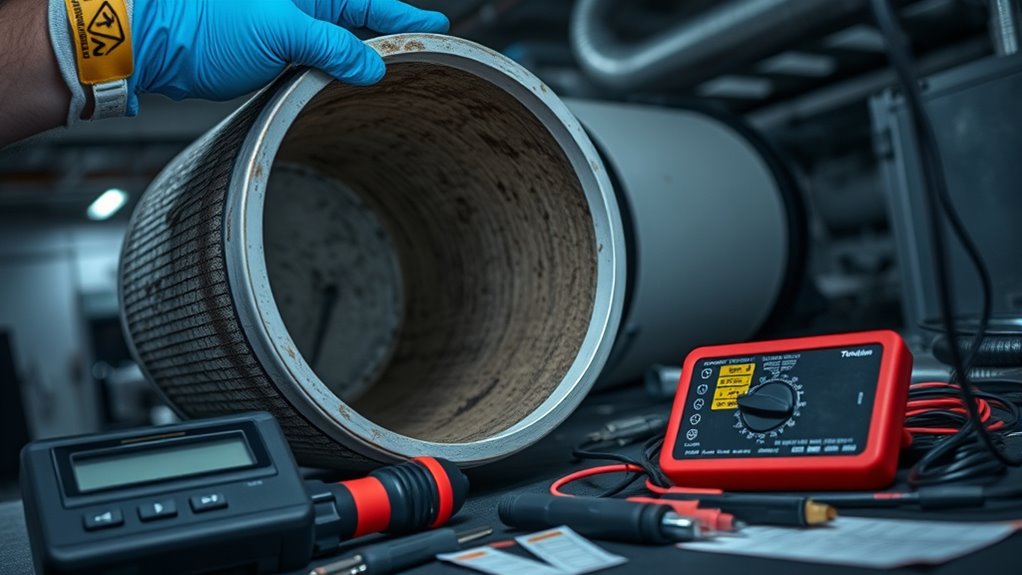
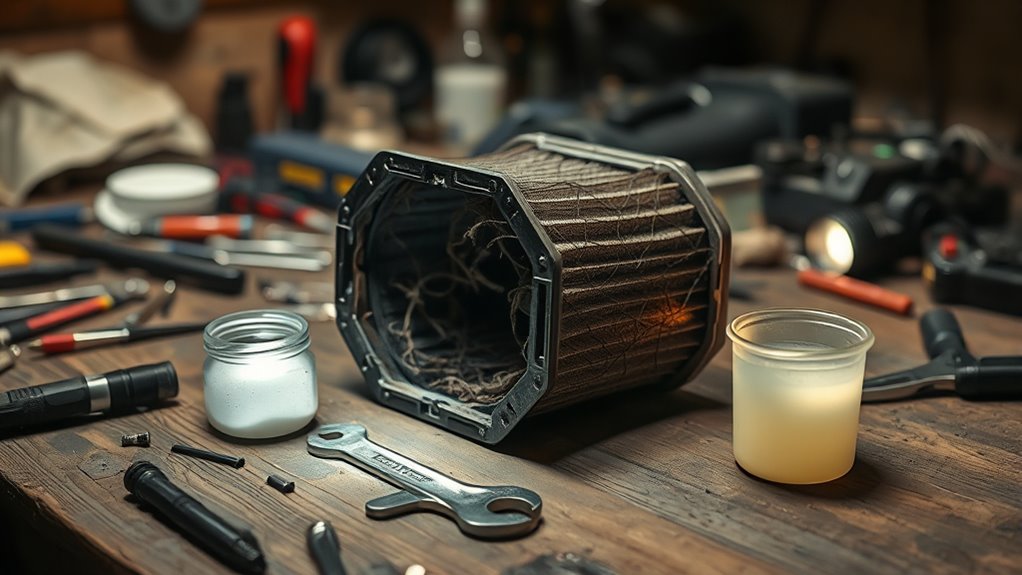
To effectively address a rotten egg smell, you first need to identify where it’s coming from. Start by checking your air filter’s lifespan; a dirty or old filter can’t absorb odors effectively, leading to persistent smells. If your filter hasn’t been replaced recently, it might be the source of the odor. Look for visible dirt, dust, or mold on the filter surface. Additionally, consider how well your filter is performing in odor absorption—some filters are designed specifically to neutralize smells. If you notice a strong sulfur-like scent, it’s often tied to a compromised filter or buildup within your ventilation system. Regular filter replacement and proper HEPA filtration are crucial for maintaining good air quality and preventing odor buildup. Pinpointing these issues early helps you target the exact source and prevents the smell from lingering or worsening.
Understanding Why Rotten Egg Smell Occurs
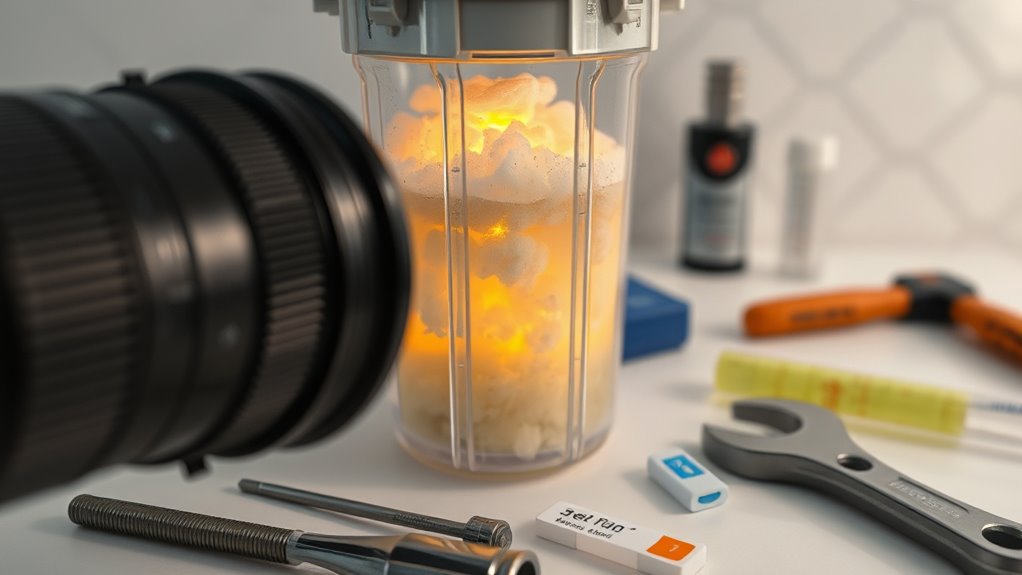
Rotten egg smells often happen because sulfur compounds form in your water, usually from natural or chemical sources. Bacterial growth in your filter can also produce these odors as bacteria break down organic material. Additionally, factors like water chemistry, including pH levels and mineral content, influence how and when these smells develop. Proper maintenance of your water filter and monitoring water quality can help prevent these odors from forming, especially when considering water chemistry factors.
Sulfur Compounds Formation
The characteristic rotten egg smell primarily results from the formation of sulfur compounds, which occur when certain bacteria break down organic matter in water or other environments. During this process, chemical reactions release hydrogen sulfide (H₂S), a gas responsible for the foul odor. When these sulfur compounds reach your nose, they trigger odor perception, creating that unmistakable rotten egg smell. Understanding this formation helps you recognize that the smell isn’t just a nuisance but a result of specific chemical reactions. Factors like water temperature, organic material presence, and bacterial activity influence these reactions. Additionally, AI-driven diagnostics can assist in identifying the precise cause of sulfur compound buildup, leading to more effective troubleshooting strategies to eliminate the odor.
Bacterial Growth in Filter
Bacterial growth in your filter is a common cause of the rotten egg smell because certain bacteria thrive in moist, nutrient-rich environments. When your filter becomes contaminated, these bacteria multiply rapidly, producing sulfur compounds that cause the foul odor. You might not notice the contamination at first, but it can lead to serious issues:
- Persistent odor that worsens over time.
- Reduced water quality affecting your health.
- Increased bacteria levels risking contamination.
- Potential damage to your filter system.
This bacterial buildup feeds on organic matter, creating a perfect environment for smell-producing sulfur compounds. Addressing filter contamination promptly is essential to eliminate the source of the smell and maintain safe, clean water. Proper attention and regular maintenance can help prevent bacterial proliferation and keep your water system functioning optimally. Ignoring bacterial growth only makes the problem worse.
Water Chemistry Factors
Understanding water chemistry is essential to identifying why a rotten egg smell occurs in your water. The presence of sulfur-reducing bacteria often results from mineral deposits and water softening processes. When minerals like iron, manganese, or sulfate accumulate, they create the perfect environment for bacteria to thrive, producing hydrogen sulfide gas—what causes that foul odor. Water softening can inadvertently contribute by altering mineral levels, either removing certain minerals or introducing others, which affects water chemistry. If your water has high mineral content or has undergone recent softening, it can foster bacteria growth and increase the likelihood of a rotten egg smell. Recognizing these factors helps you target the root cause and take effective steps to eliminate the odor. Additionally, water chemistry factors such as pH levels and oxidation states can influence bacterial activity and gas production, making comprehensive testing important.
Inspecting and Replacing Your Air Filter
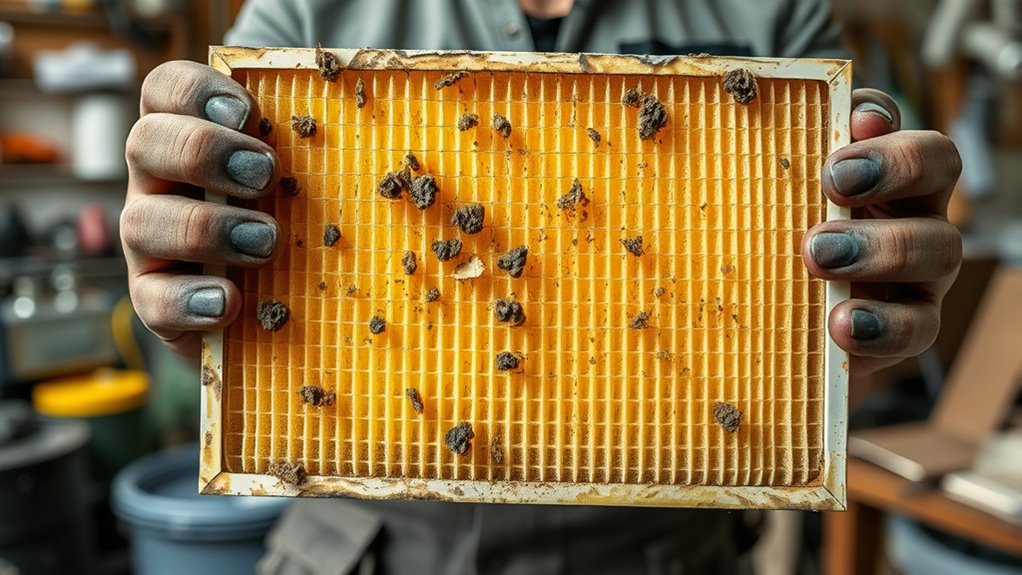
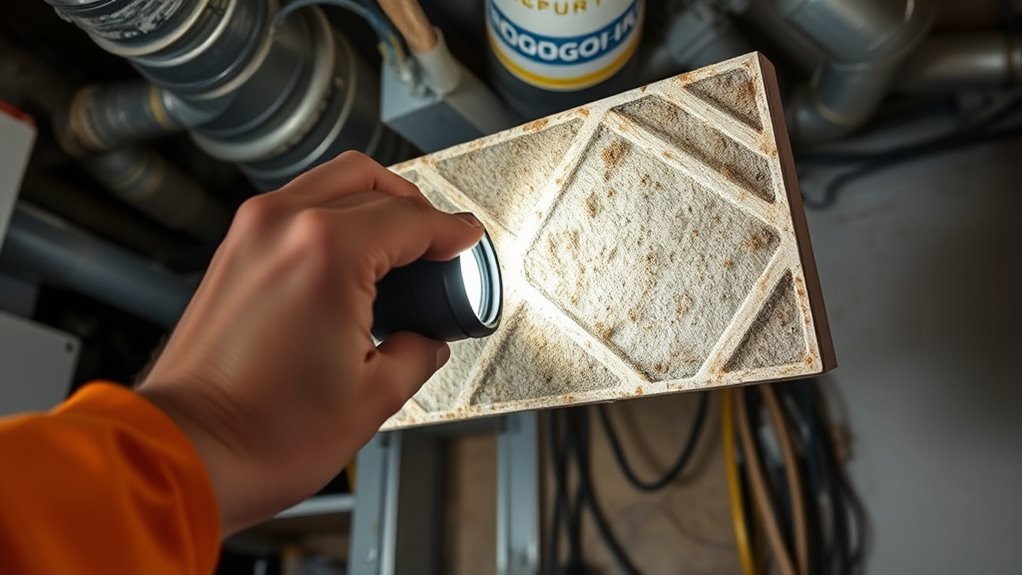
Since a dirty or clogged air filter can trap odors and worsen the rotten egg smell, it’s essential to inspect it regularly. An expired air filter’s lifespan varies, but most need replacement every 3 to 6 months. When checking, focus on these key points:
- Visual Damage: Look for discoloration, mold, or debris that may harbor odors.
- Clogging: Feel if the filter is clogged or restricts airflow.
- Filter Material: Determine if the material has deteriorated or become compacted.
- Odor Persistence: If the rotten egg smell persists despite airflow, replace the filter promptly.
- Proper Maintenance: Following manufacturer guidelines for filter care can prevent odor buildup and ensure your air purifier functions effectively.
Replacing your filter with the right filter material ensures better odor control and improves overall air quality. Regular inspections help prevent future issues and keep your home smelling fresh.
Cleaning or Replacing the Ventilation System Components
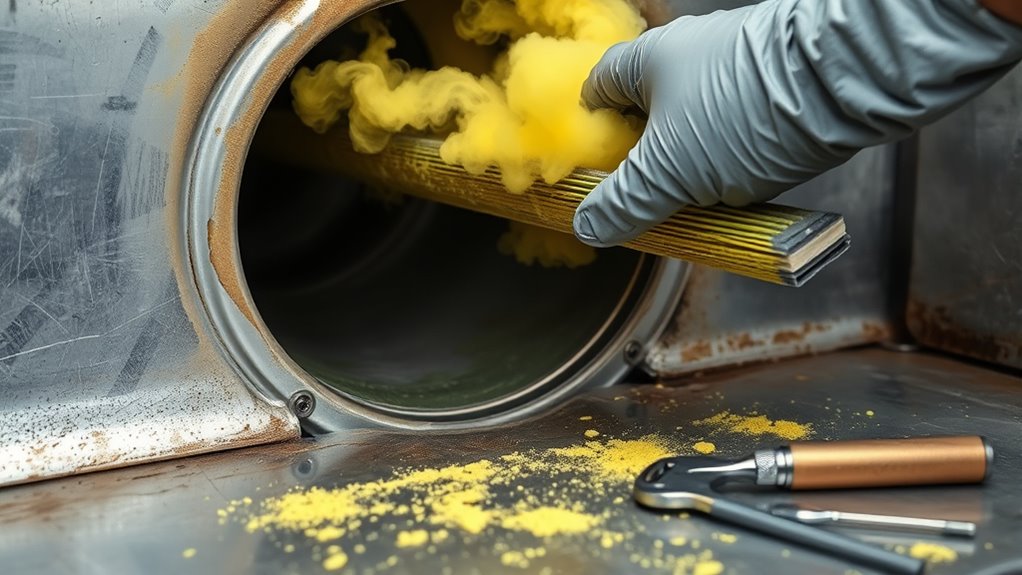
You should inspect your ventilation system to identify any buildup or damage that could cause odors. Replacing filters follows a specific procedure to guarantee proper airflow and odor control. Regularly checking and maintaining these components helps keep your air fresh and odor-free.
Ventilation System Inspection
Over time, dirt, dust, and mold can accumulate in your ventilation system, reducing airflow and causing odors. This buildup worsens air quality and disrupts your ventilation design, making your space feel stale and unhealthy. To restore proper function, inspect your system carefully:
- Check for visible mold or debris on vents and ducts.
- Ensure all components are securely connected and free of damage.
- Look for signs of moisture or leaks that foster mold growth.
- Assess airflow to identify areas of reduced ventilation efficiency.
- Regular maintenance, including cleaning and replacing filters, helps prevent contamination buildup and keeps your system operating smoothly.
Addressing these issues helps eliminate odors and improves air quality. Regular inspection guarantees your ventilation design operates at its best, preventing future odor problems and maintaining a healthier environment. Don’t overlook this step—it’s key to resolving that rotten egg smell effectively.
Filter Replacement Procedures
Regularly replacing or cleaning your ventilation system filters is essential for maintaining air quality and preventing odors. When you replace the filter media, ensure it matches your system’s airflow rate to avoid reduced efficiency. A clogged filter restricts airflow, causing stale air and potential odor buildup. Use the table below to understand the impact of filter media choices:
| Filter Media Type | Effect on Airflow Rate | Odor Control |
|---|---|---|
| High-efficiency | Maintains ideal flow | Excellent |
| Standard | Slightly reduces flow | Moderate |
| Low-quality | Significantly reduces flow | Poor |
Choose the right filter media to keep your ventilation system running smoothly, and replace filters regularly to prevent rotten egg smells from lingering. Proper maintenance of ventilation system components is crucial for odor control and optimal performance.
Checking for Gas Leaks or Other Hazardous Conditions
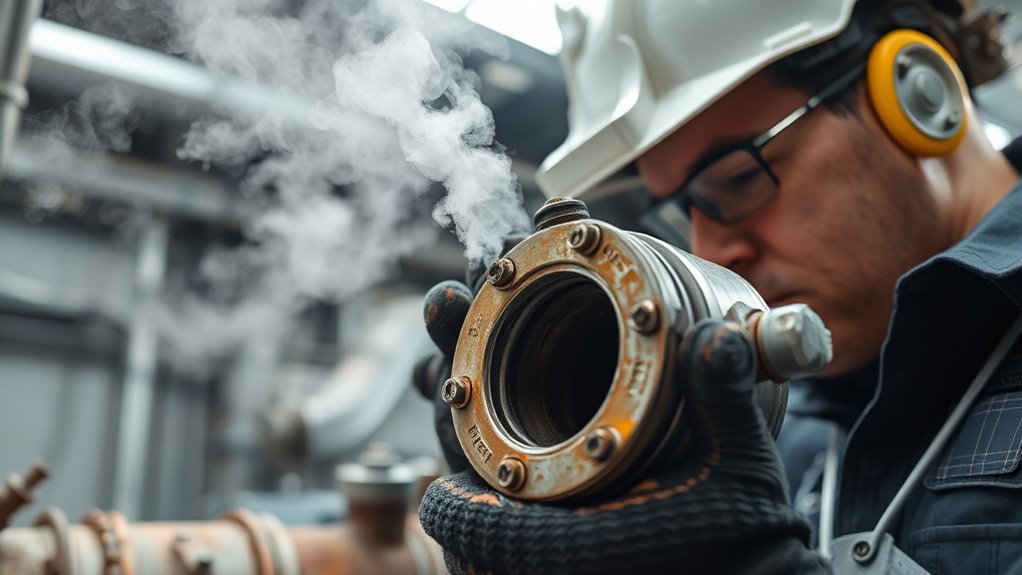
Since a rotten egg smell can indicate a dangerous gas leak, it’s essential to promptly check for any hazardous conditions. You must prioritize safety and act quickly. Here are four critical steps:
- Ventilate the area immediately to disperse any accumulated gas.
- Use a gas leak detection kit or soapy water on suspected connections to identify leaks.
- Shut off the gas supply if you detect a leak or strong odor.
- Evacuate the premises and call emergency services if you suspect a hazardous condition.
Examining the Drain Lines and Condensate Traps
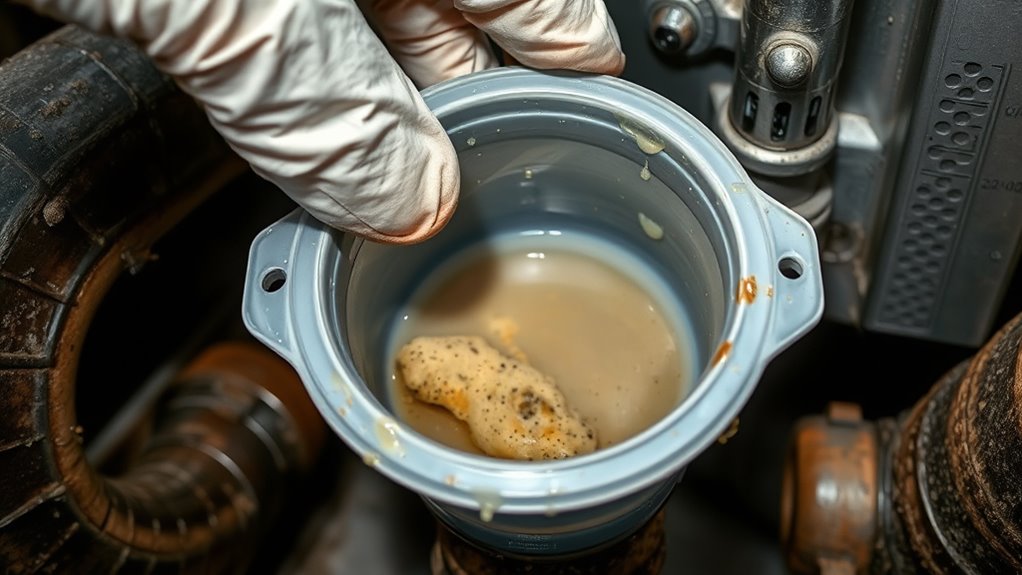
Start by inspecting your drain lines for any clogs or blockages that could trap odors. Next, check the condensate traps for leaks or cracks, as these can also release foul smells. Addressing these issues can substantially reduce or eliminate the rotten egg odor.
Drain Line Blockages
Drain line blockages are a common cause of rotten egg smells coming from your appliances or plumbing systems. When drains clog, foul gases build up, causing that unpleasant odor. To fix this, you need to focus on:
- Drain line cleaning to remove debris and buildup that trap odors.
- Trap inspection to ensure it’s intact and holding water, blocking gases from escaping.
- Checking for any clogs or obstructions that could be causing backflow.
- Clearing out any debris or mold that might be contributing to the smell.
- Regular maintenance can help prevent odor-causing buildup and ensure your system functions properly.
Condensate Trap Leaks
A leak in your condensate trap can be a hidden source of that rotten egg smell. If you notice a sulfur-like odor, it’s essential to perform leak detection on your condensate trap and drain lines. Inspect the trap carefully for cracks, corrosion, or loose fittings. Small leaks can release hydrogen sulfide gas, which causes the foul odor. Check the drain line connections for tightness and signs of leakage. Sometimes, the trap may be improperly installed or damaged, allowing gases to escape. Performing leak detection helps identify these hidden leaks early. Fix any cracks, replace damaged parts, or seal loose fittings to prevent odor from seeping into your space. Regular inspection of the condensate trap ensures it functions properly and keeps the smell at bay. Incorporating essential oils for odor elimination, such as tea tree or lavender oil, can also help neutralize the smell if a leak is temporarily unavoidable.
Assessing the Condition of the Ductwork
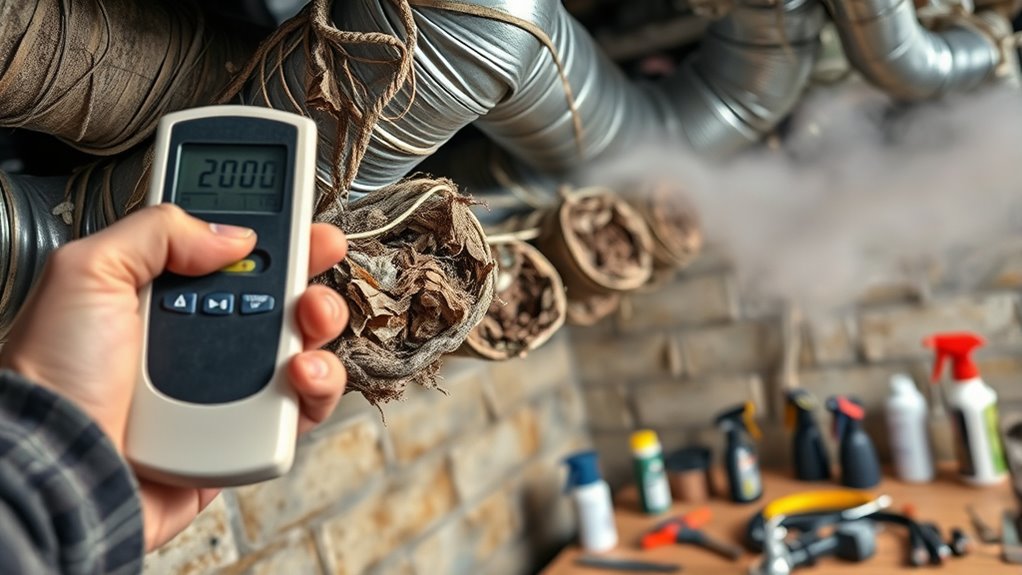
Before addressing the smell, it’s important to assess the condition of your ductwork to identify potential sources of odors. Poorly maintained ducts can trap mold, debris, or even dead pests, all of which negatively impact air quality and cause that rotten egg smell. To evaluate your ductwork:
- Check for visible mold or moisture buildup inside ducts.
- Look for signs of pest intrusion or nests.
- Inspect for loose or disconnected duct sections.
- Notice any accumulated dust or debris that could harbor bacteria.
Addressing these issues helps you pinpoint odor sources and improves air quality. A thorough inspection reveals hidden problems that contribute to the smell, giving you a clearer path to effective troubleshooting and fresh, odor-free air.
Using Air Purifiers and Odor Neutralizers
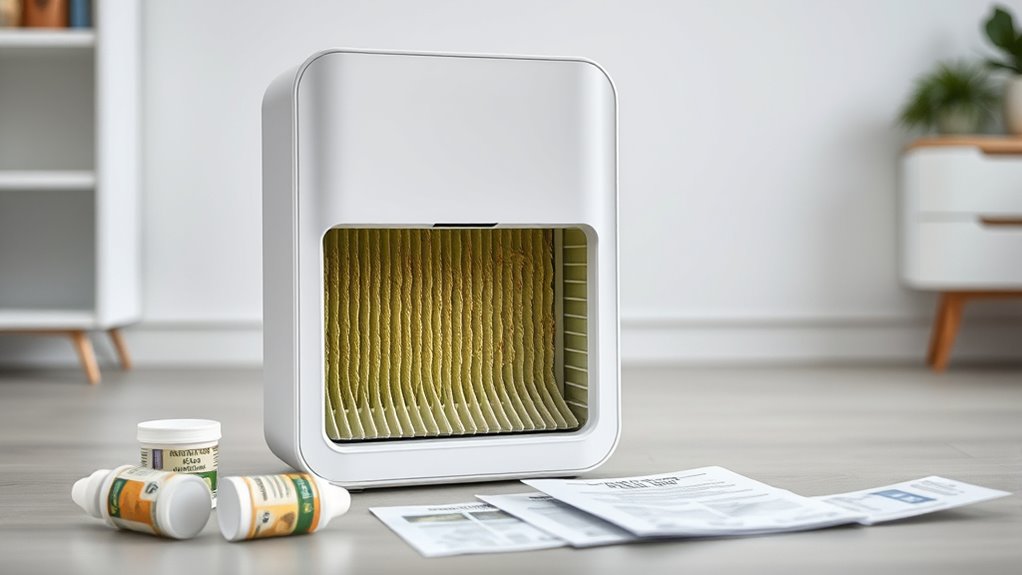
Once you’ve inspected and addressed any issues within your ductwork, using air purifiers and odor neutralizers can help eliminate lingering rotten egg smells. Regular air purifier maintenance guarantees your device runs effectively, capturing odor-causing particles before they spread. Choose air purifiers with activated carbon filters, as they excel at neutralizing sulfur-based odors like rotten eggs. When selecting odor neutralizer types, consider options such as enzyme-based sprays or gel-based absorbents, which target and break down odor molecules directly. Use these neutralizers in affected areas or near vents to enhance scent removal. Combining proper air purifier maintenance with effective odor neutralizers creates a powerful approach to eliminating stubborn smells, restoring fresh air quality in your space quickly and efficiently.
Preventative Maintenance Tips to Avoid Future Odor Issues
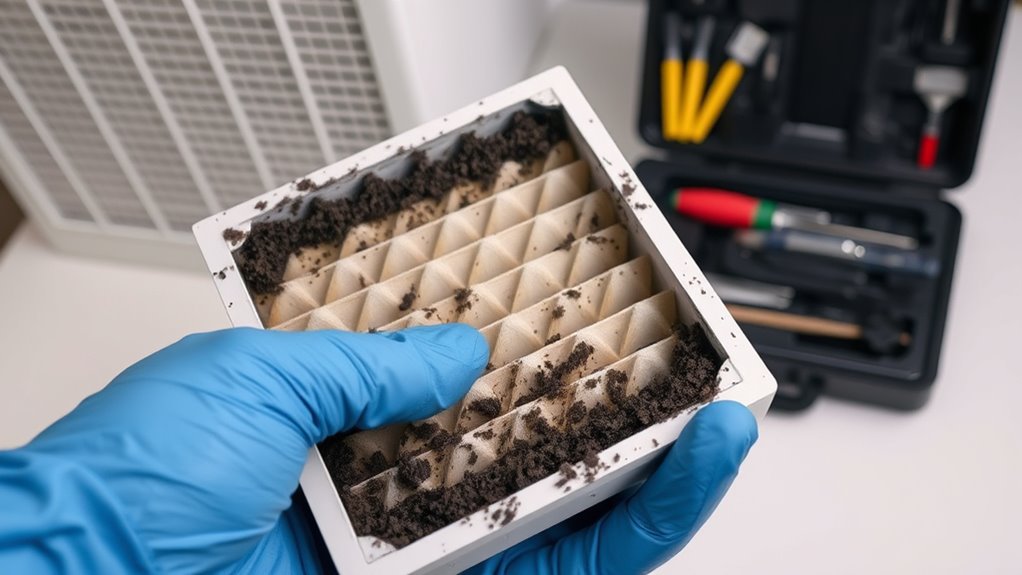
Regularly inspecting and maintaining your ductwork is essential to prevent future odor issues. By staying proactive, you can avoid the unpleasant smell and keep your home fresh. Here are four key tips:
- Replace your air filter regularly—aim for the recommended air filter lifespan to guarantee ideal air quality and odor control.
- Monitor humidity levels—using a humidifier or dehumidifier helps prevent mold growth, which can cause foul smells.
- Clean registers and vents—removing dust and debris reduces odor buildup.
- Schedule seasonal duct inspections—catch potential issues early before odors become persistent.
Consistent maintenance keeps your system running smoothly, preventing odors before they start and ensuring a healthier home environment.
When to Call a Professional HVAC Technician
Knowing when to call a professional HVAC technician is essential to preventing persistent odors and maintaining a healthy home environment. If you notice the rotten egg smell lingers despite your troubleshooting efforts, it’s time to seek expert help. Persistent odors can indicate underlying odor sources that require specialized diagnosis, such as gas leaks or faulty components. Poor air quality resulting from these issues can impact health and comfort. Don’t ignore worsening or recurring smells, especially if they coincide with decreased system performance or strange noises. A licensed technician can accurately identify the root cause, ensure your HVAC system is safe, and restore proper air quality. Prompt professional intervention helps prevent costly repairs and keeps your home smelling fresh and safe.
Frequently Asked Questions
Can the Rotten Egg Smell Indicate a Carbon Monoxide Leak?
Yes, a rotten egg smell can indicate a carbon monoxide leak, as this odor is often associated with odor detection devices alerting you to dangerous gases. However, carbon monoxide itself is odorless, so the smell may originate from sulfur compounds or other sources. If you notice this smell, you should immediately ventilate the area and get tested for carbon monoxide to ensure your safety.
Are There Specific Filters Designed to Eliminate Sulfur Odors?
Think of a sulfur filter as a sponge soaking up unwanted odors. Yes, specific filters like activated carbon filters are designed to eliminate sulfur smells, including that rotten egg odor. These filters trap sulfur compounds effectively, improving air quality. When choosing filters, verify they’re labeled as sulfur or odor removal filters, so you’re targeting the right problem and breathing easier without that pesky smell lingering.
How Long Should a Filter Last Before Odor Issues Reappear?
Your filter typically lasts about 6 to 12 months, but this depends on usage and air quality. As the filter approaches the end of its lifespan, you might notice odor recurrence, especially if sulfur odors are present. To prevent this, replace the filter regularly according to the manufacturer’s recommendations. Doing so helps maintain fresh air and minimizes the chances of rotten egg smells returning unexpectedly.
Can Indoor Plants Help Neutralize the Rotten Egg Smell?
Indoor plants can help neutralize the rotten egg smell through plant absorption and soil aeration. As plants absorb odors and toxins through their leaves and roots, they naturally improve air quality. Soil aeration encourages beneficial microbes that break down odor-causing compounds. By nurturing healthy plants, you create a cycle of absorption and aeration that diminishes the smell, making your space fresher and more inviting.
Is It Safe to Operate My HVAC System With a Persistent Odor?
It’s not safe to operate your HVAC system with a persistent rotten egg odor because it indicates a potential gas leak or other serious issues affecting air quality and odor elimination. Running the system can circulate harmful gases, risking health and safety. You should immediately turn off your HVAC system and contact a professional to inspect and resolve the problem, ensuring safe operation and restoring good air quality in your home.
Conclusion
If you’ve followed these steps and still smell rotten eggs, it’s likely a gas leak, which can be dangerous. Some believe the smell is caused by sulfur bacteria in your ducts, but it’s more often linked to natural gas leaks. Don’t ignore persistent odors—call a professional immediately. Addressing the issue quickly can prevent health risks and costly repairs, ensuring your home stays safe and odor-free.