
After plumbing work, cloudy water usually clears within a few hours to a day. If it lasts longer, there might be deeper issues like rusted pipes, sediments, or mineral build-up. Persistent discoloration or a strange smell suggests something more serious, and you should consider getting a professional inspection. Keep an eye on how long the cloudiness lasts, because understanding the cause can help you decide if you need further action. To learn more, continue exploring.
Key Takeaways
- Cloudy water typically clears within a few hours to one day after plumbing work.
- If cloudiness persists beyond 24 hours, further investigation is recommended.
- Common causes include air bubbles, sediments, or rust stirred up during repairs.
- Persistent cloudiness or discoloration may indicate underlying pipe corrosion or water supply issues.
- Running cold water and monitoring the situation help determine if professional inspection is needed.

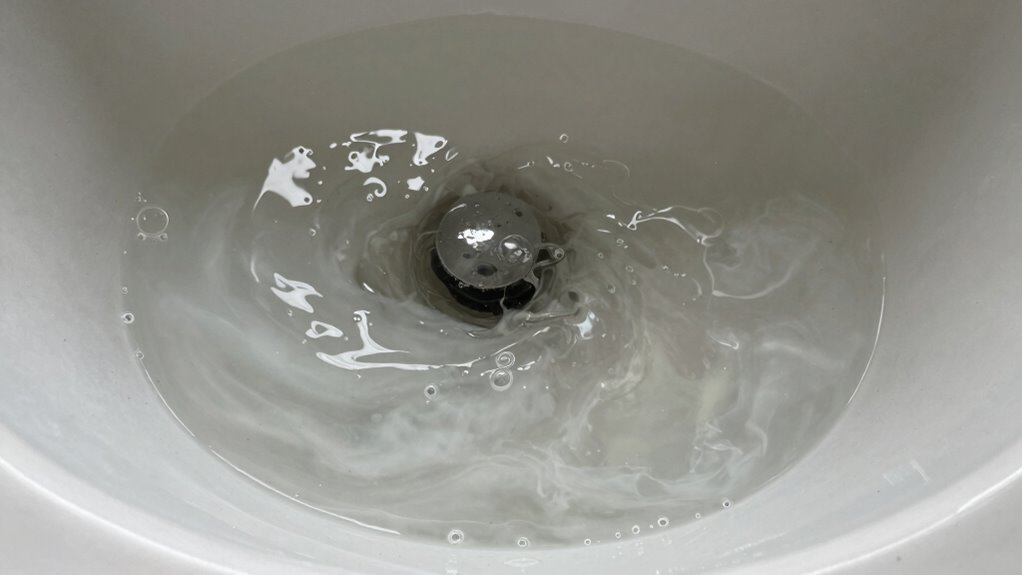
After plumbing work, you might notice cloudy water coming from your taps, which can be concerning. This water discoloration often appears as a milky or hazy look, and it’s a common issue following recent plumbing maintenance or repairs. While it might seem alarming, it’s usually temporary and not a sign of serious problems. The cloudiness results from tiny air bubbles or disturbed sediments in the pipes, which can get stirred up during maintenance activities. Understanding how long this cloudy water persists can help you determine if it’s normal or if you should take further action.
Typically, cloudy water after plumbing work clears up within a few hours to a day. This duration depends on the scope of the maintenance, the age of your plumbing system, and whether any sediments or rust were disturbed during the process. If it’s been more than 24 hours and your water remains discolored, you might need to investigate further. Sometimes, plumbing maintenance can loosen minerals or debris inside the pipes, which takes time to settle or flush out. Running cold water through your taps can help clear out these particles faster, but if the water remains cloudy or develops a strange smell or taste, it’s worth contacting a professional plumber.
Cloudy water typically clears within 24 hours; if it persists, consult a plumber.
Persistent water discoloration could also indicate other underlying issues, such as rusted pipes or problems with your municipal water supply. If your plumbing system is old, rust can flake off, causing a brownish tint and sediment build-up that takes longer to clear. Regular plumbing maintenance can help prevent these issues, but if neglected, they might cause ongoing water quality problems. In such cases, a plumber can inspect your system, identify any corrosion or blockages, and recommend repairs or pipe replacements.
It’s also important to consider your water source. If you rely on well water, disturbances from recent plumbing work or heavy rain can introduce sediments, prolonging the cloudiness. Municipal water supplies usually have filtration systems that handle most contaminants, but maintenance or repairs can temporarily affect water clarity. If you notice that cloudy water persists beyond a day or two, or if you see signs of sediment or debris, you should have your water tested. This can confirm whether the issue stems from your plumbing or the water supply itself. Understanding the cause of water discoloration can help you decide whether to seek professional help or simply wait for the sediments to settle.
Frequently Asked Questions
Can Cloudy Water Indicate a Serious Plumbing Issue?
Yes, cloudy water can indicate a serious plumbing concern. Water discoloration often points to sediment or debris in your pipes, which might signal pipe damage or buildup. If the cloudiness persists beyond a few hours or worsens, it’s a sign you should check with a plumber. Ignoring these signs could lead to further issues, so stay alert and address plumbing concerns promptly to prevent costly repairs.
Should I Test My Water Quality After Plumbing Work?
Isn’t it wise to test your water quality after plumbing maintenance? Absolutely. Water discoloration might be a sign of residual debris or other issues. Testing helps confirm your water remains safe and clean, preventing future problems. Think of it as giving your home a health check-up. You’ll gain peace of mind and catch potential issues early, so don’t hesitate to take that step—your water’s health is worth it.
Is Cloudy Water Harmful to My Health?
Cloudy water caused by water discoloration from plumbing contaminants isn’t usually harmful, but it can indicate the presence of particles or debris. While it typically doesn’t pose health risks, it’s best to avoid using the water until it clears. You should consider testing your water for contaminants and consulting a professional if the cloudiness persists, as ongoing discoloration might signal underlying plumbing issues or contaminant buildup.
How Can I Prevent Cloudy Water After Future Plumbing Repairs?
To prevent cloudy water after plumbing repairs, you should perform regular plumbing maintenance and consider water treatment options. For example, a homeowner noticed cloudy water after repairs and installed a water filter, which cleared it up quickly. Always flush your system thoroughly after work, check for sediment buildup, and use appropriate water treatment systems to keep water clear and safe. These steps minimize cloudiness and maintain water quality.
When Should I Call a Professional for Persistent Cloudiness?
You should call a professional if cloudy water persists beyond 24-48 hours despite trying DIY remedies like running the tap or using water filtration. Persistent cloudiness may indicate deeper plumbing issues or contamination that DIY solutions can’t fix. A plumber can diagnose the problem accurately and recommend appropriate treatment, ensuring your water is safe and clear. Don’t delay, as prolonged cloudiness could impact your water quality.
Conclusion
After plumbing work, cloudy water can feel like a storm cloud lingering too long. Just like a storm takes time to pass, your water may clear up within a few hours to a day. I once had a leak that caused murky water for two days—felt like waiting for the fog to lift. Remember, patience is key. If it persists beyond 48 hours, it’s best to contact a professional to make certain everything’s safe and clear.