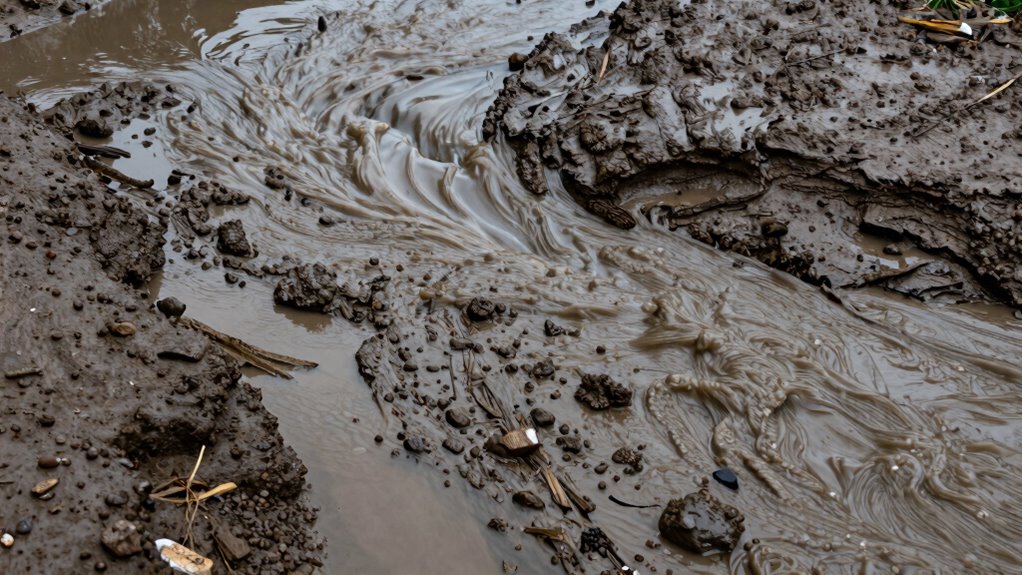

Recurring sediment after storms usually means your landscape is experiencing ongoing instability. It indicates that natural or engineered controls aren’t enough to stop sediment from moving, often due to erosion or weak defenses. This repeated sediment signals continuous erosion processes that weaken land surfaces over time. If you notice this pattern, it’s a sign that erosion vulnerabilities need addressing to prevent further damage. Keep exploring to discover how you can better manage and protect your landscape.

Get home appliances delivered free with Prime
- Fast, free delivery on millions of items
- Prime Video, Amazon Music and more included
- Member-only deals all year
Key Takeaways
- Indicates ongoing erosion and landscape instability due to repeated sediment remobilization.
- Reflects inadequate natural defenses or ineffective erosion control measures.
- Signifies that sediment is continuously displaced during storm events.
- Suggests weakened land surfaces and soil instability over time.
- Highlights the need for improved erosion mitigation strategies to prevent further degradation.
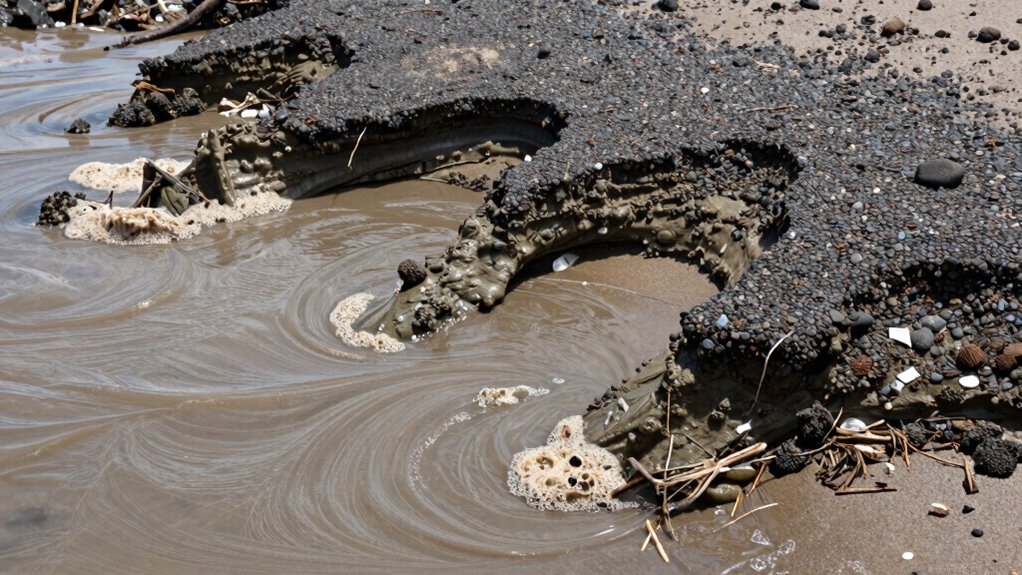
Recurring sediment after storms signals that the landscape or environment isn’t fully stable. It suggests that the natural or man-made features designed to contain or control sediment are either overwhelmed or ineffective. For example, poorly maintained dams, inadequate vegetation cover, or eroded riverbanks can all contribute to ongoing sediment movement. These features influence erosion patterns, making some areas more prone to losing soil while others accumulate sediment. When stormwater repeatedly remobilizes these deposits, it indicates that the landscape’s natural defenses or engineered controls aren’t strong enough to prevent sediment from shifting repeatedly. Additionally, repeated sediment reappearance can be a sign of soil instability, which results from ongoing erosion processes that weaken land surfaces over time. The presence of erosion vulnerabilities can further exacerbate sediment displacement during storms. Recognizing these signs early can help in implementing more effective erosion control measures to prevent further landscape degradation. In some cases, natural processes such as sediment transport play a significant role in shaping these patterns and should be considered in mitigation efforts.
As an affiliate, we earn on qualifying purchases.
Frequently Asked Questions
How Can I Prevent Sediment Buildup After Storms?
To prevent sediment buildup after storms, focus on effective stormwater management and erosion control methods. You can install silt fences, erosion control blankets, or check dams to trap sediment and slow runoff. Regularly inspect and maintain these barriers, especially after storms. Planting ground cover or native vegetation helps stabilize soil. Properly grading your landscape directs water flow away from vulnerable areas, reducing sediment runoff and buildup over time.
Does Recurring Sediment Indicate Underlying Soil Issues?
Recurring sediment after storms often signals deeper soil issues, like fragile soil stability and shifting erosion patterns. Think of your land as a fragile dance floor—if it’s uneven or cracking, storms will cause more debris to fall. Persistent sediment build-up suggests your soil might be prone to erosion or isn’t anchored well, pointing to underlying problems that need addressing to prevent future damage and preserve your landscape’s health.
What Equipment Is Best for Removing Sediment?
You should use equipment designed for sediment removal that prioritizes durability and efficient sediment sorting. A high-powered vacuum or a sediment pump can quickly extract loose sediment, while wheel loaders or excavators with sturdy buckets are great for larger deposits. Opt for durable equipment to withstand harsh conditions, and choose tools that facilitate effective sediment sorting, ensuring you remove debris without damaging your machinery or causing further soil disturbance.
How Long Does Sediment Typically Take to Settle?
Think of sediment settling as a gentle dance, taking its time to find stillness. Depending on sediment composition and settling velocity, it can take anywhere from hours to days. Fine particles like silt settle slowly, while coarser materials like gravel settle faster. You’ll notice the water clearing gradually, revealing a calmer scene. Patience is key — understanding these factors helps you predict when your water will be back to clarity.
Can Recurring Sediment Affect Local Water Quality?
Recurring sediment can markedly impact your local water quality by increasing sediment pollution, which clouds water and reduces oxygen levels. This sediment can smother aquatic habitats, harming fish and other aquatic life. When storms cause repeated sediment runoff, it leads to long-term pollution issues, making water less safe for recreation and wildlife. Managing stormwater runoff and controlling erosion are essential to protect your water resources from ongoing sediment-related problems.
stormwater sediment removal equipment
As an affiliate, we earn on qualifying purchases.
As an affiliate, we earn on qualifying purchases.
Conclusion
When you notice recurring sediment after storms, it’s like the Earth’s quiet whisper of resilience and change. Just as the river carves its path through persistence, these sediments remind you that nature’s cycles are ongoing, echoing the timeless dance of renewal and erosion. Recognize this pattern as a chapter in the Earth’s story, where each deposit hints at deeper stories of balance, chaos, and the relentless pursuit of harmony—much like the eternal ebb and flow of life itself.
erosion control blankets for landscaping
As an affiliate, we earn on qualifying purchases.
As an affiliate, we earn on qualifying purchases.
check dams for erosion prevention
As an affiliate, we earn on qualifying purchases.
As an affiliate, we earn on qualifying purchases.
Fall Picks
fall essentials
As an affiliate, we earn on qualifying purchases.