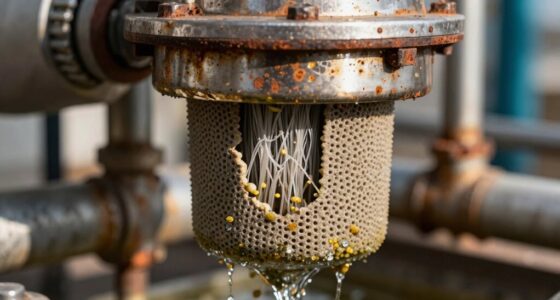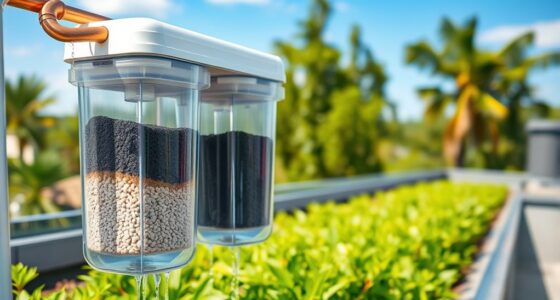

To design a well water system for iron, sediment, and bacteria, start by testing your water to identify specific contaminants. Use sediment filters or multi-stage setups to remove particles, add iron filters like oxidizing or greensand filters for iron, and install UV purifiers or chlorination for bacterial control. Place filters at entry points and guarantee flow rates match household needs. Regular maintenance and testing keep your system effective—keep going to discover more tips for ideal water safety and quality.

Get home appliances delivered free — and shop member deals
- Fast, free delivery on millions of items
- Access to Prime Big Deal Days deals on October 6–7
- Prime Video, Amazon Music and more included
Key Takeaways
- Conduct comprehensive water testing to identify levels of iron, sediment, and bacteria before designing the filtration system.
- Select multi-stage filtration combining sediment filters, iron removal methods, and UV disinfection for comprehensive treatment.
- Install filters at the well entry point to treat all household water and prevent pressure drops.
- Match filter sizes and flow rates to household demand, ensuring effective removal without overloading system components.
- Implement regular maintenance, including filter replacements and water testing, to maintain system performance and water safety.
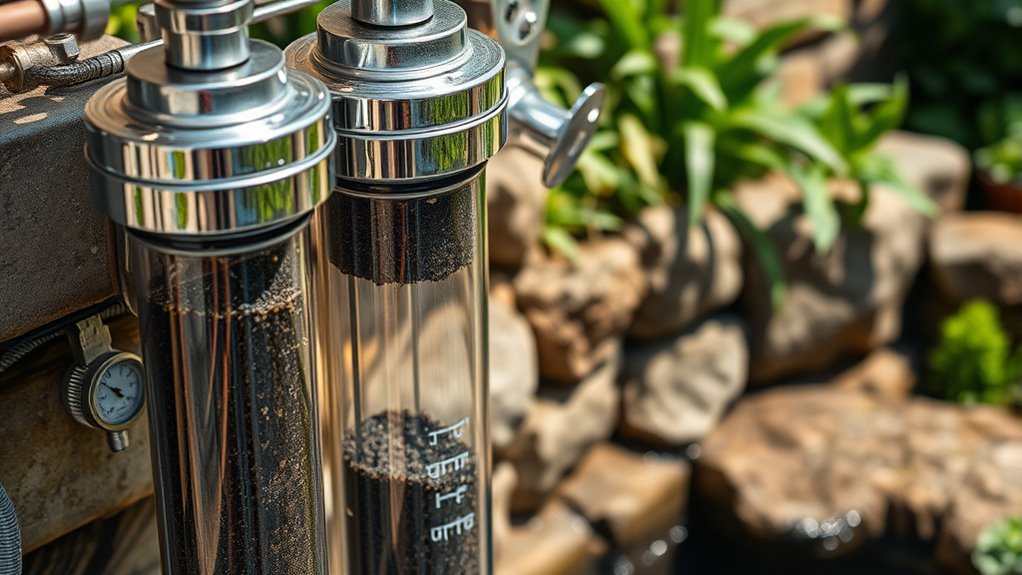
Designing a reliable system for well water guarantees your home receives safe, clean water every day. To achieve this, you need to understand what’s in your water, which begins with water testing. Regular testing helps identify issues like iron, sediment, bacteria, or other contaminants that could compromise water quality. Once you know what’s present, you can select suitable filtration options tailored to your specific needs. For instance, if water testing reveals high iron levels, you’ll want to incorporate iron removal systems. Sediment may require a sediment filter or a multi-stage filtration setup, while bacteria might call for disinfection methods like UV treatment or chlorination.
Choosing the right filtration options isn’t just about fixing existing problems; it’s about creating a thorough defense that keeps your water safe over time. Sediment filters, for example, trap particles that can clog equipment or cause staining, preserving the lifespan of your entire system. Iron removal systems, such as oxidizing filters or greensand filters, convert dissolved iron into a form that can be easily filtered out. For bacteria, UV purifiers are highly effective—they disinfect water without adding chemicals—while chlorination provides ongoing protection but requires careful handling and maintenance. Depending on your water test results, you might combine several filtration methods to address multiple issues simultaneously.
Designing your well water system also involves considering flow rates, system placement, and maintenance routines. You need filters that match your household’s water usage to prevent pressure drops or system overloads. Position filters at points where water enters your home, ensuring all water gets treated before use. Regular water testing remains essential even after installation; water chemistry can change over time, and new contamination sources might emerge. Staying vigilant allows you to adjust your filtration setup or perform maintenance as needed, keeping your water safe and your system functioning efficiently. Additionally, consulting reliable backup power solutions can ensure your water treatment system remains operational during power outages.
As an affiliate, we earn on qualifying purchases.
Frequently Asked Questions
How Often Should I Test My Well Water for Contaminants?
You should test your well water at least once a year to monitor contaminant levels. Additionally, test it after any weather events, such as storms or heavy rains, that could introduce new contaminants. Regular water testing helps you catch issues early and guarantees your water stays safe. Keep track of the results and adjust your treatment system as needed to maintain clean, healthy water.
Can I Use the Same System for Different Well Water Issues Simultaneously?
Of course, you can use a single system for multi-issue filtration—if you love complexity! System versatility means combining filters for iron, sediment, and bacteria, saving space and money. But don’t expect one magic setup to handle everything flawlessly. You’ll need to tailor it, maybe add stages or specific filters, to guarantee you’re effectively tackling each problem. After all, a one-size-fits-all approach rarely fits all issues perfectly.
What Are the Long-Term Maintenance Costs for Well Water Treatment Systems?
Your long-term maintenance costs depend on your system’s size and complexity. Typically, you should budget for regular filter replacements, disinfectant refills, and occasional system inspections. Cost estimation varies, but you might spend a few hundred dollars annually. Following proper maintenance schedules can help prevent costly repairs and extend system lifespan. Staying consistent with upkeep guarantees your well water remains safe without unforeseen expenses piling up over time.
Are There Eco-Friendly Options for Treating Iron, Sediment, and Bacteria?
Yes, eco-friendly options exist for treating iron, sediment, and bacteria. You can use biological filtration, which harnesses beneficial bacteria to naturally break down contaminants, or rely on natural purification methods like UV sterilization and aeration. These approaches reduce chemical use and energy consumption, making your water treatment more sustainable. Implementing biological filtration promotes a healthier environment while effectively managing your well water issues.
How Do Seasonal Changes Affect Well Water Quality and System Performance?
When it comes to seasonal fluctuations, your well water quality and system performance can change quite a bit. Warmer months boost microbial activity, increasing bacteria levels, while colder seasons may cause sediment to settle differently. These changes can strain your treatment system or require adjustments. Stay vigilant by regularly testing your water, and consider seasonal maintenance to keep iron, sediment, and bacteria levels in check, ensuring safe, clean water year-round.
iron removal water filter for well water
As an affiliate, we earn on qualifying purchases.
As an affiliate, we earn on qualifying purchases.
Conclusion
Now that you understand how to tackle iron, sediment, and bacteria, you’re equipped to protect your well water like a true guardian. Think of your filtration system as a shield, defending your health and home from unseen invaders. With proper design and maintenance, you’ll enjoy clean, safe water—your personal oasis amid the chaos. After all, isn’t it worth investing in peace of mind, knowing your well water is as pure as your intentions?
As an affiliate, we earn on qualifying purchases.
multi-stage well water filtration system
As an affiliate, we earn on qualifying purchases.
As an affiliate, we earn on qualifying purchases.
Fall Picks
fall essentials
As an affiliate, we earn on qualifying purchases.