
Planning for proper drainage and wastewater management involves evaluating your property’s topography, soil type, and local regulations. You should develop a thorough drainage plan that includes installing gutters, storm drains, and retention ponds to divert runoff safely. Regularly inspect and maintain septic systems and stormwater control measures to prevent blockages and failures. Long-term success depends on proactive upkeep and thoughtful design—keep exploring to discover more ways to protect your property and the environment.
Key Takeaways
- Conduct site assessments to analyze topography, soil type, and existing drainage infrastructure.
- Develop comprehensive drainage plans incorporating stormwater management techniques and proper infrastructure.
- Regularly inspect and maintain gutters, storm drains, and septic systems to ensure optimal performance.
- Implement sustainable practices like rain gardens and permeable pavements to enhance runoff management.
- Comply with local regulations and consider long-term maintenance to prevent pollution and property damage.

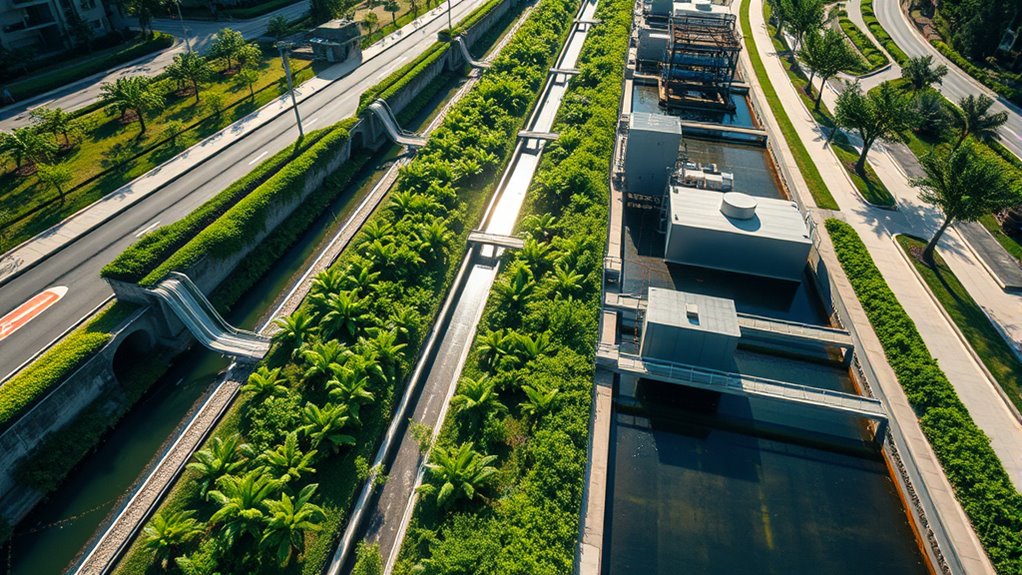
Effective drainage and wastewater management are indispensable for maintaining public health, protecting the environment, and ensuring the smooth functioning of urban and rural areas. When you plan your drainage systems carefully, you prevent water from pooling in undesirable places, reduce the risk of flooding, and minimize the spread of waterborne diseases. One pivotal aspect to consider is managing stormwater runoff. During heavy rains, excess water flows over surfaces like roads, rooftops, and lawns, carrying pollutants into local waterways. Without proper infrastructure—such as storm drains, retention ponds, or permeable pavements—this runoff can cause erosion, water pollution, and even urban flooding. You need to assess your property’s layout and implement effective stormwater management solutions that divert runoff away from structures and direct it into safe water bodies or recharge areas. Installing gutters, downspouts, and rain gardens helps you control stormwater runoff and reduces strain on municipal drainage systems. Additionally, utilizing stormwater management techniques can further enhance your property’s ability to handle heavy rainfall efficiently.
Another essential element is septic system maintenance. If your property relies on a septic tank, regular inspections and pumping are imperative. Neglecting septic maintenance can lead to system failures, which cause sewage backups, groundwater contamination, and health hazards. You should schedule routine inspections to check for leaks, clogging, or signs of system overload. Pumping out the tank every three to five years ensures it functions efficiently and prevents solids from accumulating, which can clog the system. Proper septic maintenance also involves conserving water—using low-flow fixtures and spreading out water-intensive activities—so you don’t overload the system. When designing your drainage plan, consider the size of your septic system relative to your household and local regulations to guarantee it can handle your needs comfortably.
Planning for proper drainage and wastewater management isn’t just about installing the right infrastructure; it’s about ongoing maintenance and thoughtful design. You should evaluate your property’s topography, soil type, and local regulations to develop a thorough plan that minimizes risks and maximizes efficiency. Regularly inspecting stormwater control measures, cleaning gutters, and maintaining septic systems are all part of this process. By staying proactive, you protect your property from water damage, prevent environmental pollution, and ensure that your wastewater is handled safely and effectively. Proper planning and maintenance might seem like extra work at first, but they save you money, time, and trouble in the long run, creating a healthier environment for everyone.
Frequently Asked Questions
How Often Should Drainage Systems Be Inspected and Maintained?
You should inspect your drainage systems at least twice a year, typically in spring and fall, to catch any issues early. Regular inspections help identify blockages or damage, while maintenance techniques like cleaning out debris and checking for leaks keep your system functioning smoothly. Stay proactive by adhering to your inspection schedules and applying proper maintenance techniques to prevent costly repairs and ensure effective wastewater management.
What Are the Best Eco-Friendly Methods for Wastewater Treatment?
They say, “Every drop counts,” and eco-friendly wastewater treatment methods do just that. You can use constructed wetlands, which naturally filter pollutants, or apply bioremediation techniques that harness microbes to break down contaminants. These methods are sustainable, cost-effective, and gentle on the environment. By adopting them, you help protect water resources and promote healthier ecosystems. It’s a smart choice for a greener future.
How Can I Prevent Flooding During Heavy Rainstorms?
To prevent flooding during heavy rainstorms, you should implement stormwater retention systems that hold excess water and slowly release it, reducing runoff. Additionally, installing flood barriers around vulnerable areas can block rising floodwaters. Regularly clear drainage channels and gutters to make certain unobstructed flow. Combining these measures helps manage heavy rainfall effectively, protecting your property from flooding and minimizing water damage during storms.
Are There Government Incentives for Upgrading Drainage Infrastructure?
Yes, there are government incentives like grants and infrastructure funding to help you upgrade drainage systems. You can apply for government grants aimed at improving local infrastructure, which often include drainage enhancements. These programs are designed to support communities in reducing flood risks and managing wastewater effectively. Check with local agencies or your municipality’s website to find available funding opportunities and eligibility requirements to upgrade your drainage infrastructure.
What Materials Are Most Durable for Long-Term Drainage System Installation?
You should choose high-density polyethylene (HDPE), concrete, or vitrified clay pipes for long-term drainage system installation, as these materials excel in durability. Focus on material selection by considering durability factors like resistance to corrosion, chemical exposure, and mechanical stress. HDPE offers flexibility and corrosion resistance, concrete provides strength and longevity, and vitrified clay boasts excellent chemical stability. These options guarantee your drainage system remains reliable over the years.
Conclusion
Think of your drainage system as the veins of your community—when they’re clear and well-maintained, everything flows smoothly. I once saw a neighborhood where poor drainage caused flooding after every rain, like a clogged artery. Proper planning keeps your wastewater moving effortlessly, preventing backups and health hazards. By investing in effective drainage, you’re ensuring your environment stays clean and healthy, just like a well-oiled machine that runs seamlessly—protecting your home and future.