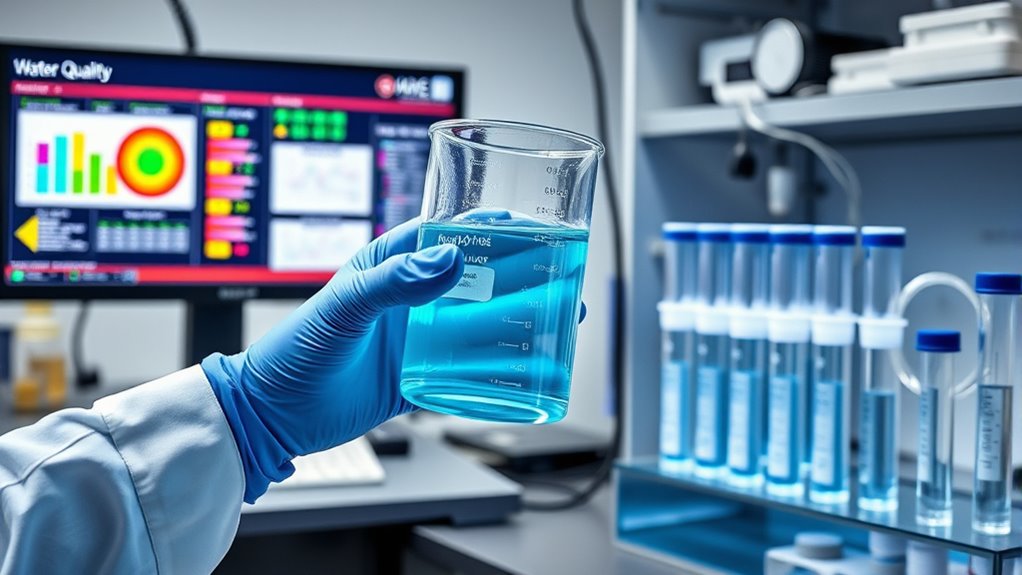

Health advisories and water quality standards are your first line of defense against contaminated water. Standards set safe limits for chemicals, bacteria, and other pollutants, based on scientific research to protect your health and the environment. When contamination exceeds these limits, authorities issue advisories to guide actions like boiling water or using alternative sources. To stay informed and understand how these protections work, keep exploring how agencies monitor and respond to water safety issues.

Get home appliances delivered free — and shop member deals
- Fast, free delivery on millions of items
- Access to Prime Big Deal Days deals on October 6–7
- Prime Video, Amazon Music and more included
Key Takeaways
- Water quality standards set maximum contaminant levels to protect public health and the environment.
- Health advisories are issued when contaminant levels exceed safe thresholds, guiding public actions.
- Standards are based on scientific research, regularly reviewed, and updated to reflect new health data.
- Regulatory agencies enforce compliance through monitoring, testing, and corrective measures.
- Clear regulations ensure safe drinking water, preventing health risks from contaminated sources.

Water quality standards are essential guidelines that guarantee safe and clean water for drinking, recreation, and ecosystems. These standards set the acceptable levels of various contaminants, ensuring that water remains safe for human health and the environment. When you look into these standards, you’ll notice they specify contaminant thresholds—maximum allowable concentrations for pollutants like bacteria, heavy metals, chemicals, and other harmful substances. These thresholds are carefully determined based on scientific research and health data, and they help prevent adverse health effects caused by exposure to contaminated water. If contaminant levels exceed these thresholds, water providers are required to take action, such as issuing advisories, treating the water, or finding alternative sources.
Water standards set safe contaminant levels to protect health and the environment.
Understanding these standards also means recognizing the role of regulatory frameworks that oversee their implementation and enforcement. Governments and environmental agencies develop and enforce regulations to ensure water suppliers comply with established contaminant thresholds. These frameworks provide a legal basis for monitoring water quality, conducting regular testing, and taking corrective measures when standards are not met. As someone concerned about water safety, you should be aware that these regulations are designed to protect public health by setting clear, enforceable limits that water providers must follow. They also promote accountability and transparency, requiring utilities to report their water quality data and respond promptly to violations.
You’ll find that regulatory frameworks often include a combination of federal, state, and local rules, each playing a role in maintaining water safety. For example, in the United States, the Safe Drinking Water Act (SDWA) establishes national standards and empowers the Environmental Protection Agency (EPA) to regulate contaminants and oversee public water systems. These frameworks are regularly reviewed and updated based on new scientific findings, making sure standards stay relevant as new contaminants are discovered or as health impacts become clearer. Additionally, public awareness about water quality monitoring can improve community engagement and proactive responses. As a consumer, you should feel reassured that these regulations are in place, working behind the scenes to keep your water safe.
However, it’s also important to stay informed about local water quality reports and advisories. If contamination levels approach or exceed regulatory thresholds, authorities will issue health advisories to warn the public. These advisories might recommend boiling water, using alternative sources, or installing filtration systems. By understanding how contaminant thresholds and regulatory frameworks work together, you gain insight into the safeguards designed to protect your health and the environment. It’s a reminder that water quality standards aren’t just numbers—they’re vital tools that help ensure everyone has access to safe, clean water every day.
Frequently Asked Questions
How Often Are Water Quality Standards Reviewed and Updated?
Water quality standards are typically reviewed every three to five years through periodic reviews, ensuring they stay current with scientific advancements and public health needs. During these reviews, regulatory updates may be proposed or implemented to improve safety and effectiveness. You should stay informed about these updates, as they can impact water treatment practices and safety guidelines, helping you better protect yourself and your community.
What Are the Health Risks of Exceeding Water Quality Standards?
Exceeding water quality standards can increase your risk of contaminant exposure, which may lead to serious health impacts. You might experience gastrointestinal illnesses, neurological effects, or other health problems depending on the contaminant involved. Long-term exposure can cause chronic health issues. It’s essential to stay informed about water safety, avoid contaminated water sources, and follow advisories to minimize health risks associated with unsafe water quality.
How Can Consumers Test Their Private Water Supplies?
Did you know that nearly 15% of households rely on private wells? You can test your private water supplies through DIY testing kits available at hardware stores or online. Use simple sampling methods, like collecting water samples in clean containers and following the kit instructions carefully. Regular testing helps detect contaminants early, ensuring your water stays safe to drink and reducing health risks associated with contaminated water.
Are Water Quality Standards the Same Worldwide?
Water quality standards aren’t the same worldwide; they vary due to international consistency and cultural differences. You’ll find countries set different limits for contaminants based on local health priorities, resources, and cultural practices. This means what’s acceptable in one country might not meet standards elsewhere. When evaluating water safety, consider these differences, and always stay informed about local standards to ensure your water is safe and healthy for your use.
What Role Do Government Agencies Play in Enforcing Water Standards?
Government agencies play a vital role in enforcing water standards through regulatory enforcement, ensuring water quality remains safe for public use. They establish and monitor compliance with agency responsibilities, which include setting water quality criteria, inspecting water sources, and taking corrective actions when standards are not met. Your local, state, and federal agencies work together to protect public health by making sure water suppliers follow these regulations consistently.
Conclusion
By understanding water quality standards and health advisories, you empower your choices and protect your health. Stay vigilant, verify values, and value vigilance — because safe water safeguards your well-being. Remember, vigilance is essential; your awareness makes a difference. When you prioritize proper precautions, you promote purity and prevent problems. So, stay savvy, stay safe, and see that your surroundings stay sound. Your proactive approach protects not just your health, but the harmony of your home and community.
Fall yard work Picks
leaf blowers
As an affiliate, we earn on qualifying purchases.