To prevent scale buildup in a tankless water heater with hard water, choose models made from materials like copper or brass, which resist mineral deposits better. Look for systems with built-in descaling or flush ports for easy maintenance. Opt for units with electronic controls that monitor flow and heat, adjusting operation to reduce mineral contact. Installing a water softener prior to the heater adds extra protection. Continue exploring to discover more effective design features that keep your system running smoothly.
Key Takeaways
- Choose tankless units with built-in descaling features and easy access flush ports for routine mineral removal.
- Opt for materials like copper or brass that resist scale formation and mineral buildup.
- Incorporate electronic controls to monitor and adjust flow rates, reducing mineral contact with heat exchangers.
- Install water softeners before the heater to lower mineral content and prevent scale accumulation.
- Select corrosion-resistant designs with advanced scale prevention features for enhanced durability in hard water conditions.
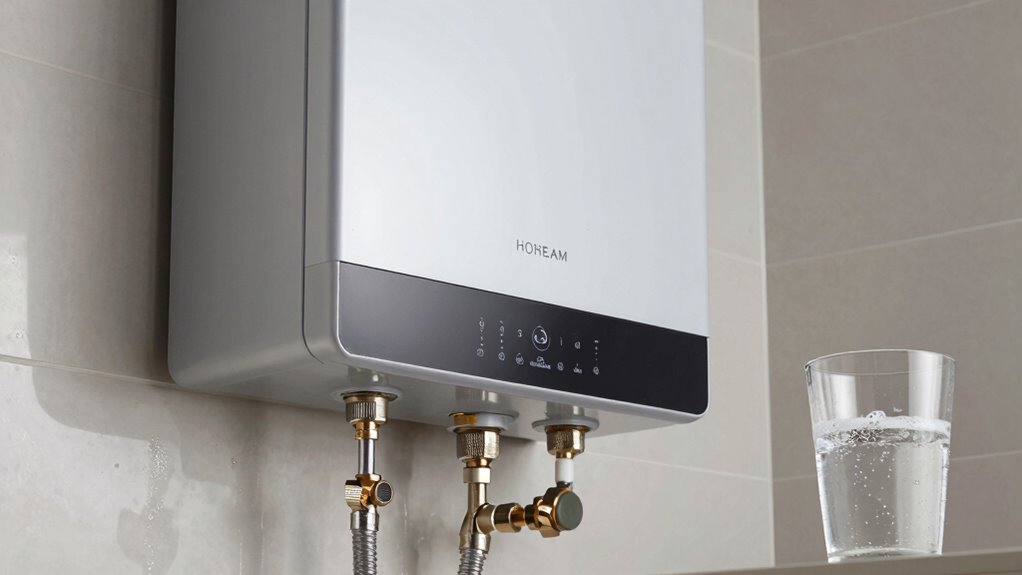
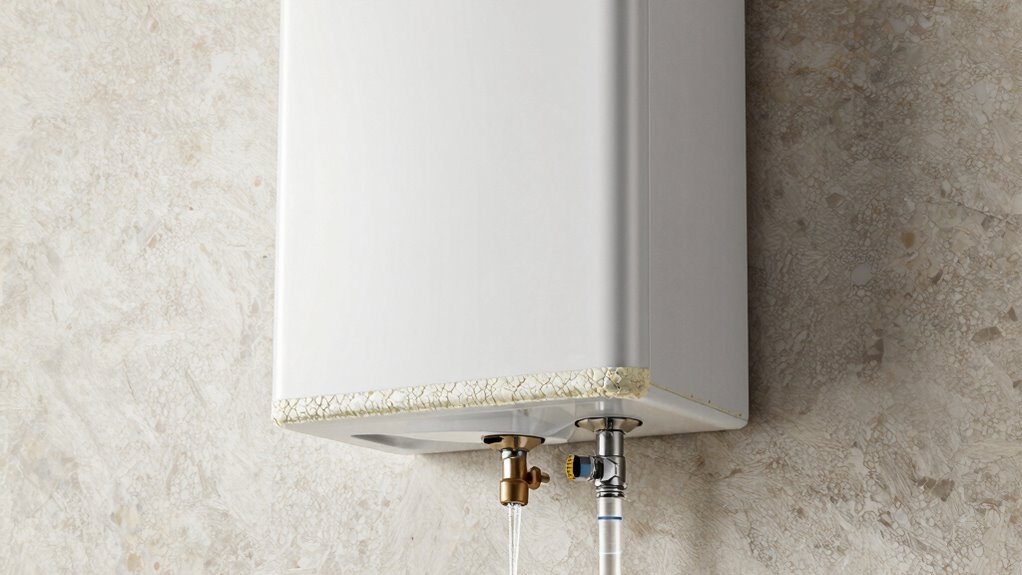
If you have hard water and are considering a tankless water heater, it’s important to understand how mineral buildup can affect its performance. Hard water contains high levels of minerals like calcium and magnesium, which tend to accumulate inside the unit over time. This mineral buildup, or scale, can substantially reduce efficiency, increase energy costs, and even cause premature failure of your heater. To combat these issues, selecting a design that prioritizes scale prevention is essential.
Hard water minerals can cause scale buildup, reducing heater efficiency and lifespan. Choose a design that emphasizes scale prevention.
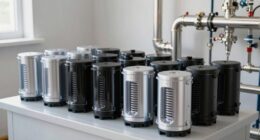
One of the most effective ways to prevent mineral buildup is choosing a tankless water heater with a copper or brass heat exchanger. These materials are more resistant to scale formation compared to stainless steel or other metals. Copper, in particular, offers excellent thermal conductivity and naturally resists mineral deposits, helping to maintain ideal performance over the years. Some models also incorporate a double-pass heat exchanger, which improves heat transfer efficiency and minimizes areas where minerals can settle.
Another vital design feature for scale prevention is the inclusion of a built-in descaling system or flush ports. These allow you to easily perform routine maintenance, such as flushing out mineral deposits before they harden. Regular maintenance can extend the life of your heater and keep it running at peak efficiency, especially if you live in an area with very hard water. Some units come with automatic flushing systems that activate periodically, reducing the need for manual intervention and ensuring ongoing scale prevention.
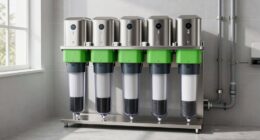
In addition, consider models with advanced electronic control systems that monitor water flow and temperature, adjusting operation to reduce mineral buildup. These systems can detect early signs of scale formation and trigger preventative measures, such as increasing flow rates to minimize mineral contact with heat exchange surfaces. Moreover, integrating a water softener into your home’s plumbing system can substantially reduce mineral content before water even reaches your heater, providing an extra layer of scale prevention.
Furthermore, selecting a heater with a corrosion-resistant design can help prolong the unit’s lifespan despite the presence of minerals in hard water. Finally, keep in mind that proper installation and sizing are key to avoiding scale-related issues. A professional installer can ensure your unit is correctly sized for your household’s hot water demand and set up with appropriate inlet water treatment options. By choosing a heater with these design features and maintaining it regularly, you can effectively prevent mineral buildup, making sure your tankless water heater remains efficient, reliable, and long-lasting despite the challenges posed by hard water.
Frequently Asked Questions
How Often Should I Flush My Tankless Heater in Hard Water Areas?
You should flush your tankless heater every 6 to 12 months in hard water areas to prevent scale buildup. Regular maintenance frequency helps keep the unit running efficiently and extends its lifespan. If you notice reduced hot water flow or longer heating times, consider flushing sooner. Using a descaling solution during each flush ensures mineral deposits don’t accumulate, maintaining peak performance and avoiding costly repairs.
Are There Specific Models Better Suited for Hard Water Conditions?
Yes, when selecting models for hard water conditions, look for units with features like scale prevention technology and larger heat exchangers. Compare models based on feature sets that reduce mineral buildup, such as built-in descaling systems or anti-scale coatings. Reading feature comparisons helps you choose a heater designed to handle hard water, minimizing maintenance and extending its lifespan. Opt for reputable brands known for durability in challenging water conditions.
Can Water Softeners Be Integrated With Tankless Water Heaters?
Can water softeners be integrated with tankless water heaters? Absolutely, and it’s like giving your system a shield against scale. Water softener compatibility is key, ensuring smooth integration. These softeners reduce mineral content, helping prevent scale buildup—a vital scale prevention strategy. By connecting a water softener, you prolong your heater’s lifespan, improve efficiency, and enjoy consistent hot water, making your home more comfortable and your system more resilient against hard water’s effects.
What Are the Long-Term Maintenance Costs for Hard Water Treatment?
Your long-term maintenance costs for hard water treatment depend on factors like your water usage and chosen system. Generally, softeners require ongoing salt top-ups and occasional media replacements, which can add up over time. When doing a cost comparison, consider potential equipment upgrades, such as installing scale-preventing features in your tankless water heater, to reduce maintenance needs and save money in the long run.
How Does Hard Water Affect the Lifespan of My Tankless Water Heater?
Ever wonder how hard water impacts your tankless water heater’s lifespan? Scale buildup from minerals causes corrosion and clogs, markedly shortening its life. Without proper treatment, your unit faces increased wear and tear. To prevent this, guarantee corrosion prevention measures are in place, like installing a water softener or using scale-resistant designs. Regular maintenance also helps keep your heater running efficiently and extends its longevity.
Conclusion
To keep your tankless water heater running smoothly despite hard water, choose models with built-in scale prevention features and install effective water softening systems. Regular maintenance and descaling are your best allies, turning what feels like an impossible battle into a manageable task. With the right design choices, you can prevent scale buildup and extend your heater’s lifespan far beyond what you’d expect—probably long enough to outlast even the most stubborn mineral deposits in history.