
TL;DR
Open a free Amazon Business account
Business pricing, bulk buying and tax-exempt orders.
As an affiliate, we earn on qualifying purchases.
A hacker has modified a commercially available ESP32 smart bulb to act as a local web server hosting banned books. The device broadcasts a WiFi network allowing users to browse and access these books, raising concerns about digital censorship and DIY activism.
A hacker has transformed a commercially available ESP32 smart bulb into a WiFi server hosting banned books, enabling access through a local network. This development highlights the potential for DIY devices to bypass censorship and raises questions about digital activism and security.
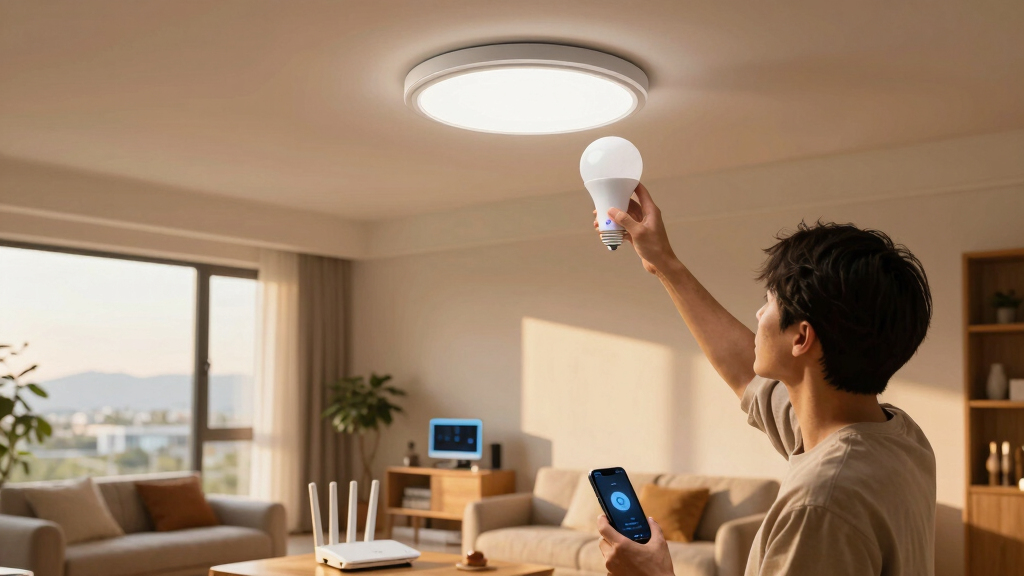
The hack involves disassembling an IoT-enabled smart bulb to access its internal ESP32 chip, which is then repurposed as a web server hosting a small library of e-books. The device broadcasts a public WiFi network, prompting users to connect and browse content via a captive portal. Although the device’s storage is limited to approximately 4MB, it contains several e-books pulled from US school libraries, which have been removed due to censorship policies. The project aims to demonstrate how everyday IoT devices can be repurposed for activism or privacy-preserving activities, but it also raises concerns about misuse and security vulnerabilities. The creator has noted that the device remains functional as a smart bulb, providing ambient lighting, alongside hosting the library.
Implications for Digital Censorship and DIY Tech
This development underscores how accessible technology can be used to challenge censorship, enabling individuals to host and access banned content privately. It also highlights the potential for IoT devices to be repurposed for activism, but raises security and safety concerns about unregulated modifications of connected devices. The hack demonstrates the blurring line between consumer electronics and tools for digital resistance, which could influence future debates on digital rights and surveillance.
As an affiliate, we earn on qualifying purchases.
Rise of IoT Devices as Platforms for Censorship Bypass
Over recent years, the proliferation of IoT devices like smart bulbs, cameras, and home assistants has created new avenues for digital expression and activism. This particular hack builds on prior examples of repurposing IoT hardware for unconventional uses, such as hosting servers or community networks. The specific focus on hosting banned books stems from ongoing debates about censorship in US schools, where certain literature has been removed from curricula. The project exemplifies a broader trend of DIY tech communities exploring ways to circumvent restrictions and promote access to information, often through small, low-cost devices. The hack was first shared on online forums and has gained attention for its simplicity and potential implications.
“This demonstrates how easily consumer IoT devices can be turned into tools for digital activism or censorship resistance.”
— an anonymous researcher
As an affiliate, we earn on qualifying purchases.
Unclear Scope of Potential Misuse and Security Risks
It is not yet clear how widely this hack could be replicated or used maliciously. While the current demonstration is limited and primarily educational, the security implications of such modifications remain uncertain. Experts warn that unregulated hacking of IoT devices could lead to vulnerabilities, but the full scope of potential misuse is still developing.
As an affiliate, we earn on qualifying purchases.
Potential Responses and Future DIY Projects
Authorities and manufacturers may consider implementing security measures to prevent unauthorized modifications of IoT devices. Meanwhile, the DIY community might explore further applications of hacked smart devices for activism or private communication. The hack also raises questions about regulation, security standards, and the role of consumer electronics in digital rights advocacy. Future developments could include more sophisticated implementations or official responses to such modifications.
As an affiliate, we earn on qualifying purchases.
Key Questions
Can this hacked smart bulb be used safely in a home environment?
Using a modified device like this may introduce security vulnerabilities. It is recommended to understand the risks before deploying such a device in a sensitive environment.
Does this hack violate any laws or regulations?
The legality depends on local laws regarding device modification and content hosting. Users should be aware of potential legal implications before attempting similar projects.
What kind of content is hosted on the hacked bulb?
The current setup hosts a small library of e-books, including titles that have been banned or removed from US school libraries.
Could this hack be used for malicious purposes?
While the current demonstration is educational, similar modifications could potentially be exploited for malicious activities, highlighting security concerns.
Are there risks to the device’s primary function as a smart bulb?
According to the creator, the device remains functional as a smart bulb, but modifications could impact its performance or safety if not done properly.
Source: Hackaday
Fall yard work Picks
leaf blowers
As an affiliate, we earn on qualifying purchases.