To guarantee your sediment staging strategies meet codes and compliance standards, you must perform accurate calculations for storage volume, considering factors like sediment compaction and soil permeability. Understanding these calculations helps prevent overflows, guarantees proper basin design, and maintains regulatory adherence. Regular monitoring and timely removal are vital. Skipping these steps can lead to penalties and environmental issues. Keep exploring further, as you’ll uncover essential tips to optimize your sediment management process.
Key Takeaways
- Understand and incorporate local, state, and federal regulations governing sediment control and erosion prevention into your staging plans.
- Accurately calculate sediment storage capacity, considering compaction and soil permeability to prevent overflow and ensure compliance.
- Regularly monitor sediment buildup and removal efficiency, adjusting staging strategies to meet legal and environmental standards.
- Document all regulatory measures, inspections, and adjustments to demonstrate compliance during audits and inspections.
- Leverage advanced data management tools and software for precise calculations, real-time monitoring, and maintaining thorough compliance records.
Understanding Sediment Control Regulations and Standards
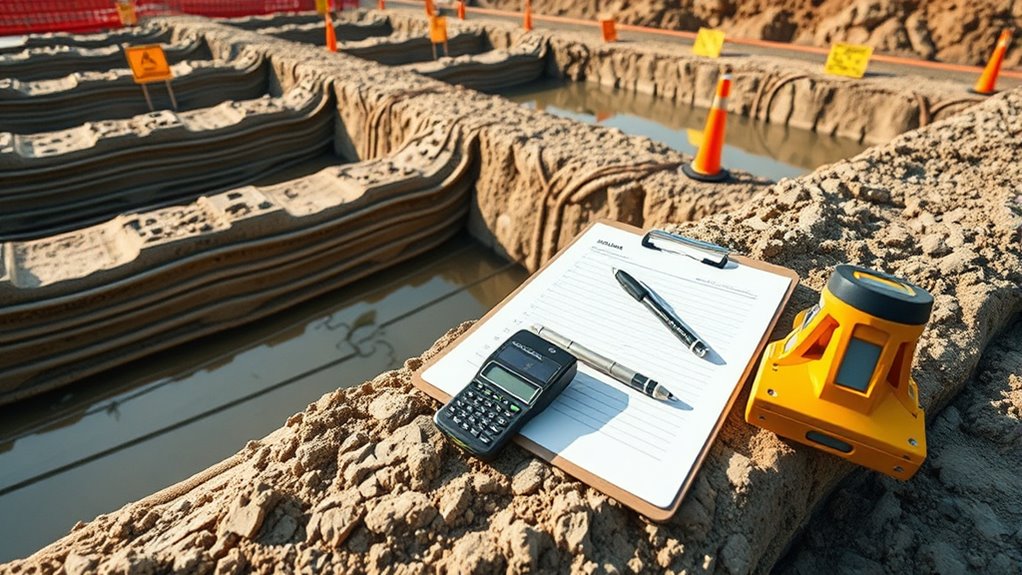
Understanding sediment control regulations and standards is essential for effective sediment staging. These rules guide how you manage stormwater and prevent erosion during construction projects. By complying with local and federal standards, you can reduce environmental impact and avoid costly penalties. Regulations often specify required sediment barriers, settling basins, and inspection routines to ensure proper stormwater management. Erosion control measures are integral to meeting these standards, helping to keep soil on-site and prevent runoff that can pollute nearby waterways. Familiarizing yourself with these regulations allows you to design effective sediment staging plans that align with legal requirements. Staying compliant not only protects the environment but also streamlines your project’s permitting process and minimizes delays. Understanding sediment control regulations and standards is crucial for implementing effective and compliant erosion control strategies.
Essential Calculations for Sediment Storage Volumes

Accurately calculating sediment storage volumes is essential for designing effective sediment management plans. You need to take into account sediment compaction, which reduces volume over time as sediments settle and become denser. This process affects the total storage capacity required. Additionally, soil permeability influences how water drains through the sediment, impacting the rate of settlement and compaction. High permeability soils allow water to escape quickly, reducing sediment volume faster, while low permeability soils retain water longer, maintaining higher volumes initially. To estimate storage needs, you should calculate initial sediment volume based on disturbed area and expected sediment yield, then adjust for compaction factors. Incorporating soil permeability into these calculations ensures your sediment storage is both sufficient and efficient, preventing overflow or underestimation. Understanding the role of color accuracy in projectors can further enhance visualization of sediment distribution and management strategies.
Designing Effective Sediment Basins and Containment Areas
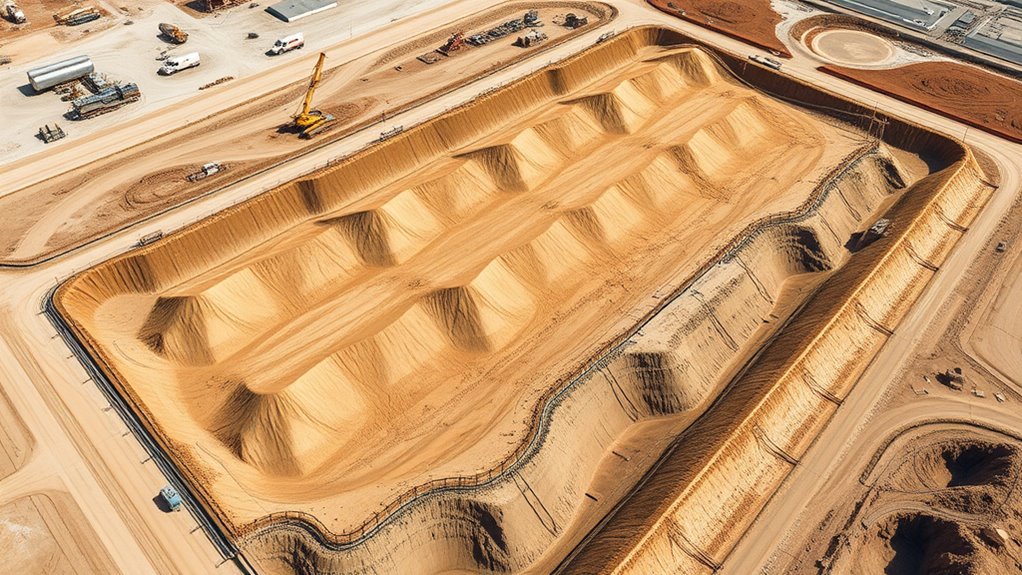
Designing effective sediment basins and containment areas requires careful planning to guarantee they effectively capture and retain sediments while allowing water to flow through safely. Proper design ensures erosion control and minimizes soil compaction issues, which can reduce basin efficiency. To achieve this, consider these key steps:
- Select appropriate basin size and shape based on site conditions.
- Incorporate outlet structures that promote sediment removal without disrupting flow.
- Use erosion control measures around the basin to prevent soil instability and ensure long-term effectiveness.
- Incorporate farmhouse-inspired textiles and accessories that can enhance the visual integration of the basin area into the surrounding landscape, promoting aesthetic harmony and functional durability.
Calculating Sediment Removal Efficiency and Timing
To guarantee your sediment basins operate effectively, you need to calculate how well they remove sediments and determine the best timing for sediment removal. Sediment testing helps you evaluate removal efficiency, ensuring basins aren’t over- or under-cleaned. Proper timing prevents sediment buildup that can reduce basin capacity or cause flow issues. Use data from testing to identify when sediment accumulation reaches a critical level. Consider this example:
| Sediment Level | Action |
|---|---|
| Low | Continue normal operation |
| Moderate | Schedule sediment removal |
| High | Immediate intervention |
Additionally, understanding the cultural narratives promoted through film and media can provide insights into community engagement strategies for environmental projects.
Monitoring and Adjusting Sediment Staging Plans

Monitoring sediment levels regularly allows you to assess whether your staging plans are working effectively. By tracking sediment erosion and slope stabilization, you can identify areas needing adjustments. Consider these key actions:
- Conduct frequent site inspections to observe sediment accumulation and erosion patterns.
- Use real-time data to modify staging timelines, ensuring sediment stays within designated zones.
- Adjust sediment controls proactively, such as adding barriers or stabilizing slopes, to prevent runoff and erosion.
- Incorporate tuning techniques from related vehicle customization practices to enhance your sediment management strategies.
These steps help you optimize sediment staging, reduce environmental impact, and maintain compliance with regulations. Continuous monitoring ensures your plans respond to changing site conditions, minimizing sediment loss and promoting effective slope stabilization. Staying vigilant keeps your project on track and environmentally responsible.
Common Mistakes in Sediment Calculations and How to Avoid Them

One common mistake is overlooking key variables that influence sediment calculations, leading to inaccurate results. Rushing data collection can also cause errors, so take the time to gather thorough and precise information. Additionally, ignoring regulatory details may result in compliance issues, so always ensure your calculations align with current requirements. Incorporating proper analytical methods can help improve accuracy and reliability in your assessments.
Overlooking Key Variables
Overlooking key variables can lead to significant errors in sediment calculations, undermining the accuracy of your staging strategies. Failing to account for factors like soil erosion rates, sediment transport processes, and seasonal weather patterns skews your assessments. Additionally, understanding emotional support can be crucial when working with stakeholders affected by sediment management projects, ensuring effective communication and collaboration.
Consider these common pitfalls:
- Ignoring the rate of soil erosion, which impacts sediment volume.
- Overlooking sediment transport pathways that influence deposit locations.
- Neglecting how storm events accelerate sediment movement and accumulation.
Rushing Data Collection
Have you ever rushed your data collection process when evaluating sediment levels? Skipping thorough sediment sampling can lead to inaccurate results, which jeopardize your entire project. Rushing often results in incomplete or inconsistent samples, making data validation difficult later. When you cut corners on sample collection, you risk missing critical variability in sediment levels across your site. This variability is essential for accurate data interpretation and regulatory compliance. This compromises the reliability of your calculations and could lead to non-compliance with regulations. To avoid this mistake, take your time during sediment sampling, ensuring samples are representative and properly labeled. Always validate your data carefully before proceeding—quick collection might save time upfront, but it can cause costly errors down the line. Precision in data collection is essential for accurate sediment staging and regulatory adherence.
Ignoring Regulatory Details
Neglecting to pay attention to regulatory details during sediment calculations can lead to serious compliance issues, environmental impact, and construction delays. Overlooking specific codes or requirements may cause project setbacks and legal penalties. To avoid this, guarantee you:
- Double-check local, state, and federal sediment control regulations before starting calculations.
- Document all compliance measures to demonstrate adherence during inspections.
- Stay updated on changing environmental standards that could affect your sediment staging strategies.
- Conduct thorough research on Gold IRA Rollovers to understand investment options that can support your financial planning needs.
Ignoring these details risks environmental harm and project delays, which can be costly and damaging to your reputation. Taking the time to understand and incorporate regulatory specifics not only keeps your project compliant but also ensures smooth progress and minimizes environmental impact.
Tools and Software for Accurate Sediment Staging Compliance

Effective sediment staging compliance relies on the right tools and software to guarantee accuracy and efficiency. Innovative software solutions streamline data collection, analysis, and reporting, reducing errors and saving time. These tools often feature advanced data visualization capabilities, allowing you to interpret sediment data quickly and clearly. With user-friendly interfaces, you can easily track progress, identify potential issues, and verify regulatory requirements are met without guesswork. Many software programs integrate with existing project management systems, providing real-time updates and thorough documentation for audit purposes. By leveraging innovative software and data visualization, you can enhance your sediment staging strategies, maintain compliance, and improve overall project outcomes with confidence and precision. Home Improvement strategies can also optimize your data management processes to further boost efficiency and compliance.
Frequently Asked Questions
How Often Should Sediment Staging Plans Be Reviewed and Updated?
You should review and update your sediment staging plans regularly, ideally before each stormwater management season or after significant weather events. Staying current with regulatory updates is essential to guarantee compliance. Frequent reviews help you catch any changes in codes or site conditions, minimizing environmental impact and avoiding penalties. Make it a routine to reassess your plan at least annually, or more often if there are notable site modifications or new stormwater regulations.
What Are the Penalties for Non-Compliance With Sediment Control Codes?
Imagine driving through a construction zone, and suddenly you see flashing lights—those are fines and citations for non-compliance. If you ignore sediment control codes, you risk hefty fines and legal liabilities that can drain your project’s budget. Authorities take violations seriously, so you might face court penalties or stop-work orders. Staying compliant isn’t just about following rules; it protects you from costly legal trouble and keeps your project moving smoothly.
Can Local Climate Variations Impact Sediment Storage Calculations?
Yes, local climate variations can impact sediment storage calculations. Climate effects like heavy rainfall, temperature fluctuations, or droughts cause storage variability, making it harder to predict sediment accumulation accurately. You need to take into account these variations when planning and designing sediment control measures. Ignoring climate effects can lead to underestimating storage needs, risking sediment runoff issues, and potential code violations. Always account for climate-driven changes to ensure compliance and effective sediment management.
Are There Industry-Standard Benchmarks for Sediment Basin Design?
Yes, there are industry-standard benchmarks for sediment basin design. You should rely on regulatory benchmarks like those from EPA or local agencies to guide sediment basin sizing. These benchmarks provide minimum sizing requirements based on project scope and expected sediment loads. By following these standards, you guarantee your design meets compliance, effectively controls sediment, and minimizes environmental impact. Always verify current guidelines, as standards may update periodically.
How Do Sediment Staging Strategies Integrate With Overall Site Erosion Control Plans?
You should integrate sediment staging strategies with your overall site planning and regulatory requirements to guarantee compliance and efficiency. This means designing sediment basins early in the process, aligning staging with erosion control measures, and coordinating with permits. By doing so, you minimize risks of violations, streamline construction, and enhance site stability. Proper integration helps you meet environmental standards while maintaining project timelines and budgets.
Conclusion
Mastering sediment staging strategies is like steering through a complex maze—you need the right calculations and compliance to find your way. By understanding regulations, performing essential calculations, and using the right tools, you can guarantee your project stays on track. Regular monitoring and adjustments keep everything flowing smoothly. Remember, skipping steps is like building a house on quicksand—unstable and risky. Stay diligent, stay compliant, and your sediment control efforts will stand strong.