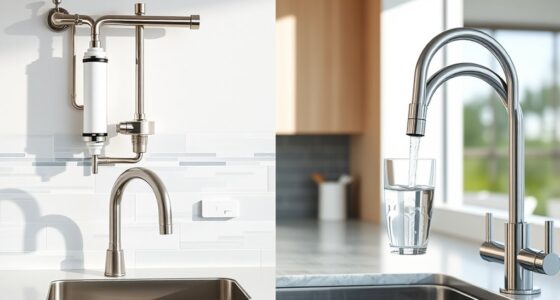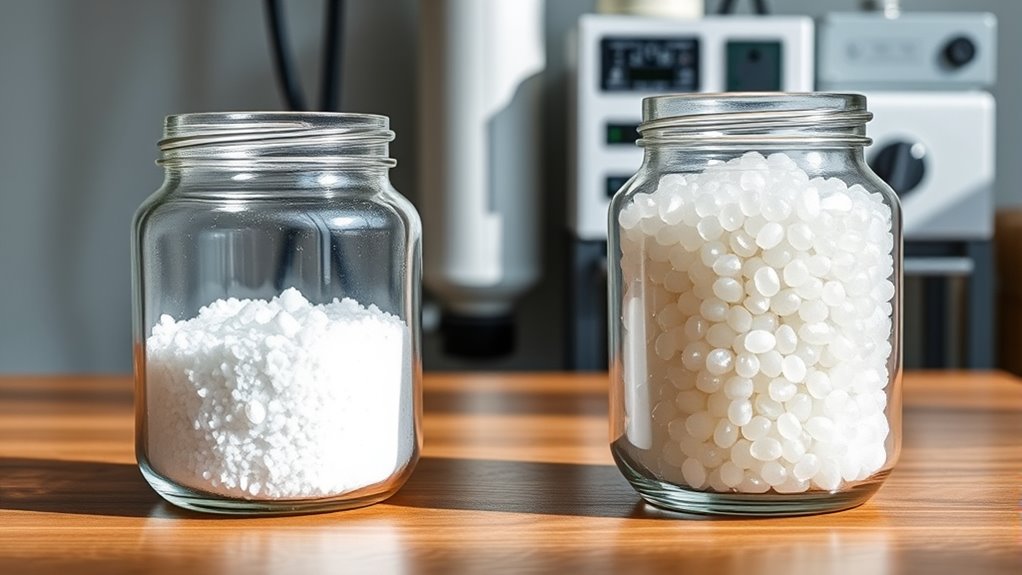

Salt-based water softeners use ion exchange to replace calcium and magnesium with sodium, effectively removing minerals that cause hardness, but they require ongoing salt refills and produce wastewater. Salt-free systems change mineral structure, preventing scale buildup without salt or chemicals, and are low-maintenance and eco-friendly. Your choice depends on how thoroughly you want to remove minerals and your environmental priorities. Keep exploring to find out which system suits your water quality and lifestyle best.
Key Takeaways
- Salt-based softeners remove hardness minerals via ion exchange, while salt-free systems prevent scale formation through crystallization.
- Salt-based systems require ongoing salt refills and generate wastewater; salt-free systems have low maintenance and no brine waste.
- Salt-based units offer more thorough mineral removal, whereas salt-free systems preserve minerals but reduce scale buildup.
- Salt-free systems are more eco-friendly and cost-effective long-term due to lower operational and maintenance costs.
- The choice depends on water hardness, health considerations, environmental impact, and maintenance preferences.
How Do Salt-Based and Salt-Free Water Softeners Work?
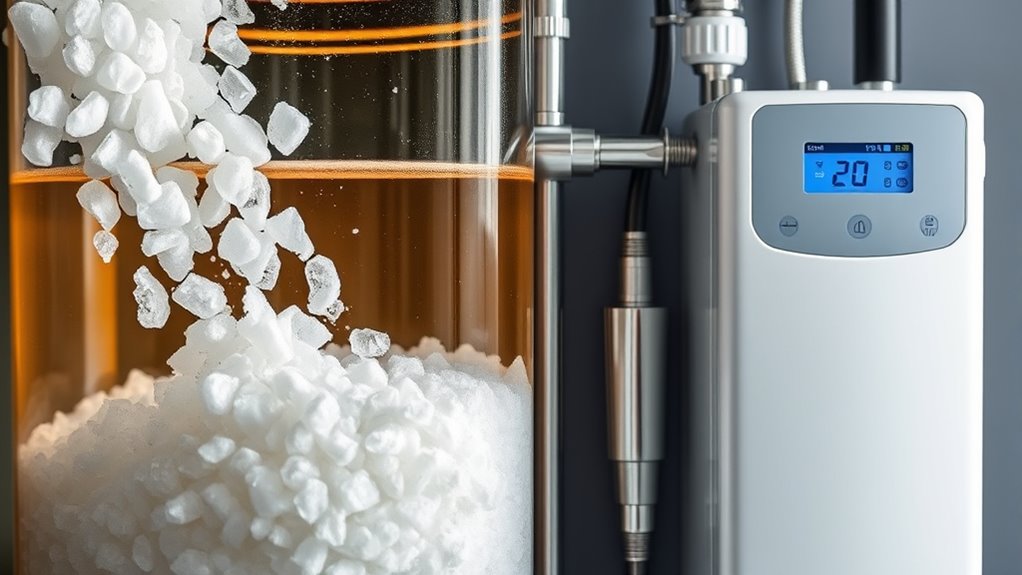
Salt-based water softeners use an ion exchange process where hard water passes through resin beads that swap calcium and magnesium ions for sodium ions, effectively reducing hardness. This mineral removal improves water taste by lowering the levels of minerals that can cause a metallic or bitter flavor. As the exchange occurs, calcium and magnesium are replaced with sodium, which doesn’t contribute to scale buildup. This process guarantees your water is softer and more pleasant to drink and use. Over time, the resin beads need regeneration with salt, restoring their ability to remove minerals. Salt-based systems are effective at removing minerals that cause hardness, directly enhancing water quality and taste, making them a popular choice for households seeking thorough mineral removal. Additionally, home water system maintenance is important to ensure continued effectiveness and safety of the softening process.
What Are the Main Benefits of Each System?
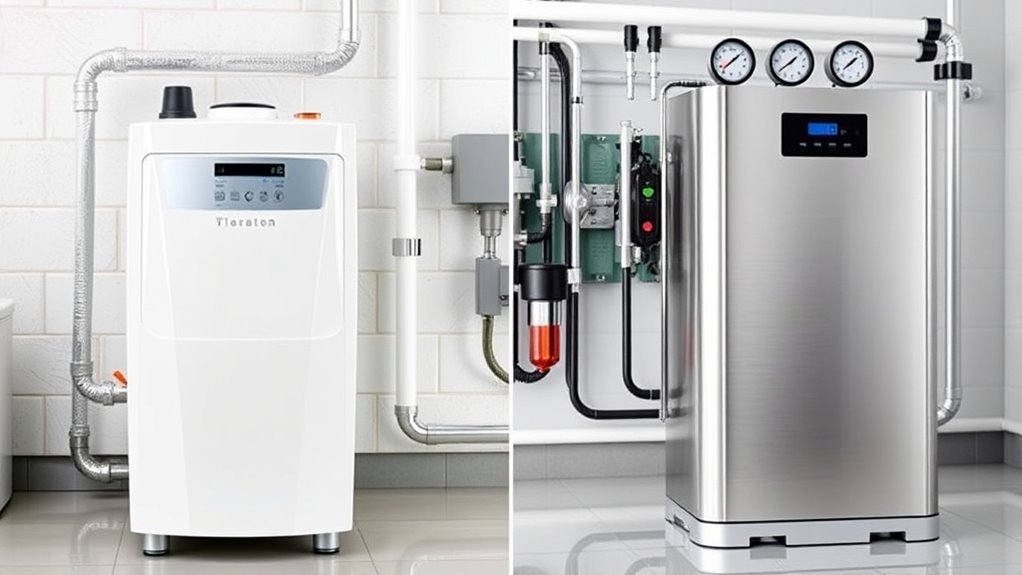
Both salt-based and salt-free water softening systems offer distinct advantages that cater to different household needs. Salt-based systems use salt regeneration and resin technology to remove hardness minerals, providing highly effective softening and extending appliance life. They’re ideal if you want thorough mineral removal and minimal scaling. Salt-free systems, on the other hand, don’t rely on salt or regeneration; instead, they use template-assisted crystallization to condition water. This approach reduces scale buildup without adding salt or chemicals, making maintenance easier and more environmentally friendly. Salt-free systems are often preferred if you seek a low-maintenance, chemical-free solution. Additionally, vetted first home theatre projectors are an example of innovative technology that emphasizes user-friendly features and energy efficiency. Each system’s main benefit depends on your priorities—whether it’s maximum hardness removal or ease of use and sustainability.
Are There Any Drawbacks or Limitations?
While salt-based systems effectively remove hardness minerals, they can be more expensive to install and maintain due to ongoing salt and water use for regeneration. Maintenance concerns include regular salt refills and potential clogging of resin tanks, which require attention to keep the system running smoothly. Additionally, effectiveness limitations may arise in areas with very high mineral content, where the system may struggle to fully soften water or require more frequent regenerations. Over time, mineral buildup can also reduce efficiency, leading to increased energy and salt consumption. Moreover, salt-based systems produce wastewater during regeneration, which can be a concern in areas with strict water regulations. High mineral content can further challenge these systems, sometimes necessitating additional treatment solutions. Overall, while effective, these systems demand ongoing upkeep and have limitations that could impact long-term performance.
Which System Is More Eco-Friendly and Cost-Effective?
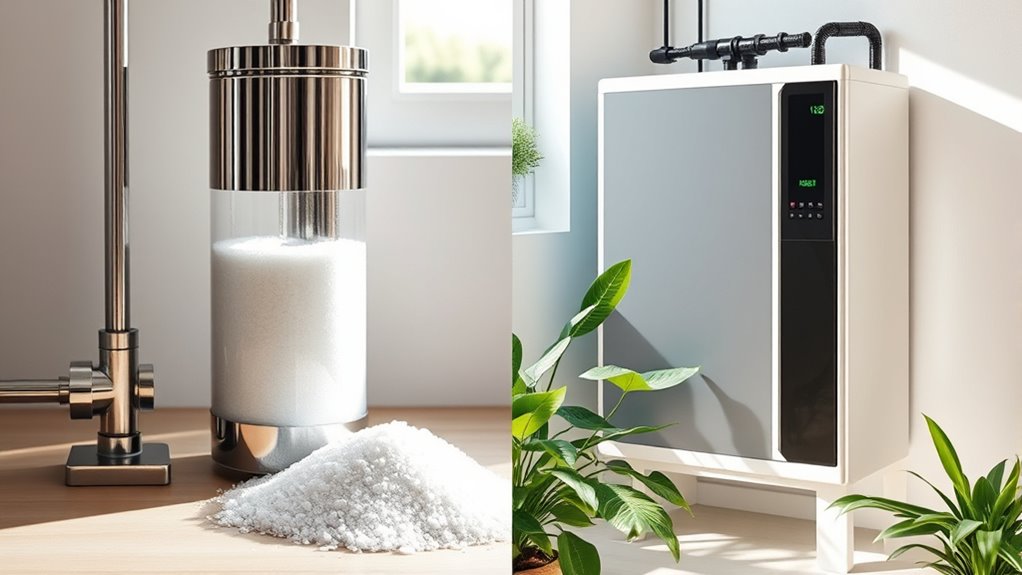
Considering the maintenance challenges and environmental concerns associated with salt-based systems, many homeowners are exploring alternatives that are more eco-friendly and cost-effective. Salt-free systems generally have a lower environmental impact because they don’t produce brine waste or require salt replenishment. Over time, they also offer long-term savings by reducing ongoing expenses and maintenance needs. To compare, here’s a quick overview:
| Feature | Salt-Based System | Salt-Free System | Which is Better? |
|---|---|---|---|
| Environmental Impact | Higher due to salt waste | Lower, eco-friendly | Salt-Free |
| Long Term Savings | Moderate to high | Higher due to low upkeep | Salt-Free |
| Maintenance | Regular salt refills | Minimal maintenance | Salt-Free |
Additionally, vibrational alignment plays a role in the overall effectiveness of water treatment systems.
How Do I Decide Which Water Softening Method Is Right for My Home?

Choosing the right water softening method depends on your specific needs, budget, and environmental priorities. If you have hard water, a salt-based system can effectively remove minerals that cause scale buildup, but it may impact water taste and add sodium to your water. Salt-free systems, on the other hand, don’t remove minerals but alter their structure to prevent scale. Consider how much you value water taste; if you prefer fresh-tasting water, salt-free might be better. Your household size, water hardness level, and maintenance preferences also matter. Salt-based softeners are more thorough but require ongoing salt refills. Salt-free options are low maintenance and eco-friendly but may not suit very hard water. Weigh these factors to decide which system aligns best with your home’s water quality and lifestyle. Additionally, understanding the types of water softening systems can help you make a more informed choice tailored to your specific water conditions.
Frequently Asked Questions
Can Salt-Free Systems Remove Existing Scale Buildup?
Salt-free systems can’t remove existing scale buildup; they focus on water mineralization to prevent future deposits. If you already have scale, you’ll need to clean or descale your plumbing first. Salt-free systems work by altering water’s mineral properties, reducing the formation of new scale. So, while they’re great for ongoing scale prevention, they don’t perform scale removal, making maintenance necessary for existing buildup.
How Often Do Salt-Based Systems Require Maintenance?
Salt-based systems typically require maintenance every 6 to 12 months. You’ll need to check the salt storage regularly to guarantee it doesn’t run out, and resin replacement might be necessary after several years of use to sustain efficiency. Keep an eye on the system’s performance, and schedule routine inspections to prevent buildup and ensure peak softening. Proper maintenance keeps your system running smoothly and extends its lifespan.
Are There Health Concerns With Salt-Based Softeners?
You might think salt-based softeners are harmless, but health concerns like increased sodium intake could be a real issue, especially if you’re on a low-sodium diet. These systems add a significant amount of sodium to your water, which can impact blood pressure and heart health. While generally safe for most, if you’re sensitive or have health conditions, you should consider alternatives to avoid unnecessary health risks.
Do Salt-Free Systems Work Effectively in Hard Water Regions?
Salt-free systems do work effectively in hard water regions, but their impact on water taste and environmental impact varies. They typically use template-assisted crystallization, which reduces scale but may not soften water as thoroughly as salt-based systems. While they’re eco-friendly and don’t add salt or affect water taste considerably, some users find they need additional filtration for ideal results. Overall, they’re a good choice for environmentally conscious households.
What Are the Long-Term Costs of Each System?
Have you ever considered how much you’ll spend over time? Salt-based systems might seem cheaper upfront, but their long-term costs include ongoing salt, water, and maintenance expenses. Salt-free systems generally have higher initial costs but lower ongoing costs with minimal upkeep. When comparing, think about the environmental impact too—salt-free systems are eco-friendlier, reducing salt runoff. So, which option aligns best with your budget and values?
Conclusion
Choosing between salt-based and salt-free softeners is like selecting the perfect key for your home’s unique lock. Picture soft, shimmering water flowing freely through your pipes, sparing your appliances from wear and tear. Whether you prefer the classic charm of salt or the eco-friendly promise of salt-free systems, your decision shapes the future of your home’s comfort. Make your choice confidently, and enjoy the smooth, gentle touch of softened water every day.